No. 01
罗马Via Di Ripetta 231Rome489 verified reviews
9
.4
Bitvoya Edit
Layering imagery, place, and detail before the page opens.
Rome is a city where history is not just preserved; it is lived. In our curated collection, 'Ancient Stone, Modern Soul,' we explore the Eternal City's most striking paradox: centuries-old palazzos housing cutting-edge contemporary interiors. This edit features properties that master the art of juxtaposition, such as the eclectic G-Rough near Piazza Navona and the sophisticated Six Senses Rome on Via del Corso. From the bustling streets of Campo de' Fiori, where Hotel Indigo Rome - St. George resides, to the grandeur near the Baths of Diocletian at Palazzo Montemartini, these hotels offer a sanctuary of modern luxury wrapped in ancient travertine. Experience the tension between the Baroque and the minimalist in Rome's most coveted neighborhoods.
Rome is undergoing a hospitality renaissance. The era of dusty, heavy velvet drapes is fading, replaced by a vibrant scene where star architects breathe new life into heritage buildings. Choosing a property from our "Ancient Stone, Modern Soul" collection means you are not just booking a room; you are engaging with living history. Hotels like Palazzo Ripetta and Palazzo Talìa exemplify this trend, offering a tactile experience where original frescoes and Roman brickwork sit alongside bespoke Italian modern furniture. This edit is perfect for the traveler who appreciates the patina of the past but demands the functionality and aesthetic of the present.
To fully experience this blend of eras, location is key.
Expect a sensory journey. In these design-led hotels, the lighting is cinematic, the materials are authentic (think Carrara marble, brass, and velvet), and the technology is seamless. You will find rooftop terraces at places like Hotel Indigo Rome - St. George that offer 360-degree views of domes and bell towers, providing a modern vantage point over an ancient skyline. Service in these establishments is attentive yet relaxed, shedding the stiffness of traditional grand dames for a more personalized, lifestyle-oriented approach.
Palazzo Montemartini Rome, A Radisson Collection Hotel, is uniquely located adjacent to the Baths of Diocletian, incorporating ancient Roman walls directly into its modern industrial-chic design.
Yes, properties like Hotel Indigo Rome - St. George and G-Rough are situated in the heart of the Centro Storico, walking distance from Piazza Navona and Campo de' Fiori.
Absolutely. Six Senses Rome and Palazzo Montemartini feature world-class spa facilities, blending Roman bath traditions with contemporary wellness treatments.
Explore our complete curated list of luxury accommodations, from boutique hideaways to grand dames.
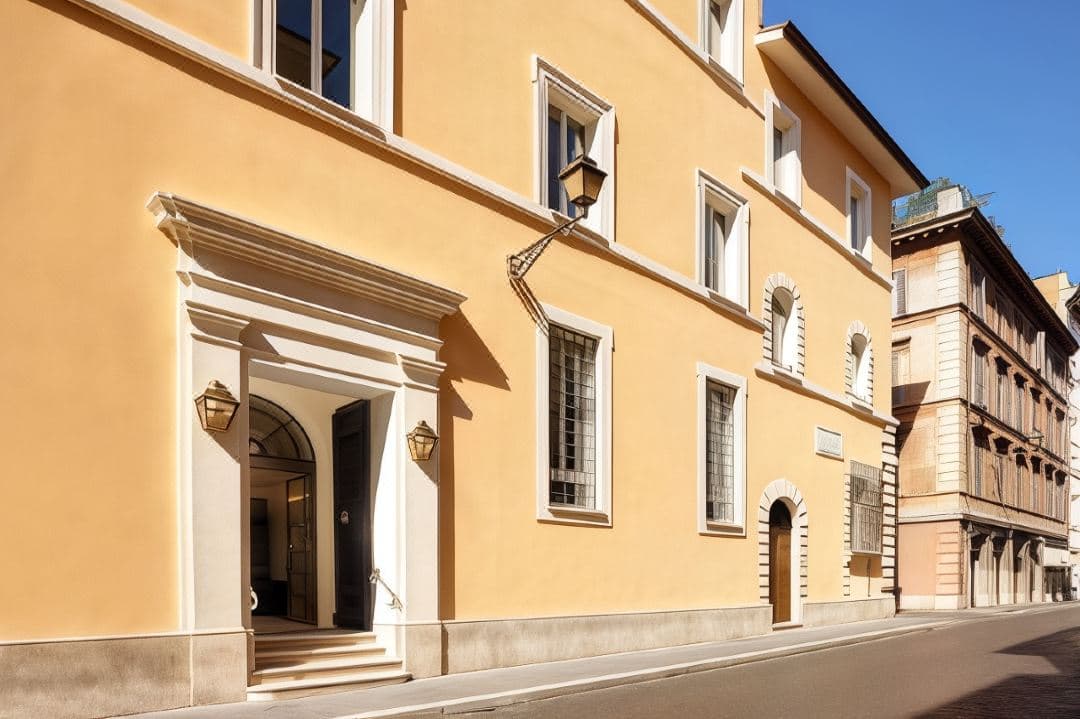
Explore All Rome HotelsIf the Vatican had a rebellious younger sister with a penchant for contemporary sculpture, she would live here. Sequestered in the 'Tridente' district, mere steps from the Piazza del Popolo, Palazzo Ripetta sheds its 17th-century conservatory skin to reveal a dangerously sophisticated interior. You don’t just check in; you are confronted—immediately—by Arnaldo Pomodoro’s colossal 'Sfera' in the lobby, a brass punch to the gut of traditional Roman aesthetics. The 78 rooms are lesson in restraint, eschewing heavy brocades for jewel-toned velvets, Frette linens, and high-spec soundproofing that largely defeats the street noise (though the courtyard-facing suites remain the true prize). Bathrooms are clad in marble and stocked with Ortigia Sicily amenities—a fragrant nod to the owner’s heritage. Dining is equally serious: at San Baylon, the Monkfish 'Saltimbocca-style' is a technical marvel, while the Etere Rooftop serves the 'Sapere Aude' cocktail against a backdrop of terracotta domes. It is not a hotel for those seeking a pool scene; it is a residence for those who prefer their Spritz served next to a 3rd-century Roman sarcophagus.
“Skip the street-facing Deluxe rooms. Request a 'Charme Suite' overlooking the Piazzetta Ripetta courtyard—you get the breeze and the jazz, but none of the Vespas.”
Insider TipAvg. Nightly Rate
474USD
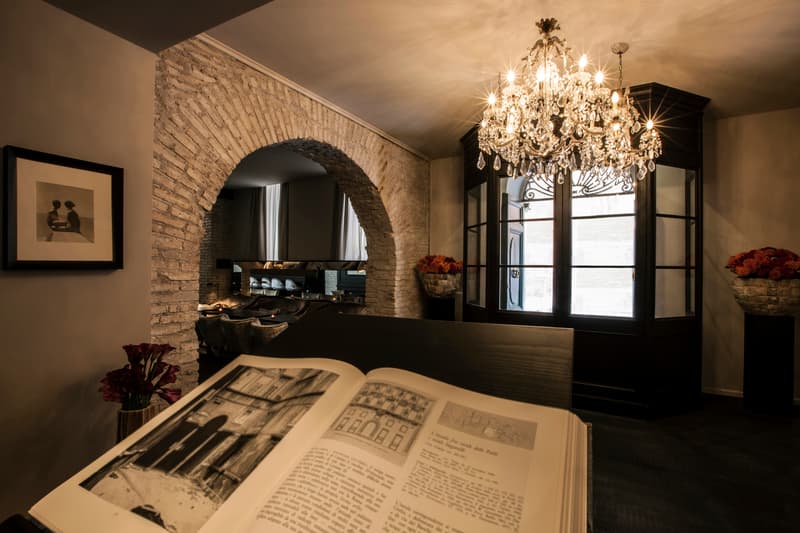
It is a rare feat to find Andy Warhol holding court inside a 17th-century Claretian monastery, but D.O.M Hotel Roma thrives on such sacred-meets-profane contradictions. Located on the legendary Via Giulia, this boutique sanctuary trades the Vatican’s golden halos for a darker, sexier form of worship. The vibe is less 'Sunday Mass' and more 'aristocratic gentleman’s club after hours'—think charcoal walls, rich chocolate velvets, and original Renaissance inscriptions (Deo Optimo Maximo) illuminated by intentionally dim, cinematic lighting. The 18 rooms are exercise in moody restraint, featuring exposed brickwork softened by 400-thread count Frette linens and the citrus-wood notes of Acqua di Parma amenities. While the lack of a spa or pool might deter the wellness crowd, the hotel compensates with pure atmospheric indulgence. Dinner at Verve Restaurant is non-negotiable; the Spaghettone Ajo, Ojo & Peperoncino is a masterclass in Roman simplicity. Afterward, retreat to The Deer Club, where the cocktails are as potent as the history seeping through the walls. This is not a hotel for those seeking bright fluorescent lights; it is a hideaway for lovers of shadow, art, and silence.
“Standard rooms can be notoriously dark. For natural light and private outdoor space, splurge on the D.O.M Suite, which boasts a 25-square-meter terrace overlooking the terracotta Regola skyline.”
Insider TipAvg. Nightly Rate
302USD
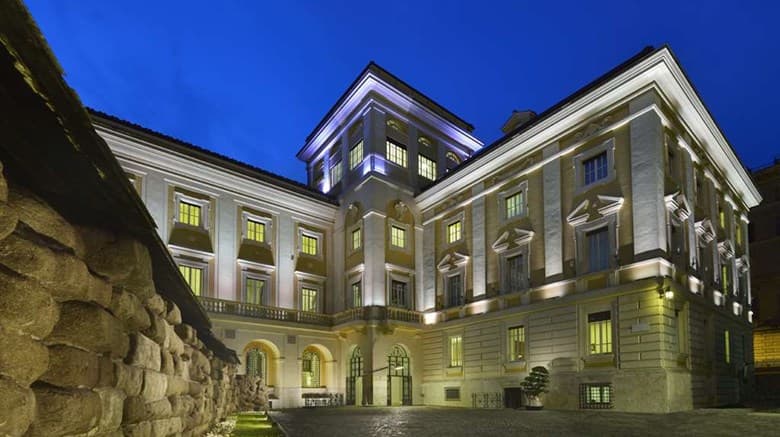
If Rome is a theater, Palazzo Montemartini is the intermission between the gritty reality of Termini Station and the dolce vita fantasy. This isn’t a soft, velvet-draped Roman palace; it’s a stark, architectural collision where the ancient Servian Wall (literally) cuts through the lobby, flanked by aggressive white minimalism and chrome. It’s slick, severe, and undeniably cool. Inside, the chaos of the train tracks vanishes. The rooms are cavernous—high ceilings that dwarf standard luggage—though the uncompromising white decor does mercilessly highlight the occasional scuff, a reminder that this is a high-traffic transit hub. The real draw is the Caschera SPA. It’s not just a basement pool; it’s a 600sqm hydrotherapy labyrinth with bubble beds and a salt room that feels medicinal in the best way. Dinner at Senses offers a playful subversion of classics, like the signature Tuna Carbonara, which manages to be sacrilegious and delicious simultaneously. Service is efficient, if brisk—Roman hospitality calibrated for the schedule of a high-speed Frecciarossa. It’s not for the traveler seeking nonna’s cozy pension; it’s for the design purist who needs a steam bath before the morning train to Florence.
“The €20 spa fee is waived if you book a Premium Room or Suite—the upgrade cost is often equal to two spa passes anyway.”
Insider TipAvg. Nightly Rate
206USD
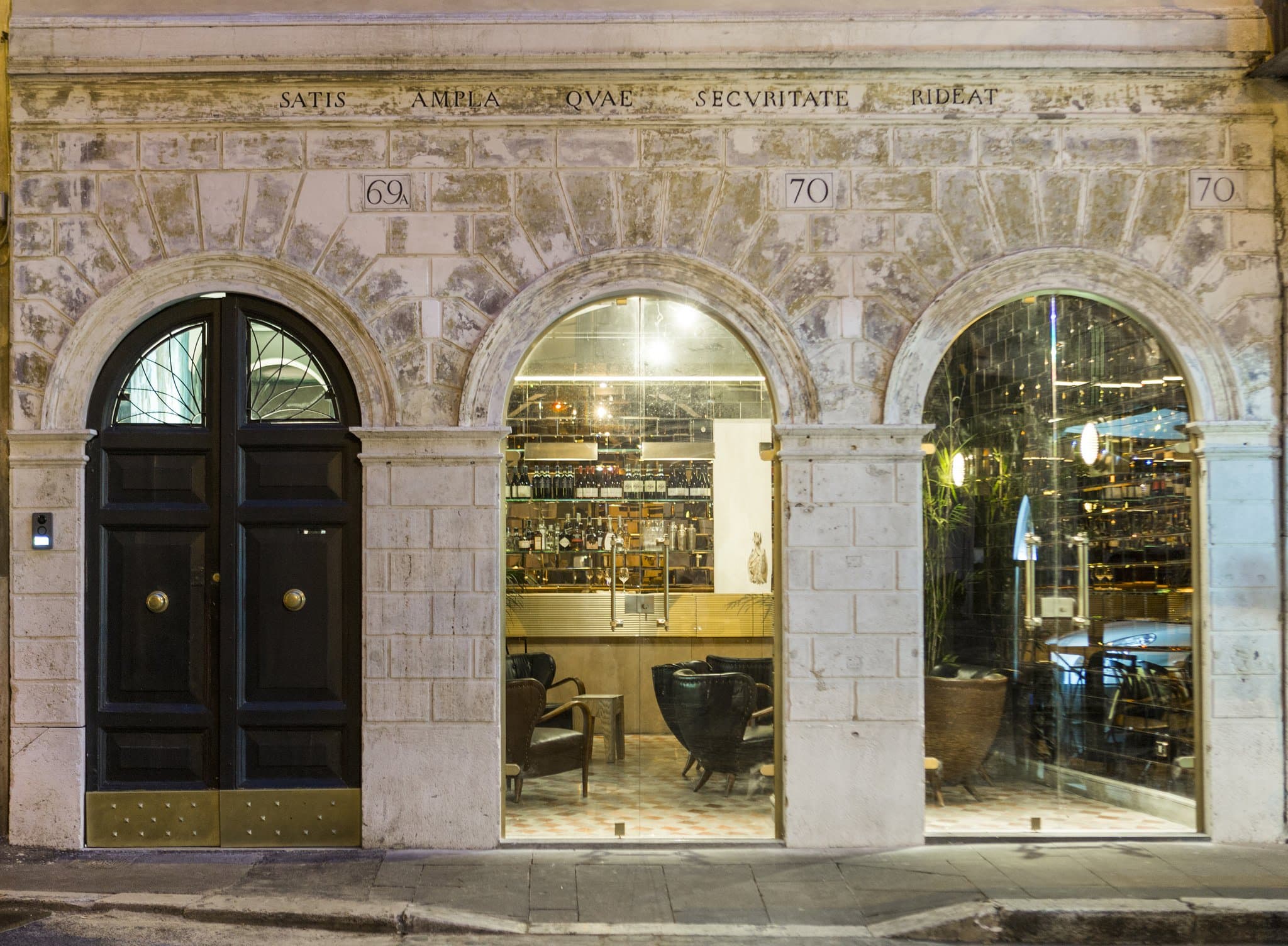
Forget the polished marble clichés of the Eternal City. G-Rough is a study in 'rough-luxe' rebellion, a 17th-century palazzo that wears its history like a ragged, aristocratic coat. Situated just steps from Piazza Navona, this 10-suite property is less a hotel and more an eccentric art collector’s crash pad. The design philosophy here is subtraction rather than addition; original timber beams and stripped-back patina walls act as a raw, theatrical backdrop for iconic mid-century Italian furniture that feels curated rather than staged. Check into the Pasquino Suite to fully understand the assignment. The aesthetic is intentionally undone—think exposed plaster meeting plush velvet—but the comforts are strictly modern. Bathrooms are a fever dream of bronze mirrors, famously dubbed the 'infinity selfie' spots, and stocked generously with Malin + Goetz amenities. There are no stiff reception desks here; the service is intimate, hyper-personalized, and refreshingly void of corporate scripting. Downstairs, the Gallery Bar serves as the property's beating heart. It’s dark, moody, and serious about its spirits. Skip the generic room service and order the signature Roscioli Cheese & Salami Platter, a masterclass in Roman curing traditions, paired with a smoky Signature Negroni. While the lack of a pool or spa might deter the resort crowd, G-Rough isn't for them. It’s for the sophisticated traveler who prefers their luxury with a side of grit and a story to tell.
“Book the Pasquino Suite for the most dramatic 'peeling wall' aesthetic, or grab a table at the nearby Cul de Sac (20m away) if the G-Bar is packed.”
Insider TipAvg. Nightly Rate
470USD
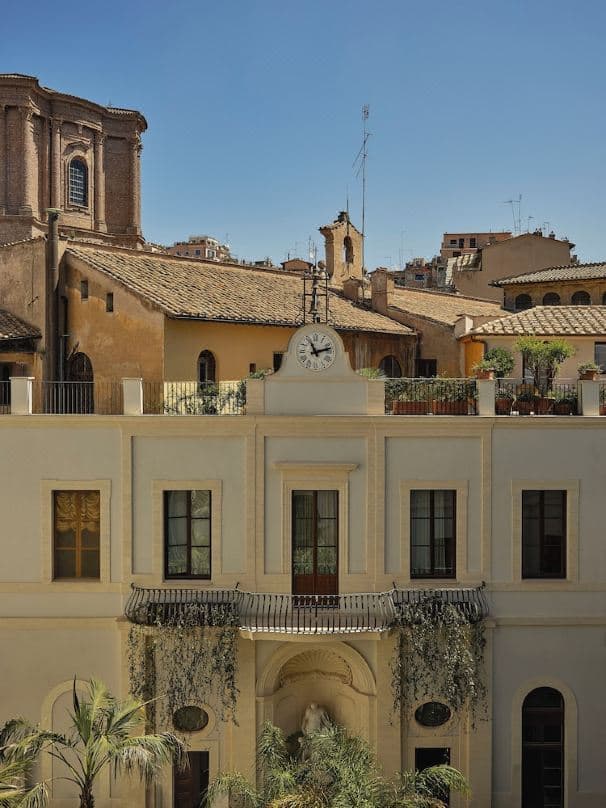
In a city where ‘historic renovation’ usually implies heavy velvets and dusty gilding, Palazzo Talìa feels like a jump cut in a Godard film. Housed in the 16th-century Collegio Nazareno—once a school for destitute scholars—this 26-room property is now a high-voltage design set piece directed by Luca Guadagnino. The drama begins in the Magna Hall, where 11-meter vaulted ceilings loom over a dizzying checkered floor, sliced through by a geometric Nigel Peake staircase runner that screams modernity. It is less a hotel lobby and more a stage for your own personal Roman holiday. Upstairs, the rooms retreat into a quieter, almost monastic chic, though not without quirks. While the silence of the internal courtyard is a rare luxury near the Trevi Fountain, the etched glass toilet doors in standard rooms offer a level of intimacy that may startle platonic travel companions. Amenities are top-tier, but the real draw is the subterranean spa—an Augustinus Bader sanctuary featuring a heated pool and an icefall that feels illicitly indulgent after a humid Roman afternoon. Dinner at Tramae is non-negotiable; the Spaghettone alla Nerano with smoked zucchini cream is a masterclass in texture. Service is still finding its footing—earnest but lacking the robotic precision of the grand dames—yet for the design-obsessed, Palazzo Talìa is the only script worth reading right now.
“Skip the crowded Trevi nearby and retreat to the hotel’s 'Bar della Musa' for a 'Melpomene'—a mezcal and pistachio milk concoction sipped under mirrored tiles that reflect the 18th-century frescoes.”
Insider TipAvg. Nightly Rate
553USD
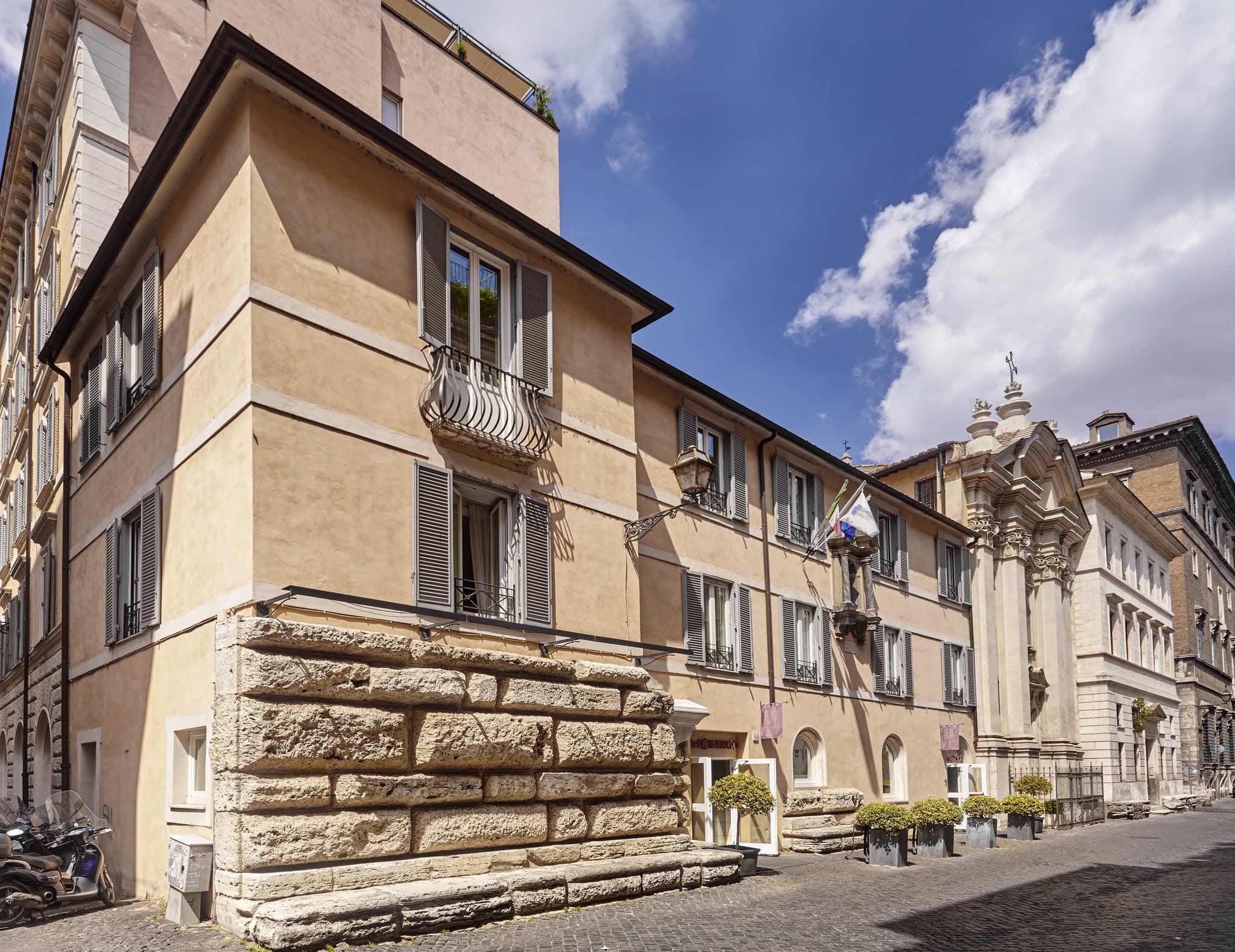
Rome often forces a choice: ancient history or modern comfort. Hotel Indigo Rome - St. George, located on the hushed, cobblestoned stretch of Via Giulia, refuses to compromise. Designed by Bramante, the street itself is a Renaissance masterpiece, and the hotel respects this lineage with a façade of massive travertine blocks—some historically linked to the Colosseum. But step past the vintage Vespa guarding the entrance, and the reverence turns playful. The interiors are a tactile dialogue between 1508 and the present. Jewel-toned velvet armchairs soften the stone, while guest rooms feature oversized murals of Fiat 500s, a witty nod to Italian cinematic history. A necessary critique: the entry-level Standard rooms are spatially efficient—a polite euphemism for tight—so travelers with serious luggage should upgrade to a suite for necessary breathing room and parquet flooring. The basement houses the St. George Spa, where a Roman bath circuit offers a steamy, monastic retreat from the city's chaotic energy. However, the true theater happens on the roof. At I Sofà Bar Restaurant, the signature duck breast with raspberry glaze competes for attention against a 360-degree panorama of St. Peter’s Basilica. This isn't just a place to sleep; it’s a place to feel the weight of Rome’s history while sipping a perfectly executed Negroni.
“Skip the street-level tables for aperitivo; book a spot at I Sofà Bar Roof Terrace 30 minutes before sunset to watch the Vatican dome turn gold.”
Insider TipAvg. Nightly Rate
155USD
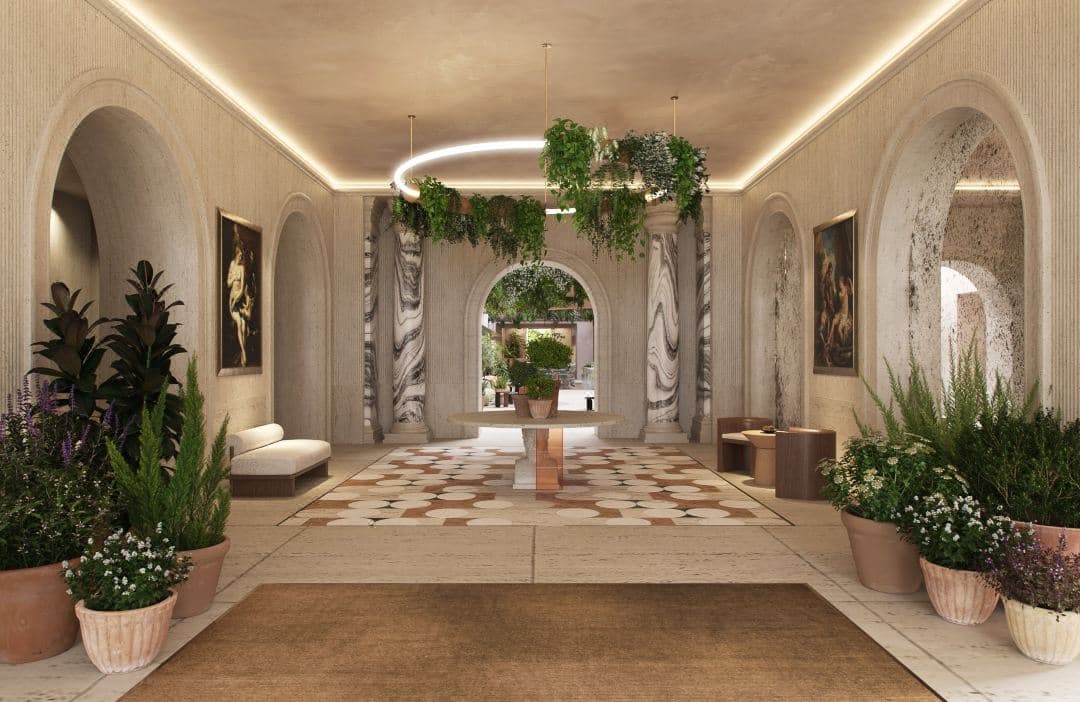
Stepping off the frenetic Via del Corso into Six Senses Rome is an act of decompression. Patricia Urquiola has masterfully scrubbed the dust off the 15th-century Palazzo Salviati Cesi Mellini, replacing heavy baroque brooding with an airy, travertine-clad sanctum that feels less like a hotel and more like a high-design sanatorium. The lobby’s centerpiece isn’t a chandelier, but a glass floor revealing a 4th-century baptismal font—a literal foundation of history beneath your Gucci loafers. Upstairs, the rooms are a study in restraint. While entry-level Classic rooms are tight (28 sqm), the finishes distract you from the footprint: cocciopesto plaster walls, sustainable oak floors, and the brand’s signature handmade mattresses that ruin you for all other beds. The real draw, however, is the basement. The Roman Bath circuit recreates the ancient calidarium-tepidarium-frigidarium ritual with a level of sleekness that would make Hadrian jealous. Dinner at BIVIUM is non-negotiable; order the ‘Omaggio a Roma’ artichoke and the ancient grain pizza. Service can be Roman—occasionally languid—but the staff’s genuine warmth usually compensates for the wait.
“Skip the morning rush at the Trevi Fountain. Instead, book a 'Biohacking' session (compression boots and IV infusion) at the spa immediately upon arrival to crush jet lag before it starts.”
Insider TipAvg. Nightly Rate
1092USD
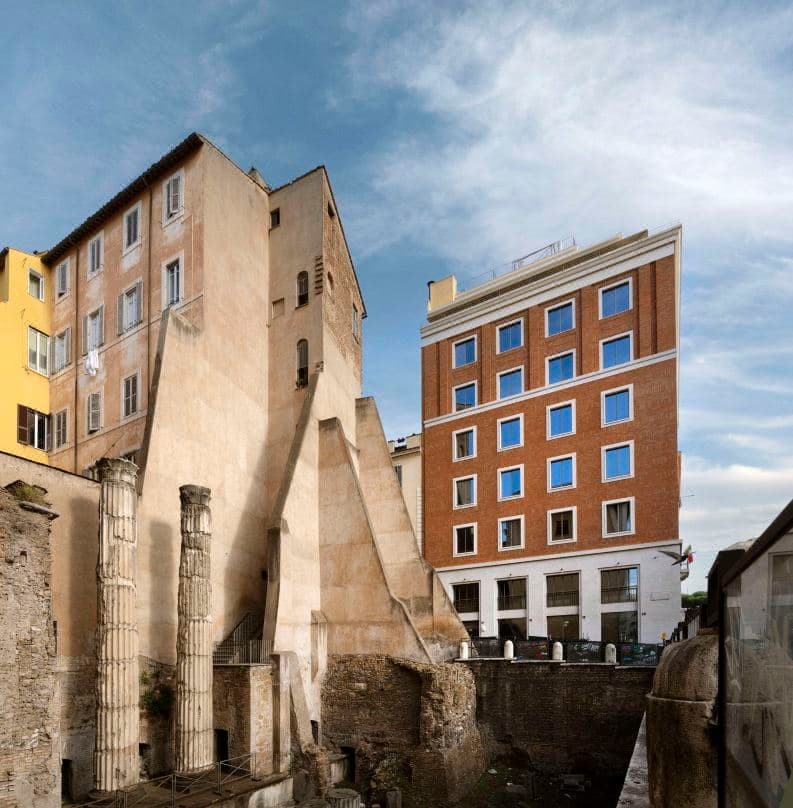
If Rome is a lasagna of history, the Radisson Collection Hotel, Roma Antica is the perfectly sliced cross-section. Housed in the restored Palazzo Lares Permarini on the moody Via delle Botteghe Oscure, this property doesn't just sit near history—it floats above it. The design narrative, crafted by Studio Zanon Architetti Associati, is a masterclass in tension. You aren't just checking in; you're stepping over the *Porticus Minucia*, the ancient ticket office for Roman games, visible through glass flooring in the basement. Upstairs, the vibe shifts from archaeological to architectural. The lobby is a study in Italian modernism, furnished with pieces from Thonet and Molteni that scream understated wealth rather than loud luxury. In the rooms, space is at a premium—let’s be honest, the entry-level 16sqm footprint is tight—but the execution is flawless. Think Carrara marble bathrooms that gleam like statuary and rich Fornasetti wallpapers that add depth to the compact footprint. Dining at *Modius* offers a competent, if safe, take on Roman classics like Amatriciana, but the real theater is *Modius on the Roof*. Here, with a Spritz in hand and the Altare della Patria looming impossibly close, the street noise fades into a cinematic hum. It’s not a sprawling resort; it’s a curated, archaeological jewelry box.
“Skip the standard 'Collection Room' if you're bringing more than a carry-on. Book a 'Panoramic Room' on the 6th floor for a private terrace that rivals the rooftop bar's view, minus the crowd.”
Insider TipAvg. Nightly Rate
325USD
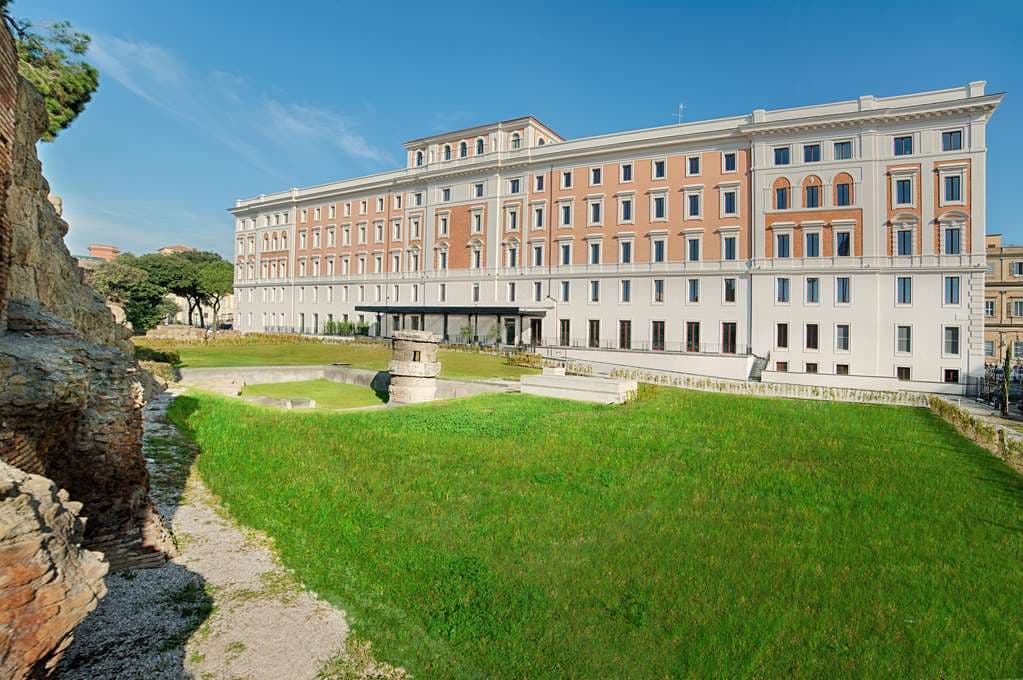
Rome’s Termini station is a chaotic assault on the senses—a swirl of rushing commuters and grit. Yet, mere steps from the platforms, the NH Collection Roma Palazzo Cinquecento offers a jarringly effective antidote. Housed in the former railway headquarters, this property pulls off a rare architectural flex: a linear, modern glass façade that creates a stark, textural dialogue with the preserved section of the 4th-century BC Servian Wall running directly through its private garden. It is a sanctuary in the literal sense. Inside, the vibe sheds the station’s frenetic energy for Art Nouveau nuances and contemporary polish. While the standard rooms are undeniably compact at 17sqm—a squeeze for those traveling with heavy trunks—they are engineered for rest with 'Sleep Better' beds and industrial-strength soundproofing that renders the trains silent. For a sense of place, the Grand Tour Restaurant delivers a competent Cacio e Pepe, but the real draw is the panoramic rooftop terrace. Here, sipping a signature Sunset Spritz while gazing over the station’s hustle towards the dome of St. Peter’s feels like an insider’s secret. Service is sharp and transactional in the best way, catering to a crowd that values precision over pomp. It is the ultimate layover upgrade.
“Skip the standard rooms and book a 'Premium Room with View'. Request the garden side specifically to wake up facing the ancient Servian Wall rather than the station taxi rank.”
Insider TipAvg. Nightly Rate
305USD