No. 01
Via Giulia 131 Rome ItalyRome449 verified reviews
9
.0
Bitvoya Edit
Layering imagery, place, and detail before the page opens.
Rome is not just a museum to be visited, but a history to be lived. There is no better way to immerse yourself in the Eternal City than by checking into a renovated 17th-century palazzo. From the bustling streets of Campo Marzio to the quiet elegance of the Quirinal Hill, these noble dwellings offer a unique blend of Baroque grandeur and contemporary design. Imagine waking up under frescoed ceilings at Palazzo Roma or sipping espresso on a terrace overlooking the Colosseum at Hotel Palazzo Manfredi. These properties, including the avant-garde G-Rough near Piazza Navona and the regal Villa Spalletti Trivelli, redefine luxury by preserving the soul of the aristocracy while offering the finest modern comforts.
Staying in a renovated 17th-century palazzo in Rome offers an exclusivity that modern chain hotels simply cannot replicate. These properties, such as Palazzo Ripetta and Palazzo Talìa, are living artifacts. They allow travelers to inhabit spaces once reserved for Roman nobility, cardinals, and elite socialites. The architecture from this era is characterized by high ceilings, grand staircases, and hidden courtyards, providing a serene sanctuary away from the chaotic Roman streets. Choosing these noble dwellings means choosing a narrative; you are not just a guest, but a part of the building's centuries-old legacy.
When booking a stay at one of these noble dwellings, expect a marriage of the antique and the avant-garde. While the facades date back to the 1600s, interiors often feature bespoke Italian furniture, contemporary art, and state-of-the-art technology. Service is typically highly personalized, functioning more like a private residence than a large hotel. Expect amenities such as private libraries, rooftop lounges with panoramic views, and inner courtyards scented with orange blossoms. Whether it is the seaside grandeur of La Posta Vecchia Hotel (a short drive from the city) or the urban chic of Palazzo Talìa, the experience is undeniably Roman.
Hotel Palazzo Manfredi is renowned for its unparalleled views directly overlooking the Colosseum, especially from its rooftop restaurant, Aroma.
Yes, properties like Villa Spalletti Trivelli and Palazzo Ripetta offer spacious suites and connecting rooms ideal for families, along with private gardens.
G-Rough offers a unique 'rough-luxe' aesthetic, stripping back walls to reveal original layers of history while furnishing spaces with iconic Italian mid-century design pieces.
Explore our complete curated list of luxury accommodations, from boutique hideaways to grand dames.
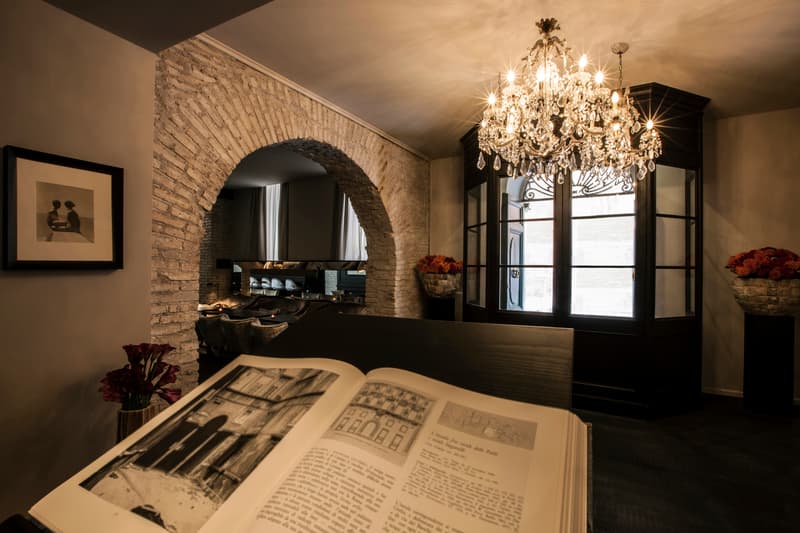
Explore All Rome HotelsIt is a rare alchemy to find original Andy Warhol silkscreens hanging in the shadowed corridors of a 17th-century Claretian monastery, but D.O.M Hotel Roma thrives on such paradoxes. Located on the historic cobblestones of Via Giulia, this property rejects the beige neutrality of standard luxury for a moody, 'Gentlemen’s Club' aesthetic that feels conspiratorial and sexy. Architect Antonio Girardi has preserved the Renaissance bones—including the Latin 'Deo Optimo Maximo' inscription that gives the hotel its name—while draping the interiors in chocolate velvets and charcoal woods. The rooms are an exercise in chiaroscuro; they are unapologetically dim, designed for romance rather than remote work. While the lack of in-room coffee makers in some tiers is a curious omission for Italy, the trade-off is high-spec finishes like dark wood flooring and oversized mirrors that amplify the drama. Dining at Verve Restaurant is non-negotiable; the 'Spaghettone Ajo, Ojo & Peperoncino' is a masterclass in Roman simplicity, best enjoyed before retreating to the rooftop terrace to watch the terracotta skyline dissolve into twilight. It is not a hotel for those seeking a bright, airy atrium—it is a sanctuary for those who prefer their luxury with a side of shadows.
“Ask for Room 24. It comes with a rare private terrace perfect for a sunset aperitivo away from the crowds.”
Insider TipAvg. Nightly Rate
302USD
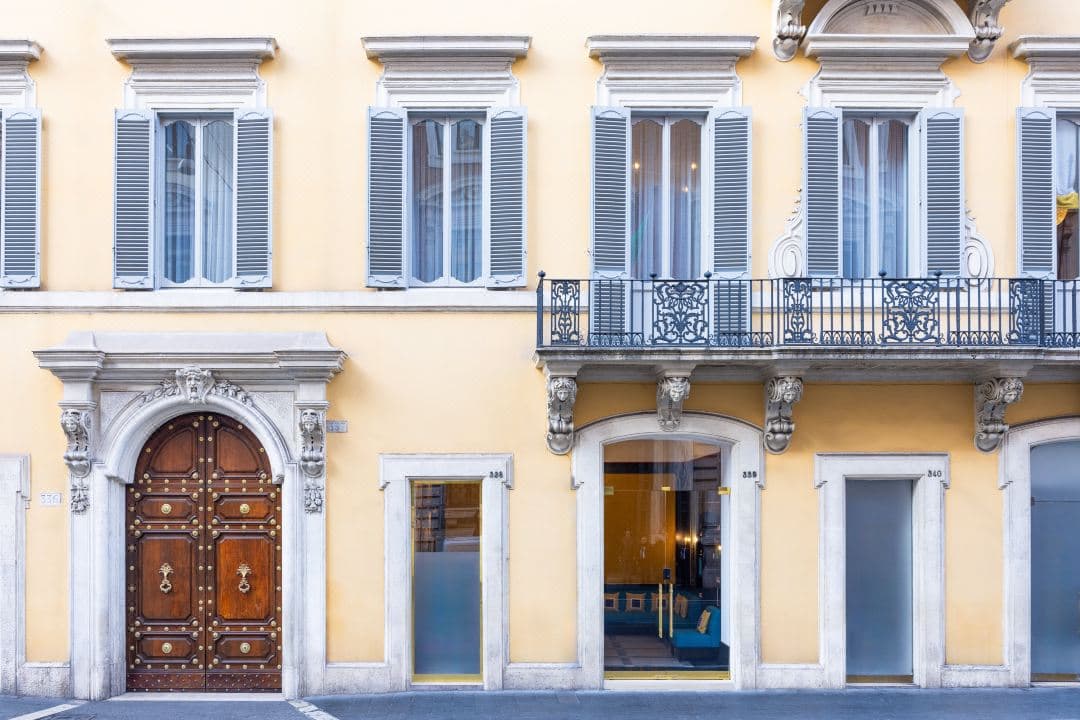
Forget the sterile lobby; entering **Palazzo Roma** is like inheriting a title. This isn't a hotel masquerading as a home—it *is* a home, a 17th-century noble residence meticulously preserved on the chaotic **Via del Corso**. The property resists the urge to modernize its soul; instead, it polishes its history. The **Grand Staircase**, watched over by marble statues, leads you into spaces where original frescoes and coffered ceilings demand your neck’s attention. The rooms are moody—critics might say dark, but we call it 'chiaroscuro' chic. While you won't find a blinding vanity mirror, you will find **Laura Tonatto** amenities and an aristocratic silence that defies the city outside. The lack of an on-site gym (you’re dispatched to Hotel Maalot) or spa is a calculated omission; this is a place for leisure, not exertion. Dinner at **Core Restaurant** is essential. Order the **Rosetta with mortadella**—a high-brow take on a Roman street classic—followed by a textbook **Cacio e Pepe**. Finish with a cocktail at **The Bar**, where **Giovanni Fortino** treats mixology like alchemy. It’s not for the traveler seeking fluorescent functionalism; it’s for the aesthete who prefers their luxury heavy with history.
“Skip the street-view rooms; request a courtyard-facing suite for absolute silence. Spend your downtime in the 'Sala degli Orologi' (Watch Library)—it feels ripped from a Visconti film.”
Insider TipAvg. Nightly Rate
650USD
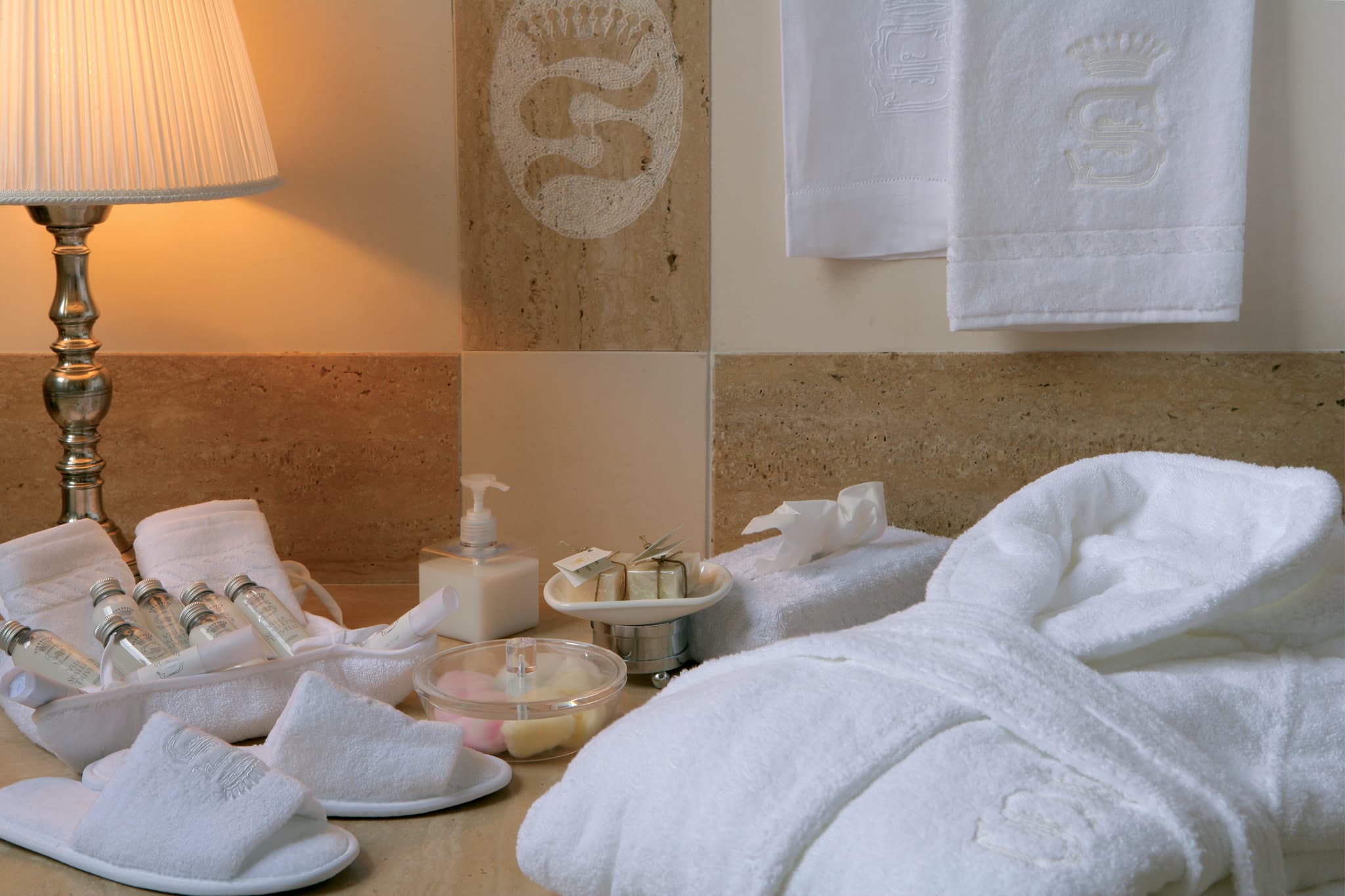
Forget the sanitized friction of corporate hospitality; Villa Spalletti Trivelli is a lesson in aristocratic living. Situated directly across from the Quirinal Palace, this isn’t a hotel—it is the residence of the Spalletti Trivelli family, and staying here feels like you’ve been written into their will. The interiors are a masterclass in early 20th-century restraint, avoiding the baroque excess of Roman rivals for something more sober and English: think original wood-paneled libraries and the Sala dei Papiers Peints, where the antique wall coverings are worth more than most luxury cars. The rooms are cavernous, boasting 400-thread count linens and high ceilings that make even the 'Prestige' category feel palatial. While the street-facing windows betray the villa's age with a touch of Roman traffic hum, the trade-off is worth it for the sheer provenance of the furniture. Downstairs, the Drawing Room operates a dangerous honesty bar—pour your own gin and sink into a velvet armchair. Dining is strictly traditional; the Ravioli Ricotta e Spinaci is a non-negotiable order. For decompression, the Caschera SPA offers a subterranean saltwater bio-pool that feels more like a private grotto than a hotel facility. It is distinct, dignified, and refreshingly allergic to modern trends.
“Skip the main dining room for lunch; instead, ask for a table in the private Italian Garden and order the Pomario Olive Oil salad.”
Insider TipAvg. Nightly Rate
424USD
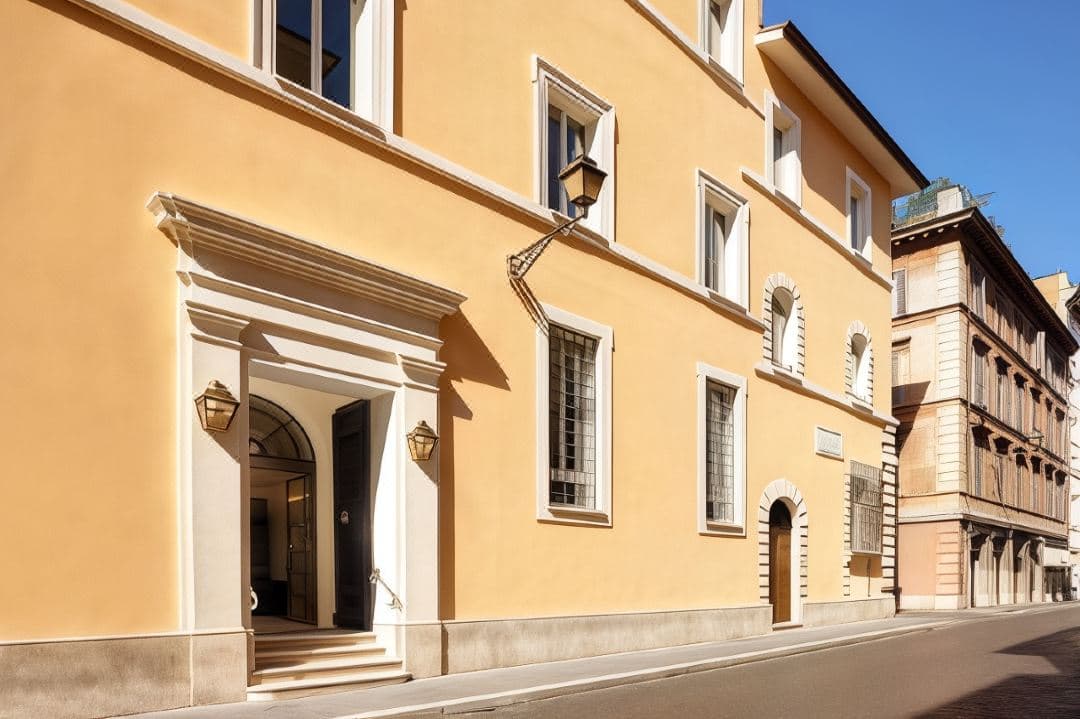
If the walls of Palazzo Ripetta could talk, they would whisper three centuries of confessions. Once the Conservatorio della Divina Provvidenza—a baroque shelter for ‘spinsters’—and later a mid-century experiment by architect Luigi Moretti, this property has finally found its true calling as Rome’s most cinematic art hotel. Entering the lobby feels less like a check-in and more like stumbling into a private vernissage; Arnaldo Pomodoro’s massive, golden 'Sfera' sculpture commands the space, instantly signaling that this is no dusty antique. The renovation masterfully juxtaposes the building’s severe 17th-century bones with 1970s swagger and contemporary Italian polish. In the rooms, high ceilings and velvet headboards soften the austerity, while bathrooms stocked with almond-scented Ortigia amenities provide a sensory anchor to Sicily. A word to the wise: the ‘Prestige’ rooms facing Via di Ripetta offer drama, but they also catch the Roman street symphony. For true silence, retreat to the courtyard-facing suites. Dining is not an afterthought here. At San Baylon, the kitchen reimagines the classics—the Monkfish ‘Saltimbocca-style’ is a clever, lighter riff on the veal original. But the real golden hour flex is at Etere, the rooftop terrace. Sipping a ‘Sapere Aude’ cocktail while tracing the curve of the Tiber, you realize the Palazzo has earned its recent Michelin Key not just for luxury, but for successfully bridging Rome’s past and present.
“Request a 'Courtyard Suite' on the 3rd floor. You get the natural light without the Via di Ripetta vespa noise, plus direct views of the internal garden's Roman sarcophagus.”
Insider TipAvg. Nightly Rate
474USD
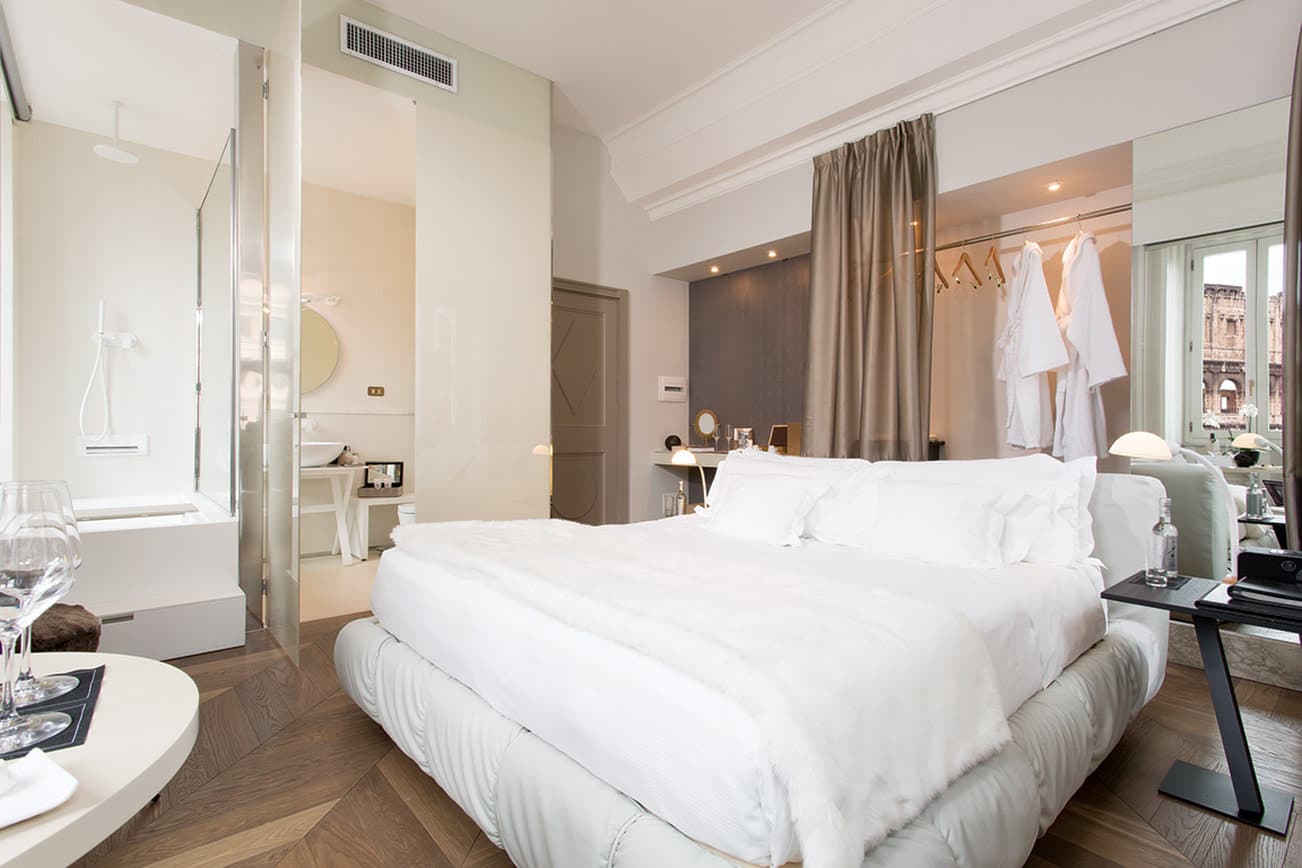
If the Colosseum is Rome’s greatest stage, Hotel Palazzo Manfredi is its royal box. Built directly upon the excavated ruins of the Ludus Magnus—the barracks where gladiators once trained—this 17th-century villa offers an intimacy with history that feels almost illicit. While tourists jostle behind barriers on Via Labicana, guests here sip 'Colosseum Negronis' at The Court, practically close enough to touch the ancient travertine. The interiors, designed by Maria Renata Fimiani, provide a sharp, modernist counterpoint to the crumbling imperial stones outside. Think velvet upholstery, marble floors, and a moody, sophisticated palette. Inside the main property, the 'Grand View Suite' (Room 43) is the essential booking, featuring a bed positioned to face the Flavian Amphitheatre head-on. Bathrooms are sanctuaries stocked with Acqua di Parma amenities, though standard category rooms can feel compact given the steep price point. Dining is the property’s other heavyweight contender. The rooftop restaurant, Aroma, retains its Michelin star for 2026 under Chef Giuseppe Di Iorio. The view is the obvious lure, but the handmade tagliolini with pumpkin and caviar pearls ensures the cuisine isn't just a supporting act. Verdict? It lacks a pool or sprawling spa, but for a weekend of high-stakes Roman drama, Palazzo Manfredi remains the city’s most cinematic address.
“Avoid the 'Annex' apartments if you want the full hotel experience; they are located down the street and lack the main villa's grandeur.”
Insider TipAvg. Nightly Rate
522USD
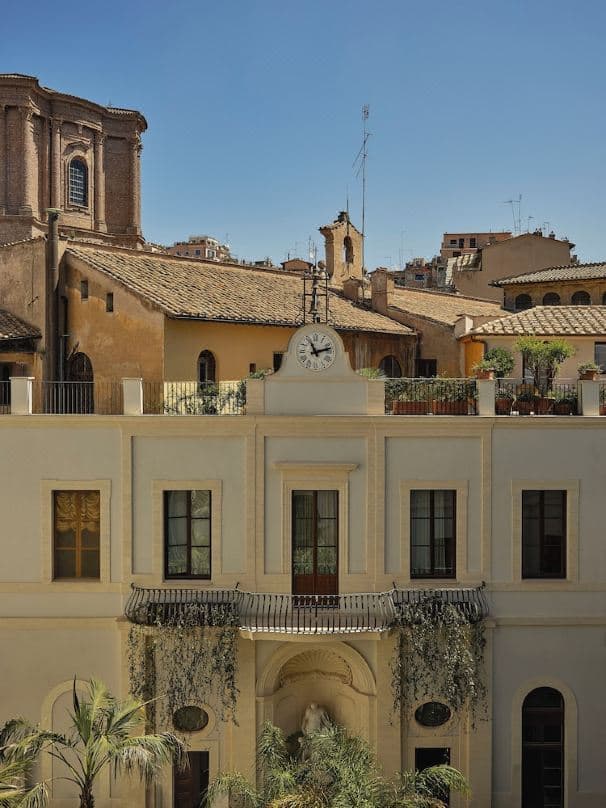
If the Trevi Fountain is Rome’s chaotic public theater, Palazzo Talìa is its hushed, VIP backstage. Tucked within the 17th-century Collegio Nazareno, this independent property doesn’t just host guests; it directs them. The lobby alone is a scene-stealer: the monumental Magna Hall boasts 11-meter ceilings and 18th-century frescoes by Gaspare Serenari, grounded by a hypnotic, geometric staircase runner by Nigel Peake. It is cinematic in the truest sense—hardly surprising, given that the public spaces were orchestrated by filmmaker Luca Guadagnino (of *Call Me by Your Name* fame). The 26 rooms, however, are a divided narrative. While the Guadagnino-designed Terrace Suite is a moody masterpiece of peach wood paneling, standard quarters by Mia Home Design Gallery lean into maximalist eclectic whimsy. Be warned: the etched glass toilet doors in entry-level rooms prioritize aesthetics over modesty, a design choice that demands a certain level of intimacy with your travel companion. Culinary direction is sharper. At Tramae, the Spaghettone alla Nerano (smoked zucchini cream) is a sophisticated twist on the Amalfi classic, while Bar della Musa offers a brooding, mirrored lair for sipping a Melpomene (mezcal and pistachio milk). Downstairs, the Augustinus Bader spa and the rare heated indoor pool—a vaulted, grotto-like escape—offer a damp, dreamy respite from the Roman heat. The service, while well-meaning, occasionally misses its cue, lacking the invisible precision of the city’s grande dames. Yet, for design purists seeking a backdrop with genuine soul, Palazzo Talìa is the only ticket in town.
“Skip the crowded streets for your aperitivo; Bar della Musa's mirrored tiles and frescoes make it the most atmospheric drink in the rione.”
Insider TipAvg. Nightly Rate
553USD
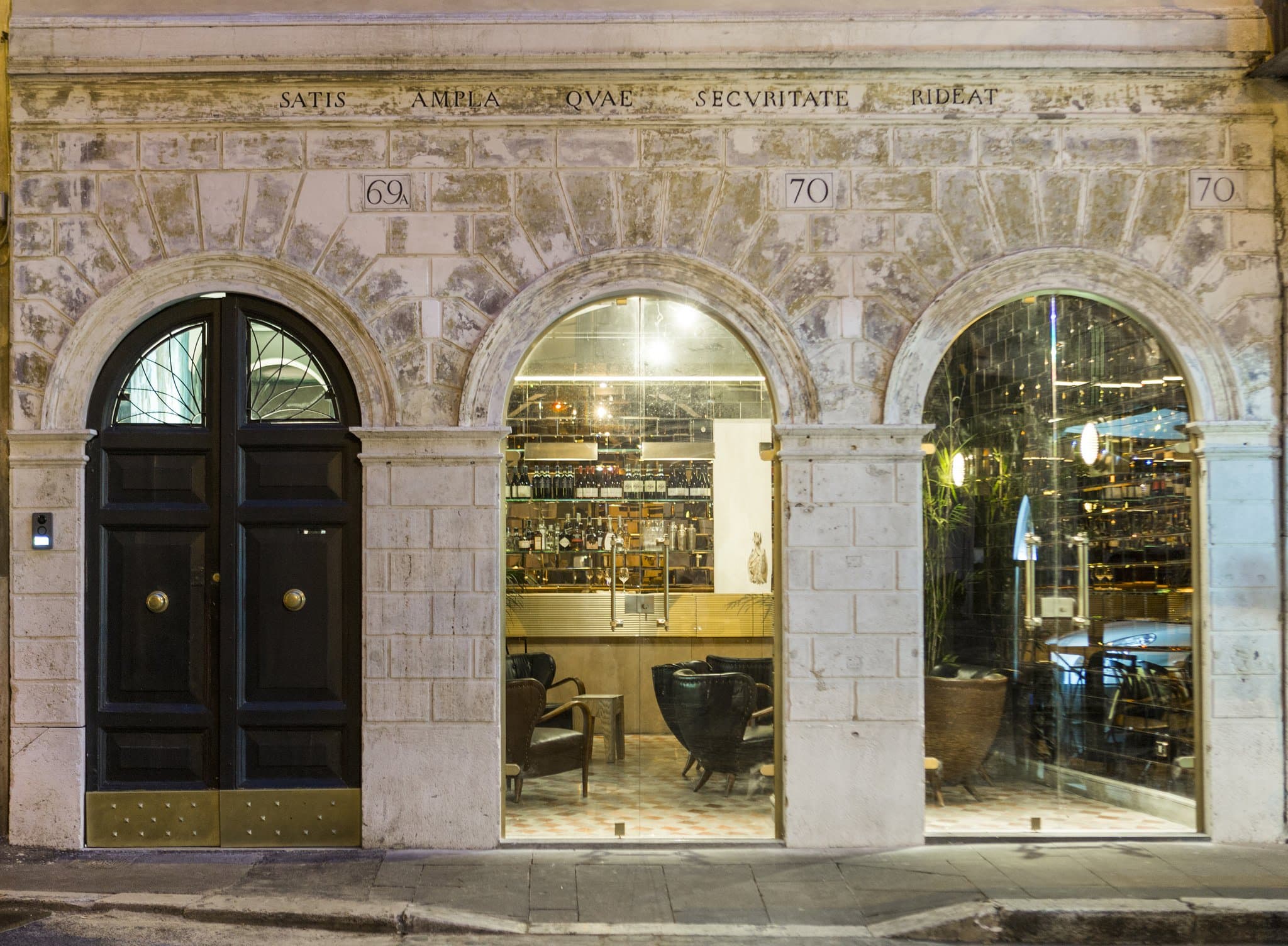
If you prefer your luxury polished to a sterile shine, G-Rough will irritate you. For everyone else, this 10-suite townhouse on Piazza Pasquino is a masterclass in 'un-restored' theatricality. Housed in a 17th-century building, the design team has boldly stripped back the interiors to reveal centuries of patina, exposing raw timber beams and peeling frescoes that serve as the backdrop for mid-century Italian furniture. It feels less like a hotel and more like crashing at the apartment of an eccentric Roman aristocrat who collects Seguso glass and vintage parchment lamps. The suites are cavernous, textural playgrounds. You won’t find a hotel compendium or a pillow menu here; instead, you get Smeg fridges, Malin + Goetz amenities, and clawfoot tubs that demand a long soak. The lack of a gym or spa is hardly a drawback when the city is your lobby, though the ground-floor Gallery Bar warrants staying in. Here, beneath bronze mirrors and moody lighting, the staff pour a Signature Negroni that rivals any in the capital. G-Rough isn’t about 24-hour room service; it’s about high-concept living where the squeaky floorboards are part of the charm. A habitable museum for the design-obsessed.
“Book the Pasquino Suite for the best vantage point of the piazza below, but bring earplugs if you’re a light sleeper—the Roman nightlife is part of the 'authentic' soundtrack.”
Insider TipAvg. Nightly Rate
470USD
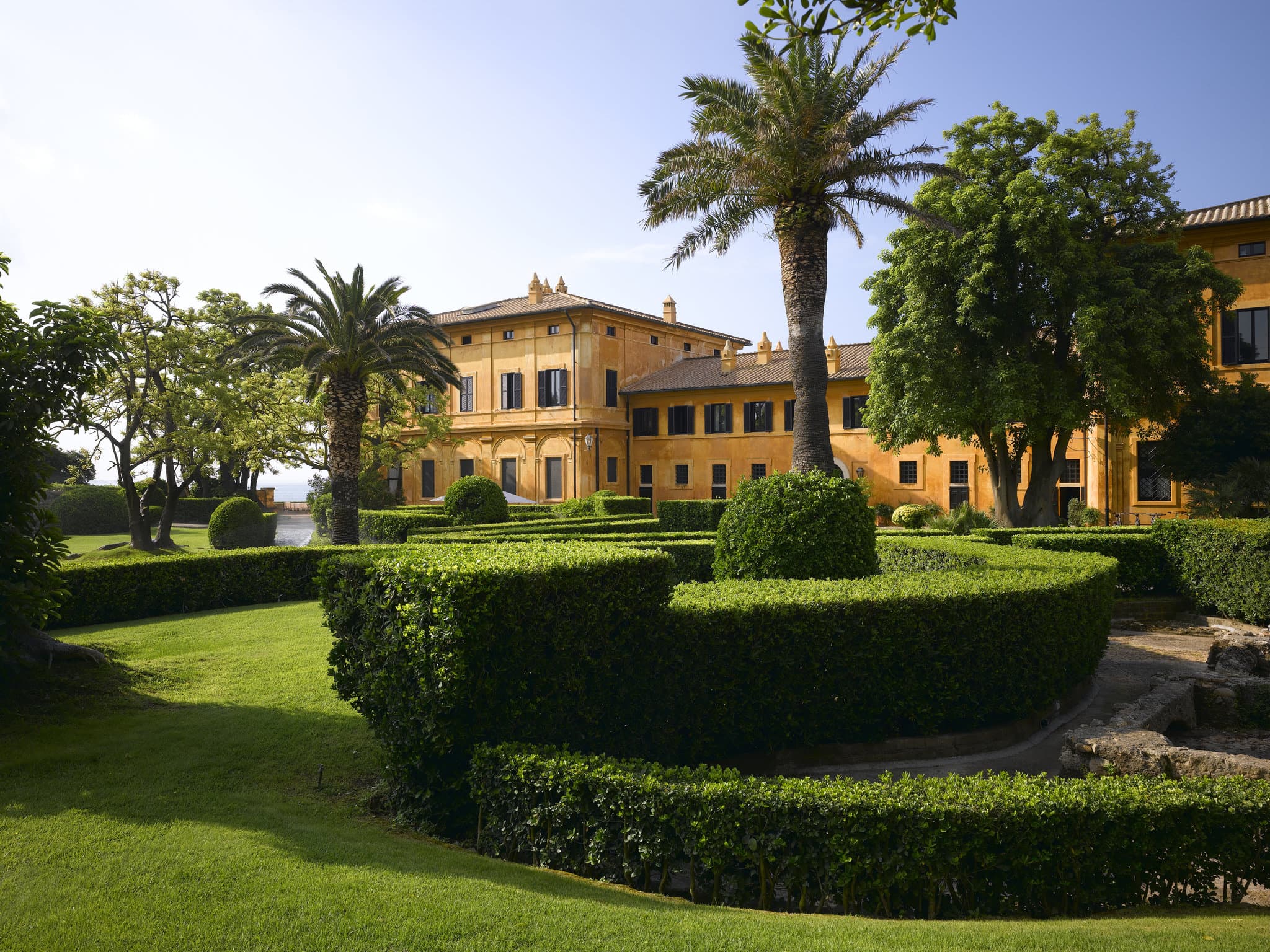
Forget the sterile perfection of modern luxury chains. La Posta Vecchia is something rarer: a moody, magnificent time capsule anchored on the Lazian coast. Once the seaside stomping ground of the Odescalchi princes and later the private fortress of J. Paul Getty, this 17th-century palazzo wears its history with a heavy, aristocratic shrug. You don’t check in here for intuitive touch-screen controls; you come to sleep under coffered ceilings and walk floors paved with authentic Roman mosaics. The design is unapologetically heritage. In the Medici Suite, the bathroom is a theatrical event of pink marble and antique mirrors that have caught the reflections of socialites for decades. While the air conditioning might wheeze with a charming inefficiency—a known quirk of the historic structure—the sea breeze through the arched windows provides a more romantic cooling solution. Downstairs, the experience descends literally into history with the on-site ruins of the Roman city of Alsium. Dining at Restaurant 'Da Aurelio' feels like a private supper club for the elite. The signature soft egg with asparagus and morels is a masterclass in regional restraint, best enjoyed after a 'La Posta Vecchia' cocktail at Bar Piranesi. The service holds a staggering 9.7 rating for a reason: it is intuitive, invisible, and deeply personal. It’s expensive, and the interiors are authentically dated rather than 'retro-inspired,' but that’s the point. You aren't just a guest; you’re the latest character in its centuries-long drama.
“Don't just look at the sea; go underground. The hotel basement contains the actual archaeological ruins of the ancient Roman city of Alsium, accessible exclusively to guests.”
Insider TipAvg. Nightly Rate
450USD
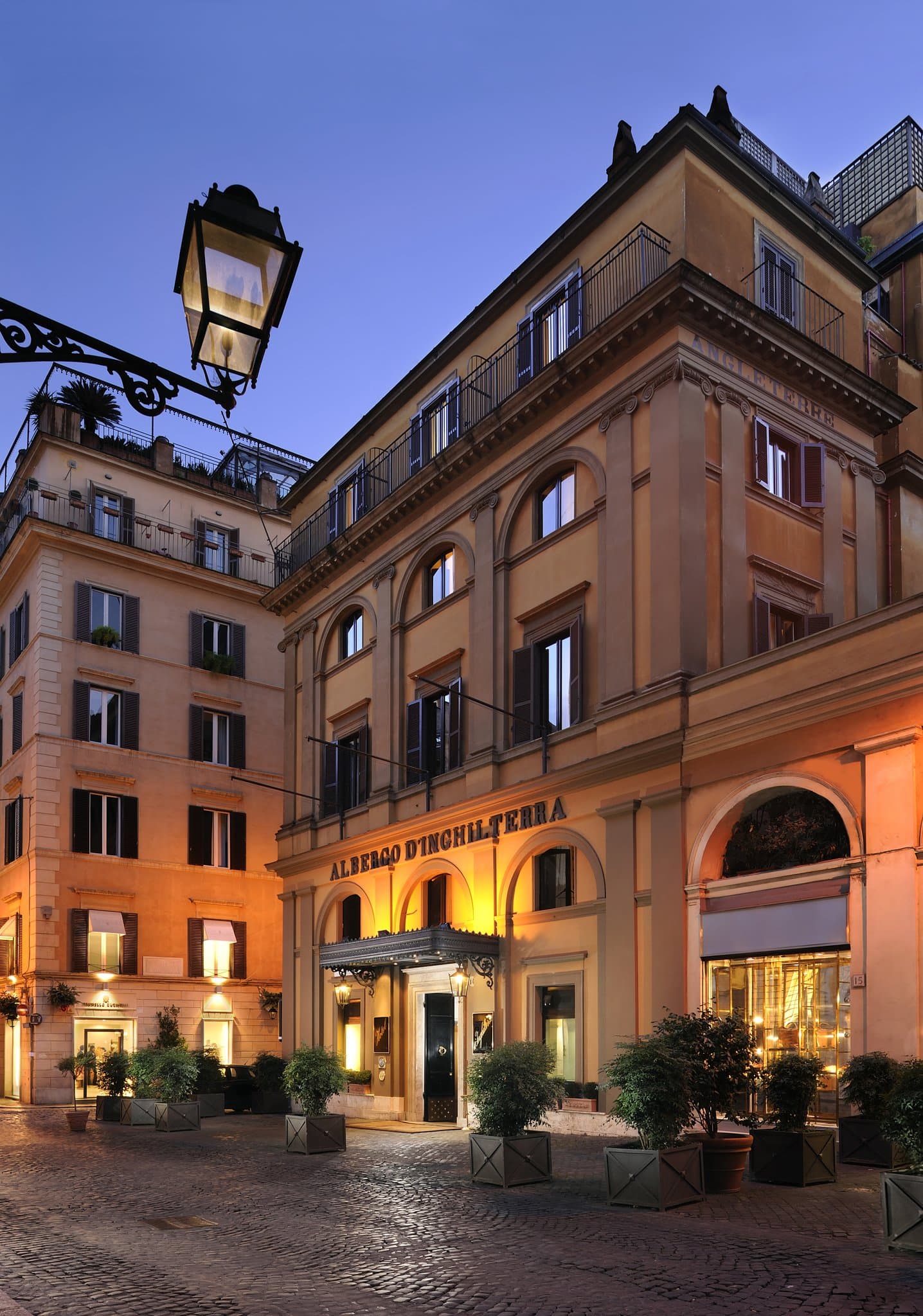
Originally constructed in the mid-16th century as guest quarters for the noble Torlonia clan, Hotel d’Inghilterra remains the discerning choice for those who prefer their history with a side of hustle. Following its extensive 2024 restoration, the property has dusted off its 19th-century grandeur without scrubbing away the patina that drew Hemingway and Taylor. Let’s address the elephant in the palazzo: the entry-level Classic rooms are undeniably compact (a snug 20 square meters). If you travel with steamer trunks, upgrade to a Junior Suite, where antique furnishings and Murano chandeliers have room to breathe. The tradeoff for space is an unbeatable location on Via Bocca di Leone, placing you seconds from the Spanish Steps. The hotel’s social pulse beats strongest at street level. Café Romano offers prime people-watching on Via Borgognona, best enjoyed with their signature crispy zucchini flowers. For a nightcap, the moody Bond Bar serves a Vesper Martini that lives up to the cinematic name. The recent addition of the Terrazza Romana rooftop provides a rare, high-altitude escape from the street noise below. **Verdict:** A sophisticated, high-energy residence for the urbanite who wants to be seen, not hidden away.
“Skip the crowded public viewpoints; the new Terrazza Romana rooftop is strictly for guests and offers the same amber-hued sunset over the rooftops without the selfie sticks.”
Insider TipAvg. Nightly Rate
550USD
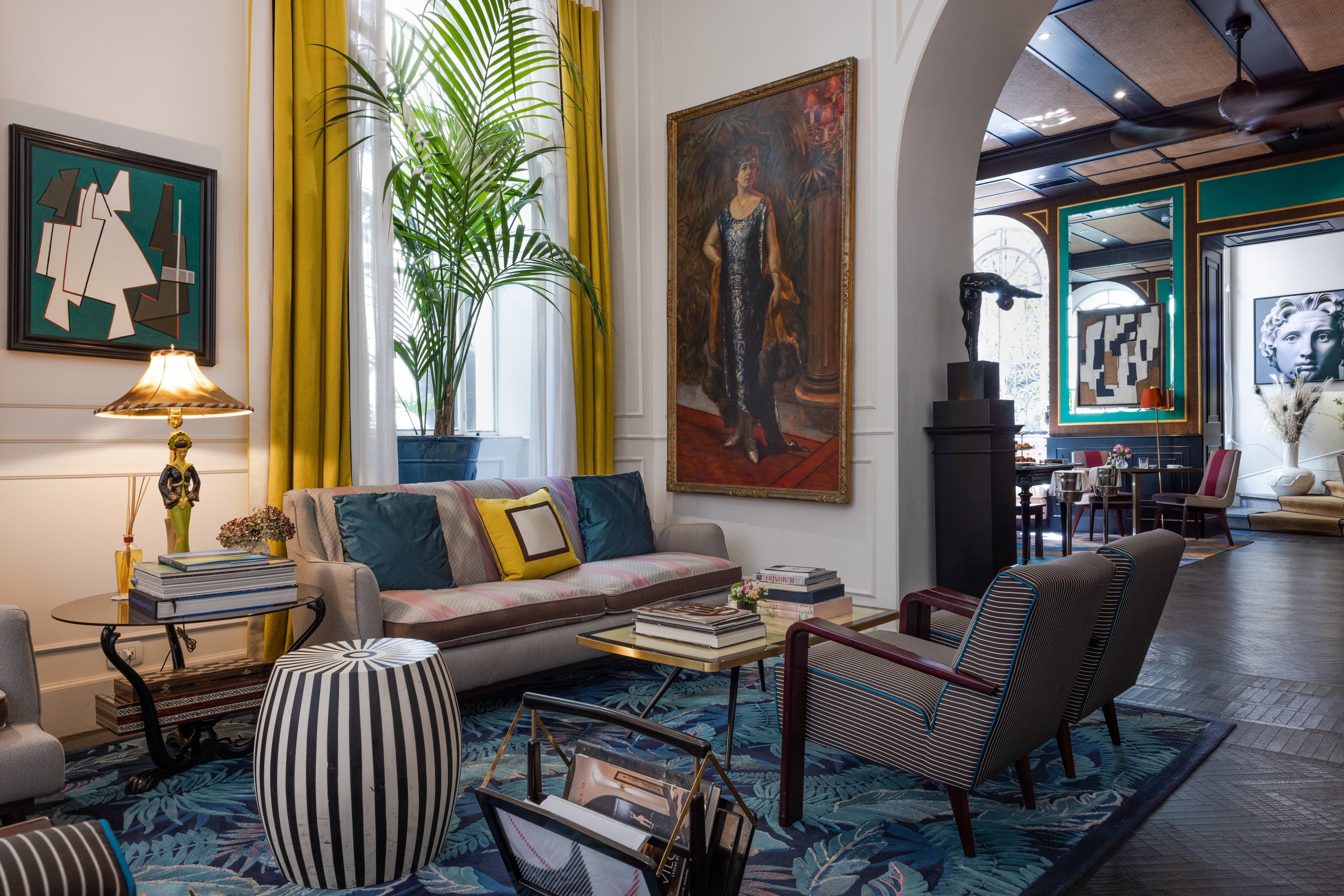
If the Palazzo Borghese is the main stage, Hotel Vilòn is the VIP green room where the real drama happens. Tucked away on Via dell’Arancio, this 18-room retreat occupies a former school for maidens, but the vibe today is decidedly less innocent. Set designer Paolo Bonfini has swapped schoolbooks for cinematic hedonism: think octane-blue velvet, Art Deco lighting that flatters even the jet-lagged, and bathrooms stocked with enough Acqua di Parma to drown a duke. It feels less like a hotel and more like you’ve been given the keys to a distracted prince’s private apartment. The service is terrifyingly good—telepathic, almost. You don't ask for a taxi; it simply appears. But the real scene-stealer is Adelaide, the in-house restaurant where Chef Gabriele Muro elevates Roman classics. His 'Il carciofo si fa in tre'—an artichoke roasted, fried, and pureed—is a textural masterpiece that ruins you for standard antipasti. Critics will bemoan the lack of a pool or gym. Let them. You are in the Campo Marzio. Your cardio is dodging Vespas; your wellness is a Negroni in the ivy-clad Giardino Segreto. At this price point, you aren't paying for amenities; you're paying for the silence, the exclusivity, and the view into the Borghese private gardens that usually requires a title to access. **Verdict**: The ultimate Roman hideaway for those who prefer their luxury whispered, not shouted.
“Book the Melangolo Suite for the private terrace that looks directly into the Palazzo Borghese’s private gardens—a view usually reserved for the Princess.”
Insider TipAvg. Nightly Rate
780USD
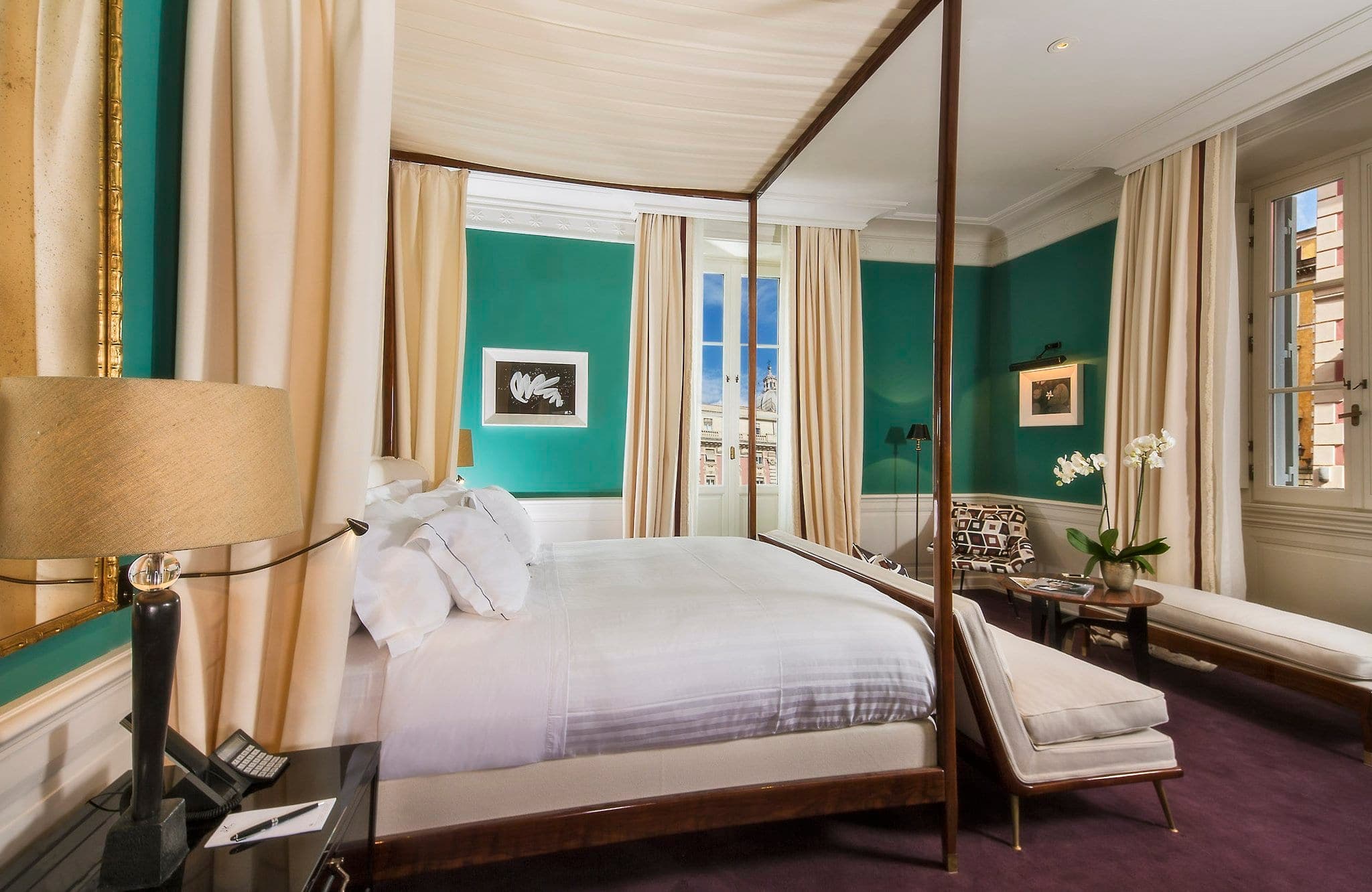
Rome is often a sensory overload, but J.K. Place Roma operates on a different frequency entirely. Housed in the former architectural school of the Palazzo Borghese, this 27-room property feels less like a hotel and more like the private townhouse of a very wealthy, very stylish friend. Architect Michele Bönan has stripped away the dusty tropes of Roman hospitality, replacing heavy brocades with a razor-sharp aesthetic: mid-century modern furniture, emerald and chartreuse velvet banquettes, and a glass-roofed atrium where classical statues stand guard over low-slung sofas. The rooms are studies in masculine glamour. Expect rosewood canopy beds, crisp linens, and bathrooms clad in grey-and-white striped marble that feels pulled from a yacht. Yes, the high-tech lighting controls might require a degree in engineering to master, but the resulting ambiance is cinematic. Downstairs, J.K. Café serves what is arguably the city's most chic comfort food—do not leave without trying the signature JK Burger or the Spaghettoni ai Tre Pomodori. While the property lacks a pool or on-site spa—a deliberate choice to maintain its residential scale—the 2:1 staff-to-guest ratio compensates with terrifying efficiency. Need a private tour of the Borghese Gallery or an in-room massage? Consider it done. This is the Eternal City for the modern patrician: discreet, impossibly elegant, and awarded Two Michelin Keys in 2024 for good reason.
“The elevator is furnished with a sofa—a quirky detail perfect for a photo. Also, ask the concierge for a table at 'Da Gino al Parlamento' nearby for a contrastingly rustic Roman lunch.”
Insider TipAvg. Nightly Rate
800USD
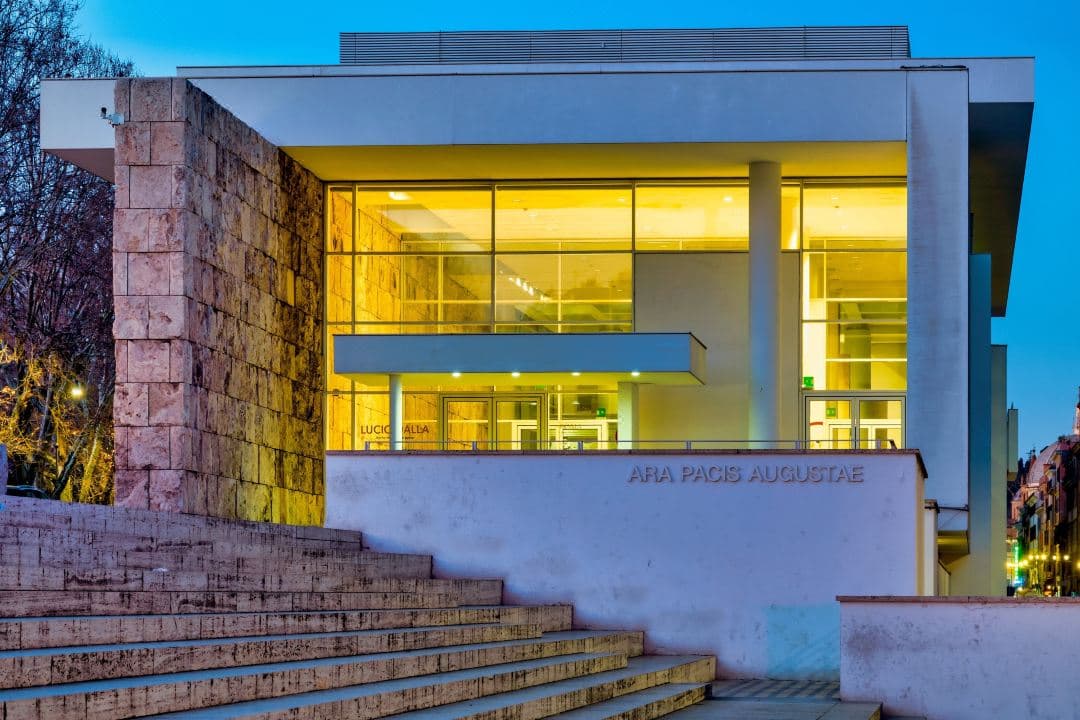
Forget the Hassler; the real Roman royalty is hiding in plain sight on Via di Ripetta. Palazzo Shedir isn’t a hotel—it’s a power move. Occupying a noble wing of the Palazzo Borghese (yes, *that* Borghese), this four-suite residence makes even the most exclusive boutique properties feel like train stations. You don’t check in; you are ushered past a discreet entrance by Alessandro or Samuele—butlers who anticipate your need for a Negroni before you do—and into a world of 17th-century frescoes and silence so profound it feels expensive. The design is a masterclass in 'quiet luxury' before the term was hijacked by TikTok. We’re talking original Baroque bas-reliefs flirting with mid-century Italian furniture and textiles that whisper wealth. The amenity ratio is frankly ludicrous: a full Technogym and a moody, mosaic-lined indoor pool reserved for just four keys. It feels less like a hotel and more like you’ve inherited a title. Dining happens in the *Ristorante degli Specchi* (Hall of Mirrors), a space so cinematically beautiful it ruins you for other breakfast rooms. Order the Cacio e Pepe—the chef’s twist involves a fragrant black lime zest that cuts the richness perfectly. Whether you’re soaking in the Turkish bath or sipping vermouth in the private lounge, the vibe is strictly 'aristocrat in residence.' It is, without hyperbole, the most intimate stay in Rome.
“Book the 'Chapel Room' (if you can get it) for the original frescoes, and ask the butler to arrange a private after-hours tour of the main Palazzo Borghese gallery next door.”
Insider TipAvg. Nightly Rate
1121USD
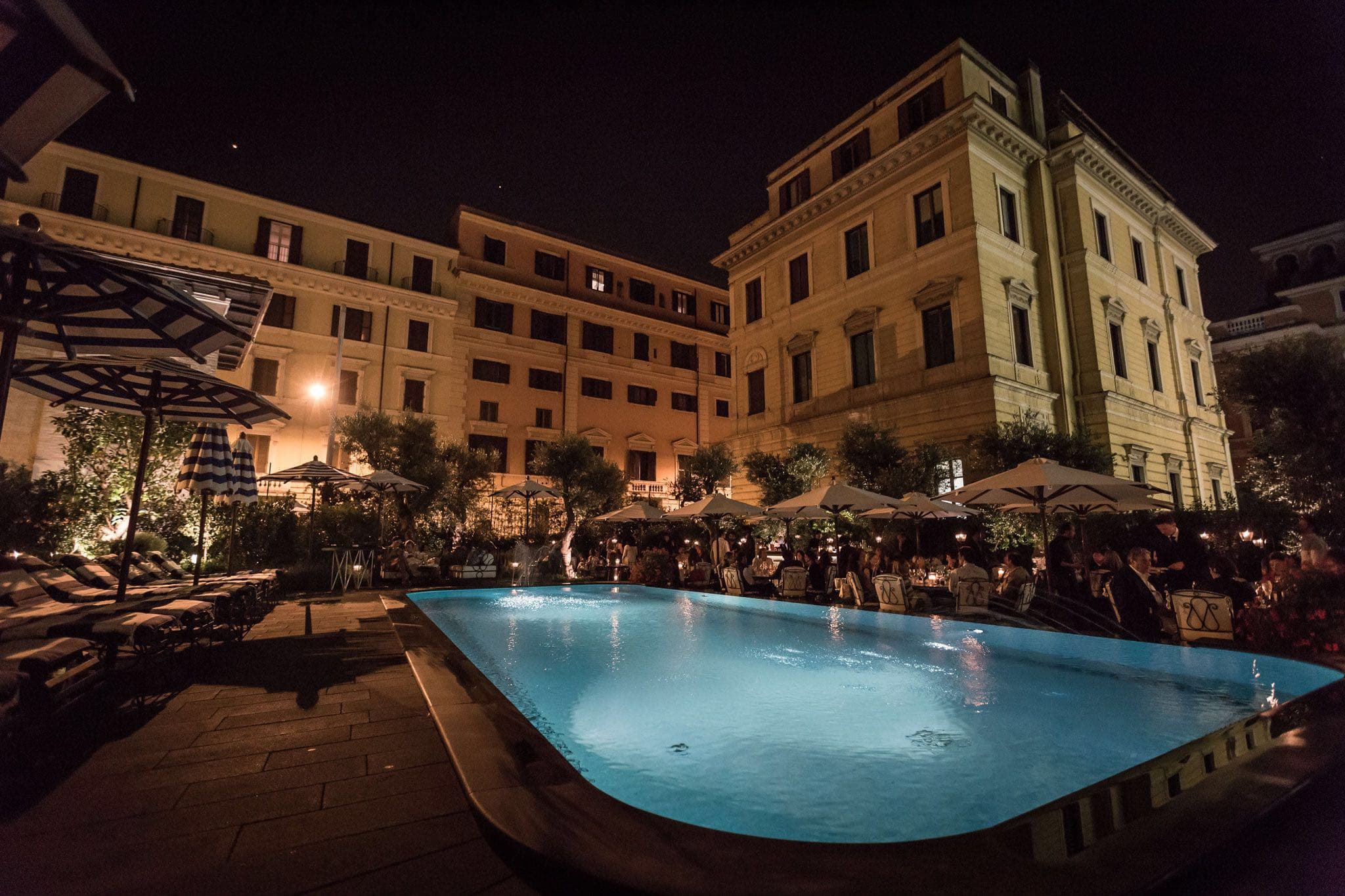
If the walls of this former Malaspina residence could talk, they’d likely whisper about the sheer number of martinis consumed under the crystal chandeliers—salvaged, incidentally, from New York’s Plaza Hotel. Palazzo Dama is not for the meditative recluse; it is a high-octane Roman villa where the reception desk feels like a prelude to a party. While the location near Piazza del Popolo is unimpeachable, the real draw is the rarest of Roman unicorns: a proper outdoor pool, lined in marble and flanked by lemon trees. The entry-level rooms are tight—20 square meters demands efficient packing—but the trade-off is high-gloss style. Navy blue walls meet brass accents, and the bathrooms are stocked with Angelo Caroli amenities. Dinner at Pacifico offers a sharp detour from carbonara, serving wagyu carpaccio and ceviche with Peruvian-Nikkei precision. But be warned: the basement houses Raspoutine, a sultry nightclub. If you crave absolute silence, this isn't it; the bass travels, and the street noise can intrude. But for those wanting to channel the Dolce Vita energy where the pisco sours flow as freely as the Tiber, this is the only address that matters.
“Request a room facing the internal garden to mitigate the street noise from the Lungotevere, though you may still hear the bass from Raspoutine on weekends.”
Insider TipAvg. Nightly Rate
253USD
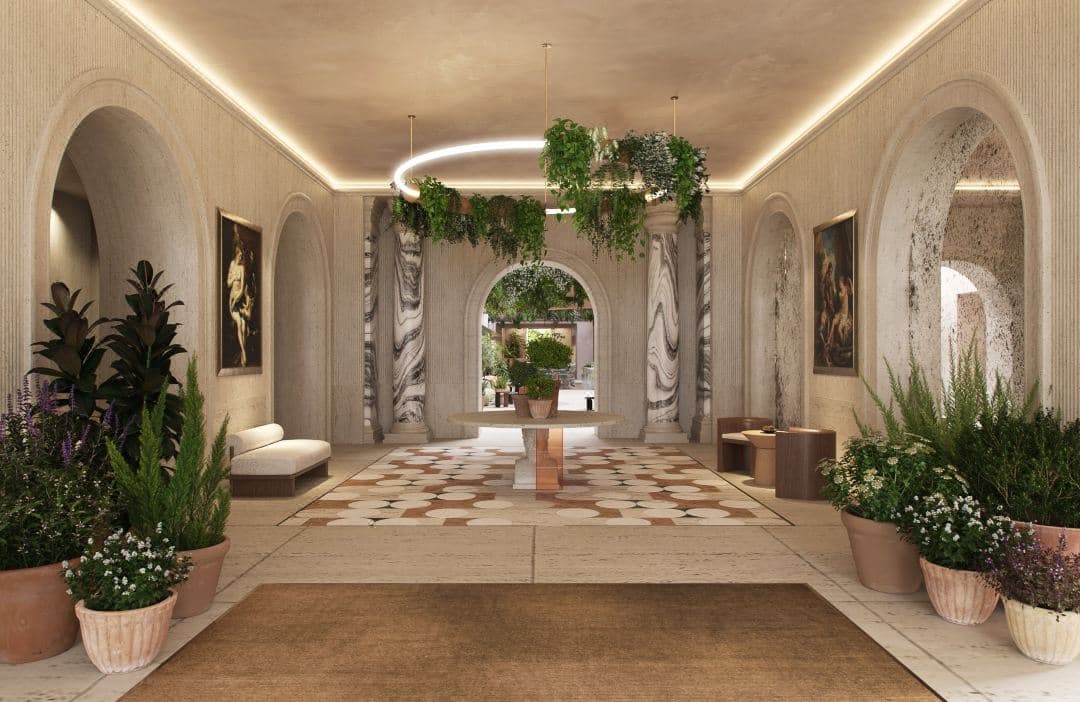
It takes hubris to open a wellness sanctuary on the cacophonous Via del Corso, but Six Senses Rome pulls it off with unnerving grace. Housed in the Palazzo Salviati Cesi Mellini, this Patricia Urquiola-designed retreat is a masterclass in hushed tones and tactile heritage. The lobby doesn’t just welcome you; it pulls you into a travertine embrace, centering around a 4th-century baptismal font visible through the glass floor of BIVIUM restaurant—a literal layer of history beneath your ancient grain pizza and artichoke 'Omaggio a Roma'. Rooms, while compact at the entry level (28 sqm), are studies in conscious luxury: think cocciopesto plaster walls, organic handmade mattresses, and yoga mats tucked into corners like standard amenities. The real draw, however, is the spa. Forget the typical massage; the Roman Bath circuit—meticulously recreating the caldarium, tepidarium, and frigidarium—is a ritualistic necessity after pounding the cobblestones. While the service occasionally falters under the weight of Roman insouciance, the Notos rooftop at sunset, with a botanical cocktail in hand and the San Marcello bell tower looming close, absolves all sins.
“Request a table at BIVIUM positioned directly over the glass floor oculus to dine above the 4th-century baptismal font excavations.”
Insider TipAvg. Nightly Rate
1092USD
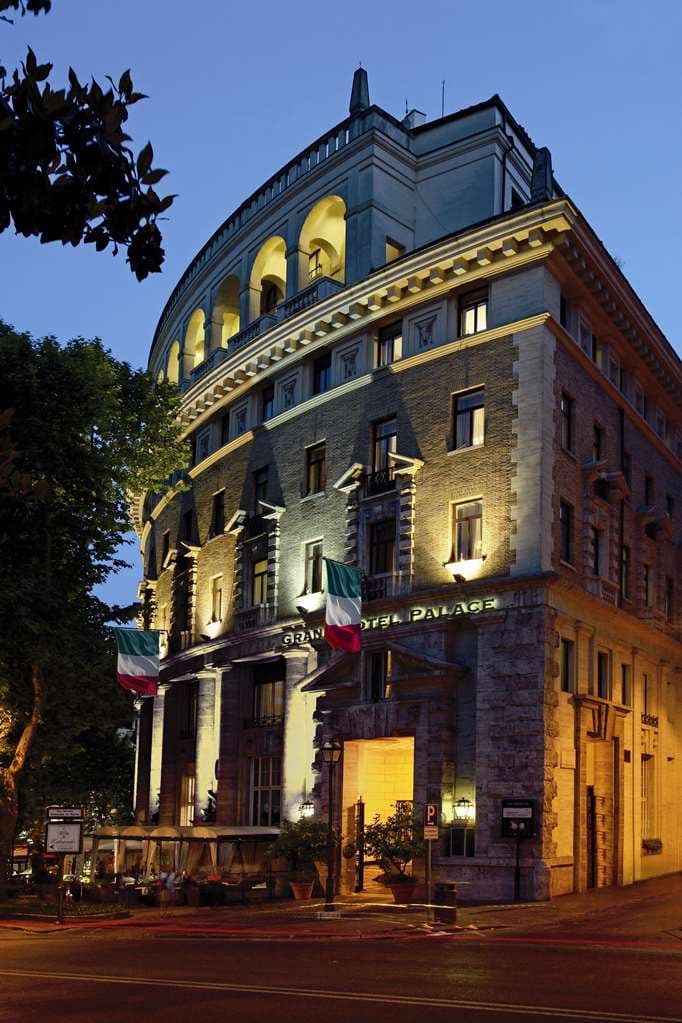
While the Via Veneto’s Dolce Vita heyday often feels like a fading memory, the Grand Hotel Palace Rome preserves the era’s pulse in spectacular fashion. Designed by Marcello Piacentini in 1927, this property doesn't just nod to history; it immerses you in it. The showstopper isn’t the travertine façade opposite the fortress-like US Embassy—it’s the Cadorin Salon. Here, massive, sinuous frescoes by Venetian master Guido Cadorin wrap the walls, immortalizing 1920s Roman high society in a permanent, museum-quality party that makes your morning cappuccino feel like a scene from *The Great Gatsby*. Upstairs, the rooms trade Art Deco exuberance for streamlined Roman Modernism. Opt for a Deluxe Executive Room to secure a private balcony—a rare perch for watching the diplomatic motorcades below. While the interiors lean toward a corporate-sleek aesthetic with marble floors and soundproof windows, the real indulgence is found in the subterranean Kami Spa. It’s an Asian-inspired sanctuary stocking Sisley Paris products, a sophisticated pivot from the city’s usual Roman baths. Dining at Ristorante Cadorin & Lounge Bar, under Chef Riccardo Zanni’s direction, offers a capable swordfish ragù, but let’s be honest: you are here for the art, not just the antipasti.
“The heated saltwater pool is a rarity in central Rome, but it requires a reservation. Book your slot before you even check in to guarantee a private, pre-dinner dip.”
Insider TipAvg. Nightly Rate
220USD
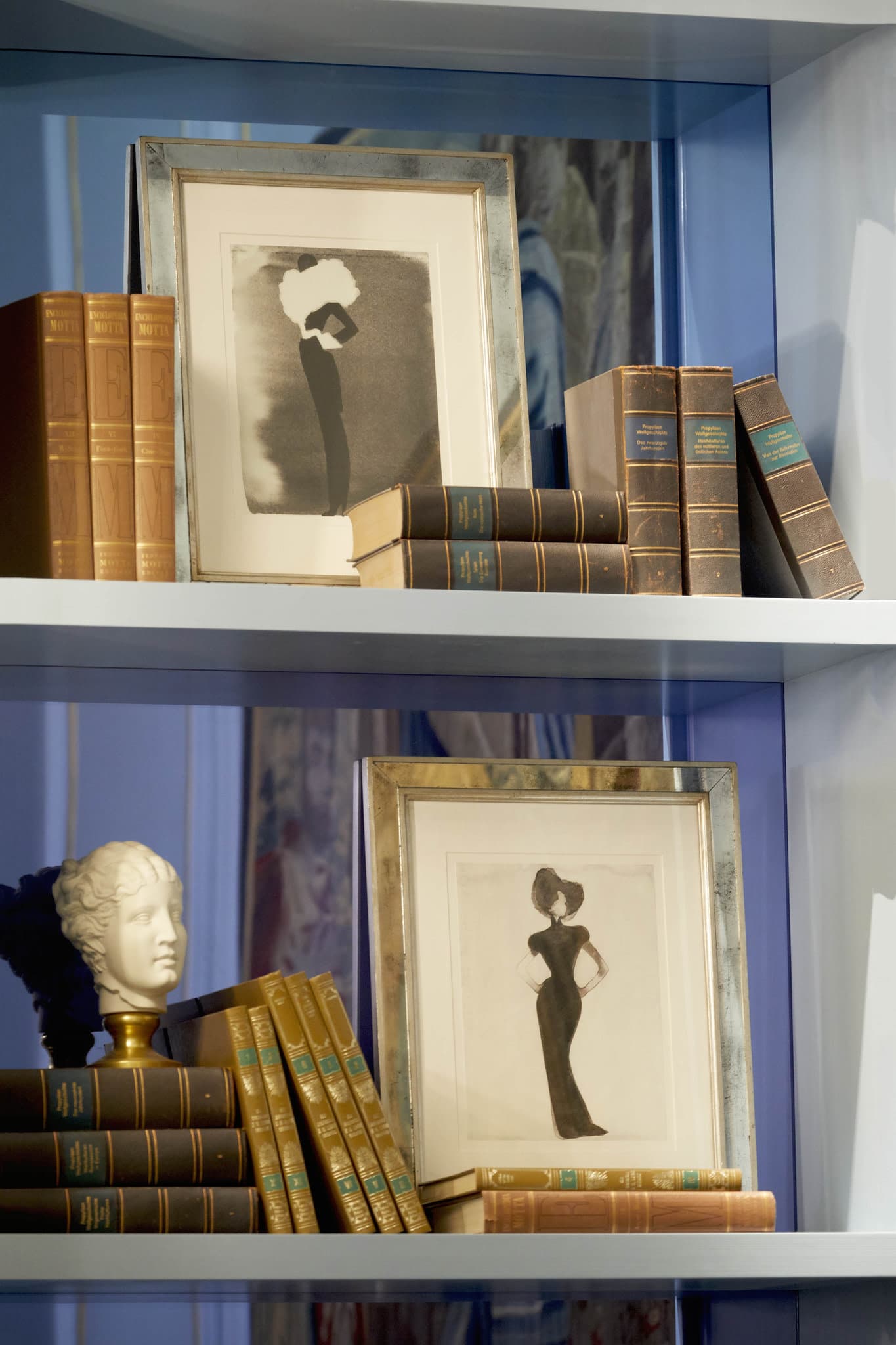
When César Ritz unlocked the doors in 1894, he didn’t just open a hotel; he gave Rome its first ballroom and a standard of nobility that outlasted the monarchy. Following Pierre-Yves Rochon’s 2018 restoration, the 'Grande Dame' has shed her dust for a tailored suit of powder blue and gold. The lobby—formerly a cavernous relic—is now the Lumen Lounge, a sun-drenched social nucleus anchored by a colossal diamond-cut Murano chandelier that demands upward gazes. Upstairs, the hallways smell faintly of expensive amber. The rooms are exercises in restraint rather than excess, dressed in Rubelli fabrics and flooded with light. Bathrooms are clad in marble so thick it feels geological, stocked with Acqua di Parma amenities that turn a quick rinse into a ritual. Dining is less about white-tablecloth stuffiness and more about the Roman 'Salotto' vibe. At Lumen Cocktails & Cuisine, the Spaghetti with red prawn tartare is a masterclass in texture, best paired with their signature Red Admiral Bloody Mary—a spicy, vodka-forward jolt. Service remains the hotel's trump card; the butlers don't just unpack, they curate. While it lacks the outdoor gardens of the Hotel de Russie, the St. Regis trades greenery for pure, unadulterated architectural grandeur. **Verdict**: The definitive Roman residence for those who prefer their history served with high-speed Wi-Fi and a side of caviar.
“Be in the Lumen lobby promptly at 7:00 PM. The lights dim, the music swells, and the sommelier executes the Sabrage ritual—slicing a champagne bottle with a saber—complimentary glass included.”
Insider TipAvg. Nightly Rate
1200USD
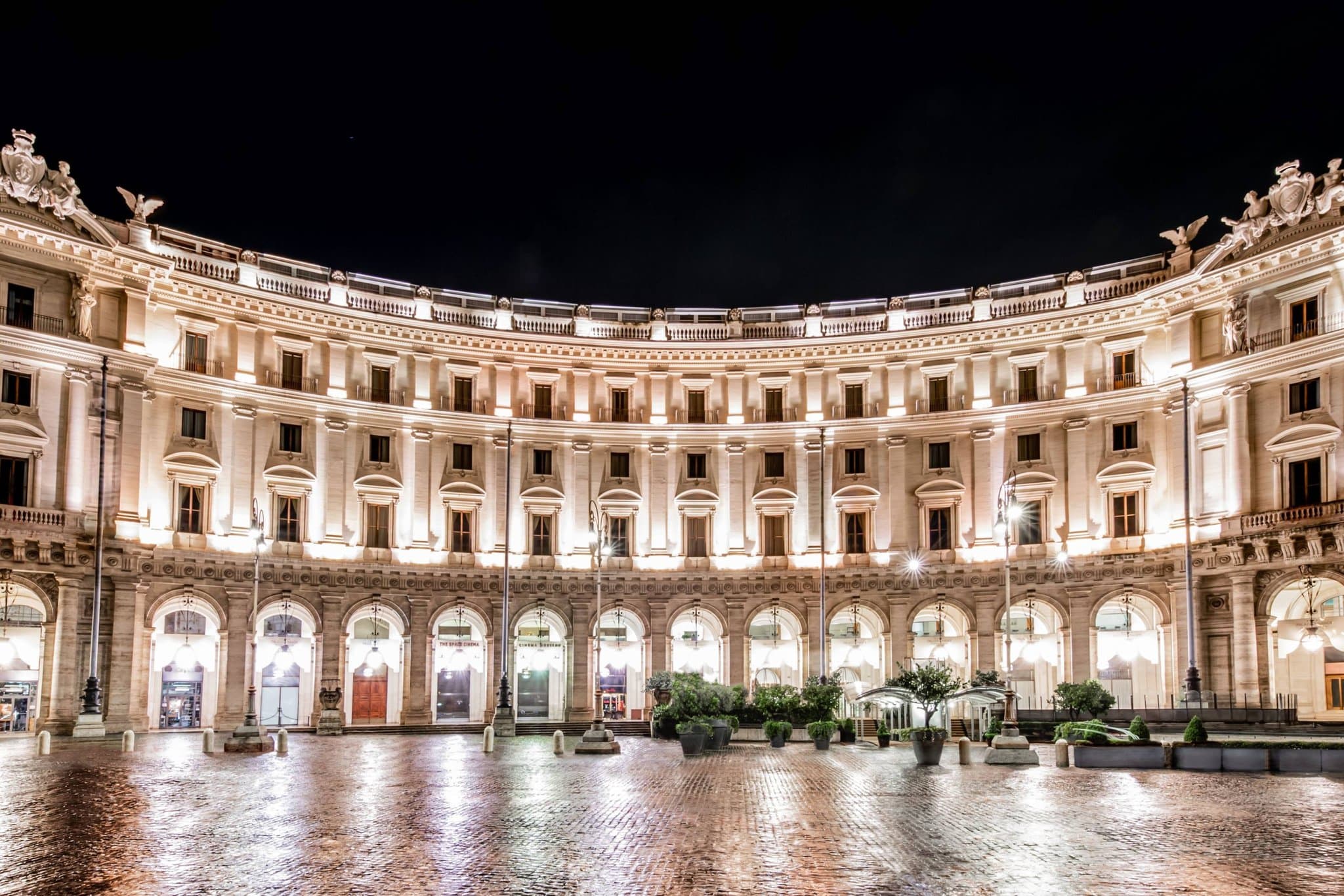
If the Centro Storico is a charming labyrinth, Anantara Palazzo Naiadi is a shout of imperial ambition. Dominating the curve of Piazza della Repubblica, this 19th-century marble palace doesn't hide; it preens. The arrival is pure theater, but the true flex lies in the lobby, where glass floor panels reveal the excavated foundations of the Baths of Diocletian. You are quite literally checking in on top of antiquity. The interiors swap the dust of history for polished neoclassical precision—think high ceilings, gold accents, and velvet that feels reassuringly expensive. However, navigation requires strategy. The Duplex Suites offer visual drama, but the upstairs bedrooms demand a spiral staircase ascent that becomes perilous after a late dinner. Smart travelers opt for the single-level accommodations where the layout is as straightforward as the service. Speaking of dinner, the hotel refuses to rely on room service clubs. At INEO, Chef Heros de Agostinis defies Roman culinary dogmas with his 'Italian Métissage' menu; his Maccheroncini with Madeira reduction and Eritrean ragout is a complex, spicy detour from the city's cacio e pepe obsession. For a different altitude, SEEN by Olivier on the rooftop serves sushi and cocktails with a side of panoramic skyline, proving that even ancient cities need a dose of modern gloss. Verdict: A grand, logistical triumph for travelers who want the gravitas of Rome’s history without sacrificing the rare luxury of a rooftop pool and immediate train access.
“Request a room on the highest floor facing the Piazza to mitigate traffic noise, and check the 'Concorso Roma' schedule if visiting in April.”
Insider TipAvg. Nightly Rate
440USD
Steps from the Trevi Fountain’s frenetic energy, the Palazzo Salviati Cesi Mellini has been reborn not merely as a hotel, but as a decompression chamber. Patricia Urquiola’s masterful design doesn’t just preserve the 15th-century bones—including the restored 600-year-old marble columns and a 4th-century baptismal font visible beneath the glass floors of BIVIUM—it softens them with creamy travertine and biophilic restraint. The genius here isn't just the visuals; it is the silence. Soundproofing is absolute, transforming the chaotic Via del Corso into a silent movie outside your window. The rooms serve as a rebuke to Roman excess, favoring Cocciopesto plaster walls and organic 'Sleep With Six Senses' mattresses over gilt and velvet. While entry-level quarters are snug (approx. 28 sqm), the tactile luxury of sustainable amenities and 400-thread count linens compensates. The real pilgrimage site, however, lies underground. The spa’s Roman Bath circuit—a laurel-leaf-embossed journey through calidarium, tepidarium, and frigidarium—makes modern wellness feel like an ancient rite. Dining at BIVIUM offers a refined 'Omaggio a Roma' artichoke that rivals any local trattoria, while the NOTOS Rooftop delivers the requisite golden-hour botanical cocktails against the San Marcello bell tower. It is steep in price, but for a true recharge in the Eternal City, it is unrivaled.
“Book the Roman Bath circuit for 8:00 PM. Most guests are at dinner, leaving the laurel-relief tepidarium entirely to you before a nightcap at NOTOS.”
Insider TipAvg. Nightly Rate
1092USD