No. 01
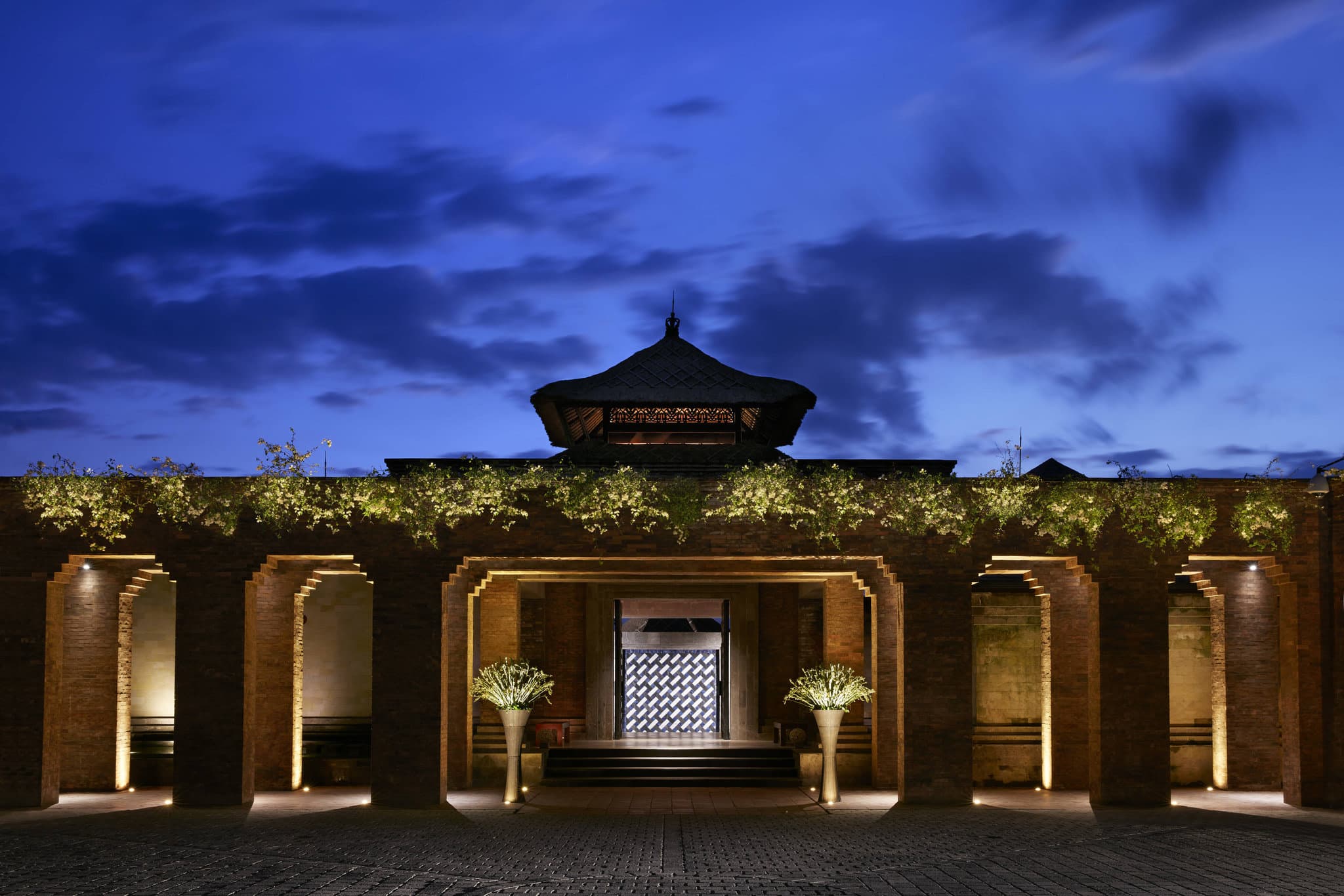
JALAN KEDEWATAN BANJAR KEDEWAT BALI ID 80571 Bali90 verified reviews
9
.8
Bitvoya Edit
Layering imagery, place, and detail before the page opens.
Escape the coastal crowds and ascend into the spiritual heart of Bali, where emerald rice terraces carve the hillsides and mist clings to the jungle canopy. This curated collection, 'Among the Paddies,' invites you to explore the serene highlands, stretching from the artistic pulse of Ubud to the untouched valleys of Sidemen and the cool ridges of Munduk. Here, heritage isn't just observed; it is lived. Properties like Mandapa and Capella Ubud offer a seamless blend of colonial nostalgia and indigenous design. Wander through the lush corridors of Payangan, breathe in the fresh air of Tegallalang, and discover a sanctuary where the rhythm of life is dictated by the swaying paddy stalks.
Bali's highlands offer a stark, refreshing contrast to the island's beach clubs. Choosing a heritage hideaway in regions like Ubud, extending towards Sidemen and Munduk, connects you deeply with the concept of Tri Hita Karana—the harmony between people, nature, and the divine. These areas are defined by cooler temperatures, dramatic river gorges, and the iconic Subak irrigation system recognized by UNESCO. Staying at properties like Four Seasons Resort Bali at Sayan or Amandari places you in the center of this cultural tapestry, where luxury is defined by privacy, history, and uninterrupted views of the working paddies.
When booking a heritage hideaway in these paddy-rich regions, expect architecture that respects the land—bamboo structures, thatched roofs, and open-air pavilions. Experiences are curated around the environment: think sunrise yoga facing Mount Agung, trekking through private rice fields at The Kayon Jungle Resort, or enjoying a picnic by the river at Padma Resort Ubud. Culinary programs often focus on farm-to-table dining, utilizing spices and vegetables grown in the resort's own gardens.
The best time to see the rice paddies at their greenest is right after the rainy season, typically from April to May, and again around October. However, Bali's tropical climate keeps the valleys lush year-round.
Yes, resorts like Padma Resort Ubud and Mandapa offer excellent kids' clubs and family villas. However, properties like Capella Ubud or Kayon Jungle Resort are better suited for couples or adults seeking tranquility.
Absolutely. Most properties in this collection, including Four Seasons Sayan, Kamandalu, and Amandari, feature villas with private infinity pools overlooking the jungle or rice terraces.
Explore our complete curated list of luxury accommodations, from boutique hideaways to grand dames.
Explore All Bali HotelsIf the Ritz-Carlton brand usually signifies corporate polish, Mandapa is its barefoot, incense-scented alter ego. There is no lobby here—at least not in the traditional sense. You are simply whisked from the cliff edge down into the Ayung Valley, a vertical drop that feels less like checking in and more like entering a lost kingdom. The architecture doesn’t just mimic a Balinese village; with its working rice paddies and a centuries-old temple on-site, it essentially *is* one. Your 24/7 Patih (butler) isn’t there to unpack your bags—though they will, with surgical precision—but to orchestrate the rhythm of your stay. The suites are brooding and cavernous, clad in dark woods and local textiles, but the real theatre happens at Kubu. Dining in one of its nine private bamboo cocoons by the river is the sort of hyper-romantic gesture that usually feels contrived; here, accompanied by the 10-course tasting menu, it’s genuinely cinematic. For something more grounded, the Rendang Pipi Sapi (beef cheek curry) at Sawah Terrace offers a complex, spice-laden slap to the palate. Verdict? It’s a sanctuary that manages to be spiritual without being sanctimonious.
“Skip the main pool for a swim. Instead, book the 'Riverfront Pool Villa' and ask your Patih to arrange a floating breakfast—it’s the only time the cliché is actually worth the photo op.”
Insider TipAvg. Nightly Rate
1000USD
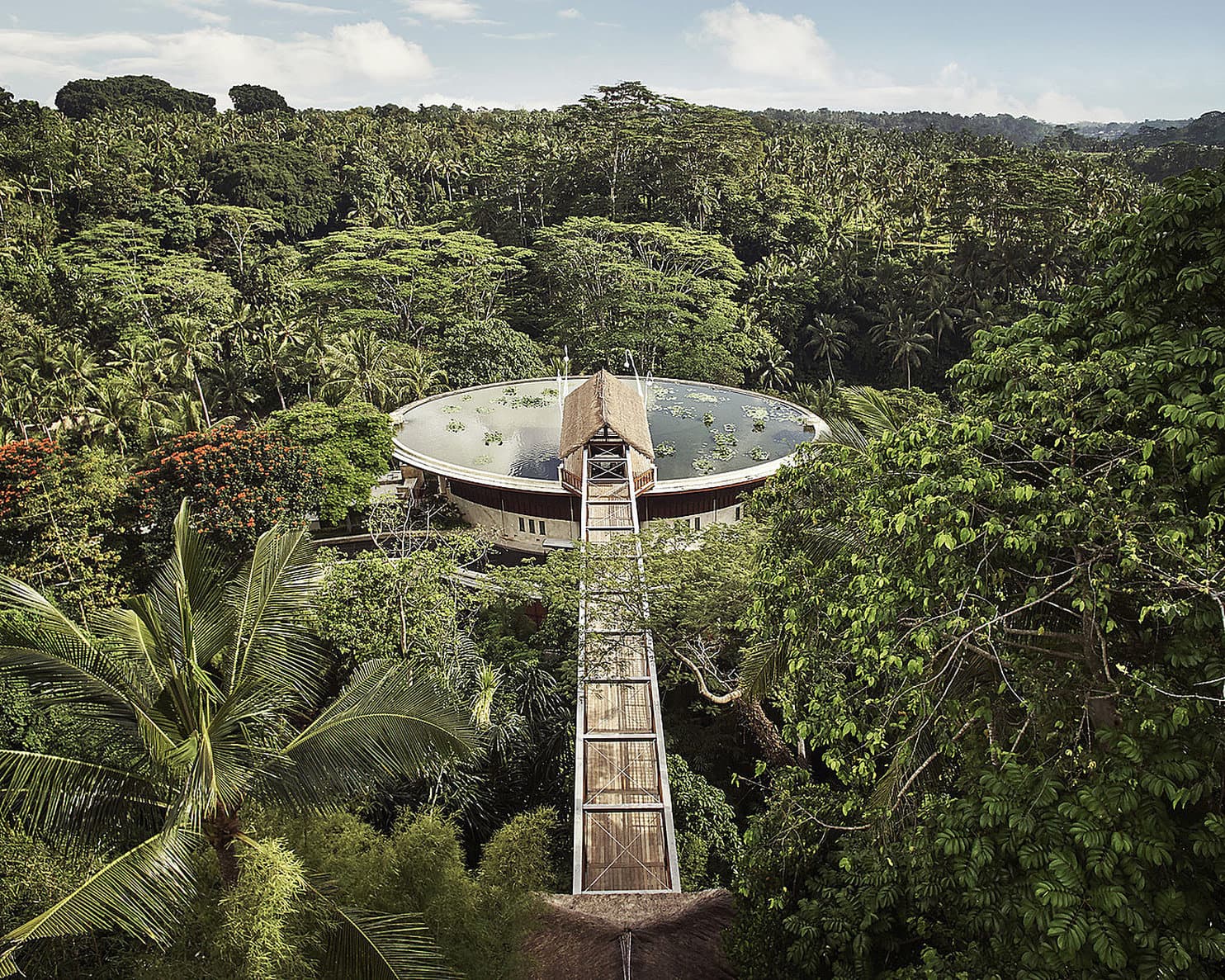
If you think you’ve seen a dramatic hotel arrival, you haven’t crossed the suspension bridge at Four Seasons Sayan. You don't enter this hotel; you descend into it. The main building, a saucer-shaped architectural feat, anchors itself to the Ayung River valley floor, defying gravity and expectation. While newer properties in Ubud chase TikTok fame with swings and infinity pools, Sayan leans into its pedigree. The hardware in the suites is showing its age—you might spot a scuff on the teak or a standard outlet where a USB-C port should be—but the 'heritage' feel here is feature, not bug. It feels lived-in, settled. The villas are the real draw, offering complete seclusion with plunge pools that seem to spill directly into the river. Dining is serious business: 'Ayung Terrace' recently snagged a 2024 Wine Spectator Award, and their Bebek Betutu (slow-roasted duck) remains the benchmark for the dish. Down by the water, 'Riverside' serves a salt-crusted snapper that requires pre-ordering but rewards the patience. The Sacred River Spa isn’t resting on laurels either, having just added infrared saunas and ice baths in a 2024 refresh. It’s steep, humid, and expensive, but for a few days, you are the king of the jungle.
“Skip the lobby car drop-off entirely. Request the 'River Raft Check-In' to arrive via the Ayung River—your luggage meets you at the villa.”
Insider TipAvg. Nightly Rate
662USD
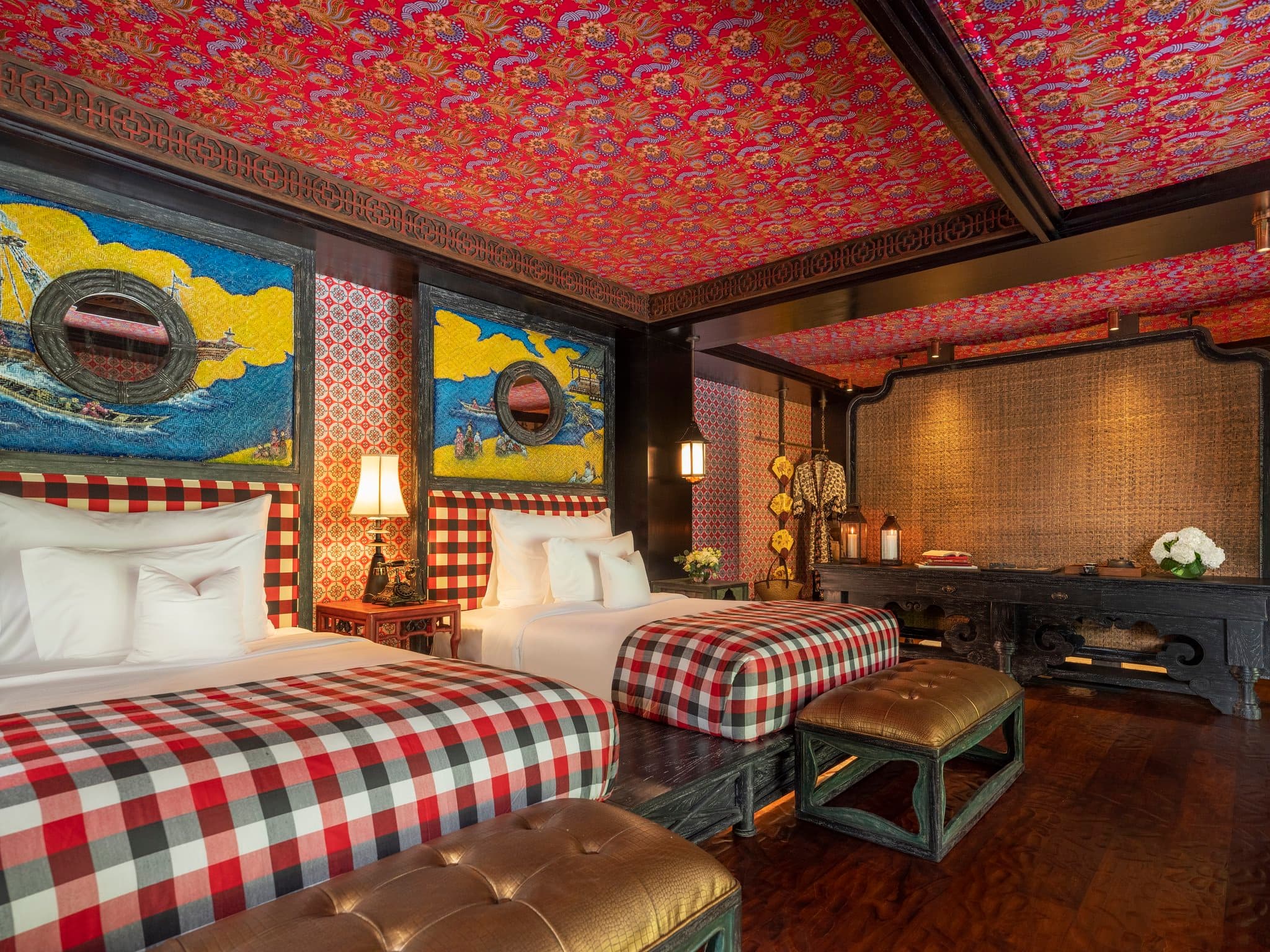
Forget the hushed, minimalist reverence of typical Balinese resorts. Capella Ubud is a riotous, theatrical plunge into the fictional world of a 19th-century Dutch spice trader, orchestrated by the madcap genius of architect Bill Bensley. Your arrival isn't a check-in; it’s an ascent across red zigzag suspension bridges that slice through the canopy, immediately signaling that you’ve left the 21st century behind. The 22 one-bedroom tents are less 'hotel room' and more 'explorer’s trophy case,' decked out with hammered metal basins, four-poster beds, and trunks that hide the minibar. While the canvas walls offer zero soundproofing against the jungle’s midnight symphony—earplugs are provided, and necessary—the trade-off is a visceral connection to the Keliki rainforest. Dining is equally dramatic. Skip the standard fare for a seat at Api Jiwa, where the Asian Omakase menu serves up smoky masterpieces like the signature Lombok Oyster with Beef Tartare right in front of you. Mornings are spent at Mads Lange, grazing on Babi Guling while overlooking the Cistern, a moody, 20-meter saltwater pool heated to a perfect 35°C. The service, led by personal 'Capella Culturists,' is clairvoyant without being hovering. It’s not for the mobility-impaired or the silence-seekers, but for those who want their luxury with a heavy dose of narrative.
“Request a River Tent near the Wos River. The rushing water acts as natural white noise, drowning out the early morning roosters from the nearby Keliki village better than the Terrace Tents.”
Insider TipAvg. Nightly Rate
980USD

While central Ubud chokes on traffic and smoothie-bowl tourism, Cicada Resort Bali Ubud, Autograph Collection operates on a different frequency entirely. Perched in the cooler, mist-laden highlands of Sebatu—a village revered by Balinese for its holy water temples—this 30-key boutique hideaway demands a physical commitment from its guests. The steep, vertiginous descent involves some 166 stairs, a literal and figurative drop into the jungle canopy that filters out the noise of the modern world. The payoff is immediate and tactile. Unlike the chilly plunge pools common in other Ubud resorts, the villas here feature heated private pools—a non-negotiable luxury when the highland mist rolls in at dusk. Inside, the design eschews aggressive modernism for a warm palette of locally sourced stone and timber, grounded by deep-soaking bathtubs and rainfall showers that mimic the valley’s weather. Dining at Tangelo Restaurant surprises with its sophistication; the Spiced Salmon Wonton Taco is a textural triumph, while the Scored Duck Breast pays homage to local poultry traditions without falling into tourist-trap clichés. For a lighter touch, the Verdant Pool Lounge & Bar serves a 'Bali Sunrise' mocktail that pairs perfectly with the infinity pool’s curved edge. Service is intuitive rather than intrusive, best experienced during the on-site 'Melukat' purification ritual led by a local Pemangku. This is not a place for families seeking kids’ clubs; it is a sanctuary for adults willing to climb for their quiet.
“Book a Puri Wana Villa for the heated pool—essential in Sebatu's 20°C evenings. Also, the 'Melukat' purification ritual here is authentic, not a hotel gimmick; book it at reception upon arrival.”
Insider TipAvg. Nightly Rate
207USD
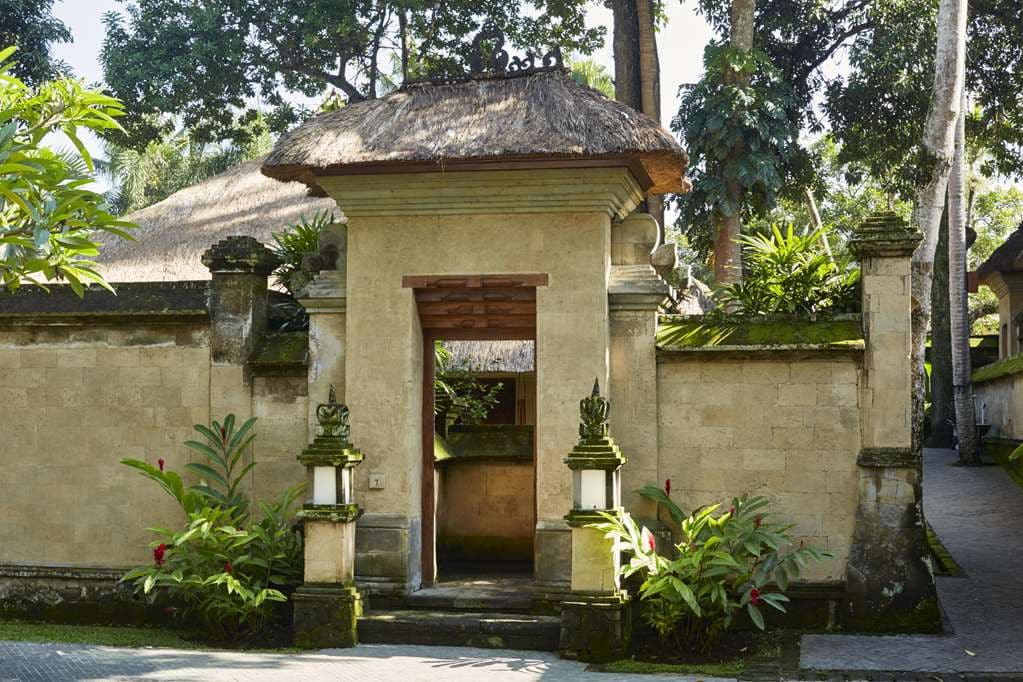
While newcomers chase trends with bamboo pods and infinity-edge gimmickry, Amandari—Peter Muller’s 1989 masterpiece—remains the gold standard, recently cementing its status with a One Michelin Key distinction. Anchored on the lip of the Ayung gorge, this isn't a hotel; it’s a living Kedewatan village simulation. You navigate via moss-slicked paras stone paths, not elevators. The suites (huge at 220 sqm) are walled compounds, offering a level of privacy that modern glass-box resorts fail to understand. Inside, the hardware is unapologetically analog. You won’t find Japanese smart toilets or Bluetooth mirrors; instead, you get outdoor sunken marble baths and sliding teak walls that open to the jungle’s humidity. The 32-meter pool, tiled in emerald green to mirror the adjacent rice paddies, remains one of Bali’s most sophisticated swim spots. Dining at 'The Restaurant' is an exercise in restraint—order the Sate Lembat (minced duck satay) and Timbungan Sapi. Service is the classic Aman telepathy: staff appear only when you need them, dissolving into the stone walls when you don’t.
“Skip the main pool at peak hours. Instead, head to the gym pavilion, which floats entirely on a lotus pond—it is often empty and offers the most serene views on the property.”
Insider TipAvg. Nightly Rate
726USD
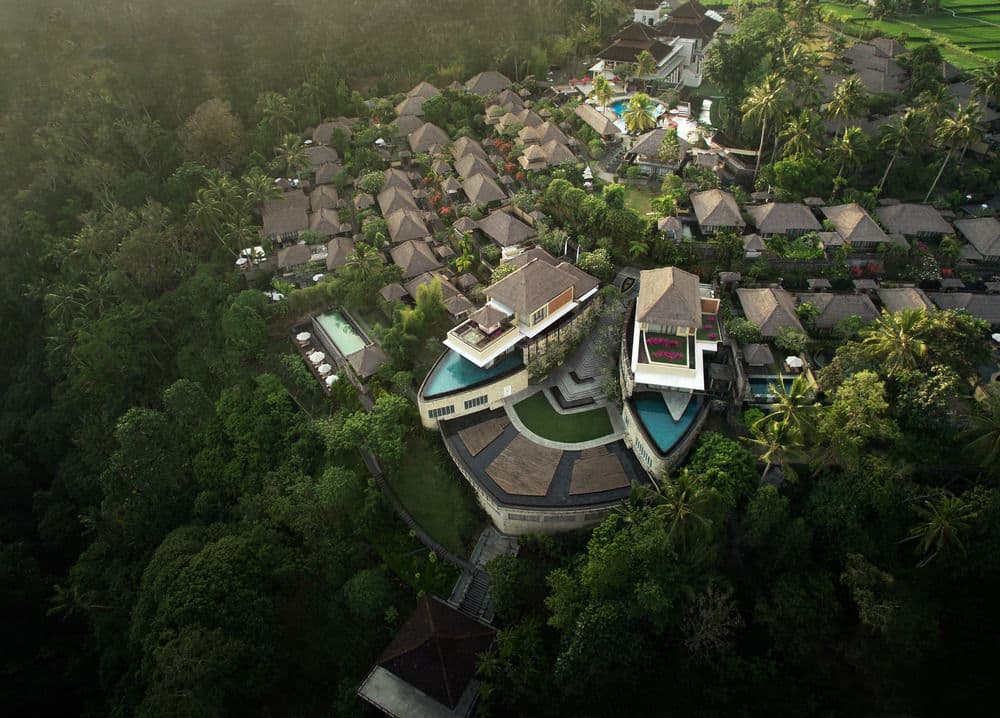
While newer Ubud openings compete to see who can pour the most concrete into the Ayung River valley, Kamandalu has spent the last three decades simply letting its garden grow. Opened in 1992, this property predates the 'digital nomad' rush, physically embodying the structure of a traditional Balinese banjar (village) rather than a hotel. The villas, though showing a dignified patina compared to shinier rivals, offer a sense of place that polished marble cannot replicate. You are here for the functioning rice paddies that thread through the grounds, maintained by local farmers, not landscape architects. The verticality of the resort is a workout—expect steep stone stairs that will justify your indulgence at Petulu Restaurant. Skip the western fare; the kitchen’s strength lies in the Peliatan Bebek Betutu, a smoked duck dish with a spice paste complex enough to wake the dead. For a quieter reprieve from the photo-hungry crowds at the swing, retreat to the Chaya Spa, where treatments use house-blended natural ingredients rather than generic luxury brands. It is not the newest kid on the block, but it possesses a soulful rhythm that the newcomers are still trying to manufacture.
“Request a 'Pool Villa' in the 300 series for the best balance of valley views and manageable stair access. Avoid the lobby-adjacent rooms if you want total seclusion.”
Insider TipAvg. Nightly Rate
142USD
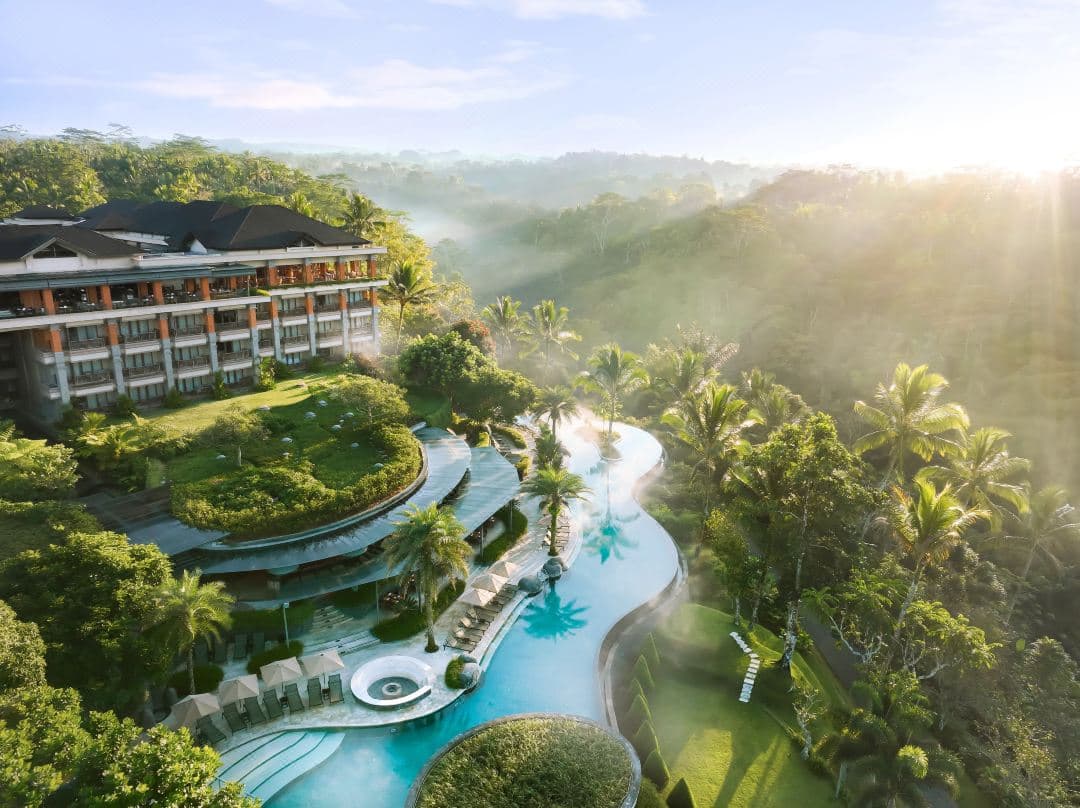
Forget the congested arteries of Ubud Center; the real flex is forty minutes north in Payangan, where the air is crisp enough to warrant a light cashmere wrap. Padma Resort Ubud isn’t just a hotel; it’s a masterclass in bamboo brutalism and high-altitude luxury. While competitors rely on aging charm, Padma delivers pristine, 2015-era hardware that still feels box-fresh. The pièce de résistance is the 89-meter infinity pool—heated, thank heavens, because the highland mist is no joke. It’s a salt-chlorinated marvel that makes standard plunges look pedestrian. The rooms are cavernous sanctuaries, but the real drama happens at The Puhu Restaurant. Don’t sleep on the Ayam Betutu; it’s a spicy, slow-cooked revelation that justifies the flight alone. Families are catered to with almost military precision—archery and an agroforestry garden keep the little ones engaged without turning the lobby into a playground. Yes, the isolation is absolute, but that’s the point. You aren't here to shop for sarongs; you're here to float above the tree line in a heated stupor. Verdict: The ultimate hideaway for those who prefer their jungle with high thread counts and zero humidity.
“Skip the midday rush and hit the heated infinity pool at 6:30 AM. The valley mist is still thick, creating a surreal, cinematic swim before the breakfast crowd descends.”
Insider TipAvg. Nightly Rate
220USD
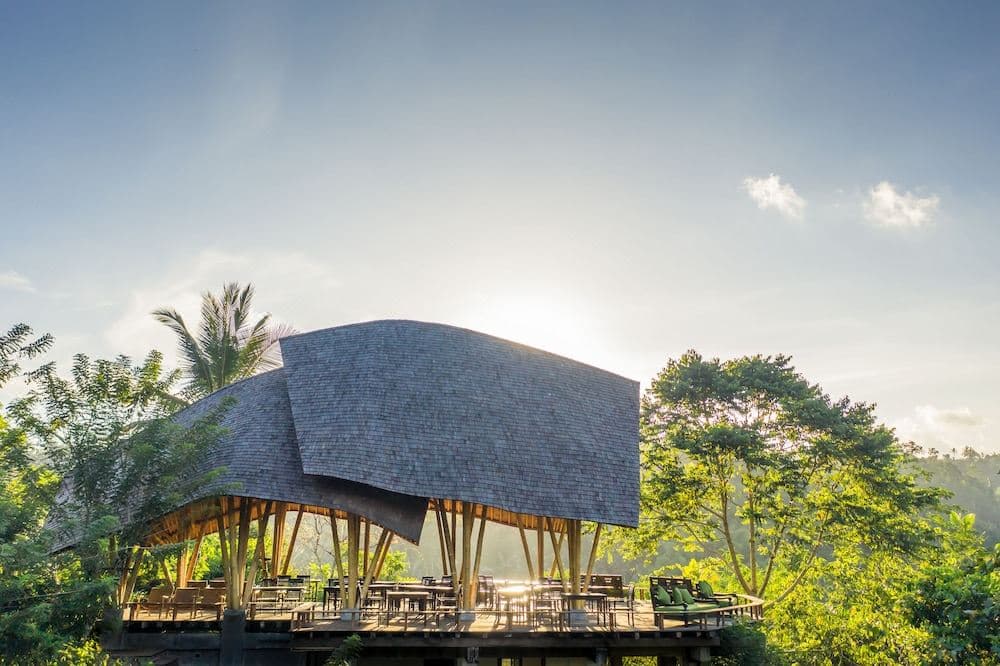
Forget the 'glamping' cliché. This is architecture as exposure therapy. At Buahan, Banyan Tree’s radical 'no walls, no doors' experiment in the Payangan highlands, you aren’t just looking at the jungle; you are the jungle. The 16 balés strip away the plexiglass barrier of traditional luxury, leaving you with nothing but gossamer veils and a bespoke copper bathtub (hand-hammered in Central Java) between you and the Ayung River valley. It’s terrifyingly exposed until night falls, and the localized cooling system—a stroke of genius hidden in the bed canopy—creates a micro-climate of cool silence amidst the insect symphony. Dining here isn't just virtuous; it's visceral. At The Open Kitchen, Chef Eka’s zero-waste philosophy yields more than just moral superiority. The fermented Paon-style curry and the signature Moringa soup are earthy, complex, and sourced almost entirely from within a one-hour radius. At the Toja Spa, the open-air concept continues; ask for Yanti, whose river-stone massage uses oil infused with onsite cacao. Verdict: It requires a certain fortitude to sleep exposed to the elements, but for those willing to trade air-conditioned hermeticism for raw intimacy, this is the most erotic hotel in Indonesia.
“Book a Riverside Jungle Pool Bale for the natural soundtrack of the Ayung River. Also, the bed's 'Veil of cooling' air-conditioning system is localized, so keep the netting tight for a frigid sleep.”
Insider TipAvg. Nightly Rate
685USD
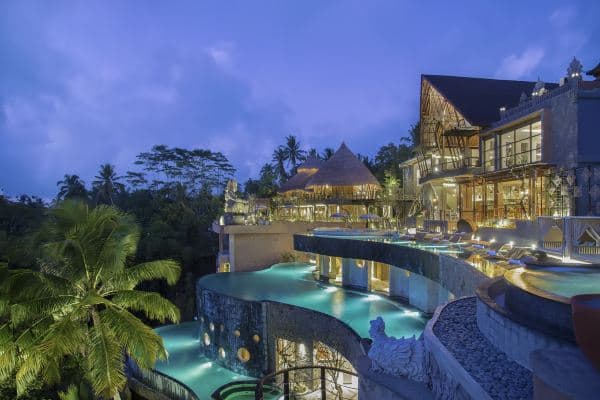
It would be easy to dismiss The Kayon Jungle Resort as merely an Instagram trap; its three-tiered infinity pool, mimicking the curvature of the Payangan rice terraces, is arguably the most photographed aquatic architecture in Bali. Yet, beyond the day-trippers clamoring for a cabana at the Wanna Jungle Pool & Bar, this adults-only (15+) hideaway in Bresela offers a startling degree of serenity. The architecture is a masterclass in biomimicry—structures don’t just sit on the valley wall; they cling to it, wrapped in stone and ironwood. Check into a Jungle Pool Villa to escape the humidity-heavy air; the rooms are hermetically sealed sanctuaries with powerful AC (a necessity against the jungle dampness) and Pevonia Botanica amenities. Service here isn’t just attentive; it’s anticipatory, with 'Royal' butlers who remember your preference for ice in your Chardonnay before you do. Dining at KePitu is an elevated affair—literally and figuratively. Order the 'Bebek Kayon' (crispy duck); it’s less oily than the Ubud standard, served with a terrifyingly good sambal. While the resort feels worlds away, the 30-minute shuttle to Ubud Center is there if you need a culture fix, though most guests find the valley's morning mist entertainment enough.
“Skip the main pool crowds at noon. Instead, book the 'Canyon Jetty' dinner at twilight—it’s a private deck suspended right over the river rapids, far from the day-club bass.”
Insider TipAvg. Nightly Rate
230USD