No. 01
19 Dongyu Street Jinjiang Dist. Chengdu ChinaChengdu1858 verified reviews
9
.0
Bitvoya Edit
Layering imagery, place, and detail before the page opens.
Chengdu, the UNESCO City of Gastronomy, offers a sensory journey where the fiery heat of Sichuan pepper meets the cool refinement of world-class hospitality. In neighborhoods like the bustling Jinjiang District and the futuristic High-Tech Zone, luxury hotels have become the new custodians of fine dining excellence. Properties like The Temple House in the Sino-Ocean Taikoo Li complex and The Ritz-Carlton overlooking Tianfu Square are not just places to sleep; they are culinary destinations in their own right. From the innovative vegetarian cuisine at Mi Xun to the sophisticated Cantonese and Sichuanese fusion at Li Xuan, these hotels offer an elevated take on local flavors, blending traditional spice with modern sophistication.
Chengdu is globally renowned as a UNESCO City of Gastronomy, but the true evolution of its culinary scene is happening within its luxury hotels. Choosing a hotel with Michelin-rated dining ensures a seamless transition from the chaotic, vibrant energy of Chengdu's streets to an oasis of culinary perfection. Properties like The Ritz-Carlton, Chengdu and The St. Regis Chengdu offer not just accommodation but a front-row seat to the region's flavor evolution, housing restaurants that have been recognized by the Michelin Guide for their mastery of Sichuanese and Cantonese cuisines.
To maximize your gastronomic journey, location is key:
When booking these properties, expect a harmonious blend of 'Mala' (numbing and spicy) flavors with white-glove service. Michelin dining in Chengdu hotels often features tea pairings using local bamboo-leaf tea, intricate plating that tells the story of the Three Kingdoms, and interiors that reflect the Shu Kingdom's heritage. Whether it's the Vignette Collection or the Palm Springs Hotel Chengdu, the standard of service complements the high intensity of the cuisine.
The Temple House is home to the Michelin-starred vegetarian restaurant Mi Xun Teahouse. The Ritz-Carlton's Li Xuan and The St. Regis are also noted for their high-quality dining often recognized in guide recommendations.
Expect elevated Sichuanese cuisine (known for Mala spice), sophisticated Cantonese dishes, and innovative vegetarian options, all prepared with premium ingredients and artistic presentation.
Yes, hotels like The Temple House and The Langbo are in the Jinjiang District near Chunxi Road and Taikoo Li, while JW Marriott is near Tianfu Square, offering easy access to top sights.
Explore our complete curated list of luxury accommodations, from boutique hideaways to grand dames.
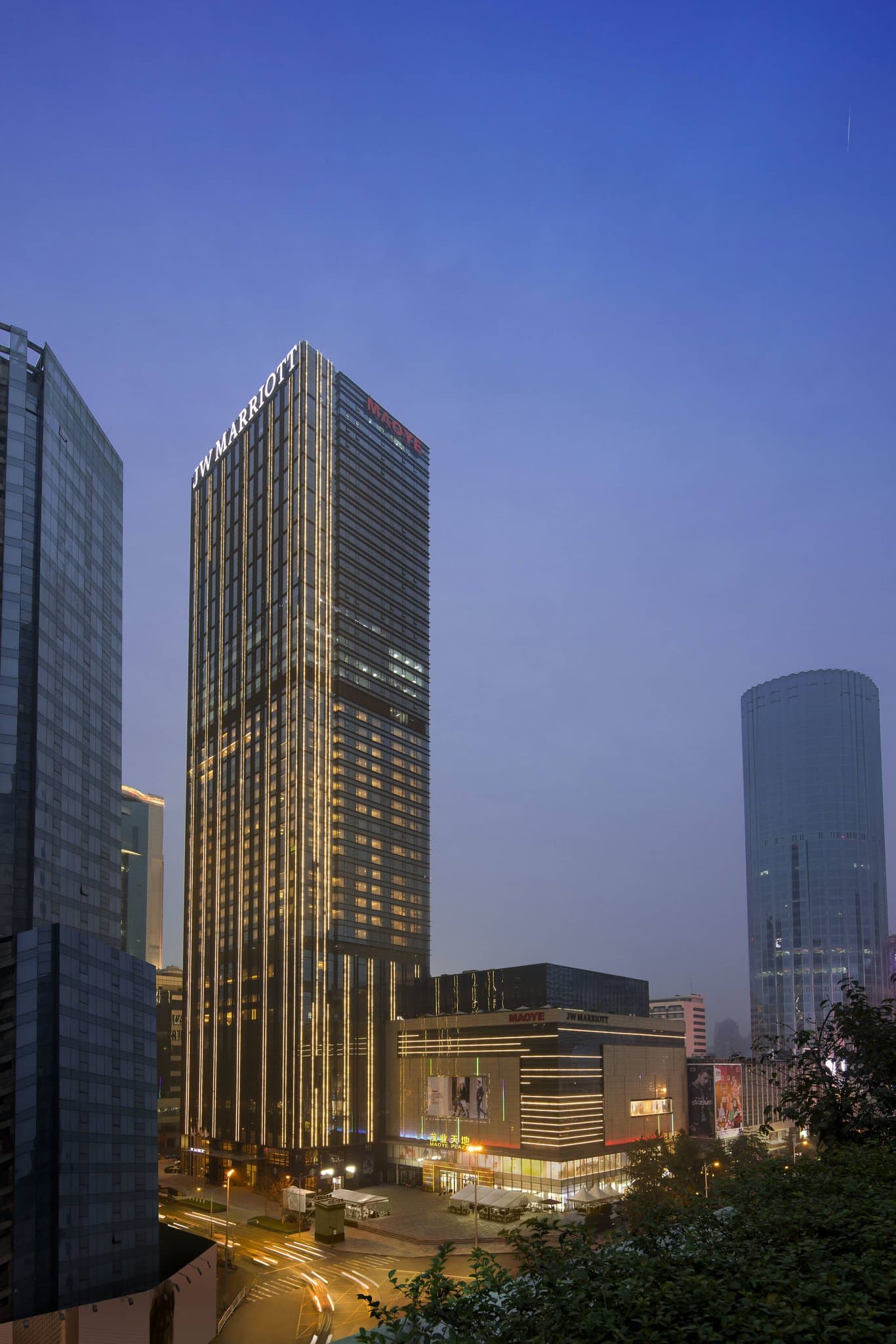
Explore All Chengdu HotelsIn a city defined by its humidity and heat—both climatic and culinary—the JW Marriott Chengdu offers a polished, air-conditioned counterpoint. Located in the heart of the Financial Centre, this isn’t just a place to sleep; it’s a study in contrasts. The exterior is all sharp corporate glass, but the interiors soften into a warm palette of textured fabrics and intricate latticework, a nod to local craftsmanship without the kitsch. The rooms are designed for the high-functioning traveler who appreciates friction-free living: think TOTO smart toilets, Technogym equipment for the jet-lagged workout, and motorized shades that reveal (or banish) the bustle of Tianfu Square at the touch of a button. But the real draw for the epicurean is Man Ho. While the brand is a Michelin-starred heavy hitter in Hong Kong, the Chengdu outpost holds its own with a menu that respects the region’s fiery reputation while maintaining Cantonese refinement. The Sichuan-style Stewed Beef is a revelation—tender, numbing, and deeply savory—while the Camphor Tea Smoked Duck offers a fragrant reprieve from the chilies. Service is anticipatory, not suffocating, with a Club Lounge team that remembers your drink order before you do. It’s the definitive address for those who want to do business in Chengdu without sacrificing the flavor.
“Skip the lobby bar for a nightcap and head to the Club Lounge instead; their beef rice noodles are arguably better than some street-side stalls and served without the queue.”
Insider TipAvg. Nightly Rate
127USD
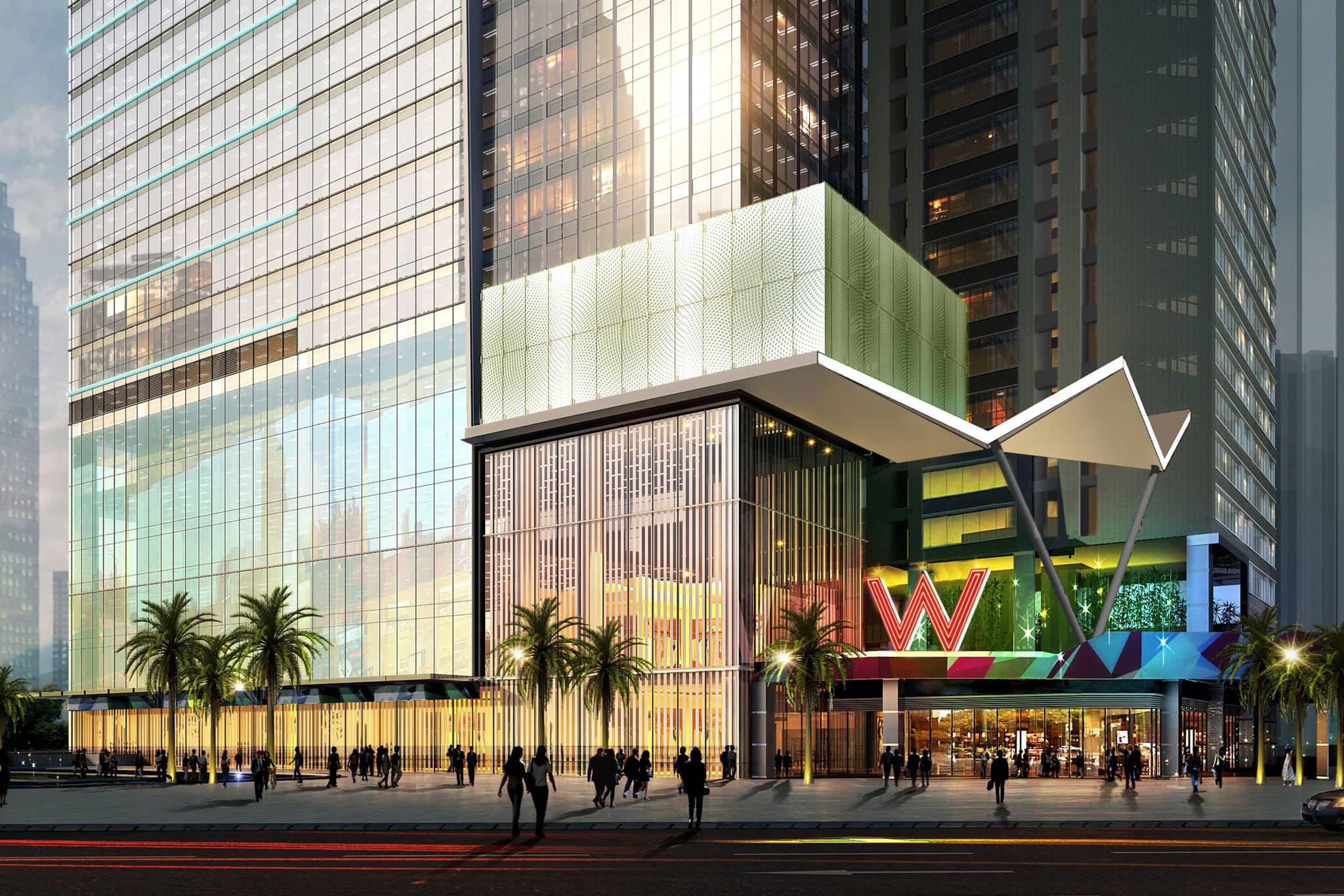
Forget the sleepy teahouse stereotypes; W Chengdu is a high-octane injection of cyberpunk energy straight into the jugular of the Gaoxin District. Anchored by a massive, sunglasses-wearing blue panda sculpture and a teamLab-designed digital waterfall, the lobby feels less like a check-in and more like a backstage pass to the city’s electric future. The rooms are a riot of iridescent surfaces and galactic motifs, though fair warning: the mattresses offer the slab-like firmness favored locally—great for posture, unforgiving on jet-lagged hips. But the real draw here is the culinary theatre. YAO YEN, the hotel’s Michelin-selected Cantonese and Sichuan powerhouse, isn't just about aesthetics. The kitchen sends out plates of modern Sichuan favorites that deliver a sophisticated, numbing peppercorn heat, contrasting sharply with the cooling, velvety Cantonese soups. It’s dining as a spectator sport, best followed by a nightcap at SPARK, the rooftop bar where the cocktails compete with the dizzying light show of the nearby Tianfu Twin Towers. Service is surprisingly polished for such a chaotic vibe, and the rare inclusion of a Club Lounge—an anomaly for the W brand—offers a necessary velvet-rope retreat from the sensory overload.
“Skip the morning rush and hit the WET® pool in the evening; the 270-degree LCD wall creates a trippy, immersive light show that’s far better than doing laps.”
Insider TipAvg. Nightly Rate
160USD
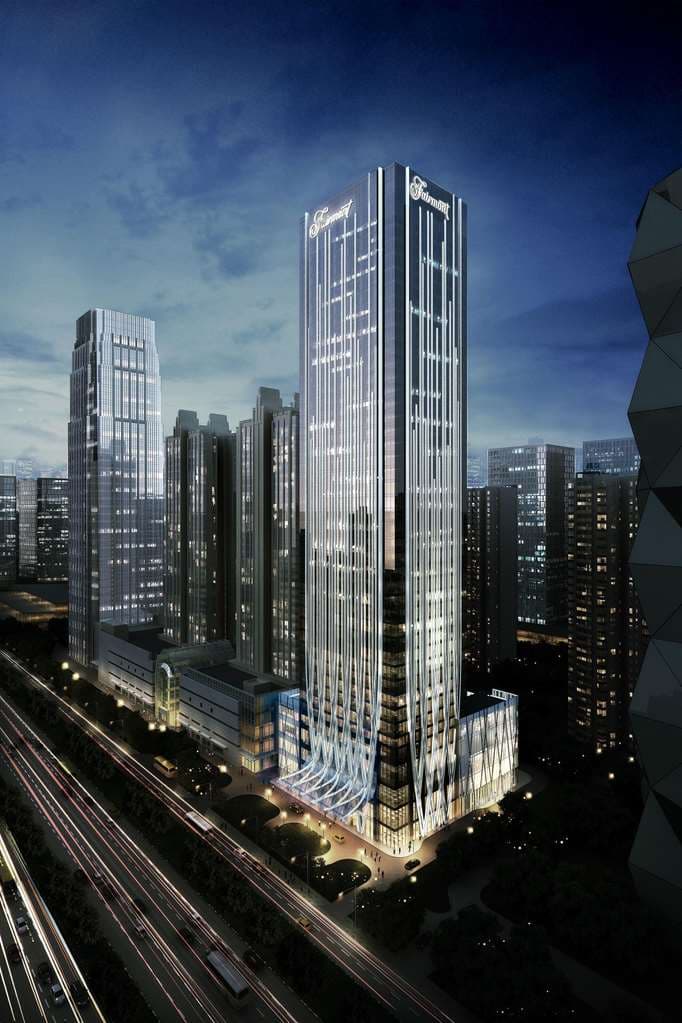
The Palm Springs Hotel Chengdu, Vignette Collection—formerly the Fairmont—retains its predecessor’s high-octane glamour while injecting a fresh, boutique spirit into the High-Tech Zone. This isn't just a place to sleep; it’s a vertical theater. The lobby, dominated by a colossal 24-karat gold-leaf art installation, sets a tone of unapologetic opulence that carries up to the 44th floor, where Miku Restaurant serves Nikkei cuisine against a backdrop of the glittering Chengdu skyline. The rooms are sanctuaries of precision, featuring Dyson hair dryers, 400-thread count linens, and expansive floor-to-ceiling windows that frame the city’s frenetic energy. But the real draw is the culinary prowess. Chang Yi, the Michelin-selected Chinese restaurant, turns dim sum into high art—do not leave without trying the handcrafted shrimp dumplings. For a nightcap, the Manhattan bar feels ripped from a Fitzgerald novel, serving rare single malts in a space defined by a Tiffany-blue spiral staircase. Whether you're sweating it out in the Technogym or indulging in an Intraceuticals facial at the spa, the service is sharp, intuitive, and reassuringly consistent.
“Book a corner room ending in '01' for dual-aspect views of the Century City skyline. Visit Miku at sunset for the best light.”
Insider TipAvg. Nightly Rate
148USD
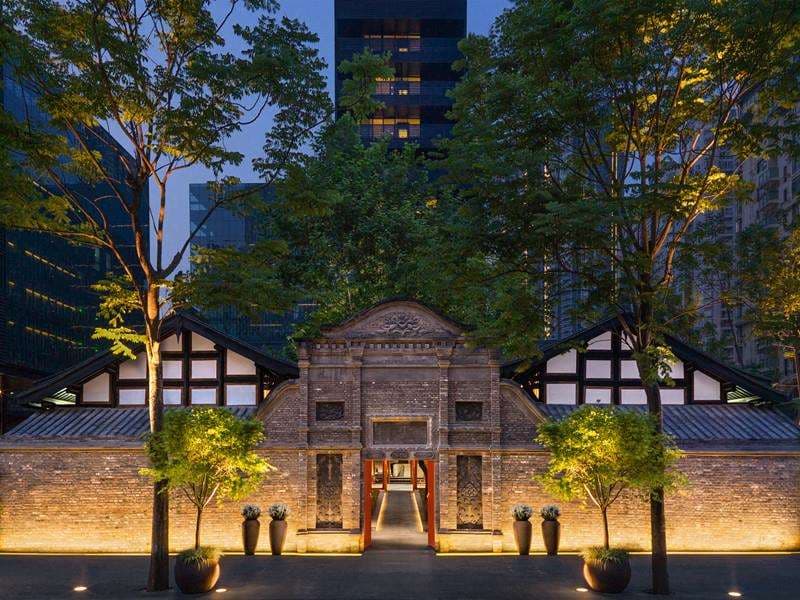
Chengdu buzzes. It hums with the electric energy of Sino-Ocean Taikoo Li, where luxury flagships jostle against ancient monasteries. But step through the modest, grey-brick Qing Dynasty courtyard entrance of **The Temple House**, and the volume drops to a reverent whisper. This isn’t just a hotel; it’s a masterclass in architectural alchemy by Make Architects, fusing a 100-year-old heritage site with dark, brooding modern towers. Check-in is a tea-scented ritual. You’re whisked to your room—likely a Studio 60, starting at a massive 63 square meters—where the vibe is "scholarly chic." We’re talking oak wood floors, spa-inspired bathrooms with deep limestone tubs, and the legendary complimentary **Maxi-bar** stocked with beer and soft drinks. A warning for the vanity-obsessed: the lighting is atmospherically dim. Great for romance, terrible for applying eyeliner. But the real pilgrimage here is culinary. **Mi Xun Teahouse**, tucked into the heritage courtyard, holds a **Michelin Star** and a newly minted **Green Star** (2025). Forget what you know about vegetarian food. The **Vegan Mapo Tofu with Chanterelles** delivers that numbing Sichuan *mala* punch without a scrap of meat, refined to a level of sophistication that feels almost religious. Afterward, retreat to **Jing Bar** for a Sichuan Negroni or a nightcap in the speakeasy vibe. **Verdict**: For the traveler who demands the pulse of the city but sleeps in a sanctuary, The Temple House is unrivaled. It is refined, moody, and deliciously specific.
“Skip the gym treadmill and head to the indoor pool; the light filtering through the unique **woven brass skylights** creates a mesmerizing, golden-hour effect underwater that is perfect for backstroke contemplation.”
Insider TipAvg. Nightly Rate
305USD
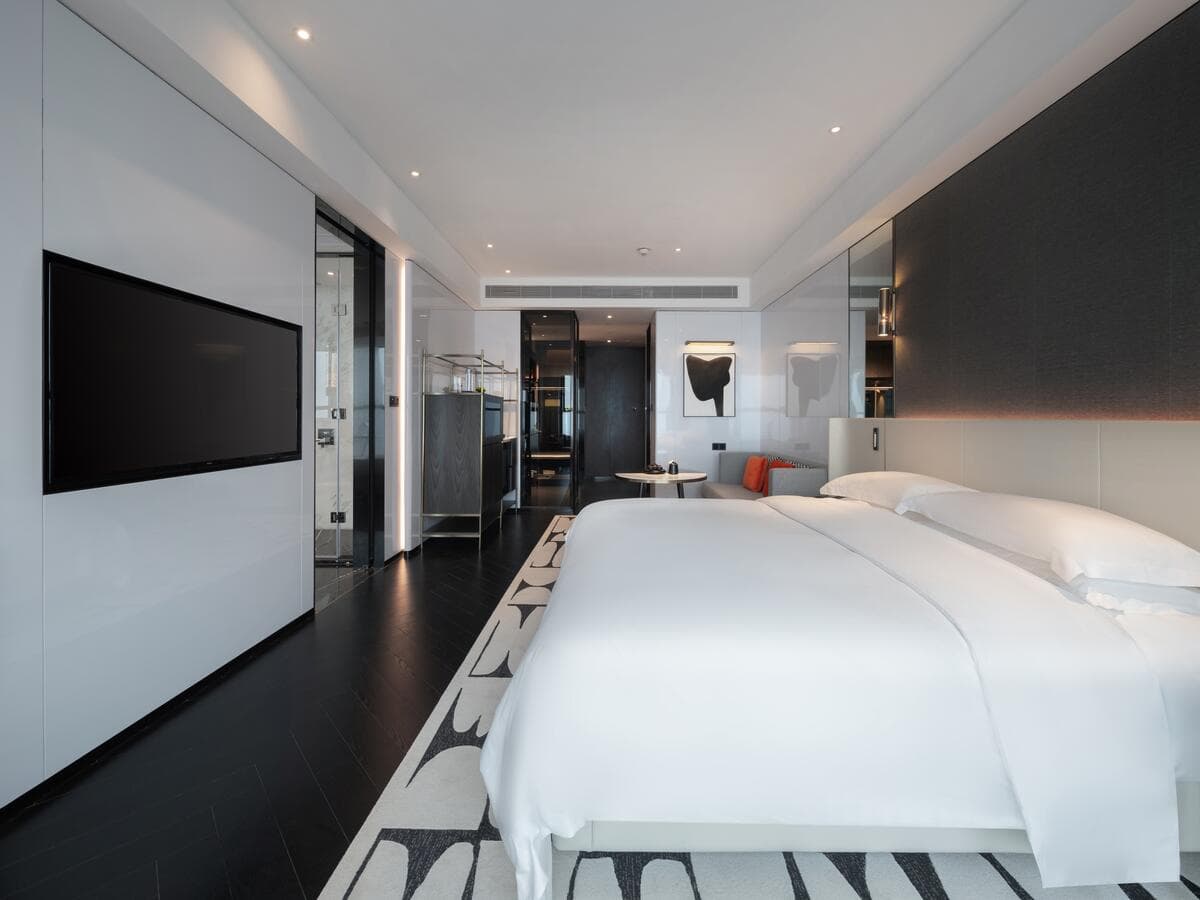
Forget the cookie-cutter glass towers; The Langbo, part of Hyatt’s Unbound Collection, feels like stepping into a modern curator’s private mansion. The drama begins at the 38th-floor Sky Lobby, where 'The Living Room' frames Chengdu’s skyline through floor-to-ceiling glass—a view that demands a Negroni in hand. Interiors by Yang Bangsheng channel 'modest luxury' with tactile jade textures and intimate, moody lighting that banishes the harsh glare of typical business hotels. In the rooms, the devil is in the details: Dyson hairdryers, Frédéric Malle amenities, and deep soaking tubs positioned against the window for voyeuristic city gazing. But the real draw is the culinary pedigree. The Dining Room (Yun Chu) justifies its Michelin buzz not with stiffness, but with precision—the pan-seared scallops are a masterclass in texture, while L'Or by Yi Palace delivers the requisite Sichuan numbing spice without blowing out your palate. Service is telepathic rather than hovering. It’s a sophisticated, jade-hued retreat that feels miles above the Chunxi Road chaos below. **Verdict**: The sharpest new lens through which to view Chengdu’s mix of grit and gloss.
“Book a suite on floors 55-60 for access to the best corner views. Don't skip the 6th-floor pool; its mirrored 'starry sky' ceiling is the hotel's most Instagrammable secret.”
Insider TipAvg. Nightly Rate
123USD
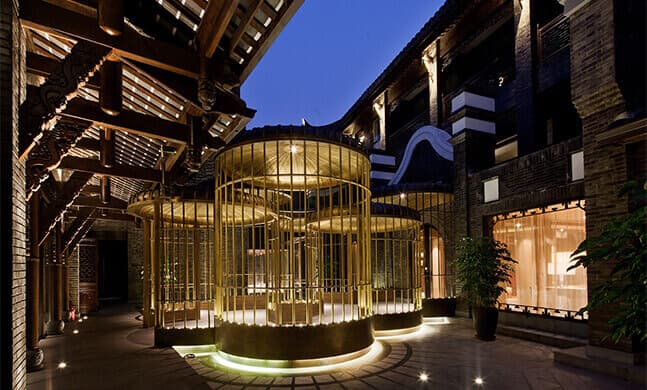
It takes a certain audacity to plant a sanctuary of silence right in the aortic thrum of Kuanzhai Alley, yet the Guanyin Yiyuntai (formerly the Diaoyutai) pulls off this magic trick with the grace of a diplomat. Designed by Bruno Moinard—the aesthetic architect behind many Cartier boutiques—the property eschews lazy chinoiserie for a sleek, lacquer-red and dark-wood vernacular that feels less like a hotel and more like a private ministerial residence. The draw here is arguably not the rooms, though the suites are hushed cocoons, but the table. The Royal Court restaurant serves 'State Banquet' cuisine—a culinary lineage of imperial precision usually reserved for visiting dignitaries. The signature 'Buddha Jumps Over the Wall' is a gelatinous, rich masterclass in slow-cooking, while the 'Codfish in Golden Soup' offers a silken, savory respite from the city’s aggressive mala heat. It is not without its heritage-imposed quirks; the historic preservation status murdered any chance of a swimming pool, and the in-room televisions are puzzlingly small for this price point. However, the service—an 'invisible hand' style of hospitality—is flawless. **Verdict**: For the traveler who prefers their luxury with a side of geopolitical prestige and absolute quiet.
“Since cars cannot enter the pedestrian alley, call ahead to have a porter meet you at the Kuanzhai entrance with a cart—otherwise, it’s a cobblestone drag for your Rimowa.”
Insider TipAvg. Nightly Rate
240USD
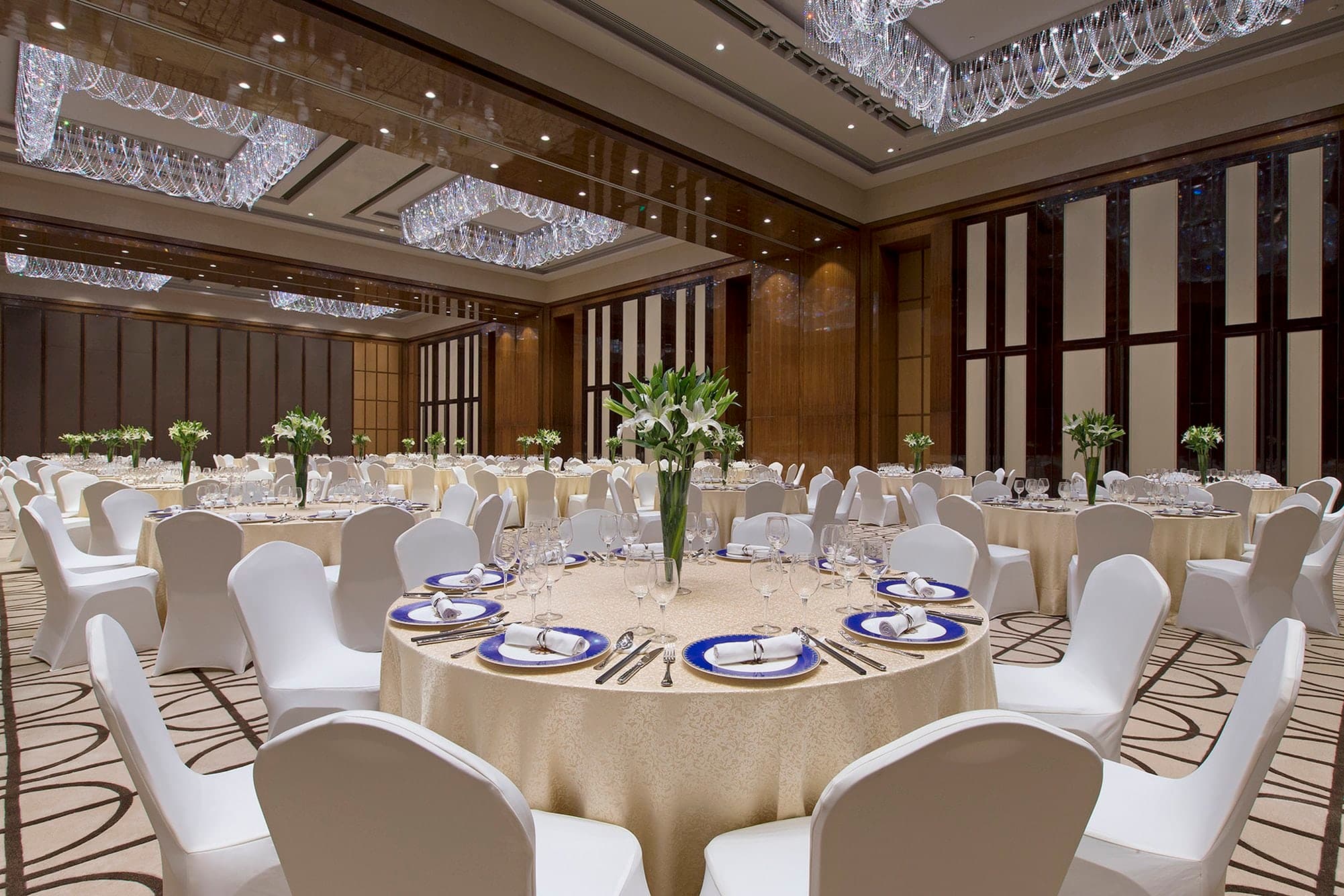
Chengdu is a city of clamorous energy, but Niccolo Chengdu is the silence above the storm. Perched atop the IFS complex—home to the iconic 'I AM HERE' climbing panda sculpture—this hotel functions as a literal glass jewel box, greeting arrivals with the ethereal 'Breeze Bird' installation, a cloud of 3,800 metallic doves that immediately signals the property's high-fashion DNA. The rooms are studies in restraint, prioritizing light and texture over gilded excess. Request an N2 Grand Temple View room for a striking juxtaposition: the ancient, sweeping eaves of the Daci Temple below, framed against the futuristic skyline. While some bathroom hardware whispers of the hotel's 2015 opening, the 500-thread-count linens and intuitive iPad controls keep the experience firmly in the ultra-luxury bracket. Dining is the headline act. Yue Hin, the Michelin-selected venue, avoids the trap of numbing heat, opting instead for complexity. The signature Lobster Broth Crispy Rice is a textural masterclass—rich, umami-laden, and satisfyingly crunchy. Finish with a cocktail at The Bar, where the city lights of Chunxi Road perform a silent ballet through floor-to-ceiling windows. **Verdict**: The sharpest, most sophisticated address in Sichuan for those who prefer their spice served with a side of art.
“Book the 'Grand Temple View' specifically; the contrast between the ancient temple and the modern city is far more poetic than the Panda view.”
Insider TipAvg. Nightly Rate
173USD
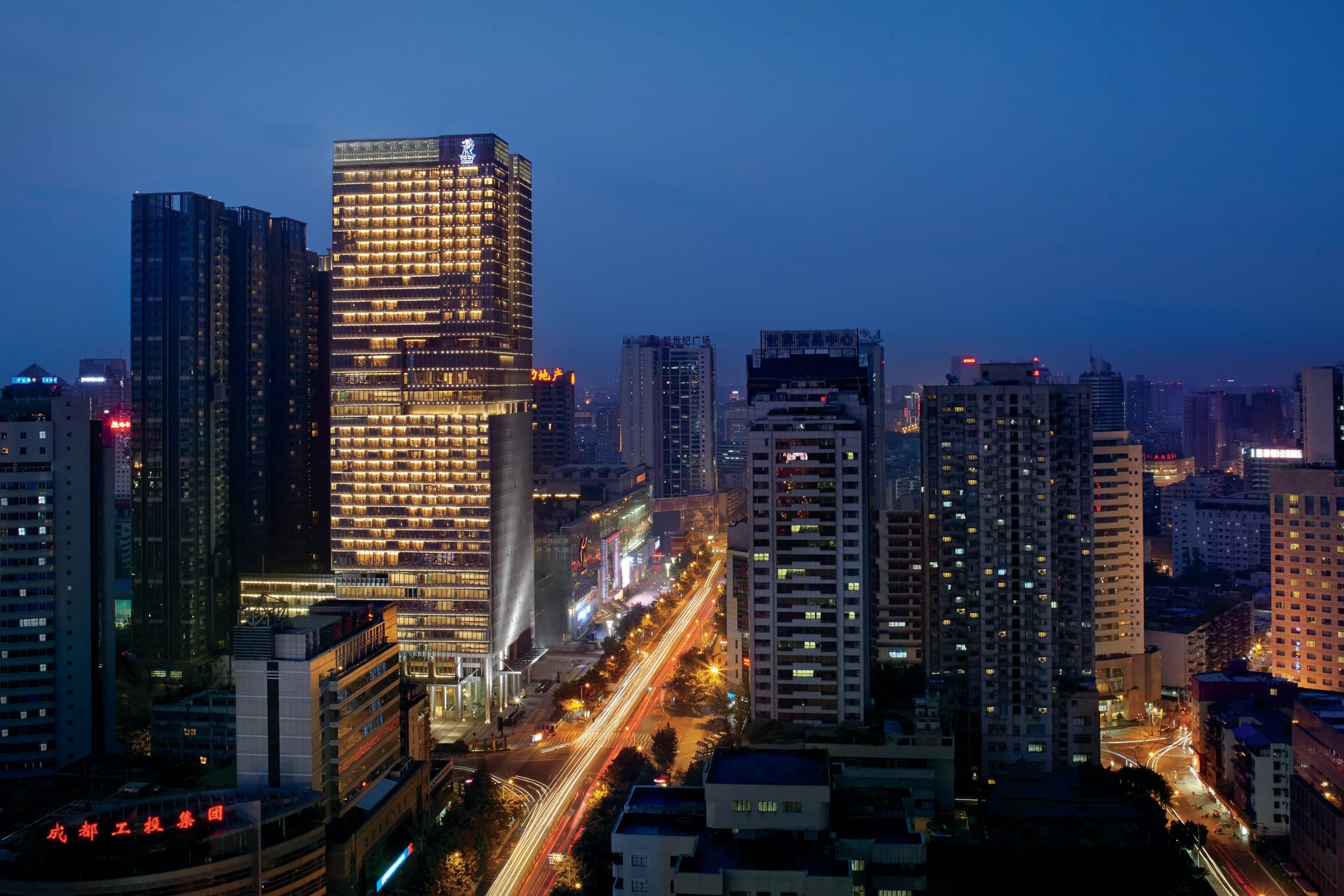
In a city defined by the numbing buzz of peppercorns and the frenetic energy of Chunxi Road, The Ritz-Carlton, Chengdu serves as a high-altitude palate cleanser. Perched above the chaos near Tianfu Square, the hotel operates with the kind of confident, old-world cadence that newer, tech-obsessed properties often fumble. You don’t come here for iPad-controlled curtains or cutting-edge gadgetry—frankly, the room controls feel a touch 2013. You come for the bones of the place. The arrival experience, sweeping you up to the 25th-floor lobby, frames the skyline through traditional wooden lattice screens—a nod to Sichuanese teahouses minus the smoke. Inside the rooms, the hardware may show faint laugh lines, but the comfort is absolute, anchored by immaculate linens and a silence that belies the traffic below. Dining is the heavyweight champion here. Li Xuan, the hotel’s Michelin-selected Cantonese and Sichuanese venue, justifies the stay alone. Skip the safe bets and order the braised blue lobster with black truffles—it is sophisticated, earthy, and unapologetically rich. For a nightcap, FLAIR’s terrace offers Asian tapas and a 360-degree fireplace that competes with the city lights. Service is swift, intuitive, and happily devoid of stiffness. **Verdict**: It may not be the newest face in town, but with its peerless Club Level and culinary prowess, it remains the most dignified.
“Bypass the standard breakfast rate and book a Club Level room. You gain access to five daily food presentations—from midday grazing to evening cocktails—which effectively serves as an ultra-high-end full board plan.”
Insider TipAvg. Nightly Rate
124USD
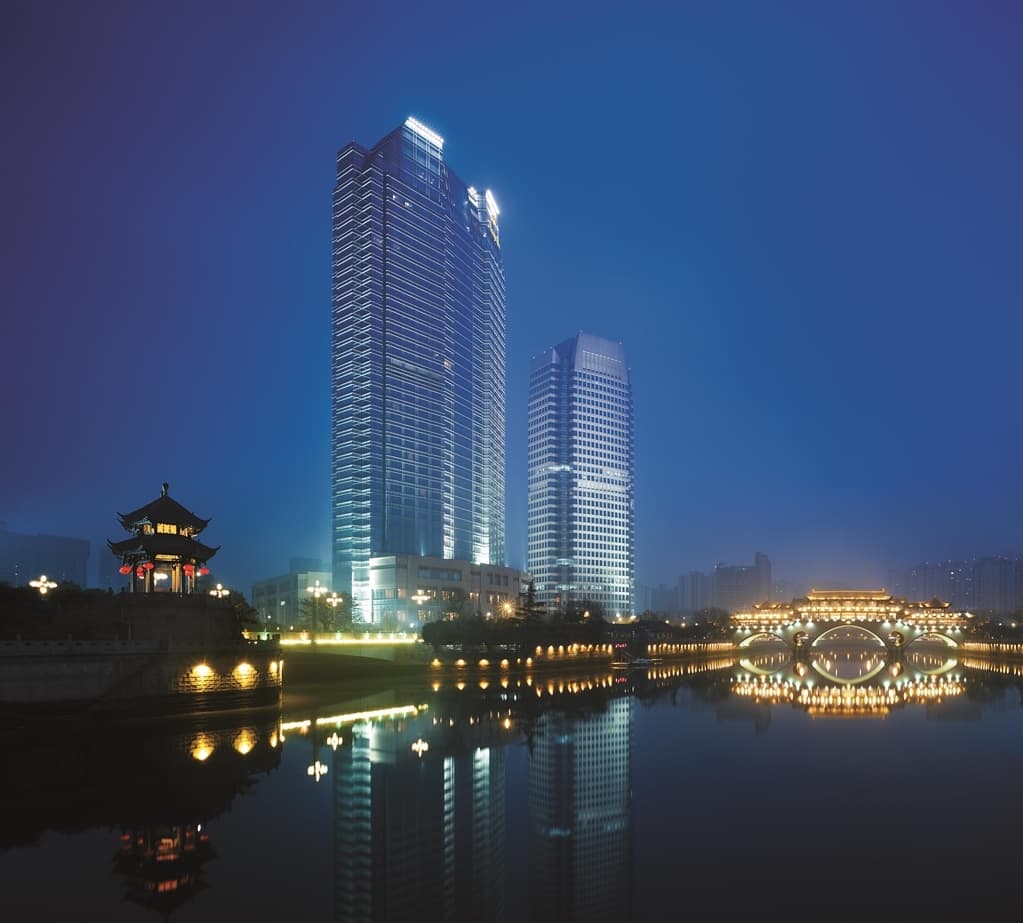
In a city obsessed with the new—from the futuristic IFS pandas to the sleekest boutique openings—the Shangri-La Chengdu remains the confident, immovable matriarch of the Jinjiang riverbank. It is telling that when the Michelin Guide unveiled its 2025 Chengdu selection, they didn’t choose a trendy newcomer; they gathered the city’s culinary elite right here, in the pillar-less Grand Ballroom. While the interiors may whisper 'mid-2000s grandeur' rather than 'minimalist chic' (the lack of in-room Nespresso machines in standard quarters is a noted quirk), the hardware hardly matters when you have these views. The Deluxe River View rooms offer a cinematic framing of the illuminated Anshun Bridge that newer skyscrapers simply can't replicate. Downstairs, Shang Palace continues to flex its pedigree. It doesn't just chase trends; it executes the Cantonese and Sichuan repertoire with military precision—the Signature Roasted Peking Duck is carved with a ceremony that borders on theater. Afterward, skip the noisy Lan Kwai Fong clubs next door and retreat to Chi, The Spa, where the 'Five Elements' treatments feel less like a menu item and more like a medical necessity after a spicy hot pot dinner. It’s not the newest player in town, but it’s undoubtedly the one with the most gravitas.
“Bypass the standard rooms and book a Horizon Club River View Room. Not only do you secure the high-floor vantage point of the Anshun Bridge, but you also gain access to the lounge's private breakfast—crucial for avoiding the morning buffet rush.”
Insider TipAvg. Nightly Rate
99USD
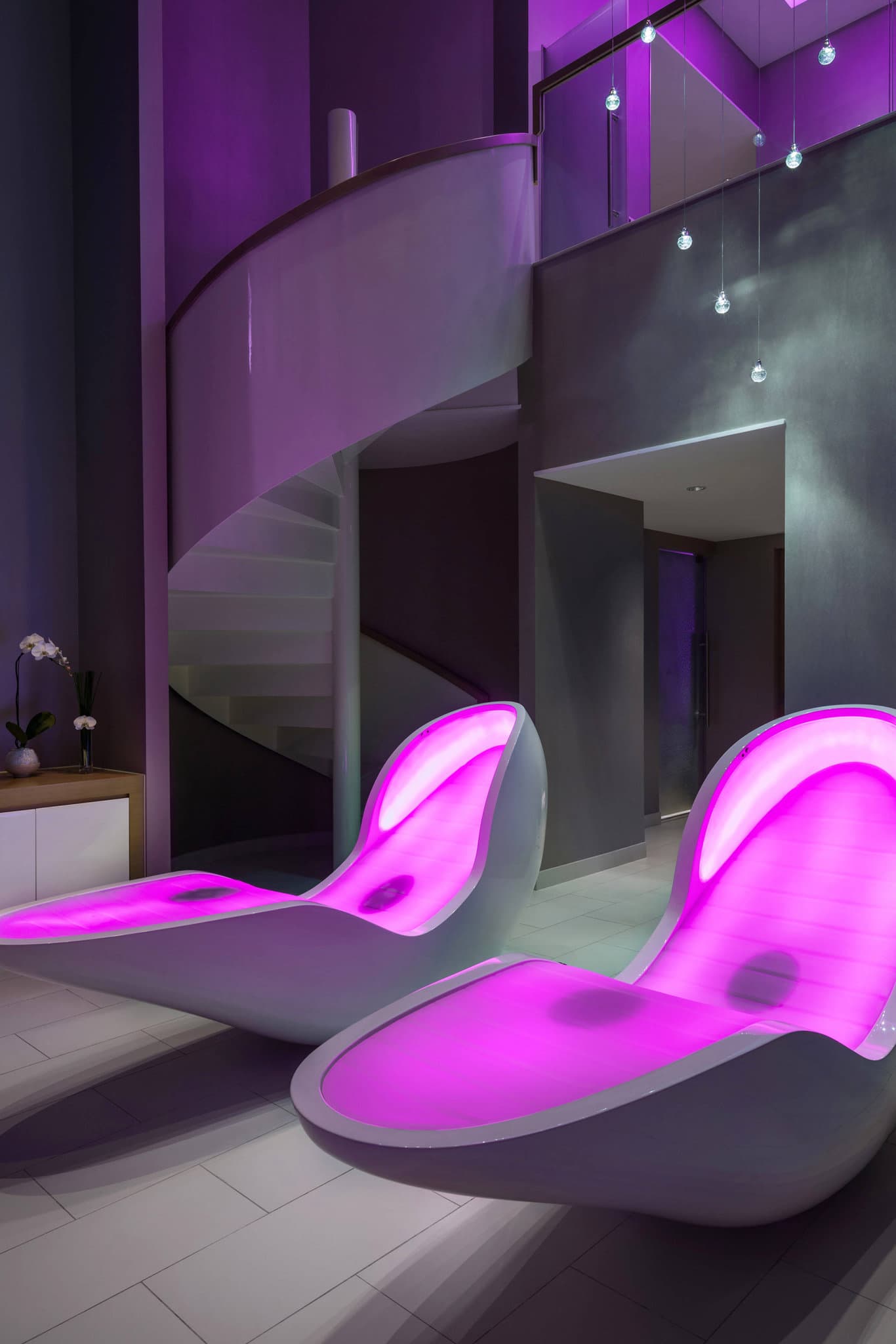
Chengdu is a sensory assault, usually in the best way possible. But when the numbing peppercorns and neon haze become too much, The St. Regis Chengdu offers a retreat that feels less like a hotel and more like a diplomat’s Art Deco bunker. This isn't about 'blending in'; it’s about standing out with 29 floors of unapologetic polish. The entry-level rooms are absurdly generous at 65 square meters, mocking the shoebox standards of other metropolises. You’ll find Frette 400-thread count linens and iPads that control everything from the blackout drapes to your privacy. While some hardware shows dignified age, the software remains elite. The St. Regis Butler Service is the real deal; let them unpack your Rimowa while you escape to the Iridium Spa for a Thalgo marine facial. Dining here is the main event. Yan Ting, a fixture in the Michelin Guide, serves a Seafood Spicy Blood Curd Hot Pot that is sophisticated anarchy in a bowl. It bridges the gap between Cantonese finesse and Sichuan heat without breaking a sweat. For breakfast, skip the western pastries and head straight for the chef’s Changsha pork noodle soup at Social. Finish your night at The St. Regis Bar with a 'Chuan Mary'—a peppercorn-infused Bloody Mary that bites back. It’s business luxury that hasn't forgotten how to live.
“Request a room ending in '08' for the best views of the Tianfu Square skyline, and ask your butler for the printed recipe card of the Chuan Mary to take home.”
Insider TipAvg. Nightly Rate
123USD
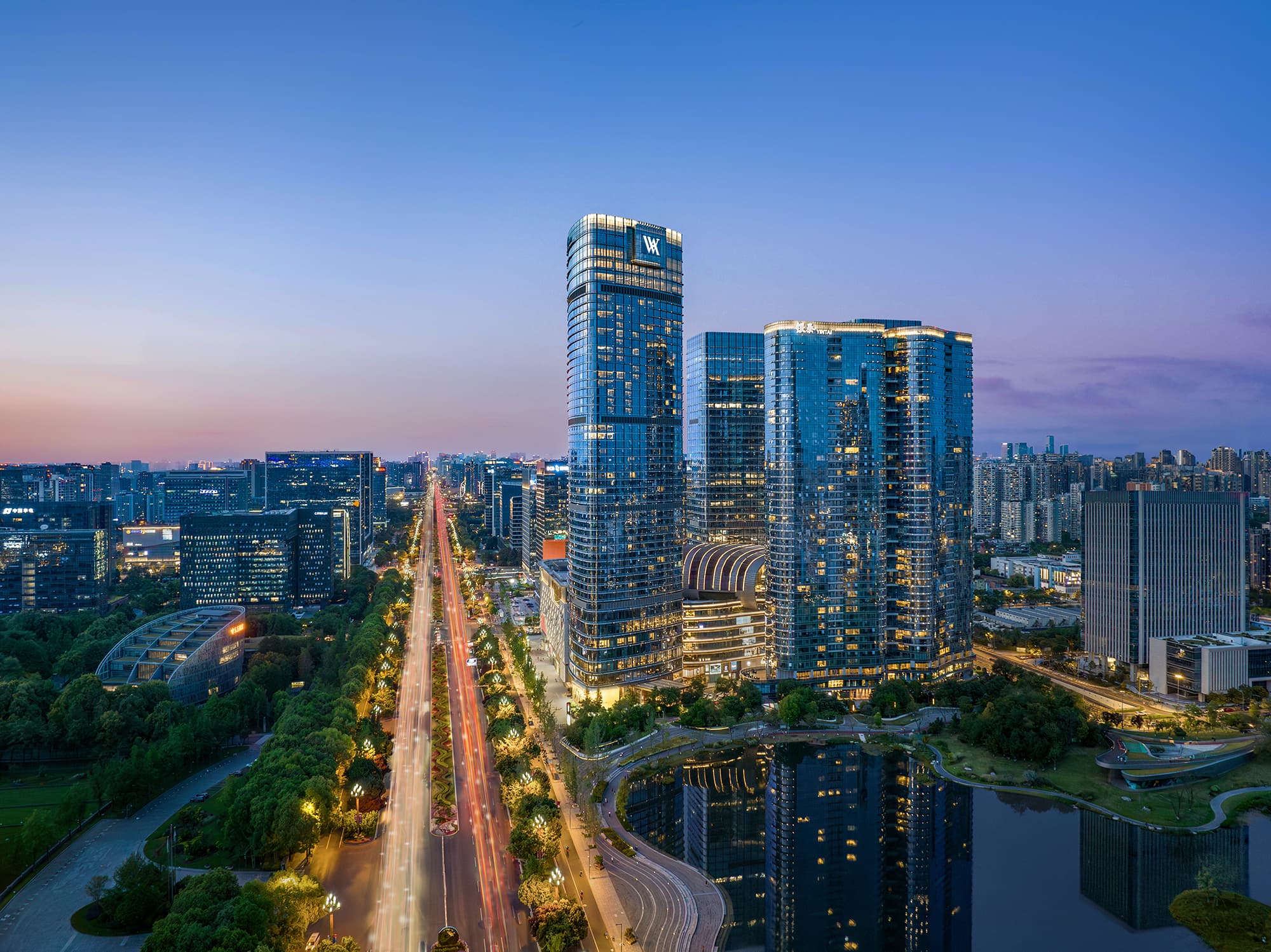
Perched in the High-Tech Zone, the Waldorf Astoria Chengdu feels less like a hotel and more like a vertical super-yacht docked in the sky. While the pandas are a distant drive away, the trade-off is a front-row seat to the city’s financial heartbeat, best viewed from the 50th-floor Sky Lobby where the ‘Leaves of Life’ crystal installation competes with the skyline. The Art Deco interiors channel a ‘Great Gatsby’ vibe, but with a Sichuan twist. Rooms are sanctuaries of silence with 600-thread count linens and Aesop amenities, though the real showstopper is the floor-to-ceiling window framing the Tianfu Twin Towers. Culinary prowess here is serious. ‘Infinite Luck’, recently crowned as a Michelin-Selected restaurant in the 2026 Guide, is the undisputed star. Executive Chef Tony Yang’s Camphor Tea-Smoked Duck is a masterclass in texture—crisp skin giving way to rich, smoky meat. Breakfast at Brasserie 99 can be a chaotic affair, but the made-to-order dan dan noodles save the day. Service is still finding its rhythm, but the hard product is undeniable.
“Request a 'Skyline View' room ending in '08' for the most direct line of sight to the nightly Twin Towers LED light show.”
Insider TipAvg. Nightly Rate
159USD
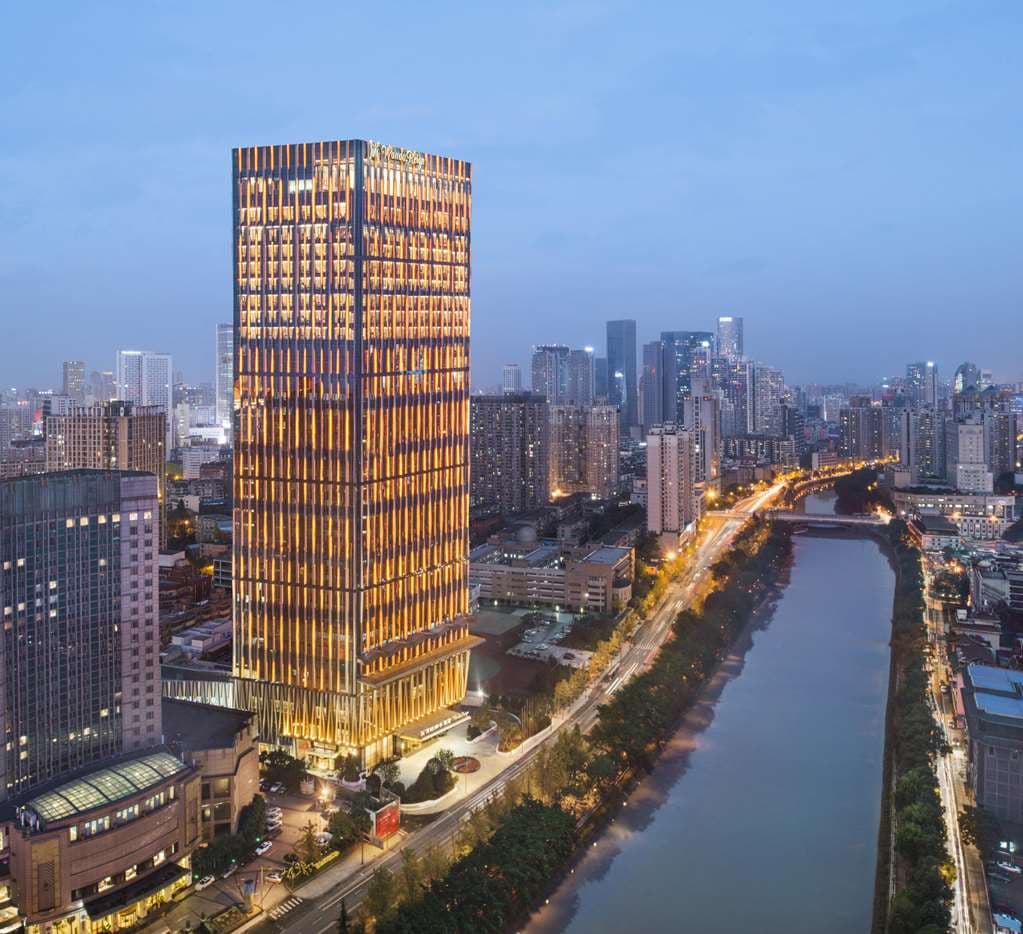
If subtlety is your virtue, look elsewhere. Wanda Reign Chengdu is an unapologetic cathedral of 'New Chinese Art Deco,' a soaring testament to the city’s economic boom where beige is banned and gold leaf is a neutral. It isn’t just a hotel; it’s a power move. The lobby, a vertiginous 41st-floor spectacle, frames the Jin River through floor-to-ceiling glass, but the real theater lies within. Rooms are engineered for the exhausted tycoon: think massage chairs that actually work, Talalay latex 'Bed of Reign' mattresses, and Dyson hairdryers alongside L'Occitane amenities. But you’re here for the heat. ZHEN, the hotel’s crown jewel, delivers Michelin-caliber Sichuan dining without the waitlist fatigue of the city's street-side legends. The kitchen executes a high-wire act between Cantonese finesse and Ma La fire—expect delicacies like the 'Prosperity Feast' where rare dried seafood meets the numbing buzz of green peppercorns. For a palate cleanser, River Drunk offers Huaiyang elegance with a localized spicy kick. Service is butler-sharp, anticipating needs before you realize you’ve forgotten your adapter. Verdict? A glorious, unashamedly opulent dive into the deep end of Chengdu luxury.
“Skip the lobby bar for sunset; instead, book the 'Cloud' suite at SHUI Spa for a treatment. It has the same river views but with zero crowds and Southeast Asian tranquility.”
Insider TipAvg. Nightly Rate
195USD
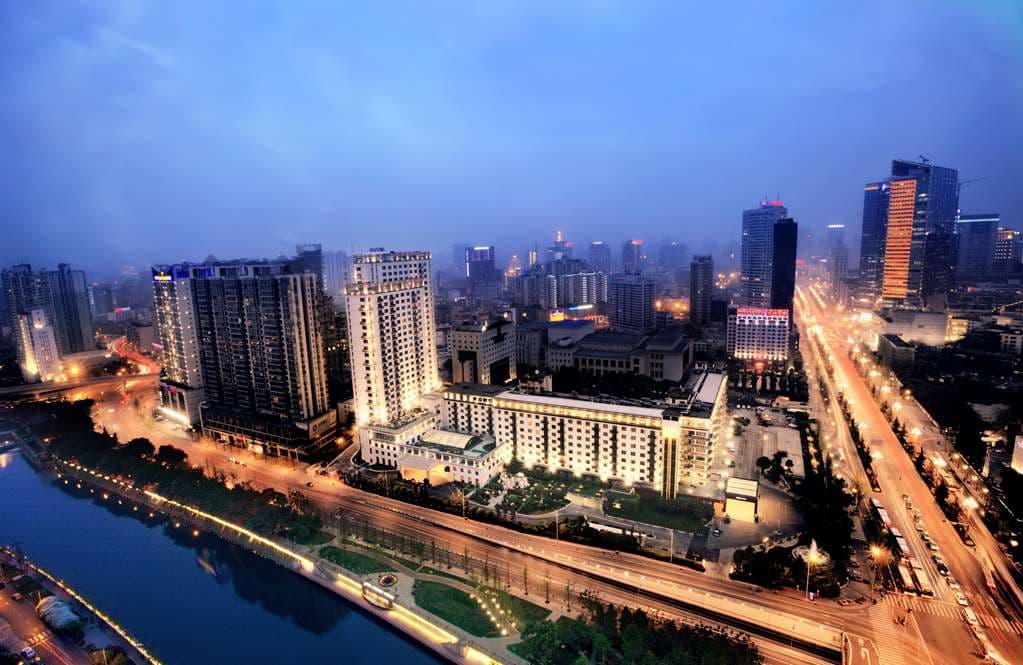
In a city rapidly populating with glass-box luxury towers, the Sichuan Jinjiang Hotel remains the unshakeable, iron-willed matriarch of Chengdu hospitality. You don’t check in here for cutting-edge minimalistic design or AI-integrated room controls; you come here to understand the culinary DNA of the province. As the historic ‘state guest’ hotel, the vibe is less ‘Instagram influencer’ and more ‘visiting dignitary,’ with a lobby that echoes with the hushed, carpeted gravity of decades of diplomatic handshakes. The rooms, particularly in the older wings, lean into a heavy, mahogany-laden aesthetic that feels purposefully preserved rather than neglected. While the beds offer the firm, orthopedic support preferred by locals (a point of contention for some Western travelers), the linens are impeccably crisp 400-thread count cotton. But the true pilgrimage is to Jinxuan Chinese Restaurant. Forget the numbing heat bombs of street-side hotpot; here, the kitchen executes ‘Kung Pao’ and ‘Mapo Tofu’ with the subtle, trembling precision required for official banquets. The signature ‘Ji Dou Hua’ (Chicken Bean Curd)—a deceptive consommé of chicken mousse that looks like tofu but tastes like poultry essence—is a masterclass in subtlety. Service is white-glove and silent, a reminder of an era when privacy was the ultimate luxury. It is a time capsule, yes, but one that tastes magnificent.
“Skip the standard rooms; book a renovated Executive Suite in the East Building for better climate control. The indoor pool is massive (20m) and often empty during dinner hours.”
Insider TipAvg. Nightly Rate
41USD