No. 01
No 18 8 Lingyin Road Hangzhou, China 310013Hangzhou936 verified reviews
9
.4
Bitvoya Edit
Layering imagery, place, and detail before the page opens.
Hangzhou, often described by Marco Polo as the finest city in the world, offers a retreat unlike any other. Beyond the iconic West Lake lies the lush, rolling greenery of the Longjing (Dragon Well) tea fields. Staying in neighborhoods like Lingyin and the hills surrounding the West Lake allows travelers to wake up to the scent of fresh tea leaves and misty mountains. Our curated selection, featuring properties like Amanfayun and Tsingpu Hangzhou Retreat, invites you to immerse yourself in this living landscape. Whether you seek the historic solitude near Lingyin Temple or the manicured luxury of the Four Seasons, these hotels offer a gateway to the soul of Chinese tea culture.
Hangzhou is the birthplace of Longjing tea, one of China's most prestigious teas. Staying near the tea fields isn't just about accommodation; it's about cultural immersion. Properties like Amanfayun and Seven Villas Hangzhou offer direct access to these ancient plantations. The experience of walking through the rows of tea bushes in the morning mist, before the crowds arrive, is a luxury that defines the Bitvoya standard. It combines the history of the Lingyin Temple area with the natural beauty of the Jiangnan region.
Expect world-class service blending traditional Chinese hospitality with modern luxury. Hotels in this collection, such as Vallie Hotel Hangzhou, focus on intimacy and nature. You can anticipate in-house tea ceremonies using water from local springs, spa treatments infused with tea polyphenols, and cuisine that incorporates fresh tea leaves (like Longjing Shrimp). Whether it's the boutique charm of Pins De La Brume or the expansive grounds of Tsingpu Hangzhou Retreat, the focus is on tranquility, wellness, and the art of tea.
The best time is late March to early April, known as the 'Pre-Qingming' period, when the most premium Longjing tea leaves are harvested.
Amanfayun is highly recommended for authenticity, located within a historic village surrounded by tea fields and offering traditional tea ceremonies.
Yes, properties like Four Seasons Hotel Hangzhou and Banyan Tree Hangzhou offer excellent family amenities, kids' clubs, and spacious villas.
Explore our complete curated list of luxury accommodations, from boutique hideaways to grand dames.
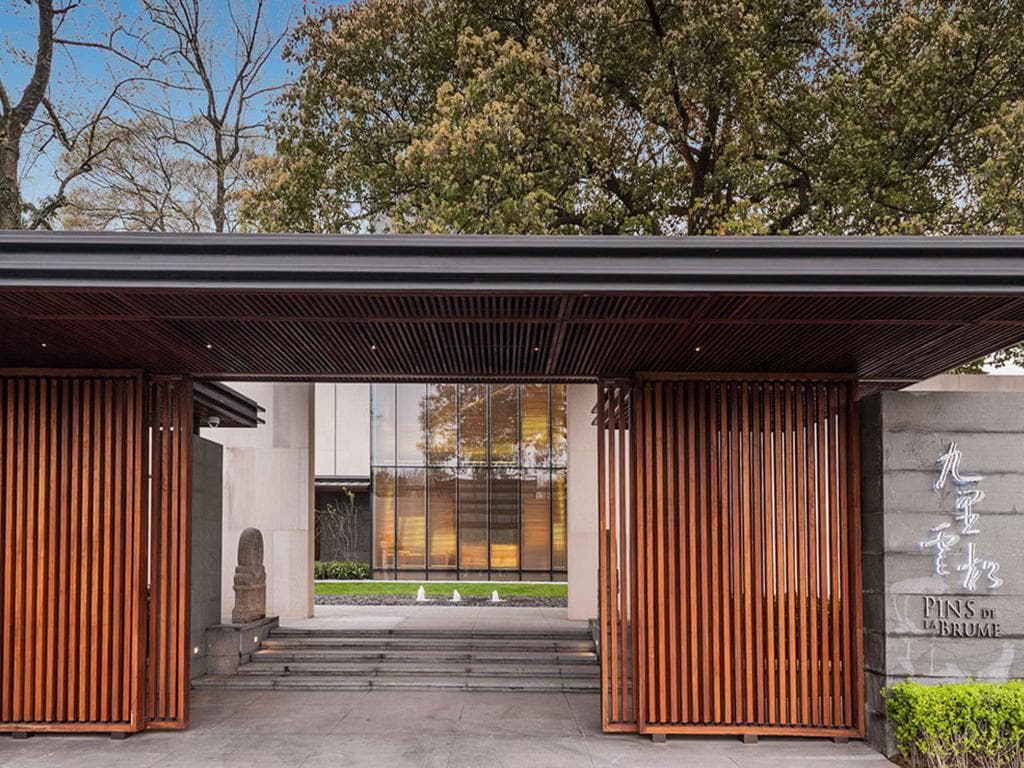
Explore All Hangzhou HotelsIt requires a certain architectural audacity to plant a stark, modernist cube within earshot of the Lingyin Temple—Hangzhou’s spiritual epicenter—and have it feel not like an intrusion, but a hush. Pins De La Brume (referencing the ‘mist’ that clings to these hills) operates as a volume knob for the world outside, turning the tourist clamor down to a reverent, gallery-like hum. The central courtyard, a ‘Water Mirror’ reflecting ancient pines, dictates the pace here: slow, deliberate, and fiercely private. Inside, the asceticism is purely visual. The guest experience is layered with tactile indulgences that justify the nightly rate. Rooms are sanctuaries of high-spec comfort, featuring Dyson hair dryers and Le Labo amenities that steep the air in santal and woodsmoke. The complimentary minibar, restocked daily, is a gracious touch, though the real draw is the Lobby Lounge & Tea Bar. Here, the seasonal Longjing tea isn't just a beverage; it’s a terroir study, brewed with a precision that borders on religious. Dinner at the on-site restaurant, Tianxiang (La Parfum), offers a sophisticated take on Jiangnan cuisine. While the West Lake Vinegar Fish is the requisite signature order, the Longjing Shrimp is the superior plate, delicate and fragrant, perfectly mirroring the greenery visible through the glass walls. Service is intuitive but unobtrusive, maintaining the illusion that you have the entire tea field to yourself.
“Ride-sharing apps (Didi) are notoriously unreliable in this secluded zone. Book a private car through the concierge at least 30 minutes before departure.”
Insider TipAvg. Nightly Rate
180USD
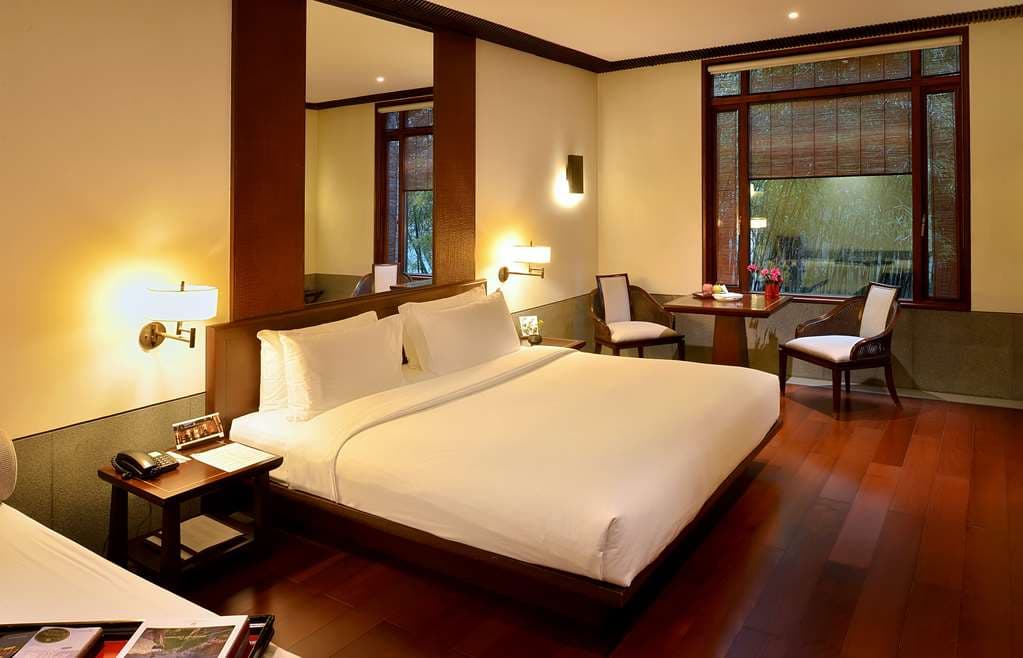
To check into Fuchun Resort is to step directly into the brushstrokes of Huang Gongwang’s 1347 masterpiece, *Dwelling in the Fuchun Mountains*. Designed by Jean-Michel Gathy, this property remains the gold standard for 'destination as art.' The aesthetic is unapologetically monastic—grey brick, sweeping timber eaves, and symmetrical corridors that frame the misty tea terraces like living gallery walls. While some hardware feels slightly vintage compared to Hangzhou’s newer glossy openings, the patina only adds to the sense of timelessness. The grandeur of the Main Pavilion is matched by the calm of the rooms, where you’ll find luxe comforts like Valmont amenities and high-thread-count linens that feel lighter than the morning fog. Dining is a serious affair at the Asian Corner, where the ‘Signature Flavor Durian Crab’ is a pungent, creamy revelation that demands bravery and rewards it with brilliance. Wellness here isn't an afterthought; the spa’s Himalayan Yoga sessions and Valmont anti-aging rituals are legitimate reasons to visit alone. It’s not just a hotel; it’s a masterclass in silence.
“Skip the standard villas for a night and book one of the newer 'Boat Rooms' floating on the river—designed by the China Academy of Art, they offer a completely different, immersive water-tribe perspective.”
Insider TipAvg. Nightly Rate
244USD
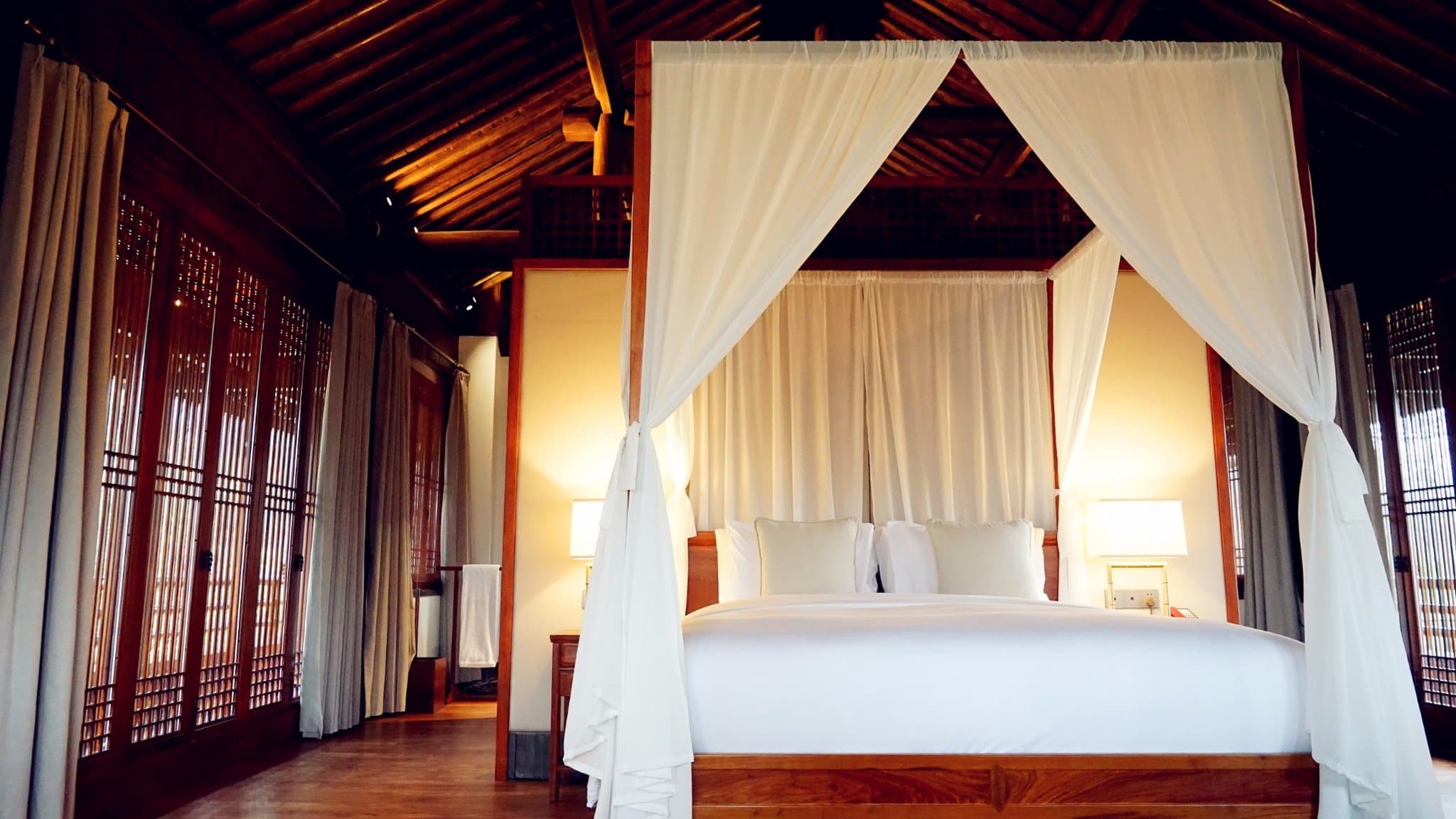
Forget the marble-clad lobbies of the lakeside chains. Seven Villas (Zixuan) is effectively a triad of award-winning restaurants that happen to offer seven ultra-luxe suites. Tucked away in the bamboo-dense silence of Maojiabu, this Relais & Châteaux property caters to the sort of traveler who prioritizes a Golden Medallion Wagyu over a swimming pool. The architecture is confident—traditional peaked roofs meeting fearless floor-to-ceiling glass. This transparency connects you viscerally to the tea fields, though it does require a strategic hand with the automated blinds to avoid becoming part of the scenery for passing gardeners. The real draw, however, is the culinary pilgrimage. You are steps away from Jie Xiang Lou, where the 2025 Michelin Guide retained its One Star status for dishes like the pork jowl with caviar. Meanwhile, Chef Eric Yu at La Villa recently snagged the Michelin Young Chef Award, proving the French-fusion menu is no afterthought. With no gym or pool to distract you, the itinerary is simple: soak in your limestone tub, summon your butler for aged pu'er, and prepare for the next tasting menu. It is an asceticism of the most indulgent kind.
“Book the 'Manshu' Japanese Kaiseki for lunch; it’s easier to get a seat than dinner, and the daytime forest views are superior.”
Insider TipAvg. Nightly Rate
625USD
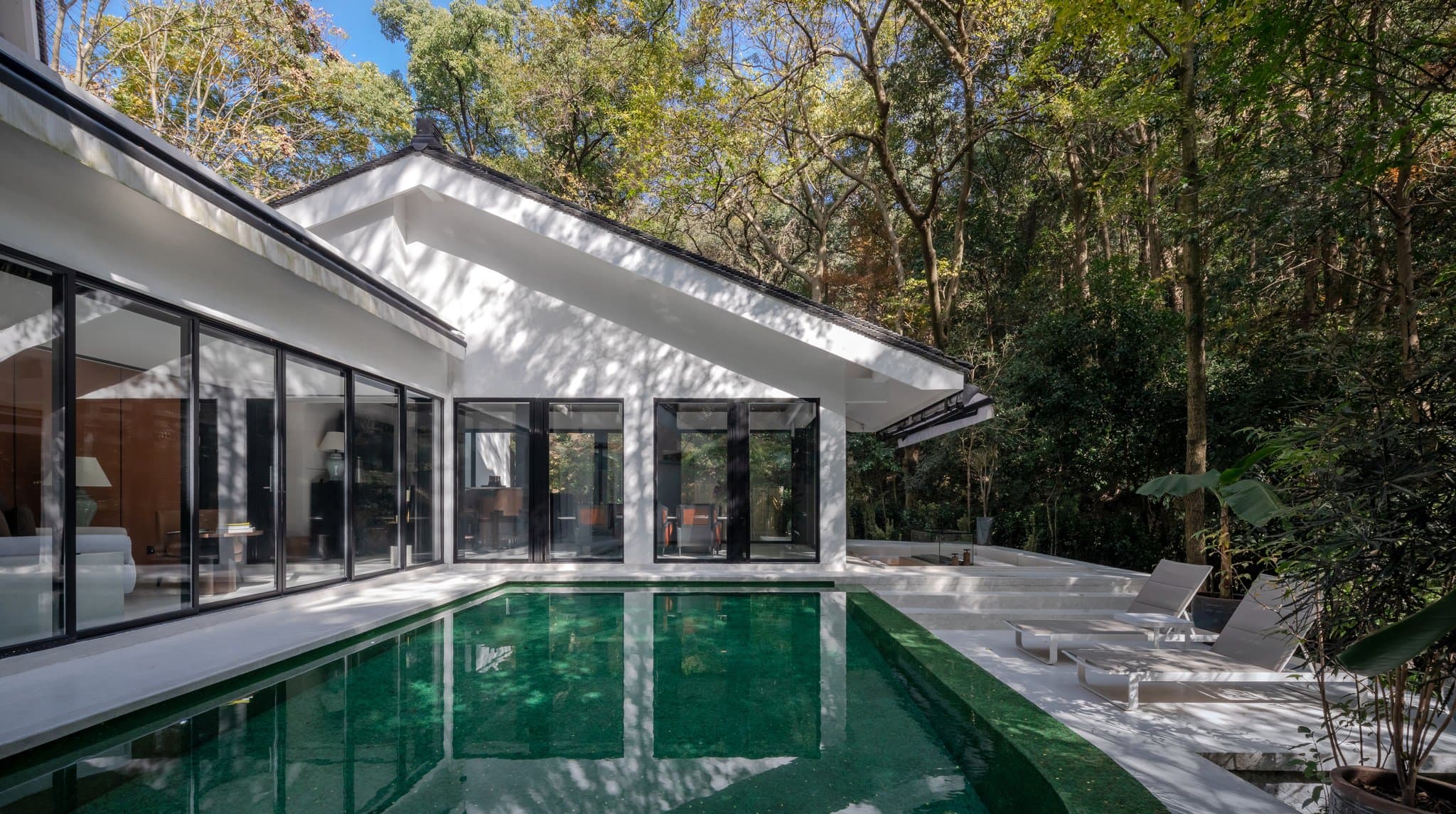
The Vallie Hotel Hangzhou offers a lesson in high-contrast luxury. Positioned within the Six Harmonies Pagoda area, this eight-room retreat feels less like a hotel and more like the private estate of a tea baron with a penchant for French gastronomy. The draw here isn't just the forest solitude; it's the Hupao (Tiger Running) Spring water—the very same legendary source used for Longjing tea—pumped directly into your private room’s soaking pool. Inside, the "tea farmer" aesthetic is a clever ruse for serious specification. While the 40-square-meter base rooms might feel compact for the price tag, they are meticulously appointed with B&O audio systems, Bulgari bath amenities, and Marvis toothpaste. It is a space designed for silence, interrupted only by the sound of spring water and the rustle of maple leaves. The culinary program is the property's other trump card. Shijiu Gastro Lounge, also known as L’éclat 19, is helmed by the team of Michelin-starred Chef Olivier Elzer. It’s a surreal experience to dine on Yellow Wine Scampi and Fennel Caviar Tart in such a distinctly Chinese forest setting. Service is hyper-personalized via 24-hour butlers who handle everything from drawing your spring bath to navigating the inconsistent breakfast service—the hotel’s only real stumble. For those seeking absolute privacy over sprawling square footage, this is Hangzhou’s sharpest address.
“Book the Courtyard Suite for the outdoor terrace which features a unique projection wall for open-air movie nights.”
Insider TipAvg. Nightly Rate
554USD

Forget the manicured, tourist-clogged rows of the main Longjing villages. The true tea-country exhale happens deeper in the Fuchun hills at Tsingpu Hangzhou Retreat. This isn’t your typical gold-tap luxury; it is a cerebral, wabi-sabi fortress of rammed earth and timber that feels less like a hotel and more like a monk’s high-design atelier. The architecture commands you to slow down—there is no 24-hour gym or flashing concierge desk here. Instead, you get hyper-personalized butler service and a room that doubles as a crafting studio. The experience is aggressively analog. You aren't just looking at bamboo; you're pulping it for paper-making workshops included in your rate. Dining at Tsingpu Kitchen is the only game in town, but it’s a strong one. Skip the western menu and order the Zhuangyuan Tofu—a local Fuyang specialty that’s silky, savory, and unpretentious. The ‘pool’ is a shallow 0.7m reflection pond, better for dipping your toes and reading Murakami than swimming laps. It’s remote, humid, and buggy, but that’s the point. This is a digital detox for the design-obsessed who prefer raw silence over room service clubs.
“Request a room on the upper floor facing the bamboo forest; the ground floor units can get damp. Don't miss the bamboo weaving class—it's far more meditative than it sounds.”
Insider TipAvg. Nightly Rate
310USD
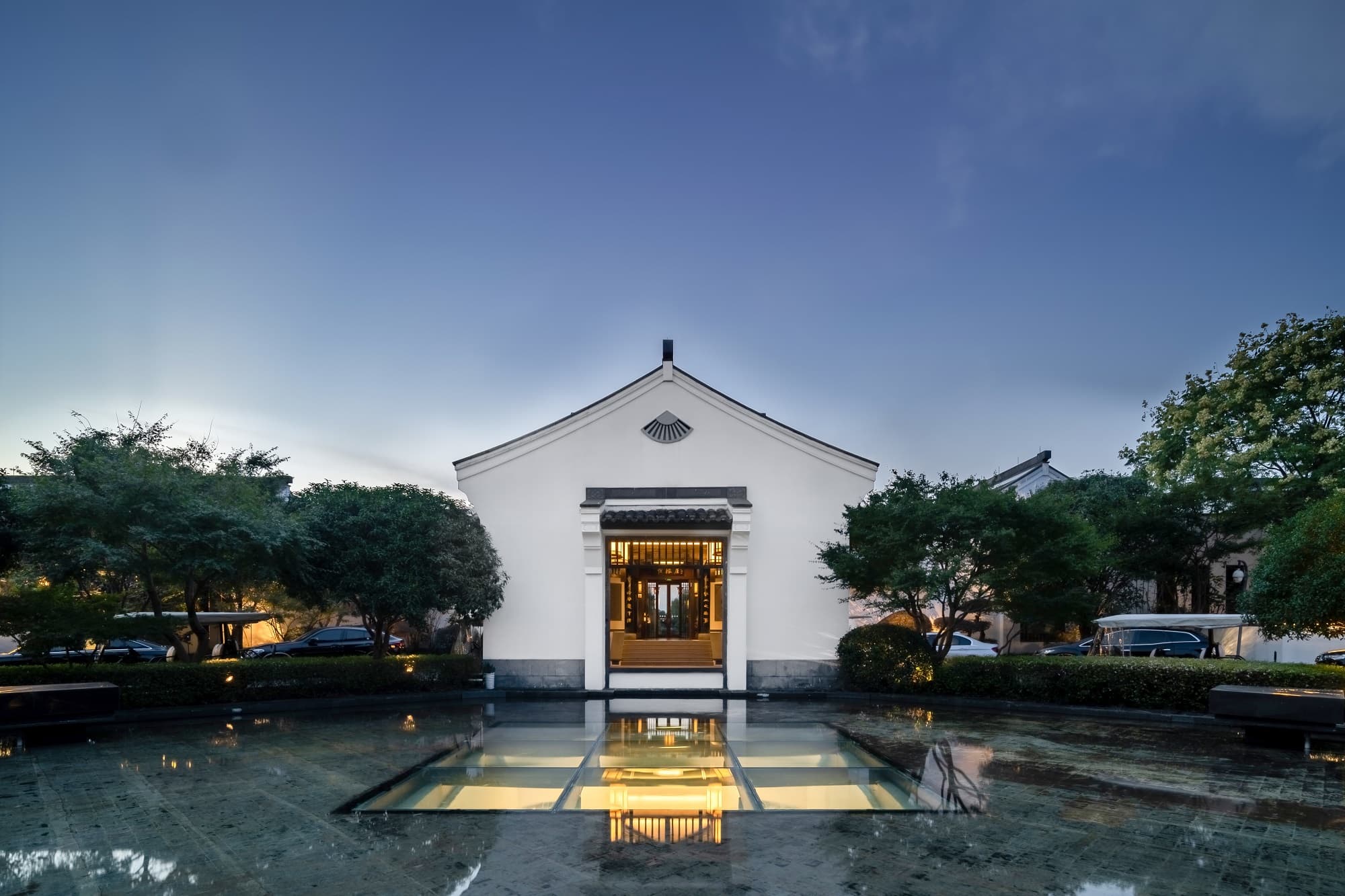
Forget the frenetic energy of the West Lake tourist trail. Checking into Banyan Tree Hangzhou feels less like entering a hotel and more like slipping into a silenced film set of the Southern Song Dynasty. Anchored within the Xixi National Wetland Park, this isn't just a resort; it’s a hyper-curated, 72-villa sanctuary where gray-tiled roofs and ivory walls reflect endlessly in the misty canals. The accommodations are aggressively spacious—entry-level Water Terrace Suites clock in at a staggering 120 square meters. Inside, the aesthetic is dark wood and high-gloss lacquer, softened by silk brocades and the scent of Banyan Tree’s signature incense. The bathrooms are veritable spas, stocked with Natura Bissé amenities and deep soaking tubs that demand a bottle of wine. Dining here is serious business. Skip the room service and head to Bai Yun, where the Dongpo pork is a glossy, braised masterpiece of fat and flavor, or settle into Jiu Xian for a flight of Hangzhou rice wines. The service, led by standouts like Viola, is intuitive without being hovering. The only catch? You’re 40 minutes from the city center. But as the mist rolls off the wetlands and the sculling boats glide past your window, you won’t care.
“Ask for a 'Water Terrace Suite' in the 300 block for the most private canal views, and book the traditional sculling boat experience at sunset for a tea ritual on the water.”
Insider TipAvg. Nightly Rate
512USD
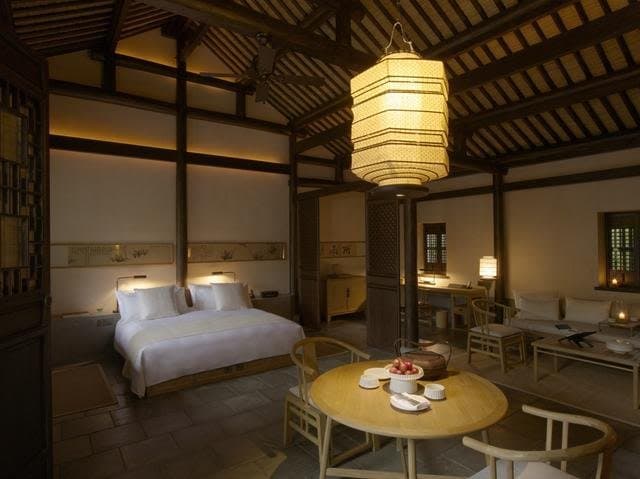
Forget the lobby check-in; arriving at Amanfayun feels less like a hotel arrival and more like stumbling into a time warp. This isn't a 'resort'—it is a restored Tang Dynasty village where the forty-seven dwellings are defined by what they lack: no blinding LEDs, no gilded faucets, and, thankfully, no ostentatious signage. The vibe is aggressively low-key, smelling of woodsmoke and damp earth. Inside your villa, the lighting is moody—bordering on dark—intentionally designed to slow your pulse. Thank the architects for the underfloor heating, a non-negotiable luxury when the Hangzhou damp settles into the stone floors. Dining requires a reservation at Lan Xuan, where the cooking is as serious as the price tag. Order the double-boiled deboned chicken with termite mushrooms; it’s a masterclass in clarity and depth. For a more casual morning, The Steam House serves bamboo mushroom soup that tastes like the surrounding forest distilled into a bowl. The service is the typical Aman whisper—present only when you realize you need it. The only caveat? The main Fayun Pathway is public. Day-trippers will peer at your gate, but come evening, the village belongs to you and the monks. It’s imperfect, dim, and exorbitantly expensive, yet utterly singular.
“The main thoroughfare is open to the public during the day. For true solitude, book a late-evening soak in the Bath House's circular wooden tubs when the day-trippers have vanished.”
Insider TipAvg. Nightly Rate
716USD
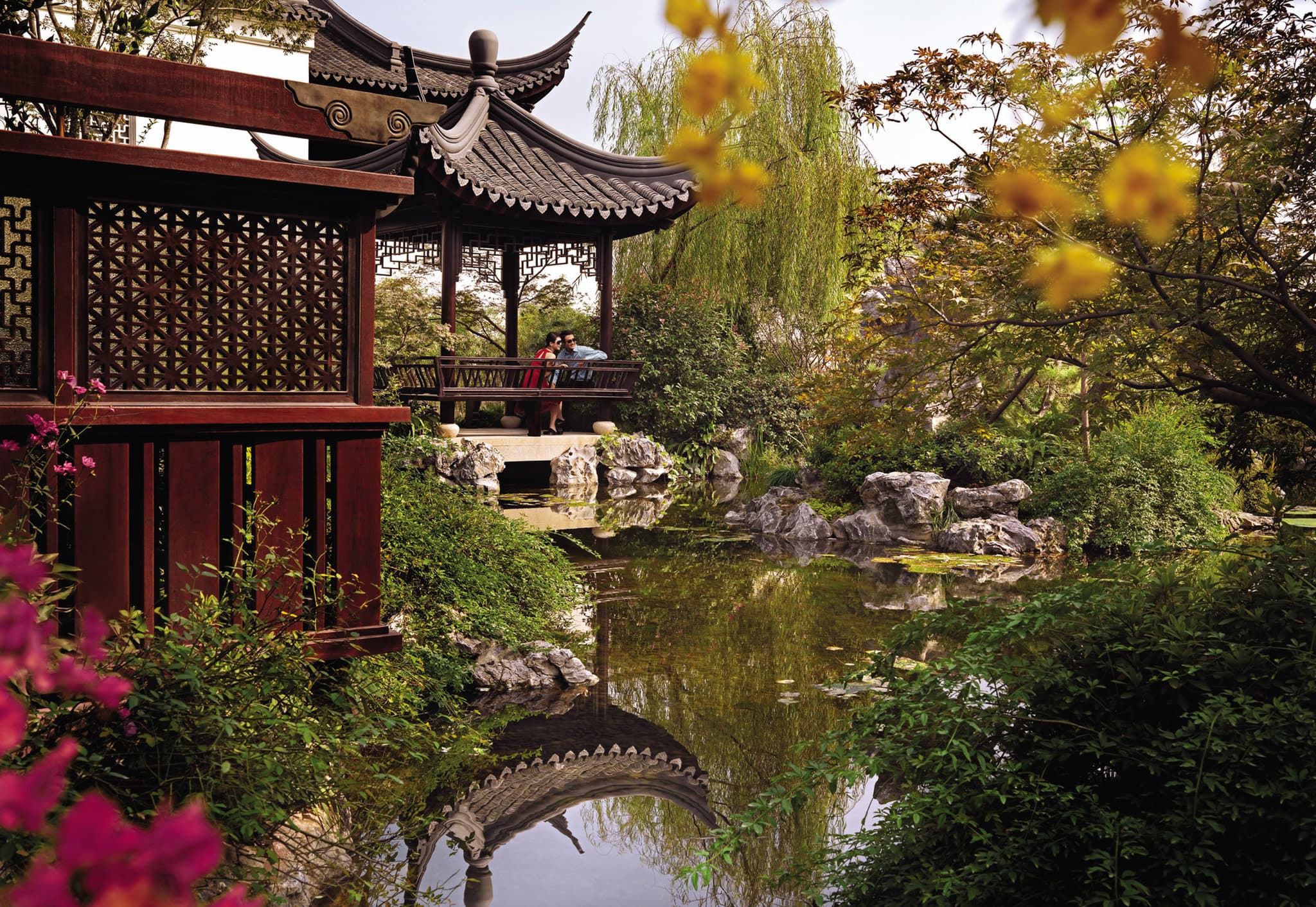
Hangzhou’s West Lake is legendary, but the crush of tourists on the Broken Bridge can be overwhelming. The Four Seasons operates as a high-walled sanctuary against this chaos. Located deep within the botanical gardens, the property mimics a traditional Jiangnan village with uncanny precision—think timber-framed open corridors, grey-tiled pagodas, and mist-covered lagoons that seem to have been there for centuries rather than decades. The rooms are massive, starting at a sprawling 63 square meters, many featuring glass-enclosed conservatories (complete with premium tea sets) that allow you to watch the rain hit the lotus leaves in total privacy. But the real pilgrimage here is culinary. **Jin Sha**, the hotel’s flagship restaurant, remains the only venue in Hangzhou to hold a Black Pearl 3-Diamond rating for eight consecutive years. Chef Wang Yong’s signature Shanghainese braised pork with abalone is mandatory eating—rich, sticky, and worth the flight alone. While the **Technogym**-equipped fitness center is serviceable, the "Imperial-style" indoor pool—flanked by stone columns and daybeds—is the better place to undo the pork belly damage. It commands the highest rates in the city, but for a private slice of West Lake without the selfie sticks, it is arguably underpriced.
“Book a table at Jin Sha at least two weeks before your stay; even hotel guests are frequently turned away from dinner service due to its cult following.”
Insider TipAvg. Nightly Rate
535USD