No. 01
PALACE ROAD-RAJASTHAN JAIPUR IN 302006 Jaipur7502 verified reviews
9
.2
Bitvoya Edit
Layering imagery, place, and detail before the page opens.
Jaipur is redefining royalty with a conscience. Beyond the chaotic bazaars lies a serene world of eco-luxury where sustainability meets heritage. Travelers seeking 'Conscious Jaipur' can find solace in the rolling Aravalli hills of Kukas, home to expansive resorts like Fairmont and The Leela, or retreat to the remote, adaptive-reuse marvel of Bishangarh at the Alila Fort. Even in the city center, historic properties like Rambagh Palace and ITC Rajputana are championing 'Responsible Luxury' through water conservation and organic sourcing. This guide curates the finest properties that blend the Pink City's legendary hospitality with a deep respect for nature and community.
Jaipur is historically known for its opulence, but a new wave of hospitality is proving that luxury doesn't have to come at the planet's expense. The concept of 'Conscious Jaipur' bridges the gap between regal heritage and modern sustainability. Properties like ITC Rajputana are pioneers in the 'Responsible Luxury' movement, boasting LEED Platinum certifications for their energy efficiency. Meanwhile, destinations like Alila Fort Bishangarh serve as prime examples of adaptive reuse, turning a 230-year-old warrior fortress into a world-class hotel without destroying the original structure, thereby preserving local history and reducing construction waste.
Choosing these eco-luxury retreats means you are supporting properties that invest in rainwater harvesting—a critical practice in Rajasthan's arid climate—and maintain extensive organic gardens. The Oberoi Rajvilas and The Leela Palace offer farm-to-table dining experiences where ingredients are sourced directly from their own grounds or local farmers, ensuring low food miles and high nutritional value.
When booking a conscious retreat in Jaipur, expect a seamless blend of ethics and aesthetics. You will likely find zero-plastic policies in rooms, with glass bottled water and bamboo amenities replacing single-use plastics. Culinary experiences often feature 'Slow Food' principles, highlighting Rajasthani millet and seasonal produce. Furthermore, these hotels often curate experiences that connect you with the land, such as pottery workshops with local artisans, nature walks in the Aravallis, or tours of their on-site organic farms.
The Oberoi Rajvilas and Alila Fort Bishangarh are renowned for their farm-to-table concepts, utilizing ingredients grown in their on-site organic gardens to serve fresh, seasonal cuisine.
Yes, ITC Rajputana is a leader in sustainable luxury located near the city center, holding a LEED Platinum certification for its water conservation and energy efficiency measures.
Alila Fort Bishangarh is a prime example of adaptive reuse, converting a heritage fortress into a hotel without new construction waste, and it actively supports the local community through employment and sourcing.
Explore our complete curated list of luxury accommodations, from boutique hideaways to grand dames.
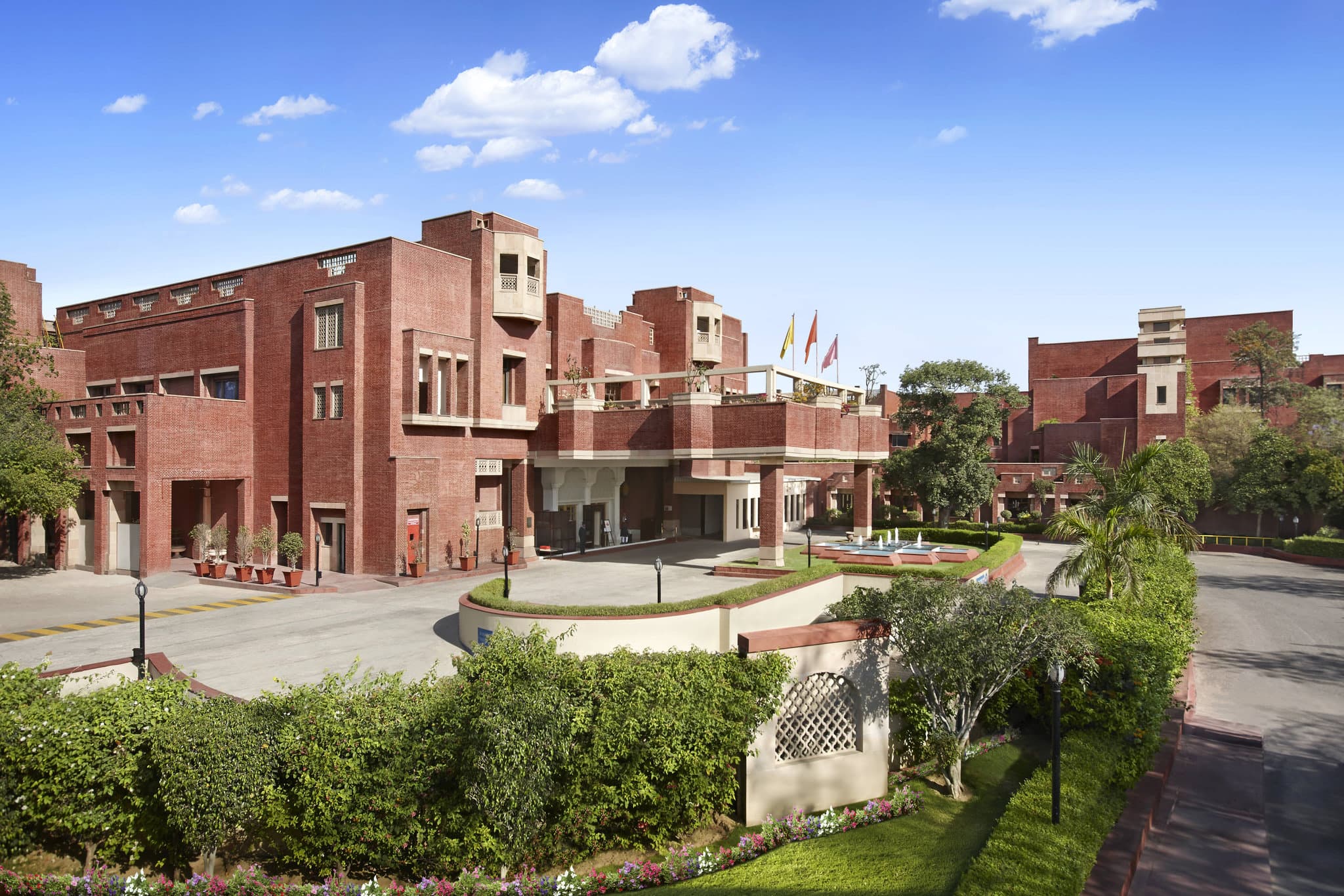
Explore All Jaipur HotelsThe arrival is a study in kinetic contrasts. You step off the train at Jaipur Junction, navigating a sensory assault of rickshaws and heat, and moments later, you vanish behind the thick, red-brick ramparts of the ITC Rajputana. Designed to mimic the spatial drama of a Rajasthani *haveli*—think long, sun-dappled corridors and hushed courtyards—this property is a masterclass in ITC’s ‘Responsible Luxury’ ethos. It is not merely a hotel; it is a LEED Platinum-certified fortress that runs almost entirely on off-site wind energy and holds a rare LEED Zero Water certification. Inside, the aesthetic rejects modern minimalism for heavy, tactile grandeur. While some room hardware leans towards the vintage, the commitment to the planet is cutting-edge. The filtered water in glass bottles and the locally sourced Kaya Kalp amenities are standard, not an afterthought. But the real pilgrimage here is culinary. At *Peshawri*, the menu is printed on wooden blocks, but you won’t need it. Order the Dal Bukhara—black lentils simmered for 18 hours into a dark, buttery velvet—and the Sikandari Raan. It is a gastronomic institution that justifies the booking alone. For the eco-conscious traveler, this is the ultimate verdict: five-star indulgence with a near-zero carbon footprint.
“Request a room in the 'Thikana' wing on the ground floor for direct access to the pool deck, and visit the Sheesh Mahal Bar post-dinner for a Single Malt under a wall of mirrors.”
Insider TipAvg. Nightly Rate
94USD
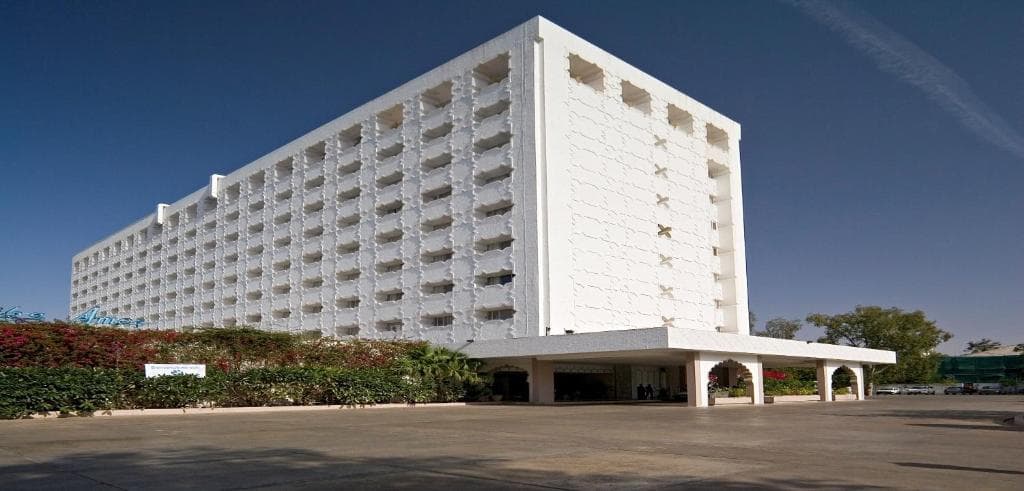
Forget the haveli clichés. Hotel Clarks Amer, Rajasthan’s first five-star property, has traded royal cosplay for mid-century modernist cool and serious sustainability credentials. Recently crowned the new home of the Jaipur Literature Festival, this 1970s structure has evolved from a vintage stay into the city’s intellectual nerve center. The real story here is the 'Conscious Luxury' ethos. It’s not just a placard on the bed; it’s the on-site 'Poly House' greenhouses growing organic arugula for Zolocrust, the hotel’s 24/7 chef-run bakery. There is no front-of-house staff here—chefs serve you directly on compostable crockery, offering a zero-waste dining experience that feels revolutionary. Order the signature Jungle Marinara pizza; the sourdough crust is impeccable. Rooms are spacious, featuring the cool marble flooring typical of the era, though they frankly show their age—bathrooms are retro, and not always intentionally. But you aren't here for a rainfall shower; you're here to sip a gin at ta BLU, the rooftop art bar, knowing the water you drink is recycled and the vibe is authentically local, not tourist-trap glossy. It is a place for the culturally curious, not the gold-tap obsessed.
“Skip room service and head to Zolocrust at 2 AM for the Tiramisu—it’s made with house-grown coffee. Request a 'Club Room' on a higher floor for reduced street noise.”
Insider TipAvg. Nightly Rate
40USD
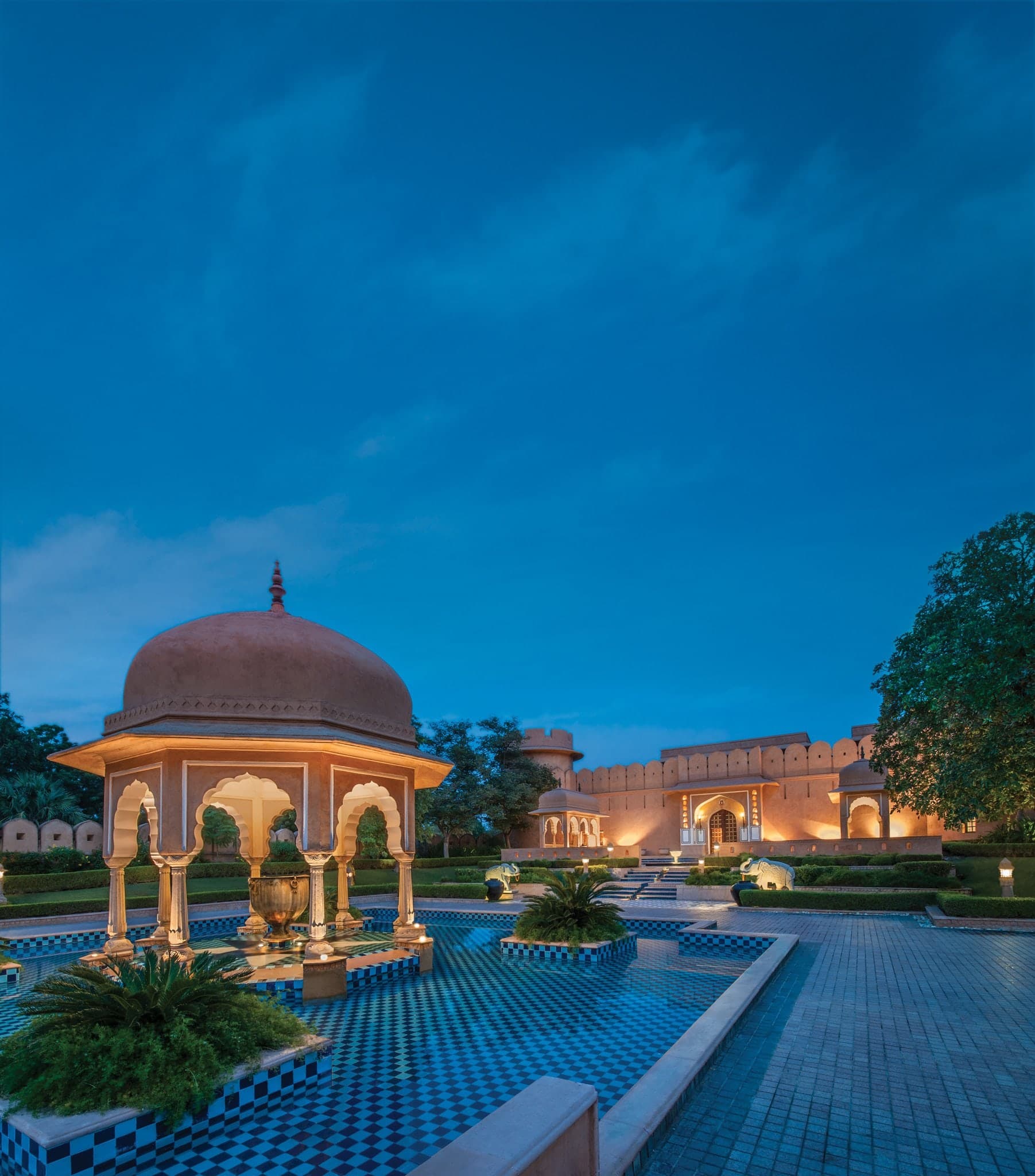
While the Pink City honks and hustles 14 kilometers away, The Oberoi Rajvilas operates on a different frequency—specifically, the quiet hum of a 32-acre ecosystem. Recently crowned the 'Best Hotel in the World' by Travel + Leisure (2024), this isn't just a place to sleep; it is a masterclass in regal preservation. The grounds are less 'landscaped garden' and more 'thriving sanctuary,' where 150 peacocks strut with the entitlement of landlords and a 280-year-old Shiva Temple anchors the lotus pond. Inside the Luxury Tents, the experience is tactile: teak floors, claw-foot bathtubs, and block-printed canopies that nod to Rajasthan’s nomadic past without sacrificing the Dyson hair dryers and high-speed WiFi. Dining at Surya Mahal avoids the usual buffet fatigue; the Malabar Fish Curry is a revelation of spice, while the seasonal farm-to-fork menus utilize produce from the on-site kitchen gardens. Service is telepathic—staff seem to anticipate your need for a cold towel or a lime water before you’ve fully formulated the thought. **The Verdict:** A fortress of biodiversity that justifies every rupee of its rate. It dominates the global rankings for a reason.
“Skip the morning rush. Visit the onsite 280-year-old Shiva Temple at 'golden hour' (around 5:30 PM) when the priest performs the aarti and the peacocks are most active.”
Insider TipAvg. Nightly Rate
863USD
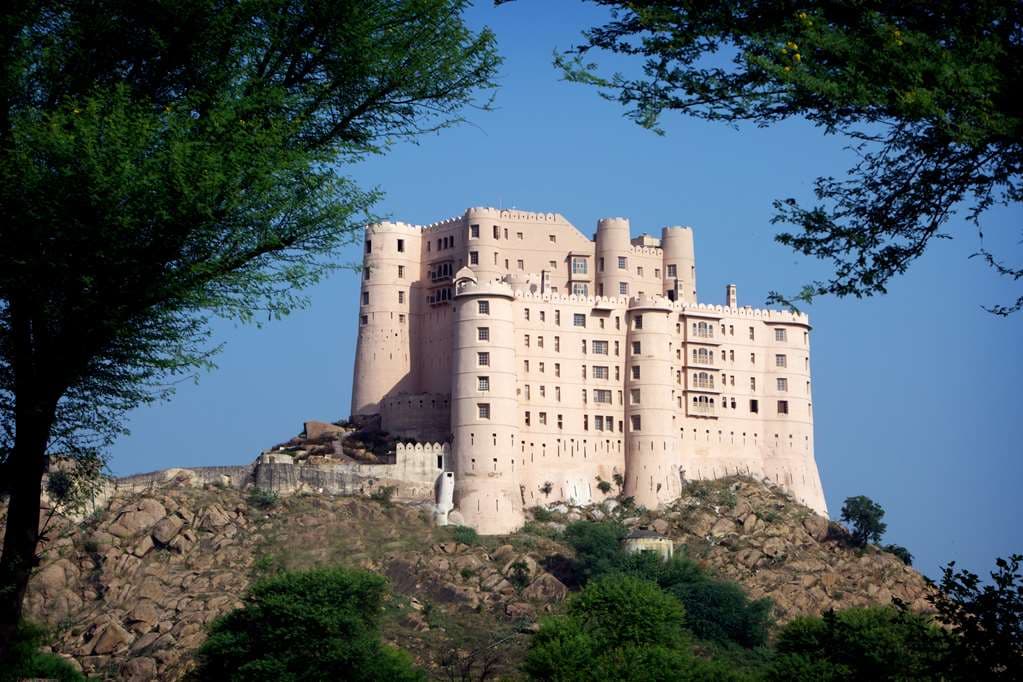
Forget the saccharine pastels of Jaipur’s palaces; Alila Fort Bishangarh is a granite fist punched into the Aravalli skyline. This isn't a delicate restoration—it's a 230-year-old warrior stronghold that demands you leave your car at the base and ascend via vintage jeep, a masterstroke of arrival theatre. Inside, the vibe is strictly 'Spartan splendor.' We’re talking two-meter-thick stone walls, reclaimed wood, and stark, moody lighting that makes everyone look mysterious. The sustainability angle isn't just PR fluff. The zero-mile menu at *Haveli* relies on the organic garden you passed on the way up, but the real drama happens at *Nazaara*. Here, sand-pit cooked meats and the signature *Laal Maas* are served under the stars on the turret terrace. It’s primal, smoky, and sophisticated. The rooms maximize the structure's defensive heritage; ask for a Turret Suite where the large bay windows (Jharokhas) offer daybeds perfect for watching the rural landscape, wrapped in high-thread-count linens while sipping artisan coffee. Service operates on 'fort time'—leisurely but warm—yet when the staff delivers a piping hot *Thala* breakfast, all is forgiven. A brooding, eco-conscious masterpiece for those who prefer stone over silk.
“The infinity pool is located at the 'Haveli' base, not the fort top. For the best experience, head there in the late morning, then retreat to the Nazaara rooftop terrace specifically at 5:30 PM for the sunset transition.”
Insider TipAvg. Nightly Rate
180USD
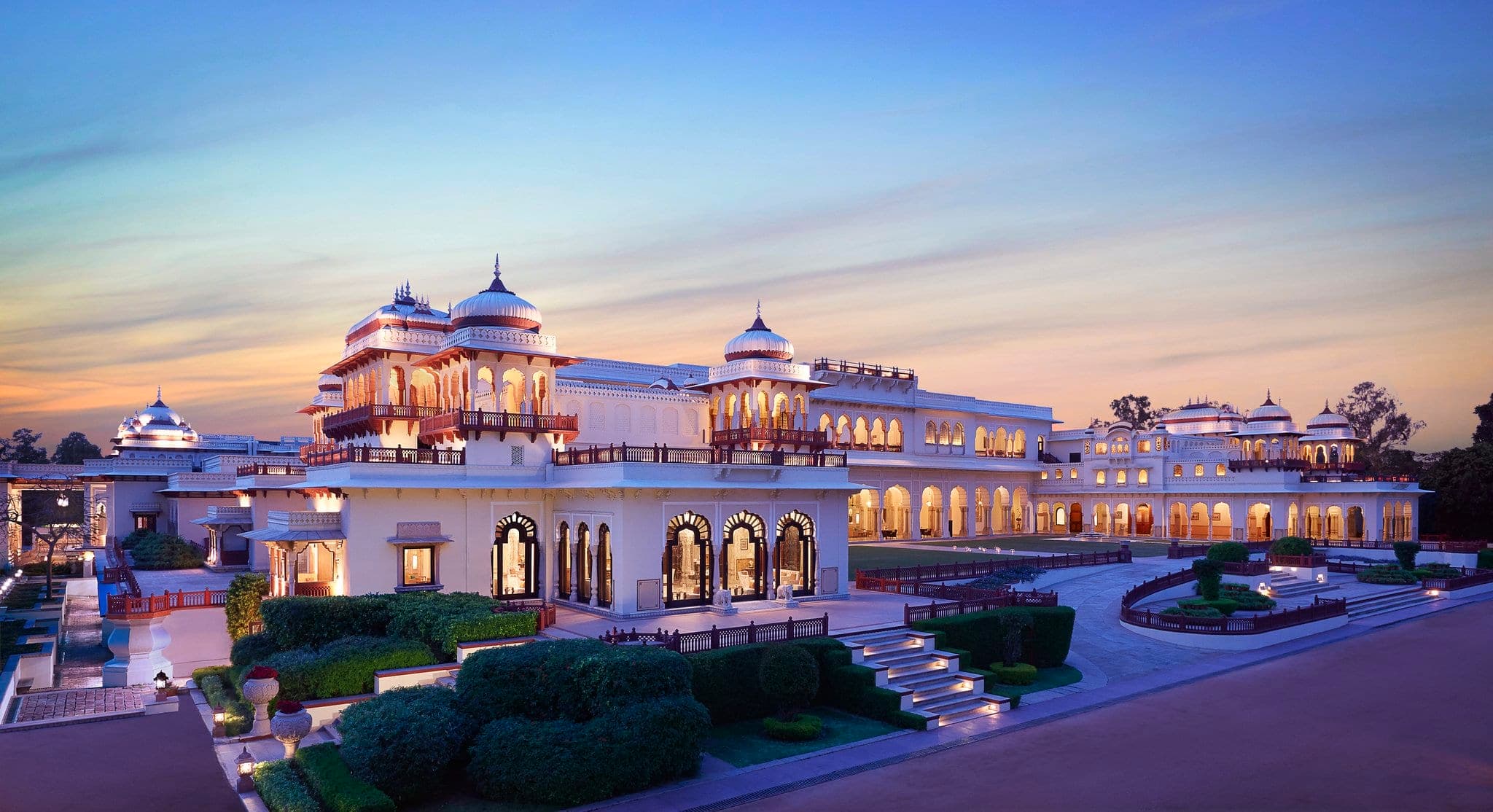
It begins with the peacocks—hundreds of them, iridescent sentinels patrolling a 47-acre estate that acts as Jaipur’s most vital green lung. While Rambagh Palace wears its 1835 heritage with the requisite velvet-roped grandeur, the real story here is how the 'Jewel of Jaipur' has quietly pivoted to eco-conscious stewardship without dropping a single star. Beneath the manicured Mughal gardens lies a sophisticated rainwater harvesting network, turning the estate into a sponge that recharges the parched city’s water table. Inside, the vibe steers clear of sterile modern luxury. The rooms are exercises in period-correct opulence, featuring high ceilings, intricate mother-of-pearl inlay, and 400-thread count linens that feel inherited rather than purchased. Dining offers a delightful whip-lash of styles: Suvarna Mahal demands formal attire for its gold-plated thalis and signature Laal Maas, while Steam—a restored Victorian train carriage parked in the gardens—serves unexpectedly excellent wood-fired thin-crust pizzas to a younger, gin-sipping crowd. Service is telepathic, a Taj signature, where your preference for ice-cold towels is noted before you even break a sweat. It’s an opulent time capsule, certainly, but one that breathes life back into its environment.
“Request a room in the original palace wing for genuine Art Deco flair and higher ceilings. Don't miss the peacock feeding ritual at the Verandah around 5 PM—it is theatrical, chaotic, and utterly photogenic.”
Insider TipAvg. Nightly Rate
540USD
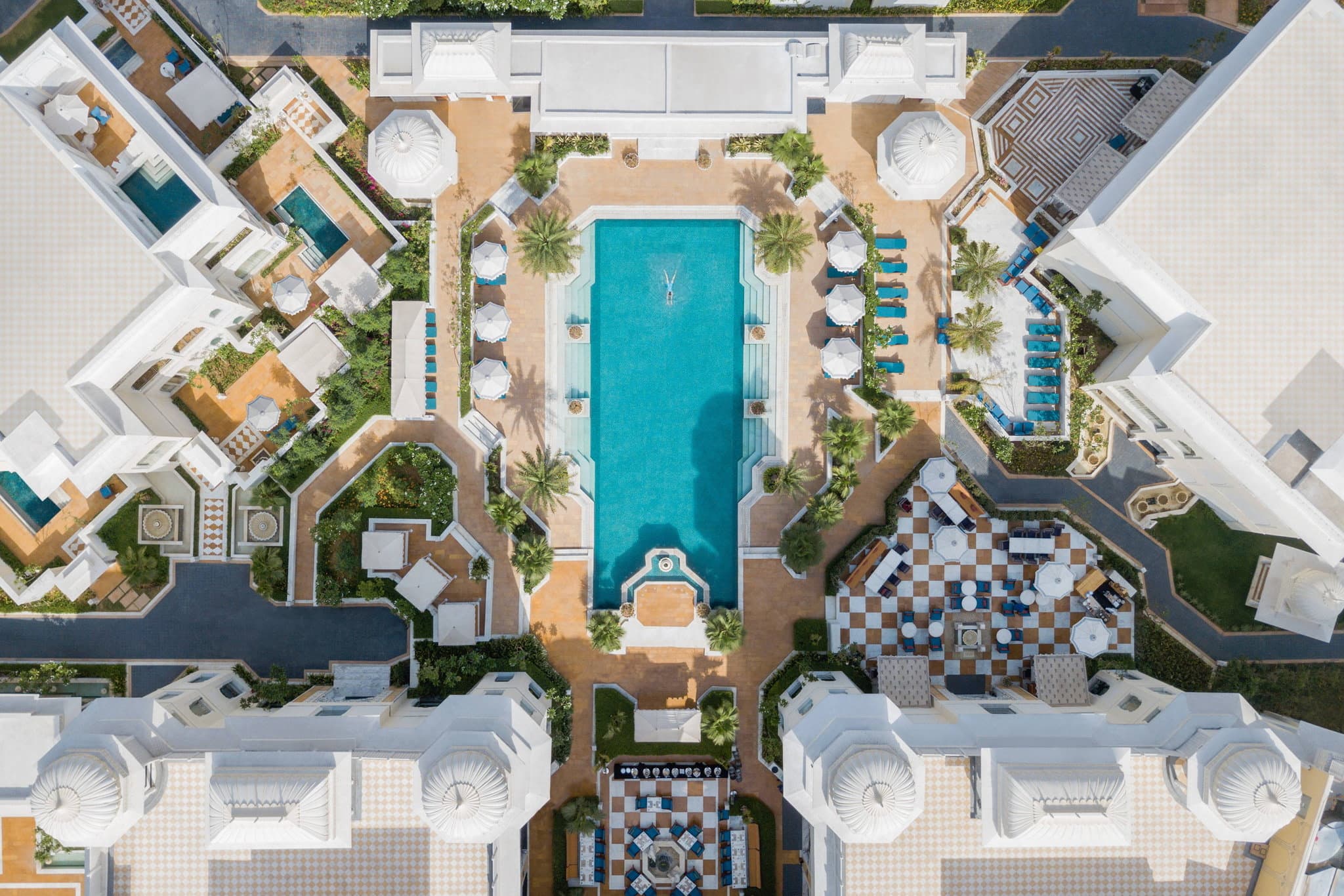
It takes confidence to plant a 'Palace in White' amidst Jaipur’s terracotta grandeur, but The Leela Palace Jaipur—freshly minted with Two Michelin Keys and a 2025 Gold List nod—delivers a masterclass in modern royalty. Situated in Kukas, a calming 30-minute drive from the city’s frenetic bazaars, this is where the 'Conscious Jaipur' narrative truly takes root. Unlike its heritage competitors, the Leela is purpose-built for the eco-aware traveler, recently achieving EDGE Advanced certification for its energy efficiency. The commitment to sustainability isn't just a brochure footnote; it’s woven into the 'Aujasya' wellness concept at The Spa and the vegan, cruelty-free 'Tishya by The Leela' amenities in your bathroom. The design is equally thoughtful, employing local Thikri craftsmanship to dazzling effect without feeling dated. The culinary program is a standout. At Mohan Mahal, electricity is banished in favor of candles reflecting off 350,000 mirrors, creating a sustainable spectacle that pairs perfectly with the signature Sharabi Maas (rum-soaked lamb). For a lighter touch, Preet Mahal serves a Sous Vide Lamb Agnolotti that rivals any trattoria. Service is delivered by dedicated butlers who navigate the fine line between attentive and invisible. It’s a sanctuary that proves you don’t need to sacrifice plushness for the planet.
“Book a table at Mohan Mahal precisely at 8:00 PM. The transition from twilight to pure candlelight against the 350,000 mirrors is a zero-electricity light show you can't miss.”
Insider TipAvg. Nightly Rate
300USD
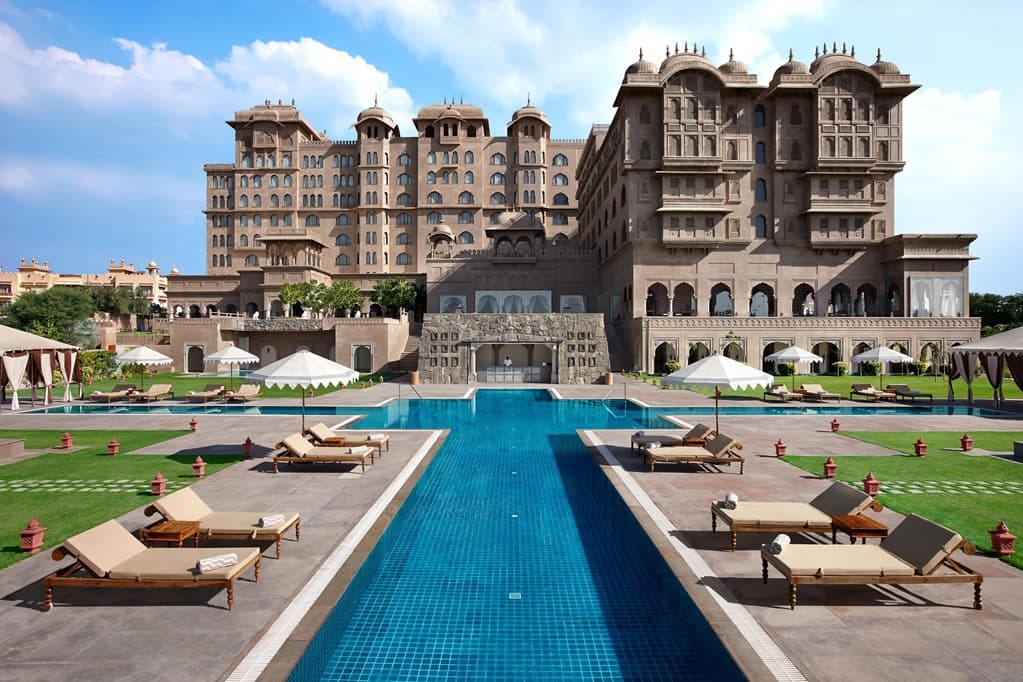
The arrival at Fairmont Jaipur is calculated drama: a shower of rose petals and the thunder of nagada drums at the 400-year-old inspired fortress gates. But the real story here isn’t the imperial cosplay; it’s the grit behind the glamour. Recently minted with a Green Globe certification (2025), this property has aggressively pivoted from mere opulence to operational circularity. The kitchen doesn’t just lip-sync farm-to-table; they utilize Orbisk AI technology to slash food waste by 30%, turning the rest into compost for the onsite organic garden that feeds restaurant Zoya. Inside, the vibe shifts from masculine fortress to feminine indulgence. Rooms feature 400-thread count linens and large soaking tubs, though the unheated Chaupar-shaped pool is best admired from the terrace during winter. Dining is the heavyweight champion here: Zarin’s Indo-Persian 'Atta Raan'—lamb leg baked in sourdough—is mandatory, as is the Laal Maas at Zoya. For downtime, the Ruhab Spa uses local Forest Essentials products for zodiac-based therapies, skipping generic imports for potent, regional ayurveda. It’s a wedding factory, yes, but one that’s finally cleaning up the confetti.
“The 'Gold Lounge' on the 1st floor offers a quiet breakfast alternative to the chaotic main buffet. Also, check wedding dates before booking; noise travels.”
Insider TipAvg. Nightly Rate
142USD
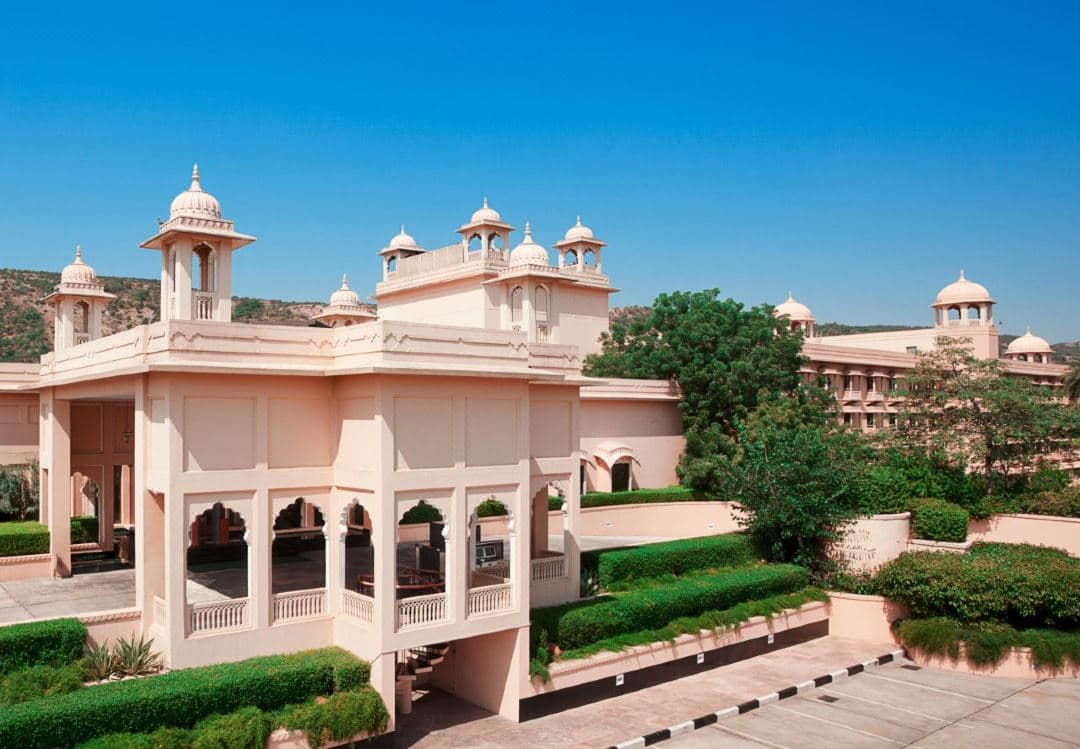
While most tourists jostle for a fleeting photo of the Jal Mahal from the promenade, Trident guests view the Water Palace as their private front lawn. Managed by The Oberoi Group, this property doesn't just face the Mansagar Lake; it actively stewards the ecosystem, maintaining the indigenous flora that buffers the wetland from the city’s chaos. The hardware is undeniably vintage—base rooms are a snug 25 square meters, a reminder of a different architectural era—but the software is flawless. Housekeeping operates with almost telepathic precision, and the 'Oberoi standard' shines in the unhurried service at The Verandah. Dining is the unheralded hero here: the *Jal Mahal* restaurant delivers a Laal Maas that smokes its competitors, while the breakfast Kachori with Kadhi offers a spicy wake-up call worth skipping the alarm for. **Verdict:** A polished, eco-conscious heritage stay. Visit now to experience its classic rose-hued charm before the property closes in July 2025 for a comprehensive metamorphosis.
“Book a 'Lake View' room on the 3rd floor. You’ll get the best angle of the Jal Mahal at sunrise without the noise of the ground-level terrace.”
Insider TipAvg. Nightly Rate
120USD