No. 01
Goner Road. Jaipur India 303012Jaipur189 verified reviews
9
.6
Bitvoya Edit
Layering imagery, place, and detail before the page opens.
Jaipur, Rajasthan’s fabled Pink City, offers more than just sightseeing; it offers the chance to inhabit history. Beyond the bustling bazaars of the Walled City lie intimate sanctuaries of the past—restored Havelis and palaces that have been meticulously transformed into luxury retreats. Properties like The Raj Palace and Rambagh Palace allow you to step back into the era of the Maharajas, surrounded by frescoed courtyards and intricate stonework. Whether you prefer the regal isolation of Alila Fort Bishangarh or the lush gardens of the Oberoi Rajvilas near the city center, these heritage stays define the Bitvoya experience. Discover the seamless blend of Rajput architecture and world-class hospitality in the heart of India’s most colorful city.
Choosing a restored Haveli or palace hotel in Jaipur is about choosing an immersive narrative over a standard hotel stay. Jaipur is unique in India for its density of royal residences that have opened their doors to guests. Unlike modern constructions, properties like the Fairmont Jaipur and the ITC Rajputana pay homage to the region's architectural lineage, while authentic restorations like The Raj Palace offer a direct link to the 18th century. These venues provide 'Intimate Restored Havelis' experiences by offering private courtyards, personalized butler services, and dining experiences in historic durbars, ensuring that every moment feels like a secret shared between the city and you.
To truly unlock the secrets of the Pink City, location is key. The Walled City (Old City) is ideal for those who wish to be within walking distance of the Hawa Mahal, where several smaller Havelis are tucked away. For a grander scale of luxury, the Civil Lines and Rambagh Area host the sprawling estates like Rambagh Palace and The Leela Palace Jaipur, offering vast gardens and serenity. For travelers seeking a fortress experience, the Amer and Bishangarh regions, home to Alila Fort Bishangarh, provide dramatic hilltop views and a sense of protective seclusion away from the urban chaos.
The ideal time to visit Jaipur's restored Havelis is between October and March. During these winter months, the weather is pleasant (15°C-25°C), allowing you to enjoy outdoor courtyards and rooftop dining at properties like The Raj Palace.
Yes, luxury heritage properties in Jaipur, including Alila Fort Bishangarh and Fairmont Jaipur, are family-friendly. They often provide Kids' Clubs, cultural activities like puppet shows, and spacious suites suitable for families.
Absolutely. Hotels like Rambagh Palace and ITC Rajputana specialize in authentic Rajasthani cuisine, serving traditional dishes like Laal Maas and Dal Baati Churma in settings that replicate royal dining halls.
Explore our complete curated list of luxury accommodations, from boutique hideaways to grand dames.
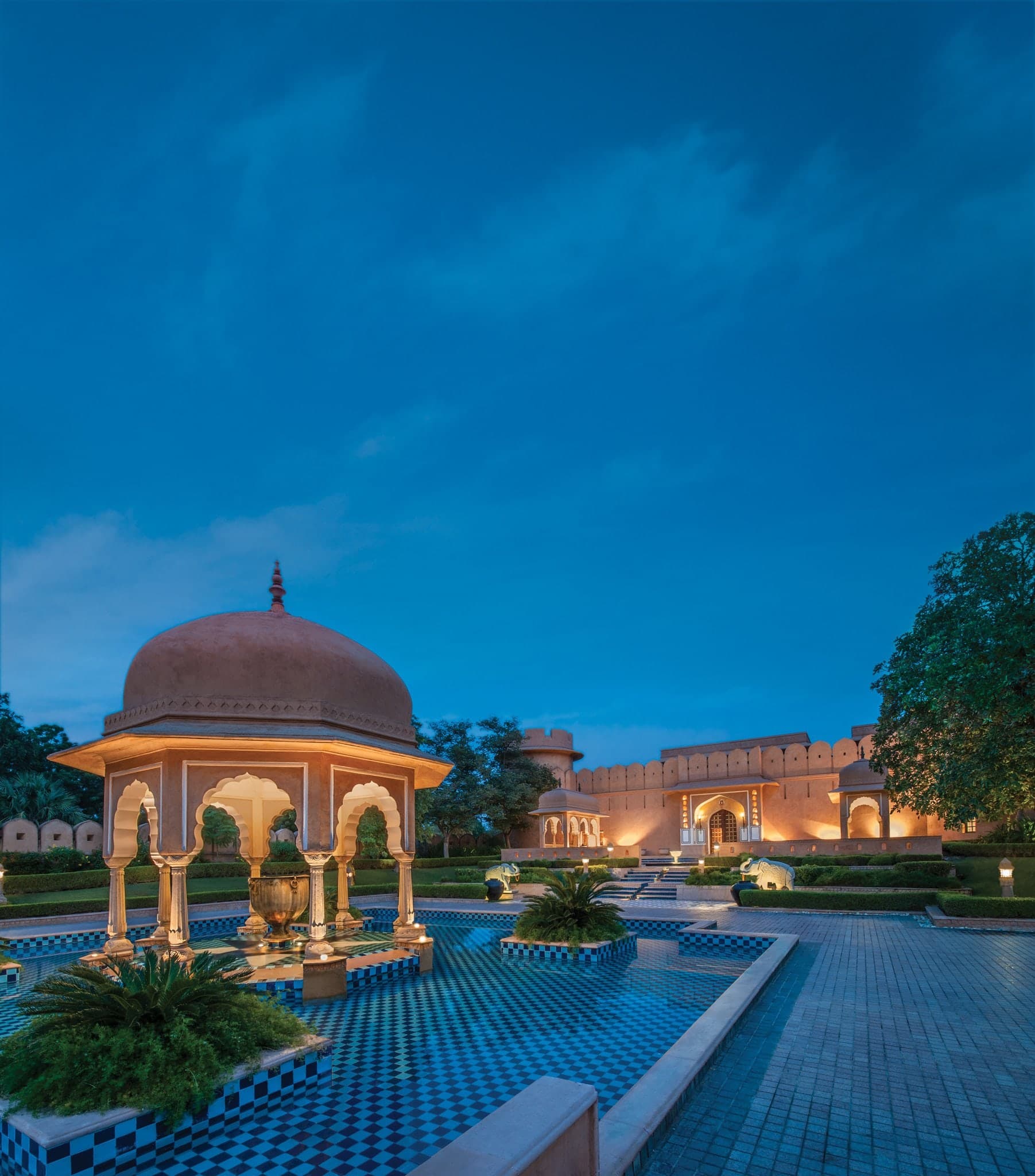
Explore All Jaipur HotelsWhen Travel + Leisure crowned this property the ‘Best Hotel in the World’ in July 2024, the skepticism was palpable. How does a 1997 vintage veteran beat the shiny new toys? The answer lies in the silence. Located a deliberate 14 kilometers from the frenetic Hawa Mahal, Rajvilas isn’t just a hotel; it’s a fortress against entropy. Built around a functioning 280-year-old Shiva temple, the layout mimics a traditional Rajasthani village, albeit one manicured to an inch of its life. The magic here isn’t in the gold leaf, but in the restraint. The ‘Luxury Tents’ are the power move—think less Boy Scouts, more Raj-eraglamour with Burmese teak floors, air-conditioning that actually works, and claw-foot bathtubs that demand a soak. At Surya Mahal, skip the continental drift and order the signature Rajasthani Thali; the Ker Sangri is smoky, spicy perfection. While the bathrooms feel slightly 1990s compared to the city’s newer openings, the service remains telepathic. Staff don’t just serve; they anticipate. In a world of algorithmic hospitality, Oberoi still deals in human intuition.
“Book a 'Luxury Tent' specifically in the 100-block cluster for the most privacy and direct garden access to the peacock roaming grounds.”
Insider TipAvg. Nightly Rate
863USD
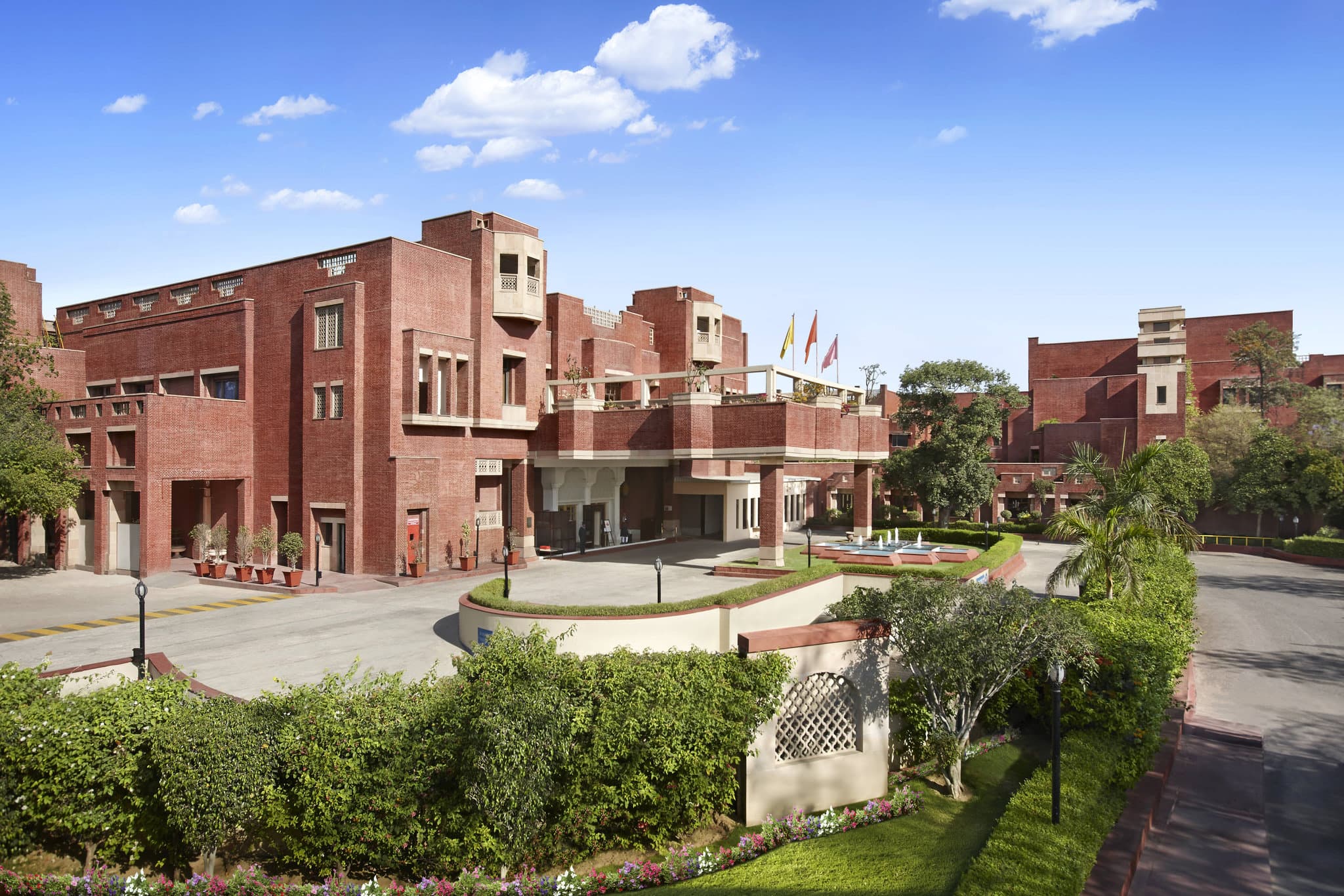
Step off the train at Jaipur Junction, dodge a rickshaw, and 500 meters later, you vanish into a red-brick silence that feels centuries old. The ITC Rajputana isn’t just a hotel; it’s a masterclass in architectural trompe-l'œil. Built in the 90s to mimic a traditional Rajasthani haveli, its maze of long, shadowed corridors and murmuring courtyards successfully tricks the pulse into slowing down. While the 2024 renovations have polished the public spaces, the rooms retain a 'classic' charm—a polite euphemism for hardware that has seen a few decades, though the 400-thread count linens remain crisp. The real pilgrimage here is culinary. At Peshawri, the menu is painted on a wooden block and cutlery is discouraged. You’re here for the Dal Bukhara—black lentils simmered for 18 hours until they achieve a texture akin to silk—and the Sikandari Raan, which falls off the bone at a mere glance. It’s a stark, delicious contrast to the buffet bustle at Jal Mahal. Service carries the brand’s signature 'Namaste' grace, though the front desk can occasionally mirror the chaotic energy of the railway station outside. It’s not the newest shine in the Pink City, but for atmosphere and that legendary dal, it remains a heavyweight.
“Request a 'Thikana' room in the 'K' block facing the pool. The 'station-facing' rooms suffer from noise pollution despite the heavy glazing.”
Insider TipAvg. Nightly Rate
94USD
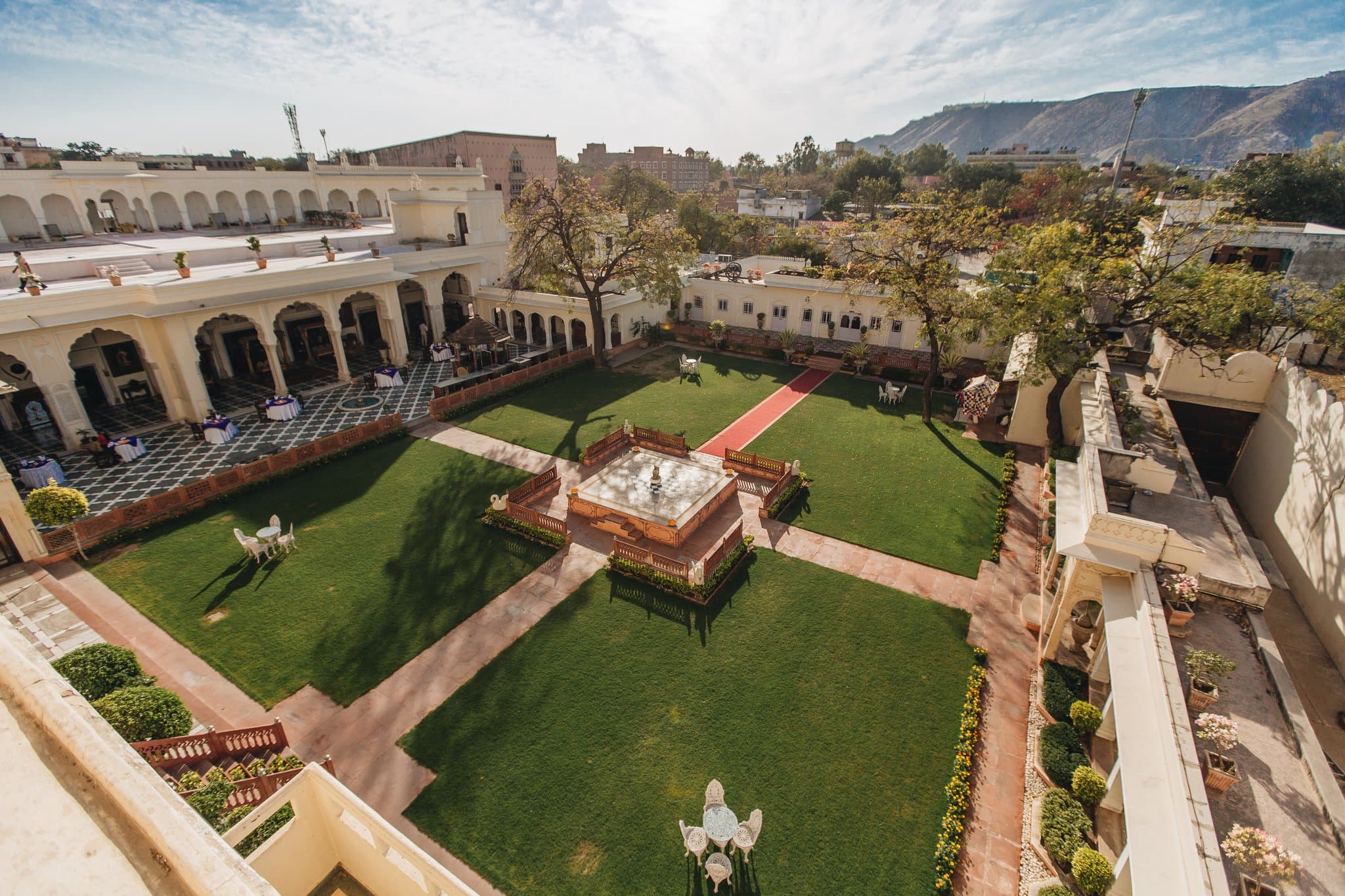
In a city crowded with faux-fortresses and corporate luxury, The Raj Palace stands as a defiant, albeit slightly dusty, bastion of the real deal. Built in 1727—the same year Jaipur itself was founded—this isn't just a hotel; it’s a living museum where you sleep in the exhibits. You don't check in here for Dyson hair dryers or lightning-fast Wi-Fi (which, frankly, can be as temperamental as a monsoon sky). You come for the Swapna Mahal, a dining hall so ornate it makes Versailles look restrained, where the Laal Maas is served on actual gold and silver crockery that demands white-glove service. The residence breathes history, sometimes literally through its aging HVAC systems, but the trade-off is unparalleled atmospheric weight. The Charbagh courtyard, with its Mughal geometry, offers a silence you can’t manufacture. While the unbranded gym facilities might feel like artifacts themselves, the Prakriti spa’s Ayurvedic treatments use oils that feel ancient and healing. It’s a polarized experience: perfectionists seeking standardized 5-star gloss might struggle with the worn bathrooms, but for the slow traveler, the flaws are just patina on a masterpiece.
“Book the 'Heritage Room' in the original wing, not the new addition. Request a table near the crystal chandelier in Swapna Mahal for the best lighting during the thali service.”
Insider TipAvg. Nightly Rate
175USD
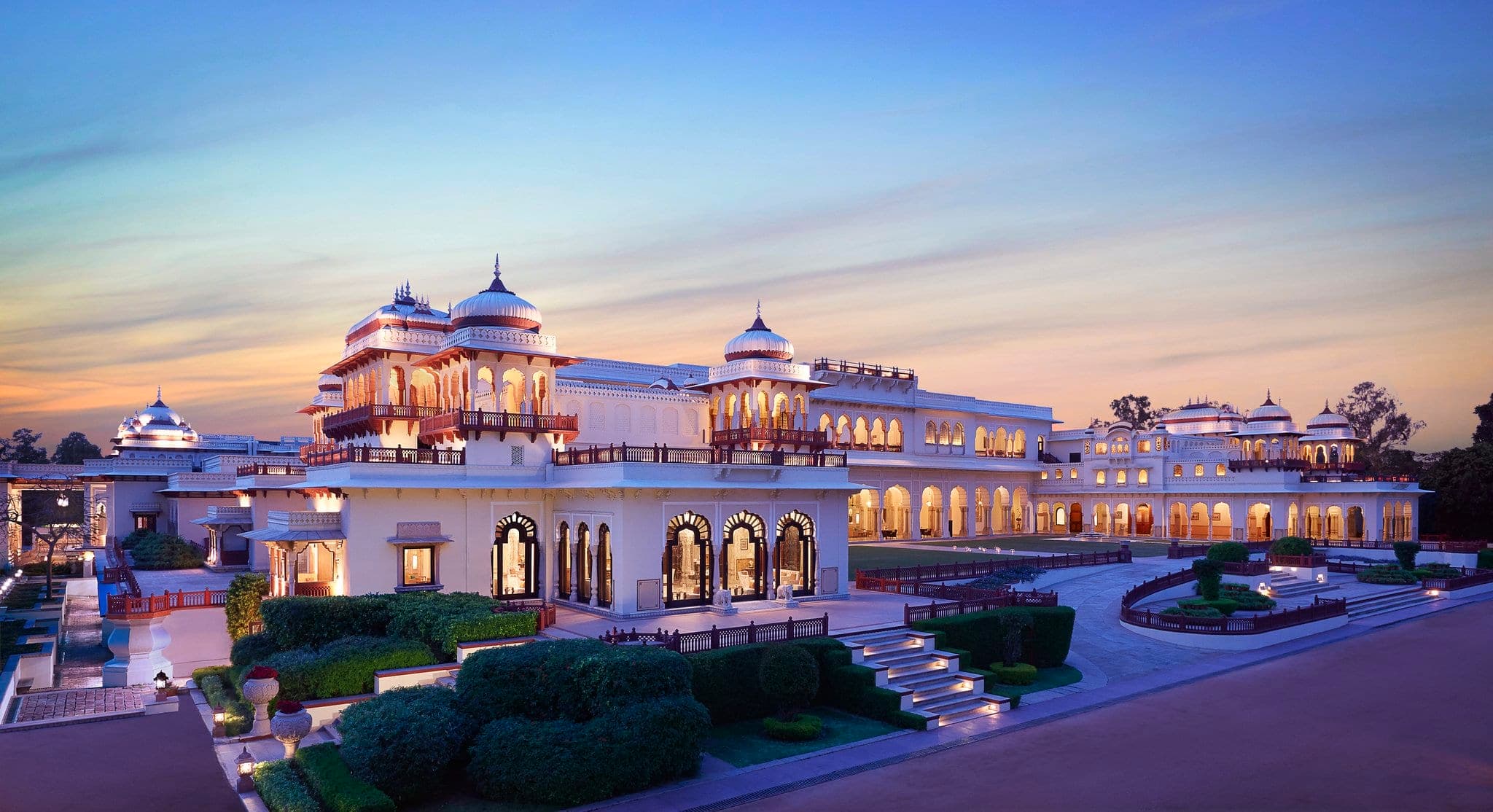
If Jaipur’s restored havelis are the city’s whispering secrets, Rambagh Palace is its declarative shout. Driving through the gates, the cacophony of the Pink City dissolves into the hush of 47 acres of manicured Mughal gardens. This isn't just a hotel; it is the benchmark against which all 'heritage' claims are measured. While newer boutique properties mimic the aesthetic, Rambagh possesses the effortless weight of provenance. The interiors teeter beautifully between museum-grade opulence and lived-in patina—expect hand-painted frescoes and 400-thread count linens, though you might forgive the occasional dated switchgear for the sake of authenticity. Dining here is theatrical. Skip the standard buffet for 'Suvarna Mahal', where the Laal Maas is served under gold-plated ceilings that once looked down on the Maharaja’s banquets. For a witty counterpoint, 'Steam' serves wood-fired pizza inside a restored Victorian steam engine, proving the palace doesn't take itself too seriously. Service is telepathic, appearing with cold towels before you realize you're warm. It’s grand, yes, but with a slow, romantic pulse that defines the very essence of Jaipur luxury.
“Book a table at 'Steam' for sunset; the lounge is a restored steam engine, and the cocktails are significantly better than the standard lobby bar fare.”
Insider TipAvg. Nightly Rate
540USD
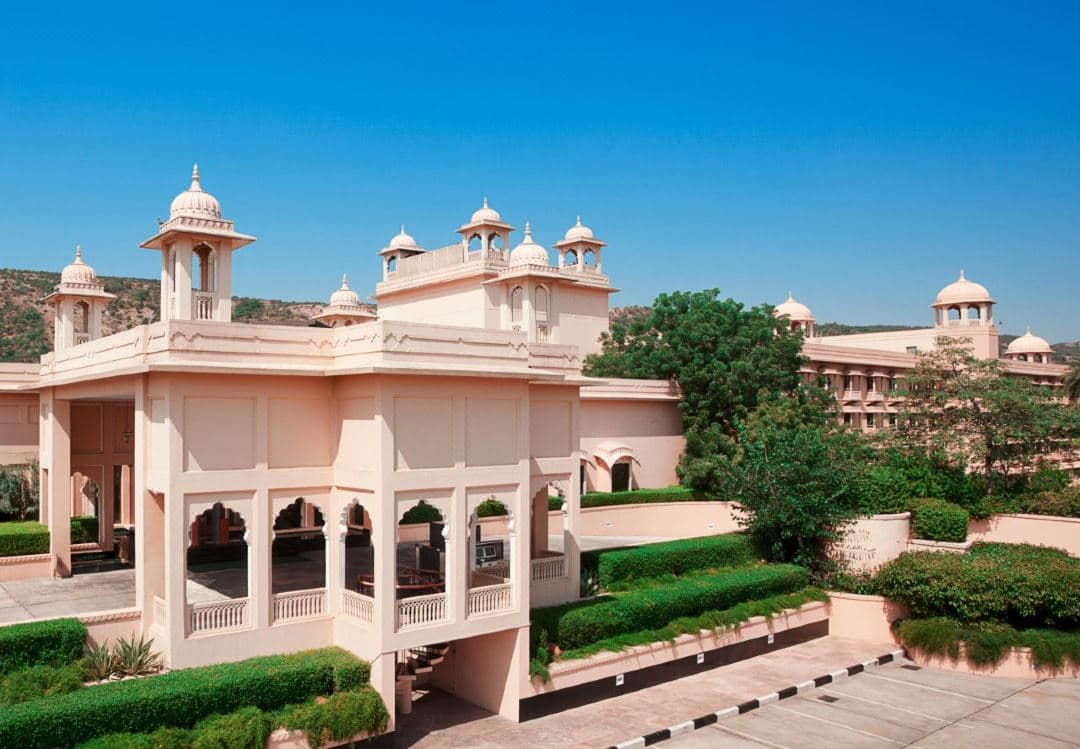
Forget the glass-and-steel monoliths invading Rajasthan; the Trident commits fully to the vernacular. Situated within striking distance of the Amber Fort and facing the Jal Mahal, this low-rise structure mimics the intimacy of a traditional haveli, dressed in the requisite pink sandstone and dotted with intricate ‘jharokha’ balconies. While the property is slated for a significant facelift in July 2025, the current aesthetic offers a nostalgic, established comfort that feels distinctly Jaipuri. The rooms are compact—think ‘cozy heritage’ rather than ‘sprawling suite’—but the real luxury here is the Oberoi-standard service, which operates with telepathic efficiency. Mornings are best spent poolside in the central courtyard, where the Aravalli mountains provide a dramatic, jagged backdrop. Dining is a serious affair: skip the generic continental options and head straight for the ‘Jal Mahal’ restaurant to order the Laal Maas, a fiery mutton curry that demands respect. As dusk falls, the ‘Mansagar’ bar becomes the essential spot for a single malt, looking out towards the water. It is a quiet, reliable retreat that prioritizes peace over pretension, offering a breathless pause before you dive back into the city’s bazaars.
“Book a Lake View room on the first floor for direct sightlines of the Jal Mahal, and visit before the July 2025 closure for renovation.”
Insider TipAvg. Nightly Rate
120USD
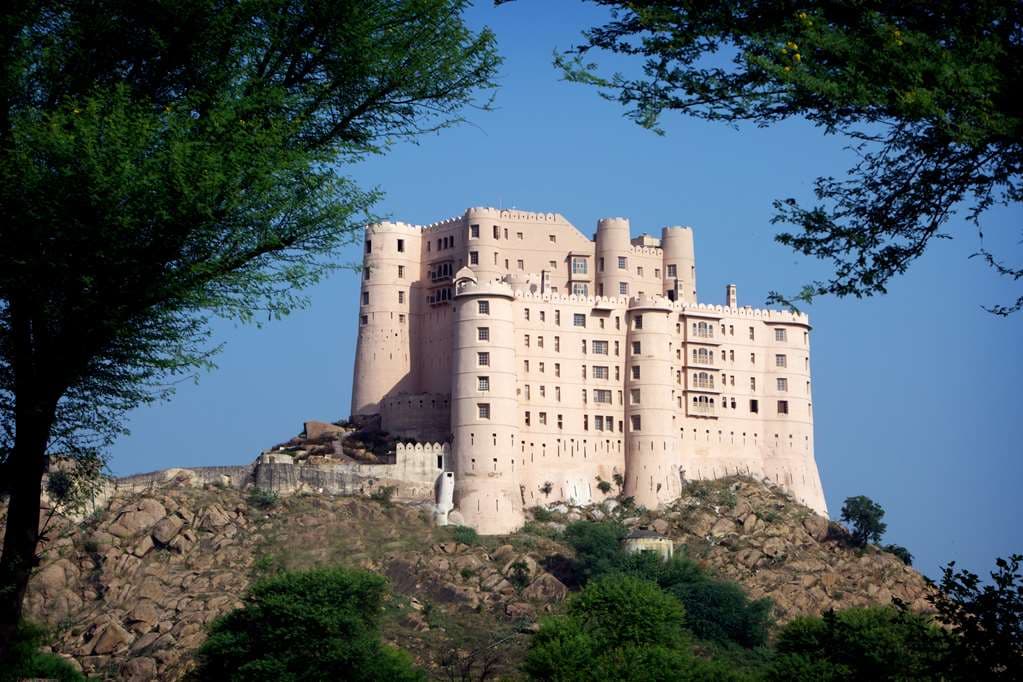
Forget the delicate filigree of typical Rajasthani palaces; Alila Fort Bishangarh is a brute. Perched atop a granite monolith in the Aravalli range, this 230-year-old fortress was built for defense, not decor, and its restoration brilliantly respects that martial grit. The two-meter-thick walls remain, but they now guard oversized soaking tubs and aromatic Alila Living amenities rather than muskets. The arrival is theatrical—a tented outpost at the base followed by a jeep ascent up the ramparts. Inside, the vibe is moody and labyrinthine; hallways are intentionally dimly lit (a complaint for some, a vibe for others) to preserve the structure's historic integrity. Dining is the real siege here. Bypass the standard fare for **Nazaara**, the rooftop terrace where Rajput hunter-style meats are slow-cooked in sand pits. The *Laal Maas* here is smoky, unforgivingly spicy, and best enjoyed under the stars. Mornings are softer at **Amarsar**, where the signature *Thala Breakfast* offers a curated regional platter that banishes buffet fatigue. The only strategic weakness? The infinity pool is located down at the **Haveli** base, requiring a buggy ride for a dip. It’s a minor logistical hiccup in an otherwise impenetrable sanctuary of silence.
“The pool service operates on 'fort time' (read: leisurely). Order your gin and tonic immediately upon arrival to the Haveli deck. For the room, request a 'Grand Suite' with a Jharokha window for the best reading nook in Rajasthan.”
Insider TipAvg. Nightly Rate
180USD
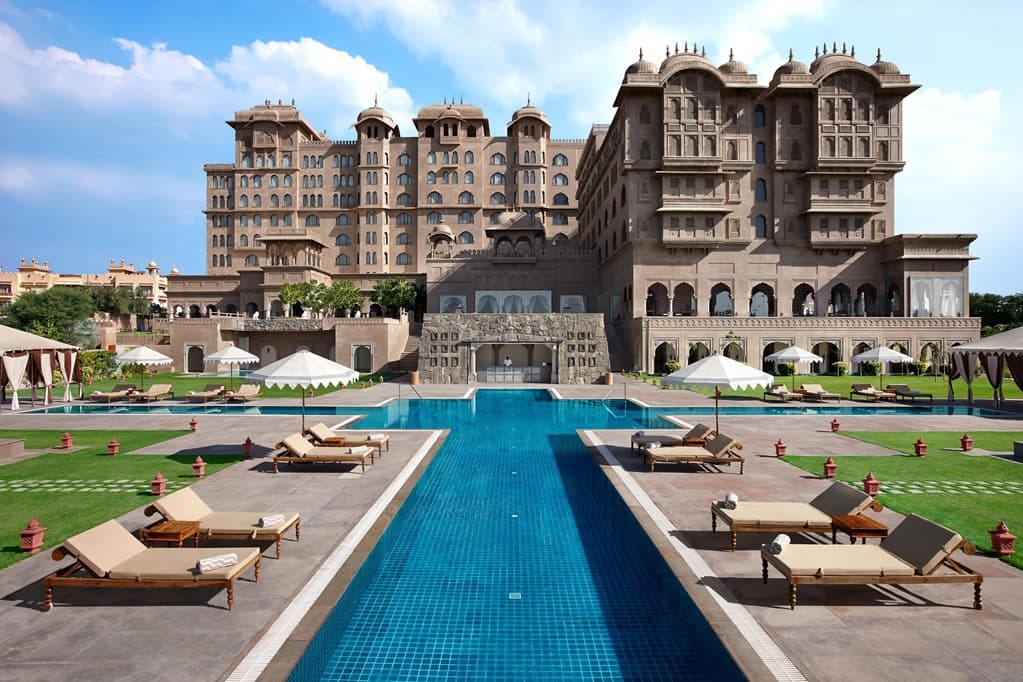
Let’s clear the air: The Fairmont is not a restored haveli. In a feature about intimate heritage saves, this 2012-built colossus is the raucous, high-budget counterpoint. Anchored against the Aravallis, it mimics a Mughal fortress so committedly—from the thundering naggara drums at arrival to the shower of rose petals—that you stop caring it’s a fabrication. The scale is aggressive; the ‘Charbagh’ style gardens and the unheated, Chaupar-shaped pool demand attention. Inside, the rooms are less ‘dusty history’ and more ‘Bollywood set design,’ featuring four-poster beds, massive stone baths, and Le Labo amenities that smell of expensive distinctiveness. Dining is where the theatrics pay off. Skip the all-day buffet at Zoya and head to Zarin for the Atta Raan—a leg of lamb slow-cooked in a sourdough shell that is ceremoniously cracked open at the table. It’s rich, performative, and delicious. Be warned: this is a wedding factory. If you seek the silence of a crumbling 18th-century courtyard, look elsewhere. But if you want the royal fantasy with functioning plumbing, Technogym equipment, and aggressive hospitality, this is your fortress.
“Request a room on the higher floors facing the Aravalli hills. The courtyard-facing rooms suffer from the noise of late-night wedding DJ sets.”
Insider TipAvg. Nightly Rate
142USD
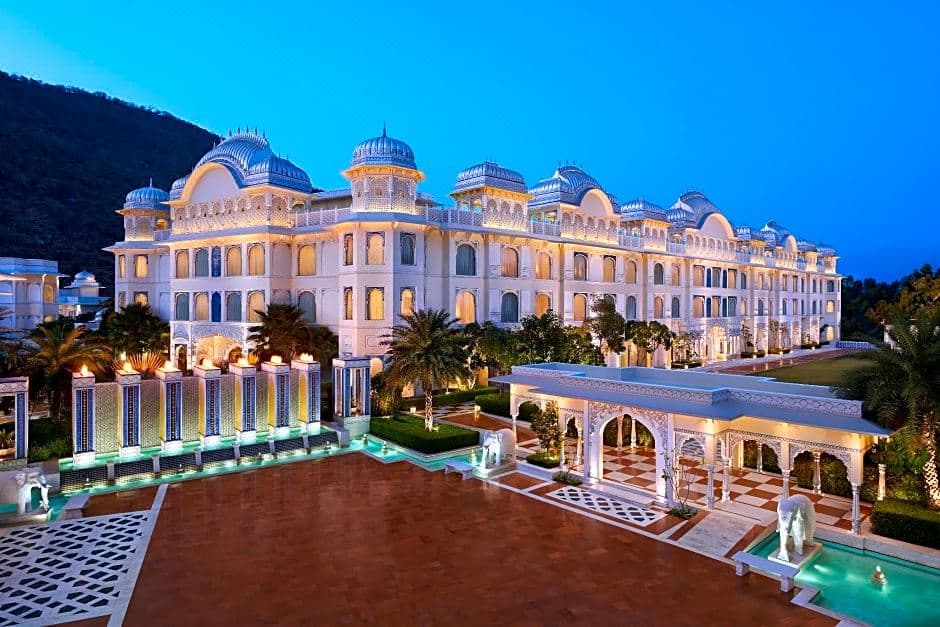
While purists might chase the creaky authenticity of Jaipur’s heritage hotels, The Leela Palace Jaipur offers something arguably more seductive: a high-definition, defect-free fantasy of Rajput grandeur. Located in Kukas, a dusty 30-minute drive from the city’s chaotic heart, this white marble fortress stands in stark, serene contrast to the rugged Aravalli hills. It is not a restored ruin; it is a modern masterpiece of silver domes and hand-painted frescoes that functions with the silent precision of a Swiss watch. The villas are the standout here. Unlike the dark, cavernous chambers of old havelis, these are flooded with light, featuring private plunge pools and bathrooms stocked with Thalgo marine products and plush 400-thread count linens. The pièce de résistance, however, is Mohan Mahal. Inspired by the Sheesh Mahal at Amber Fort, this zero-electricity restaurant is illuminated solely by candles, their flames dancing in 350,000 tiny mirrors while you dine on ‘Sharabi Maas’ (lamb flambéed in dark rum). It is theatrical, yes, but undeniably magical. With impeccable butler service that anticipates needs before you form them, this is the Pink City sans the dust—a polished, glittering retreat for the modern Maharaja.
“Skip the standard rooms and book a Royal Villa with a Plunge Pool for total seclusion. Request a 7:30 PM reservation at Mohan Mahal to witness the candle-lighting ritual.”
Insider TipAvg. Nightly Rate
273USD