No. 01
Africa Avenue New Delhi India 110023New Delhi1959 verified reviews
9
.4
Bitvoya Edit
Layering imagery, place, and detail before the page opens.
Lutyens' Delhi is not merely a location; it is a statement of grandeur and history. Named after the British architect Edwin Lutyens, this district forms the administrative and political heart of New Delhi. Characterized by wide, tree-lined boulevards, colonial bungalows, and roundabouts, it stands in stark contrast to the chaos of Old Delhi. Here, amidst the corridors of power near Raisina Hill and the diplomatic silence of Chanakyapuri, lie some of India's most iconic hotels. From the heritage-soaked corridors of The Imperial New Delhi on Janpath to the modern opulence of The Leela Palace in the Diplomatic Enclave, these properties offer a front-row seat to the capital's elite lifestyle. Staying here means you are moments away from landmarks like India Gate and the Rashtrapati Bhavan.
Choosing a hotel in Lutyens' Delhi is about immersing yourself in the narrative of India's capital. This collection, featuring properties like The Taj Mahal Hotel and The Oberoi, New Delhi, represents the pinnacle of hospitality where heritage meets modern power. Unlike other parts of the city, this zone offers lush greenery, high security, and wide avenues perfect for morning walks. You aren't just booking a room; you are staying in the same precincts frequented by heads of state, diplomats, and global business leaders. Whether it's the colonial charm of The Claridges or the architectural marvel of The Lodhi, these hotels define the skyline and the soul of New Delhi.
Expect nothing less than royalty. These icons are institutions in themselves. Culinary excellence is a given; for instance, the legendary Bukhara at ITC Maurya is a bucket-list dining experience. You can expect expansive gardens—a luxury in a metropolis—at properties like The Imperial and The Lodhi. Service is intuitive and discreet, catering to VVIPs regularly. From high tea rituals that hark back to the British Raj to spa treatments utilizing ancient Indian Ayurveda, these hotels offer a sanctuary where the chaos of the city melts away, leaving only the essence of New Delhi's power and grace.
The Imperial New Delhi is widely considered the best for heritage, offering a museum-like experience with its colonial architecture and extensive art collection dating back to the British Raj.
Yes, Chanakyapuri (the Diplomatic Enclave) is home to some of the city's finest hotels, including The Leela Palace New Delhi and ITC Maurya, known for their high security and luxury.
ITC Maurya is world-renowned for its dining, specifically 'Bukhara', which is famous for its North Indian frontier cuisine and is a frequent stop for visiting heads of state.
Explore our complete curated list of luxury accommodations, from boutique hideaways to grand dames.
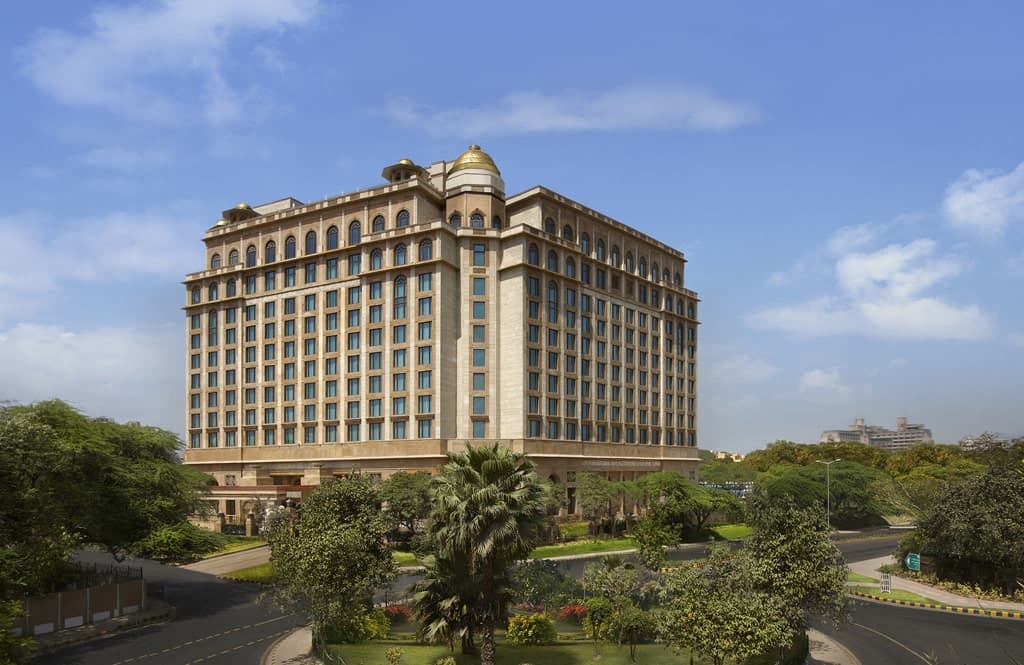
Explore All New Delhi HotelsIf Lutyens’ Delhi is the brain of the Indian state, The Leela Palace is its diamond-encrusted skull. Anchored in the diplomatic grid of Chanakyapuri, this is where foreign dignitaries retreat when the capital’s chaos hits fever pitch. The security perimeter is airport-grade, but inside, the vibe shifts from fortress to feudal fantasy. You aren’t just checking in; you’re ascending a hierarchy. The lobby is a riot of Murano chandeliers and hand-woven carpets, but the real flex here is space. Entry-level Grand Deluxe rooms clock in at a massive 51 square meters—palatial by Delhi standards—fitted with 400-thread count linens that feel like heavy cream. Dining is a serious affair: skip the buffet and head straight to Megu for the Yellowtail Carpaccio, or let Jamavar’s Raan-e-Jamavar (a leg of lamb slow-cooked until it surrenders) dismantle your diet. Service is swift, silent, and butler-led, though the rooftop infinity pool—while visually arresting against the skyline—is largely decorative during the smog-choked winter months of December and January. It’s a minor grievance in a hotel that functions as a high-security cocoon for the global elite.
“Request a room facing the inner courtyard to avoid traffic hum. Don't miss the 6:00 PM ceremonial lighting of the Devi sculpture—it’s theatrical, distinct, and best viewed with a gin and tonic in hand.”
Insider TipAvg. Nightly Rate
173USD
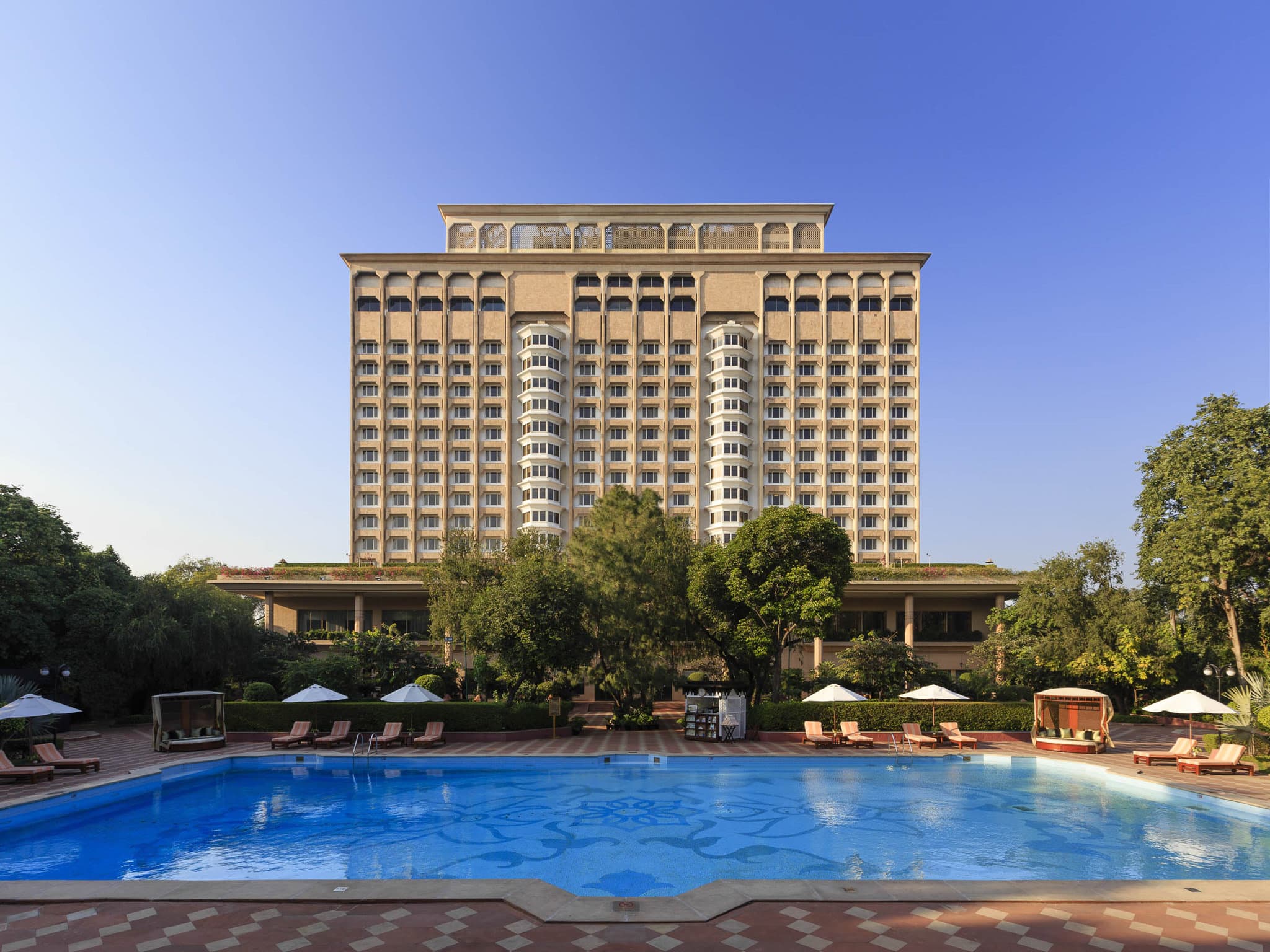
If Lutyens’ Delhi had a pulse, it would be found thrumming beneath the Mughal-inspired domes of 'Taj Mansingh.' Long established as the unofficial annex of the capital’s political theatre, this property has fresh wind in its sails following a comprehensive renovation and a shiny new accolade: 'India's Leading Hotel 2025' from the World Travel Awards. While entry-level rooms remain a modest 33 square meters—a quirk of its 1978 heritage—the recent overhaul has added state-of-the-art air purification systems and crisp, modernized interiors that maximize the leafy views of Rashtrapati Bhavan. The true allure, however, lies in the lobby's social choreography. By day, diplomats trade secrets over Earl Grey; by night, the mood shifts to the electric Rick’s, where the Umami Ugarte cocktail fuels the city’s socialites. Dining is non-negotiable here. The House of Ming remains the capital’s definitive spot for Peking Duck, while Varq continues to elevate the genre with its signature Varqi Crab. Yet, it is the staff—embodying the brand’s legendary 'Tajness'—who make this marble fortress feel like a home. They don’t just serve; they anticipate.
“Book a table at Rick’s after 10 PM on a Friday for the best people-watching in the capital, or request a room on the higher floors facing the India Gate for a smog-free sunrise view.”
Insider TipAvg. Nightly Rate
213USD
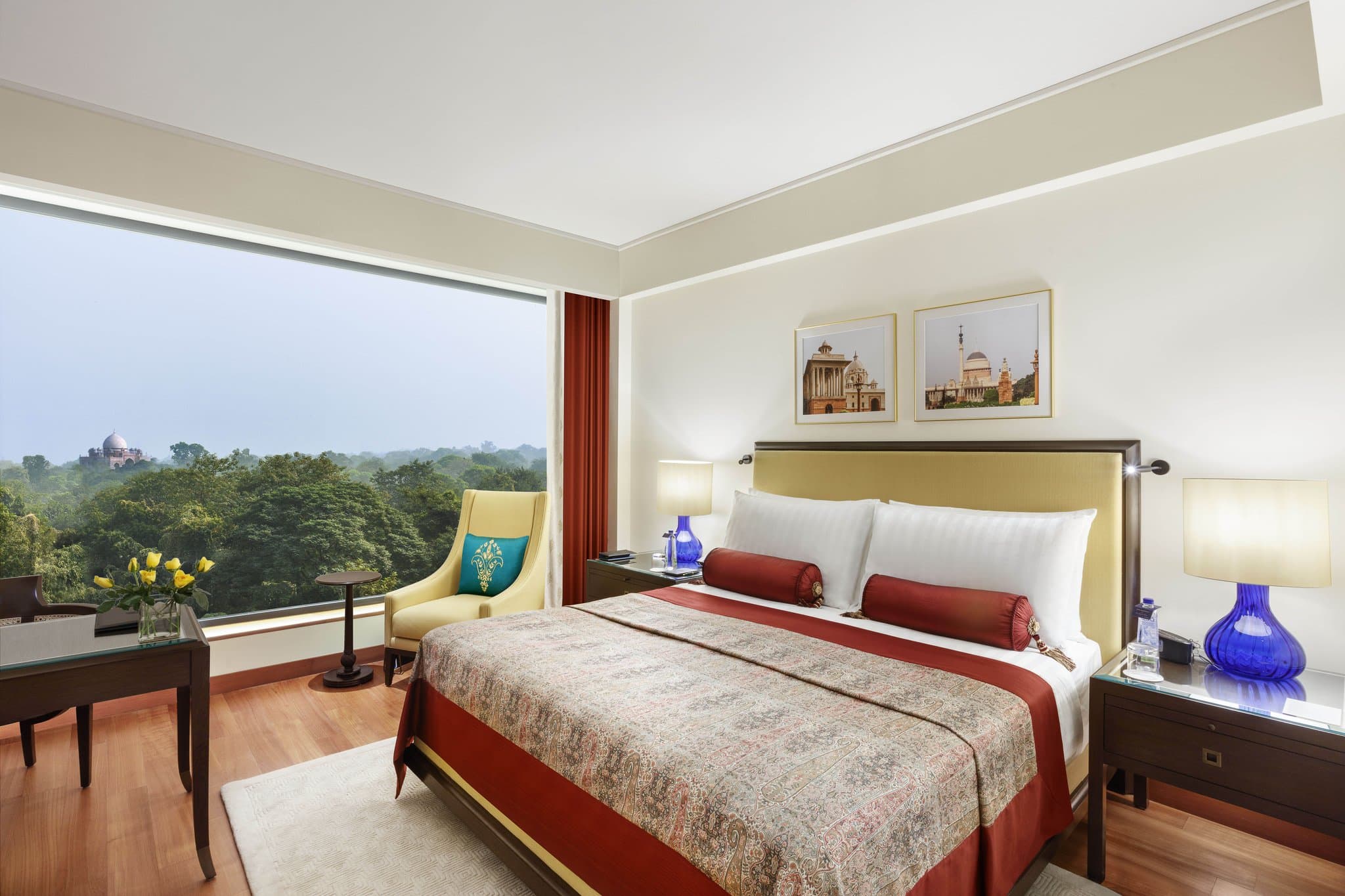
In a city where the Air Quality Index often dominates the morning briefing, The Oberoi, New Delhi offers the ultimate diplomatic immunity: breathability. Behind the 1960s Brutalist concrete facade lies a hermetically sealed sanctuary where hospital-grade MERV 13 filtration keeps the indoor AQI famously under 15. It is the definitive 'green capital' experience, less about gold taps and more about the luxury of oxygen and unmatched views over the verdant Delhi Golf Club. The 2018 renovation by Adam Tihany stripped the interiors of colonial dust, replacing it with a bright, residential polish. Base rooms are compact (33 sqm) but punch above their weight with tech-forward intuitive controls and expansive windows that frame Humayun’s Tomb like a living oil painting. Service here is weaponized efficiency; the strict 'no tipping' policy removes the awkward fumble of banknotes, allowing interactions to remain purely professional—a relief for the visiting dignitary. Dining is equally serious. At Baoshuan, the 'Wolf & Spoon' dim sum (a nod to mentor Andrew Wong) is a masterclass in texture, while Omya’s Malabar Pepper Chicken brings authentic heat. But the real summit happens at Cirrus 9, the rooftop bar where, at Altitude 124, one sips Skyline Cocktails while watching the sun dip below the smog line. It is Lutyens’ Delhi at its most composed.
“Skip the standard transfers; the hotel's fleet includes air-purified BMWs. For the best meeting spot, the Cigar Lounge offers privacy that the lobby lacks.”
Insider TipAvg. Nightly Rate
350USD
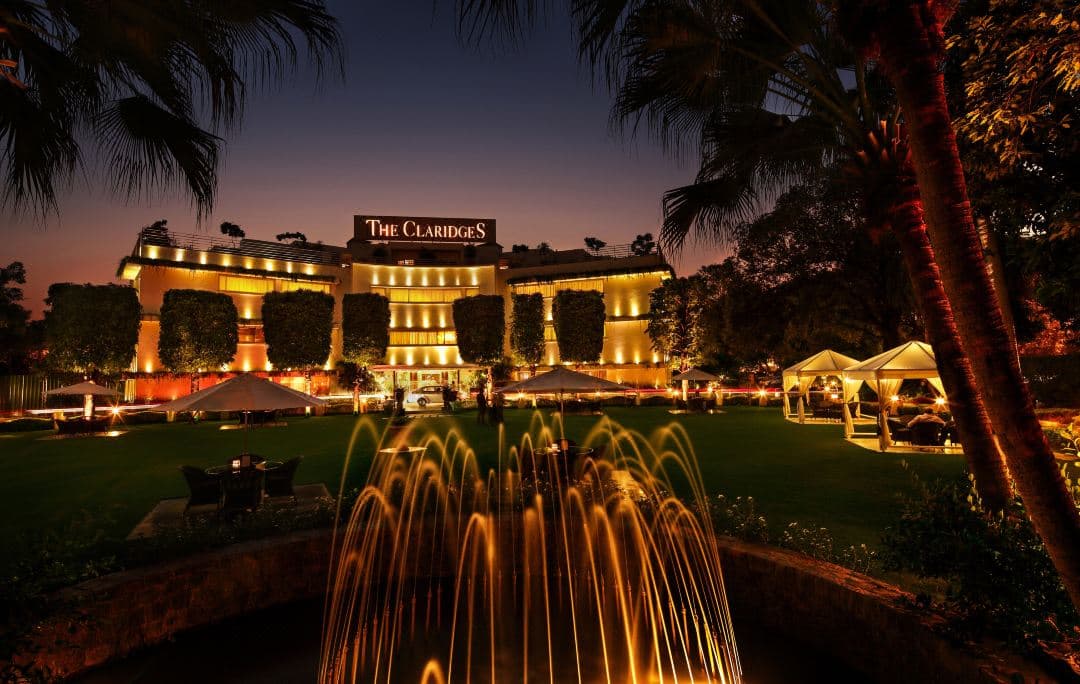
In a capital obsessed with vertical glass-and-steel, The Claridges remains a defiant, whitewashed low-rise in the ultra-secure Lutyens’ Bungalow Zone. It is the preferred address for diplomats who find aerated glass hotels soulless. The property exudes a 1955 colonial swagger—think manicured lawns and a lobby that smells of tuberose and history. With the recent news of IHCL (Taj) stepping in to manage the property, the rough edges of its aging hardware are poised for a polish, but the charm remains intact. The accommodation offers high ceilings and mid-century proportions rarely found in Aerocity boxes, though the interiors can feel like a time capsule. The Cabana Wing rooms, with their private patios, are the savvy choice. However, the hotel's true leverage lies in its dining. 'Sevilla' remains Delhi’s most romantic venue, where political secrets are traded under canopy-covered cabanas over plates of Patatas Bravas. Conversely, 'Dhaba' leans into kitsch with truck-art murals and its legendary Balti Meat, a dish that has outlasted multiple prime ministers. For wellness, the 'Cinqtuair' spa skips generic oils for potent Forest Essentials treatments, including hyperbaric oxygen therapy for jet-lagged delegates. It’s not flawless, but it has a soul that the skyscrapers can’t manufacture.
“Skip the standard rooms; book a Cabana Wing room for direct access to the patio. Also, reserve a table at Sevilla at least 48 hours in advance—it’s perpetually fully booked.”
Insider TipAvg. Nightly Rate
72USD
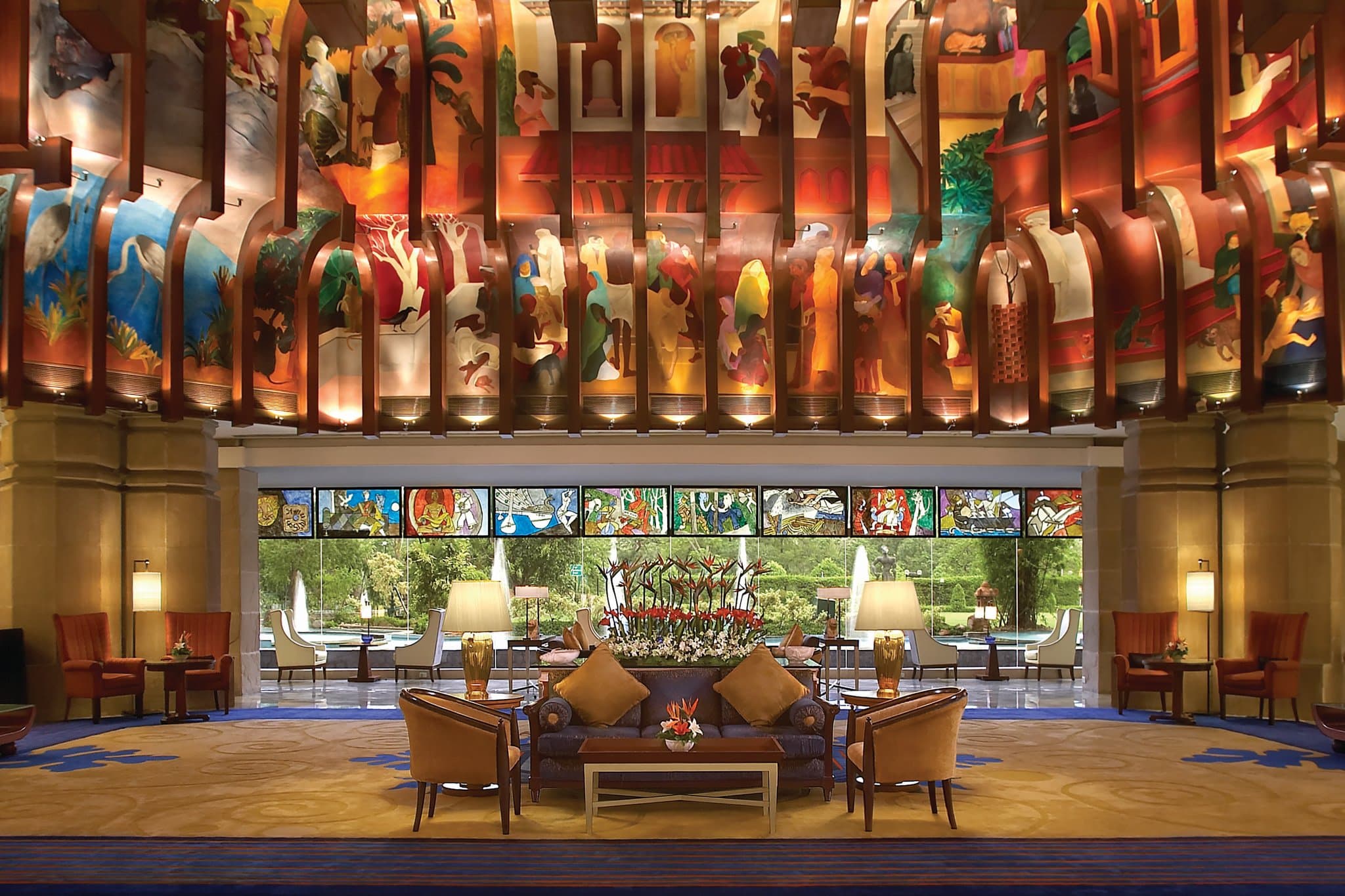
In the Diplomatic Enclave, the air is scented with frangipani and high-stakes geopolitics. The ITC Maurya isn't merely a hotel; it is a fortress where US Presidents and G20 delegates drop their bags. The lobby, dominated by Krishen Khanna’s chaotic, vibrant mural 'The Great Procession', feels like the center of the universe—busy, loud, and important. Upstairs, the reality is a study in contrasts. While the suites host Heads of State, the base rooms (a tight 26 sqm) frankly mutter about the need for a refresh, with furniture that leans historic rather than sleek. But you don't check in here for the carpet patterns. You check in for the culinary pilgrimage. 'Bukhara' remains the undisputed heavyweight, where the 18-hour slow-cooked Dal Bukhara and the table-sized Naan Bukhara demand you eat with your hands, dignity be damned. For a more regal, quiet affair, 'Dum Pukht' serves a Kakori Kebab that dissolves on the tongue. If the heritage heaviness gets too much, 'Avartana' provides a sharp, modernist palate cleanser with its Asparagus & Coconut Stew. Service is militaristically efficient yet warm—a necessity in a property that runs on such high voltage.
“Skip the crowded lobby for meetings. Head to the 'Golf Bar' for a quiet single malt, or book the signature 'Pomegranate and Brown Sugar' scrub at the Kaya Kalp Spa to scrub off the Delhi dust.”
Insider TipAvg. Nightly Rate
148USD
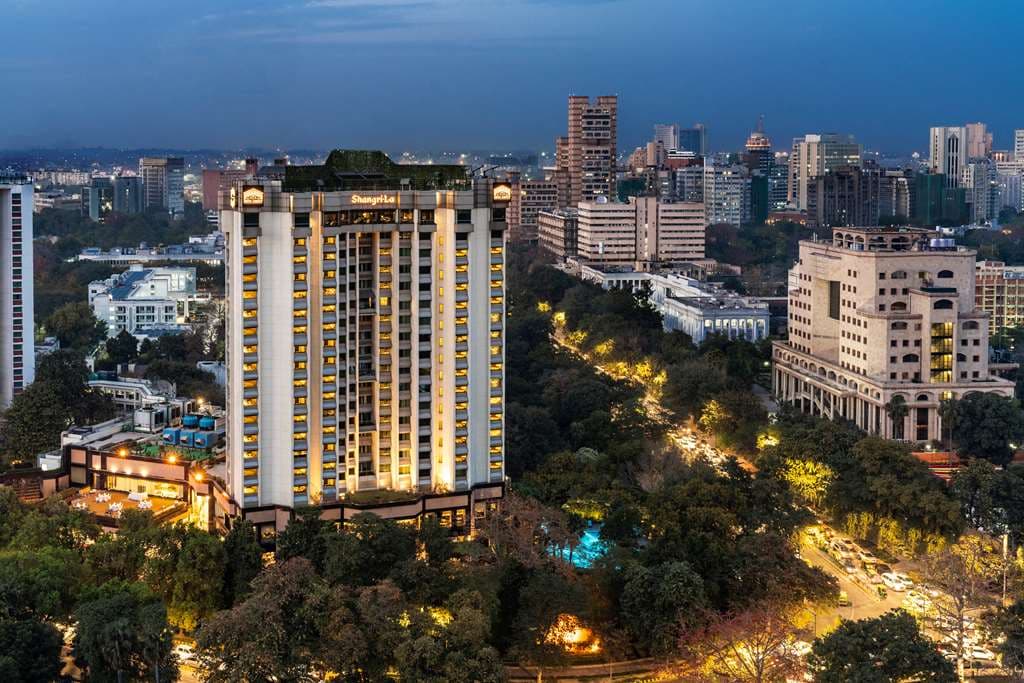
Perched above the frenetic pulse of the capital, the Shangri-La Eros functions less like a hotel and more like a high-altitude observation deck for Lutyens’ Delhi. While the lobby—permanently scented with the brand’s signature ginger and bergamot—buzzes with the comings and goings of the diplomatic corps, the real draw is the vertical escape. The 19th-floor Horizon Club serves as the property’s command center, offering a sweeping, smog-cutting vista of the Central Vista and India Gate lawns that few competitors can match. The rooms eschew trendy minimalism for a heavier, classic aesthetic—think dark woods and plush carpets—but they are fortified with Electronic Air Cleaners (EAC), a critical amenity in this city. Sleep quality is aided by blackout curtains and formidable soundproofing that reduces Ashoka Road to a silent film. Dining is a serious affair here: 'Shang Palace' executes a Beijing Roast Duck with skin that shatters like glass, while 'Tamra' acts as the de facto canteen for the city’s power lunchers; the Aambedi Fish Tikka is the order to make. Service is eager, occasionally hovering, but rigorously efficient. While it lacks the buzzy newness of Aerocity hotels, for those who measure luxury by proximity to the Prime Minister’s office, this remains the definitive address.
“Secure a Horizon Premier Room ending in '08' for the most direct line of sight to the Rashtrapati Bhavan. The 19th-floor lounge happy hour offers the city’s best sunset vantage point.”
Insider TipAvg. Nightly Rate
130USD
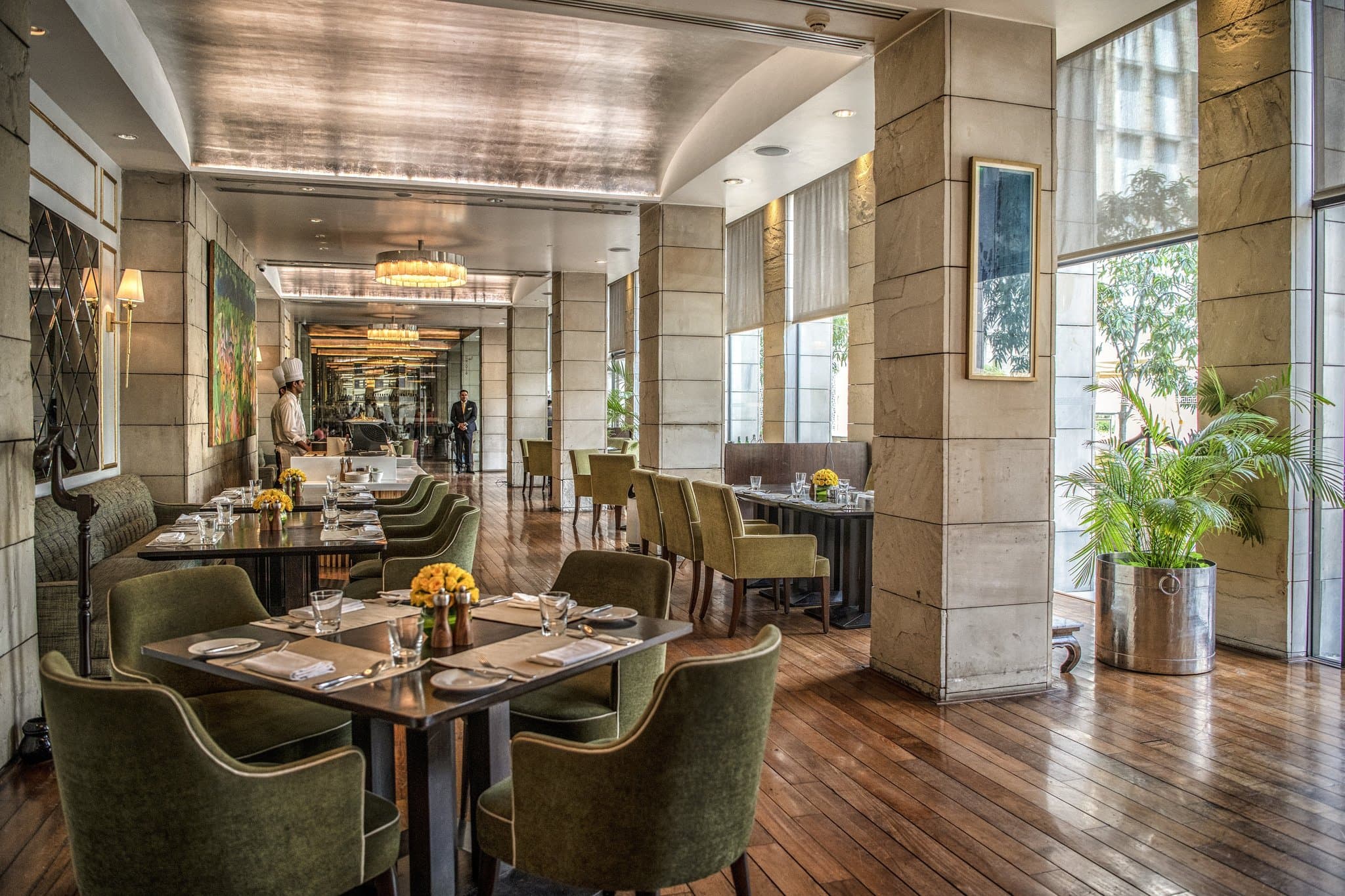
For years, The Lodhi was the capital’s worst-kept secret among diplomats and scions who prefer their luxury whispered, not shouted. Now, with a freshly minted Michelin Key (awarded October 2025), the secret is officially out. Forget the gilded chandeliers of its colonial cousins; this Kerry Hill-designed monolith is a masterclass in Brutalist cool, where geometric jaali screens slice the harsh Delhi sun into soothing shadow play. The entry-level rooms here are laughable—in that they dwarf the suites of most competitors at a staggering 1,350 square feet. But the real flex is the private plunge pool on your balcony, a hedonistic necessity in the Delhi heat. Inside, Olivier Claire amenities and expansive stone bathrooms reinforce the spa-like solitude. While the service can be invisible to a fault—don't expect the fawning hovering of the Oberoi—the hardware is impeccable. Dining is a power play in itself. Indian Accent remains the city's culinary north star; the blue cheese naan is non-negotiable, a dish that has likely sealed more deals than the boardroom. For a nightcap, the Safari Lounge serves wildlife-inspired cocktails that feel appropriately predatory for Lutyens' Delhi. Verdict: The only address in Delhi where privacy is the ultimate amenity.
“Request a room on the 4th floor or higher facing the inner courtyard to minimize street noise and maximize views of Humayun's Tomb in the distance.”
Insider TipAvg. Nightly Rate
300USD
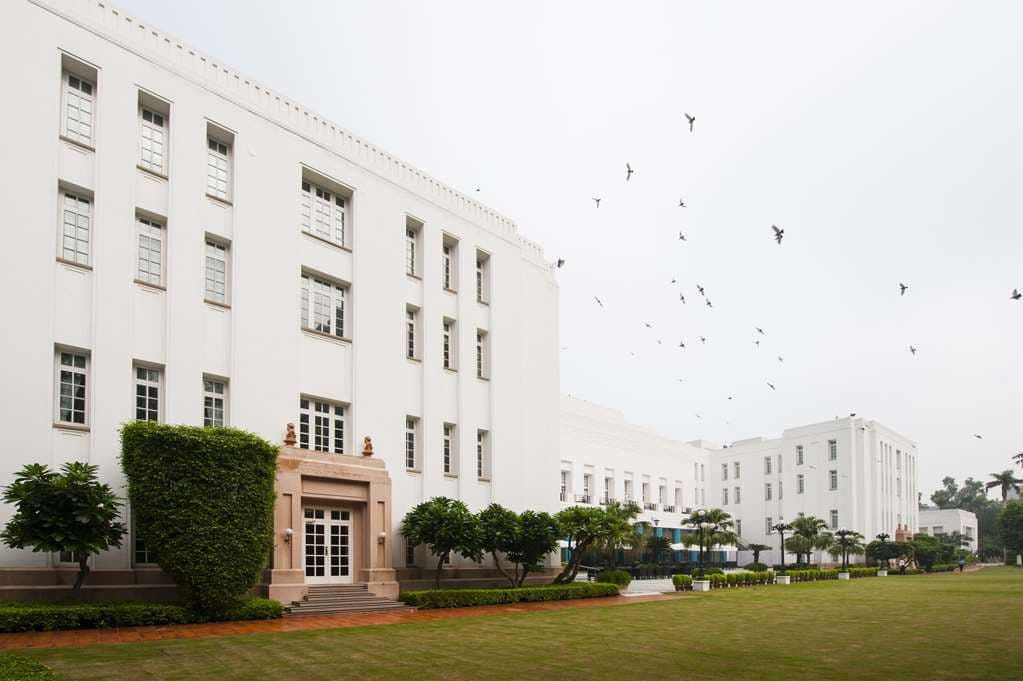
If walls could talk, the corridors of The Imperial would whisper state secrets. Anchoring the bottom of Janpath, this 1936 grande dame remains the only address in New Delhi that truly matters for the diplomatic set. The arrival experience—a sweeping turn off the chaotic street onto the serene, royal-palm-lined driveway—is less of a check-in and more of a coronation. Inside, it is a museum first and a hotel second; you are sleeping amidst a priceless collection of 18th-century aquatints and lithographs that rival the National Museum down the road. While the rooms can feel a touch cavernous and some face the internal atrium (request a garden view to avoid the gloom), the high-ceilinged colonial nostalgia compensates for the occasionally tired towels. But one doesn't come here for the thread count; one comes for the *scene*. The 1911 Restaurant’s verandah is the de facto office for Lutyens’ elite, while the Patiala Peg bar serves a legendary 120ml whiskey pour—a measure decided by a Viceroy and a Maharaja during a tent-pegging match—that remains the stiffest drink in the capital. Dinner at The Spice Route, with its intricate hand-painted murals and Chemeen Thoren (Kerala prawns), feels like dining inside a temple artifact. It is imperfect, undoubtedly, but it is the only place in Delhi with a soul this heavy.
“Skip the main lobby during check-in if you can; instead, head straight to the 1911 Bar for a gin and tonic while your bags are sent up. Also, the 'Eliza' shop in the arcade stocks better curios than the local emporiums.”
Insider TipAvg. Nightly Rate
190USD
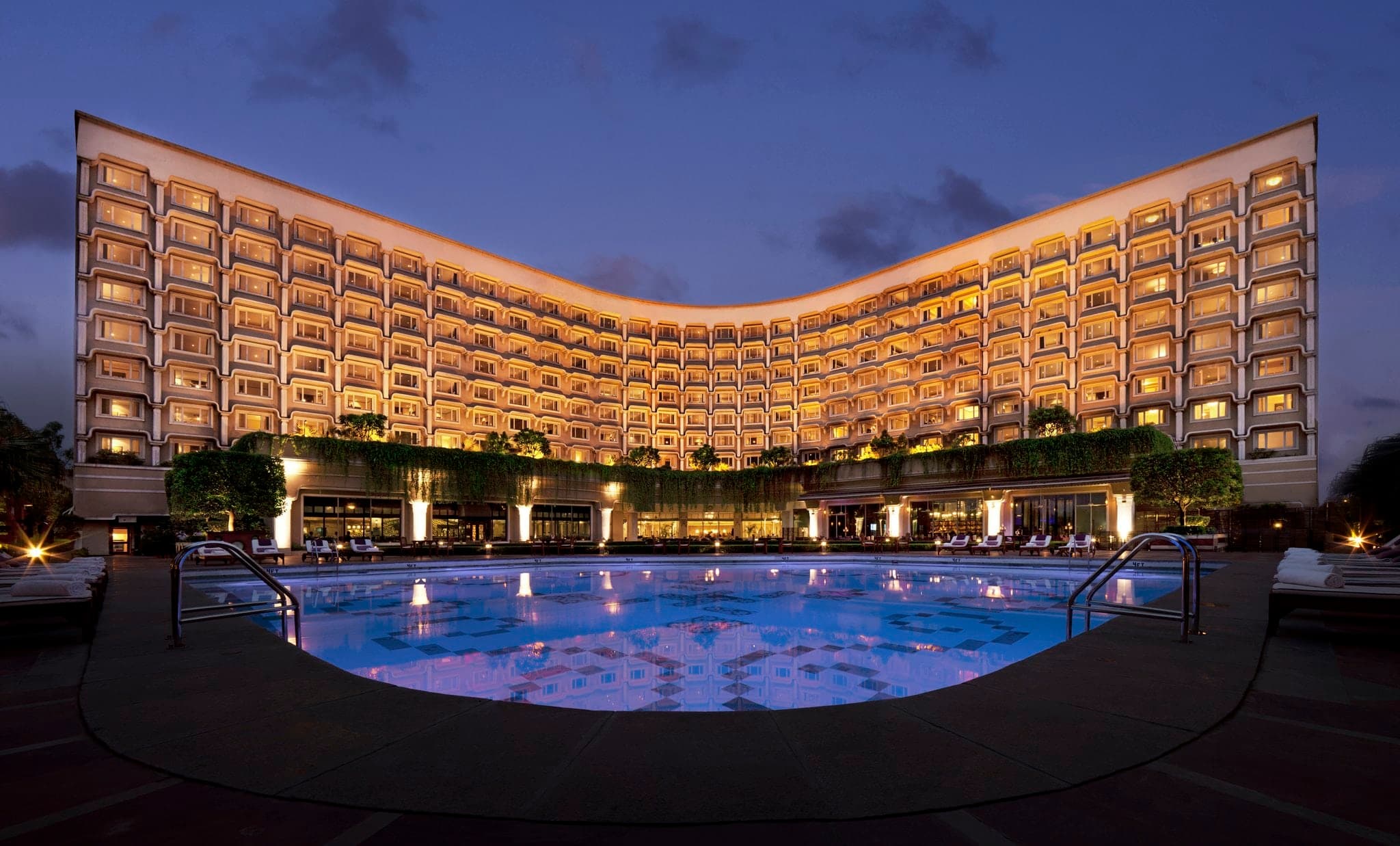
In the verdant, high-security embrace of the Diplomatic Enclave, the Taj Palace acts less like a hotel and more like a geostrategic asset. While its neighbor, the Maurya, flaunts celebrity buzz, this boomerang-shaped titan is where the heavy lifting happens—quietly. The lobby, anchored by an arrestingly intricate antique *Jhula* (swing), buzzes with the hushed urgency of delegation summits and high-stakes weddings. Upstairs, the rooms trade trendy minimalism for old-world heft. While the hardware can feel slightly dated compared to Delhi’s newer glass towers, the deep silence of the Enclave and the plush comfort of the bedding ensure a diplomat-worthy sleep. The real leverage, however, lies in the dining. The legendary *Orient Express* remains a masterclass in nostalgia, serving its signature Camembert Cheese Soufflé inside a stylized carriage—a relic of colonial glam that still charms. For modern heat, *Spicy Duck* delivers a Peking Duck and Truffle Spring Rolls that rival Hong Kong’s finest. Conversely, breakfast at *Capital Kitchen* can be a chaotic scrum; wise travelers skip the morning queues in favor of ordering the Chicken Bunny Chow via room service. Despite reports of an increasingly pushy tip culture, the staff’s ability to anticipate needs remains the Taj’s enduring ace.
“Secure a private booth in the *Orient Express* carriage days in advance; it’s the only table in Delhi where you can whisper state secrets without being overheard.”
Insider TipAvg. Nightly Rate
180USD
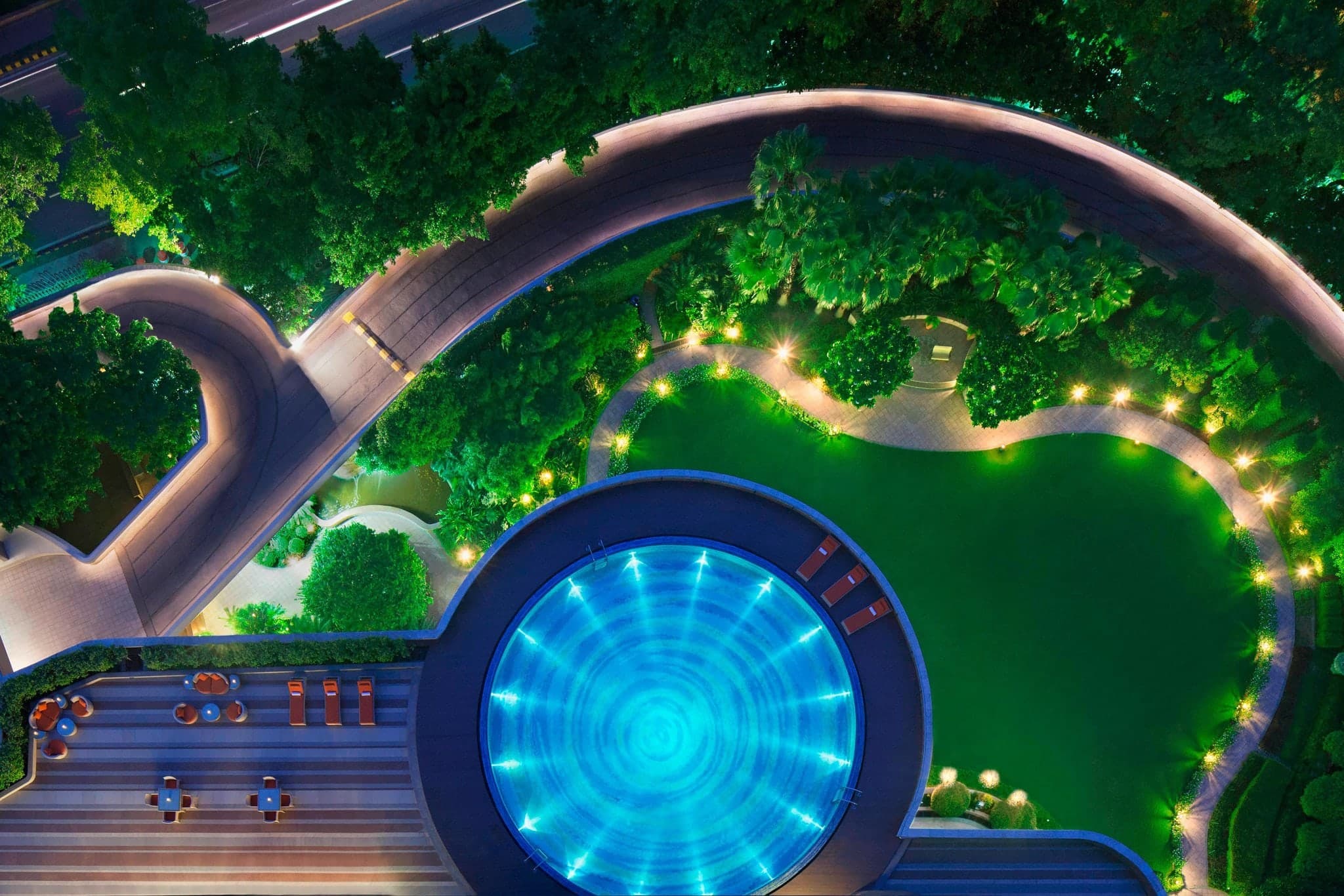
If Lutyens’ Delhi is the stage for India’s political theater, Le Méridien is its modernist green room. While its heritage neighbors trade in colonial nostalgia, this property—fresh off its win as 'Best City Business Hotel' at the 2025 India Travel Awards—offers high-velocity efficiency. Entering the lobby, your gaze is forced upward into the iconic 20-story glass atrium, a dizzying 'God's Eye' perspective that feels less like a hotel and more like a cathedral of capitalism. The standard rooms are admittedly compact (26–29 sqm), a trade-off for the prime Windsor Place address, but they are surgically precise workspaces. The real maneuvering happens downstairs: at Nero, the gothic-chic bar where deals are sealed over 'French Mules', or at Eau de Monsoon, where the Kashmiri Gucchi Pulao is a culinary asset worth its weight in diplomatic immunity. Service is discreet and swift—staff here have seen everything and say nothing. The circular outdoor pool, now fully operational after its early-January maintenance, offers a rare architectural break from the geometric rigor. It isn't the sprawling opulence of the Taj, but for those with business at Rashtrapati Bhavan, the sightlines here are unbeatable.
“Book a west-facing room on the 18th floor or higher for a direct line-of-sight to Rashtrapati Bhavan. Order the 'Laksa' at the rooftop XO & Mi for a spicy counterpoint to the view.”
Insider TipAvg. Nightly Rate
96USD