No. 01
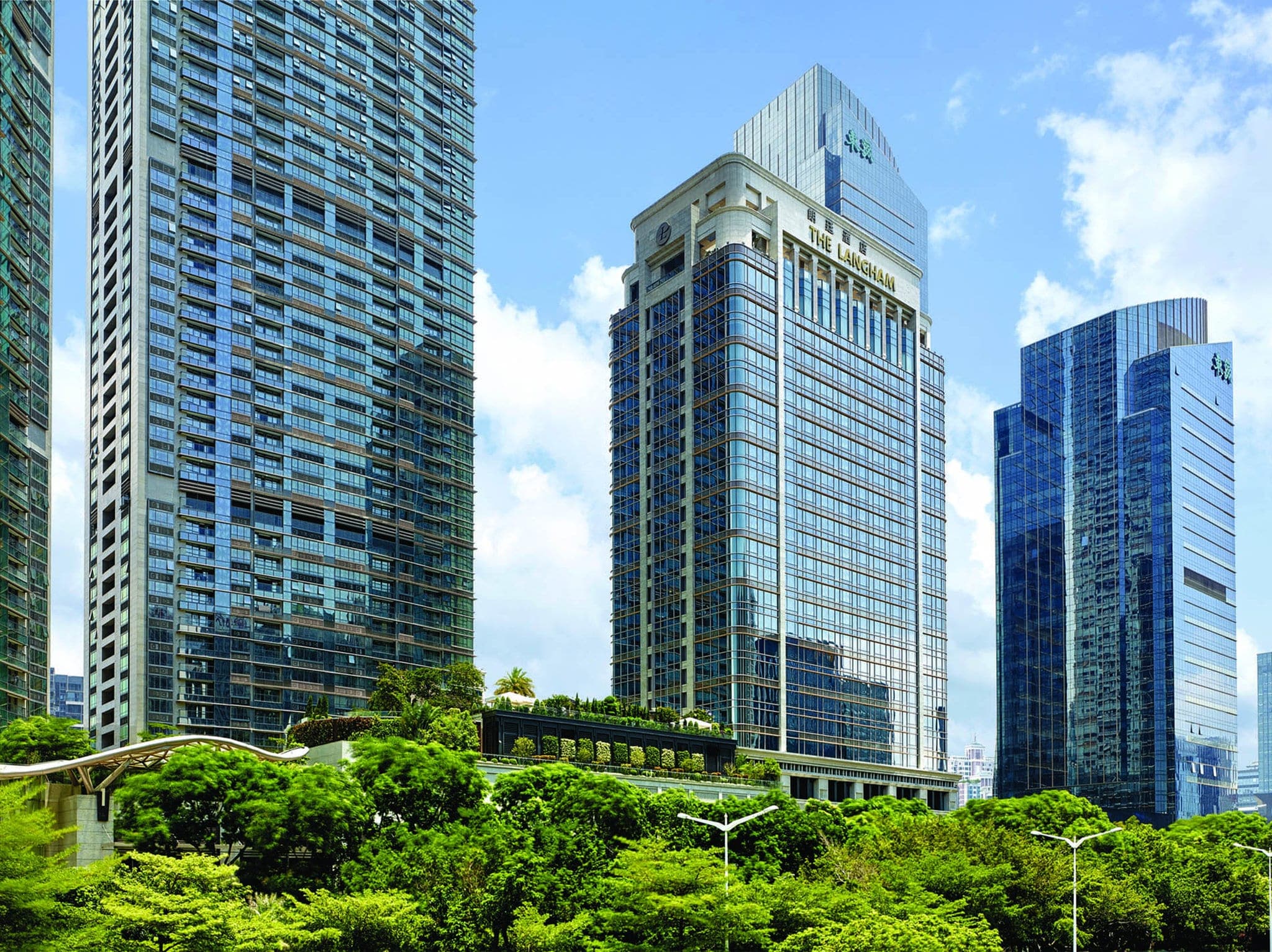
7888 Shennan Boulevard Shenzhen China 518040Shenzhen609 verified reviews
9
.4
Bitvoya Edit
Layering imagery, place, and detail before the page opens.
Shenzhen has transcended its reputation as solely a technology hub to become a formidable destination for gastronomy, particularly within its ultra-luxury hospitality sector. In the bustling districts of Futian and the scenic bays of Nanshan, hotels are not merely places to sleep but culinary landmarks housing Michelin-standard kitchens. From the soaring heights of the St. Regis Shenzhen Bao'an to the refined elegance of the Mandarin Oriental, these properties offer a fusion of avant-garde innovation and traditional Cantonese mastery. Whether seeking the impeccable service of The Ritz-Carlton or the artistic presentation at Conrad Shenzhen, this curated collection guides you to the city's most exquisite tables.
Shenzhen's culinary landscape has evolved rapidly, mirroring its economic rise. The city's luxury hotels act as incubators for gastronomic talent, attracting chefs from Hong Kong, mainland China, and Europe. Dining in properties like Raffles Shenzhen or the Four Seasons Hotel Shenzhen guarantees not just superior ingredient sourcing—vital for delicate Cantonese cuisine—but also rigorous standards of service and hygiene. Unlike standalone restaurants, these hotel venues often offer private dining rooms with panoramic views of the skyline or Shenzhen Bay, making them ideal for high-stakes business dinners or intimate celebrations.
Expect a heavy emphasis on Modern Cantonese cuisine, where traditional techniques meet global ingredients like truffles and caviar. High tea culture is also significant, with venues like the St. Regis offering cloud-level afternoon teas. Service is attentive yet unobtrusive, often available in multiple languages to cater to international travelers.
While many hotels excel, Raffles Shenzhen and Four Seasons Hotel Shenzhen are renowned for their award-winning Cantonese restaurants that utilize premium ingredients and traditional techniques.
Yes, most Michelin-standard hotel restaurants in Shenzhen enforce a smart casual or formal dress code. Avoid shorts and flip-flops; jackets are recommended for gentlemen at dinner.
Absolutely. Luxury properties like Mandarin Oriental and The Langham cater to diverse dietary needs, often providing dedicated vegetarian menus upon request.
Explore our complete curated list of luxury accommodations, from boutique hideaways to grand dames.
Explore All Shenzhen HotelsIn a city defined by relentless speed and chrome-wrapped skyscrapers, The Langham, Shenzhen hits the pause button with unapologetic British pomp. This isn’t just a hotel; it’s a scented, marble-clad rebellion against the sterile business boxes of Futian. You enter a lobby that smells of ginger flower and old money, where the grand spiral staircase demands a slow descent, not a rushed exit. The rooms are residential sanctuaries—think dark wood veneers, cream-colored velvet, and heavy drapes that shut out the neon hum of Donghai. But the real draw here is the caloric intake. T’ang Court, the mainland outpost of the three-Michelin-star Hong Kong legend, justifies the booking alone. Their Baked Stuffed Crab Shell is a masterclass in texture—sweet, flaky crab meat beneath a golden, buttery crust. For a different kind of indulgence, Palm Court serves a proper Wedgwood afternoon tea that rivals London’s best, complete with warm scones and clotted cream that feels illicit in this humidity. While the interiors show faint laugh lines of age (having opened in 2012), the service remains razor-sharp, a rare commodity in a transient tech hub. It’s an ‘old world’ manor dropped into a ‘new world’ metropolis.
“Skip the lobby bar for sunset; head to 'Perch' on the alfresco terrace. Order the signature birdcage cocktail and grab a corner table for a view that balances the 'Victorian' vibe with Shenzhen’s urban sprawl.”
Insider TipAvg. Nightly Rate
131USD
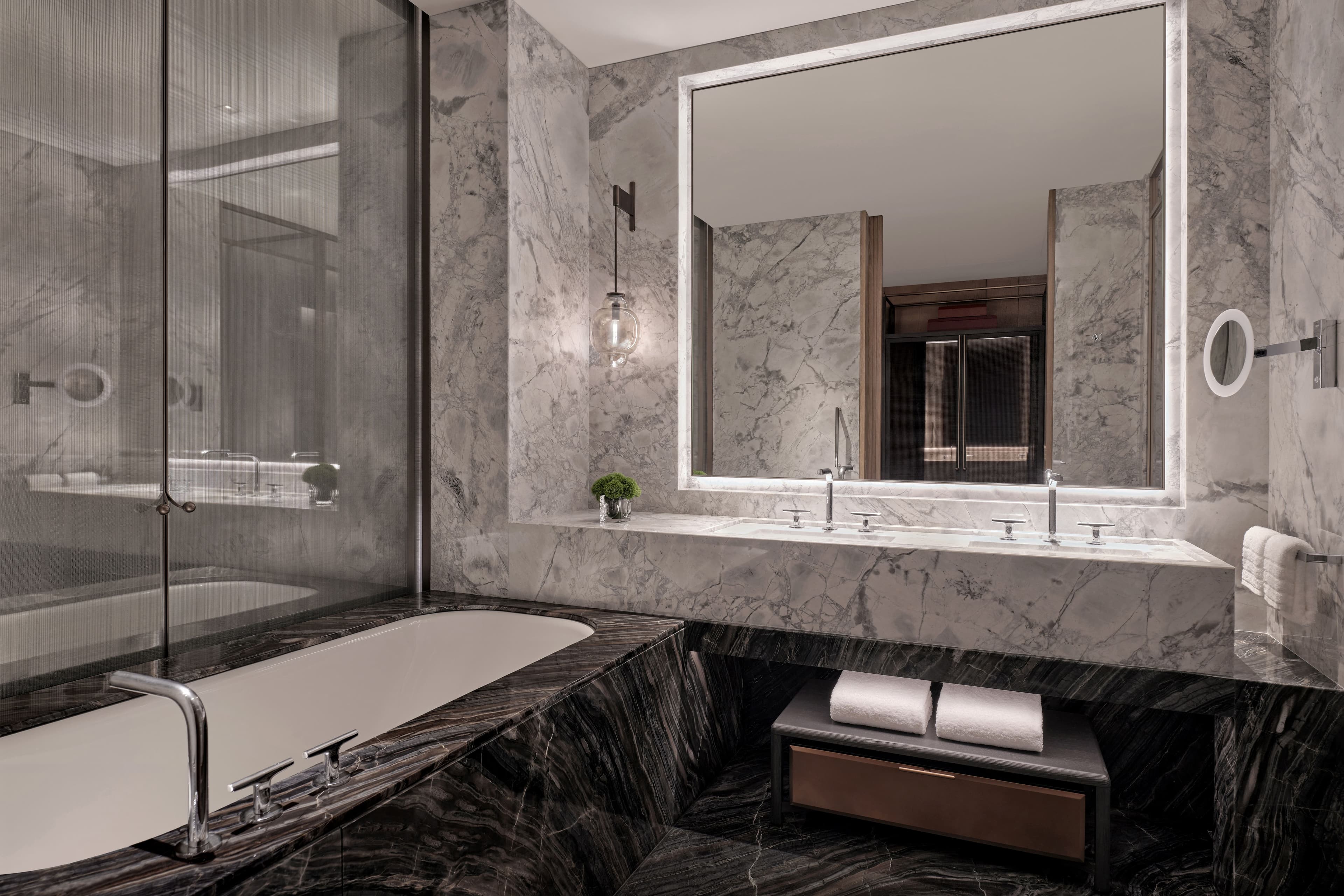
Shenzhen’s Qianhai district often feels like a shiny simulation loading in real-time, yet the Conrad anchors this developing sprawl with a surprising, museum-grade weightiness. It isn’t just a hotel; it’s a gallery where you happen to sleep. The lobby, dominated by the 'Two Forms' figure-eight sculpture, feels moody and deliberate—a sharp pivot from the humidity and hustle outside. Yabu Pushelberg’s interiors reject the usual gilded excess for a palette of muted warmths and lattice structures that frame, rather than shout. Upstairs, the 56-square-meter base rooms are a rare luxury in a city of vertical compression. The hardware is exacting: Dyson dryers tame the subtropical frizz, and Byredo’s ‘Mojave Ghost’ amenities provide a sharp, woody counterpoint to the standard hotel florals. But the property’s true gravitational pull is CH'AO. In a city flooded with mediocre Cantonese banquets, this kitchen treats Teochew cuisine with surgical precision. The signature Baked Lobster with Handmade Rice Cake avoids heavy-handed sauces, letting the crustacean’s sweetness sing against the chewy, charred texture of the rice cake. It is a dining experience that justifies the taxi fare from Futian alone. For the serious palate, the Conrad isn't just a stay; it's a destination.
“Skip the standard pillow menu and request the 'Cassia Seed' pillow from housekeeping immediately upon arrival—it offers a firm, cooling support perfect for the humid climate.”
Insider TipAvg. Nightly Rate
252USD
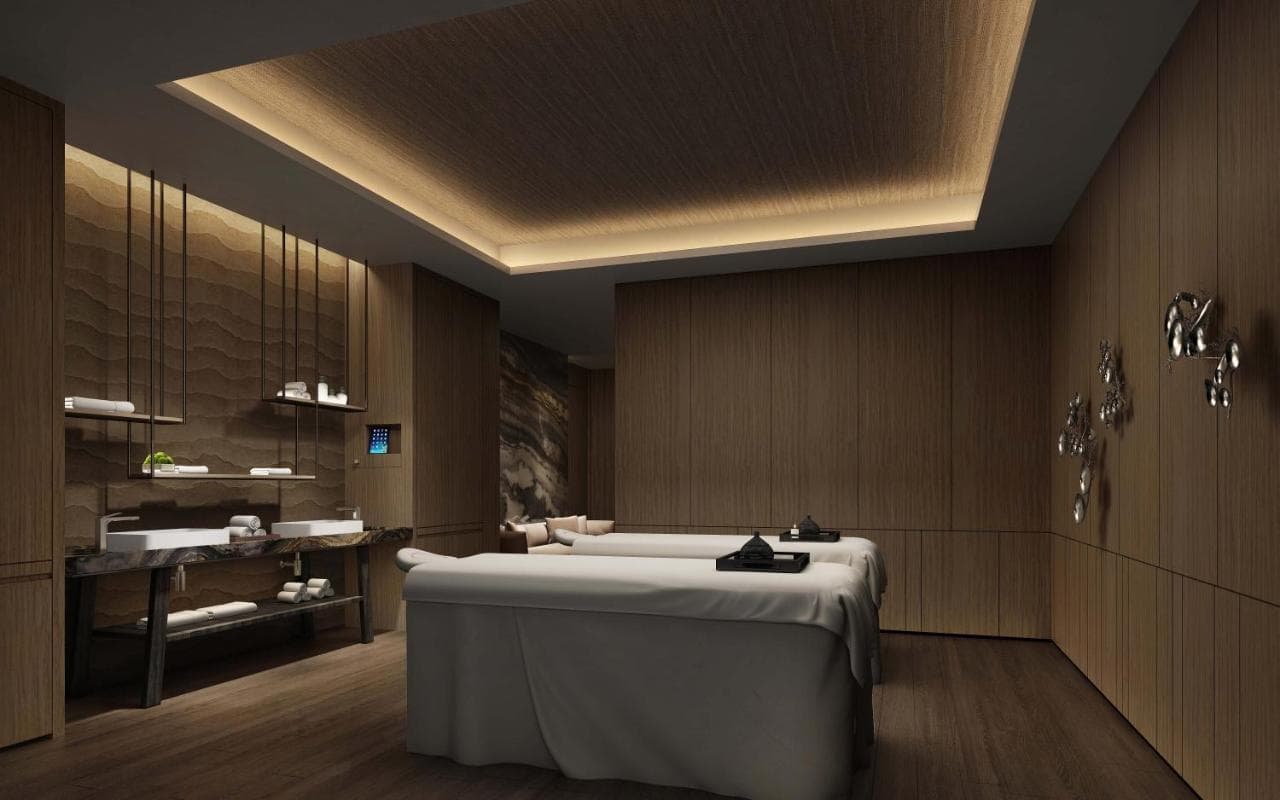
Forget 'nestled' or 'hidden.' The Mandarin Oriental Shenzhen is a 79-story exclamation point above Futian’s UpperHills, recently stamped with a prestigious **Michelin Key (2025)**. This is cyberpunk luxury: you check in at cloud level, where the lobby feels more like a villain’s lair in the best possible way. The base rooms are massive—56 square meters of stone and silence, equipped with Dyson hair dryers and Bose sound systems that actually work. But the real reason to ascend is **The Bay by Chef Fei**. It isn't just a restaurant; it’s a masterclass in Chaoshan technique. The signature Poached Threadfin with Pickles is a revelation—the acidity cuts through the fatty fish with surgical precision. Don't skip the sommelier; their pairing for the threadfin is daring. Cap the night at MO Bar, where the industrial 'Movable Type' cocktails nod to Shenzhen’s printing past. The verdict? A vertical gastronomic power-move that redefines the city hotel.
“Book a 'Skyline View' room facing West for sunset over Shenzhen Bay. The 68th-floor pool is virtually empty at 1:00 PM on weekdays.”
Insider TipAvg. Nightly Rate
487USD
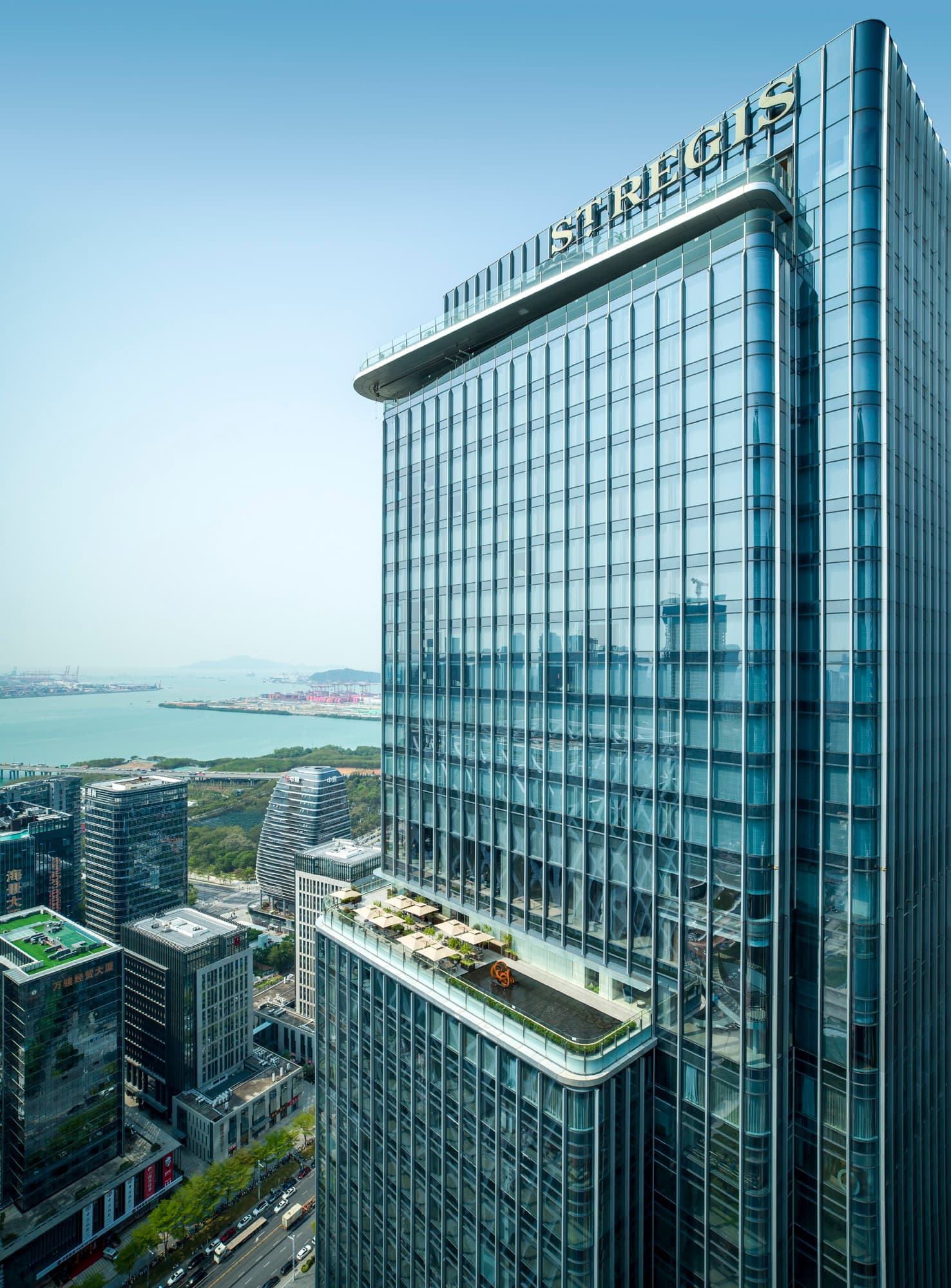
Forget the frantic, neon-charged pulse of Nanshan. The real ascent happens in Bao’an, where The St. Regis has anchored itself not as a hotel, but as a residential sanctuary in the sky. Designed by André Fu, the property eschews the typical gold-leaf ostentation for a hushed, curated aesthetic—think manicured urban mansion rather than corporate lodging. The arrival experience, sweeping you up to the 51st-floor lobby, immediately recalibrates your pulse to the rhythm of the tides in Qianhai Bay below. But the true pilgrimage here is culinary. Yan Ting (宴庭) operates with a balletic precision that screams Michelin ambition. The signature crispy skin chicken, encrusted with flaxseed, is a textural marvel—shattering glass-thin skin giving way to succulent flesh—that justifies the trek alone. Service is trademark St. Regis: omnipresent but invisible, though the butler service feels less like a rote brand standard and more like genuine anticipation here. Quirks? Yes. The property’s strict 'no-delivery-to-room' policy for outside food (Meituan/Ele.me) forces a lobby run—a jarring friction point in hyper-convenient China. Yet, once you retreat to the St. Regis Bar for a Bay Mary, watching the sunset bleed into the bay, you realize this isolation is the point. It’s not just a stay; it’s a sophisticated pause button.
“Book a 'Bay View' suite specifically on the 45th floor or above to clear the neighboring construction cranes and secure an uninterrupted sightline of the Bay Glory Ferris Wheel.”
Insider TipAvg. Nightly Rate
306USD
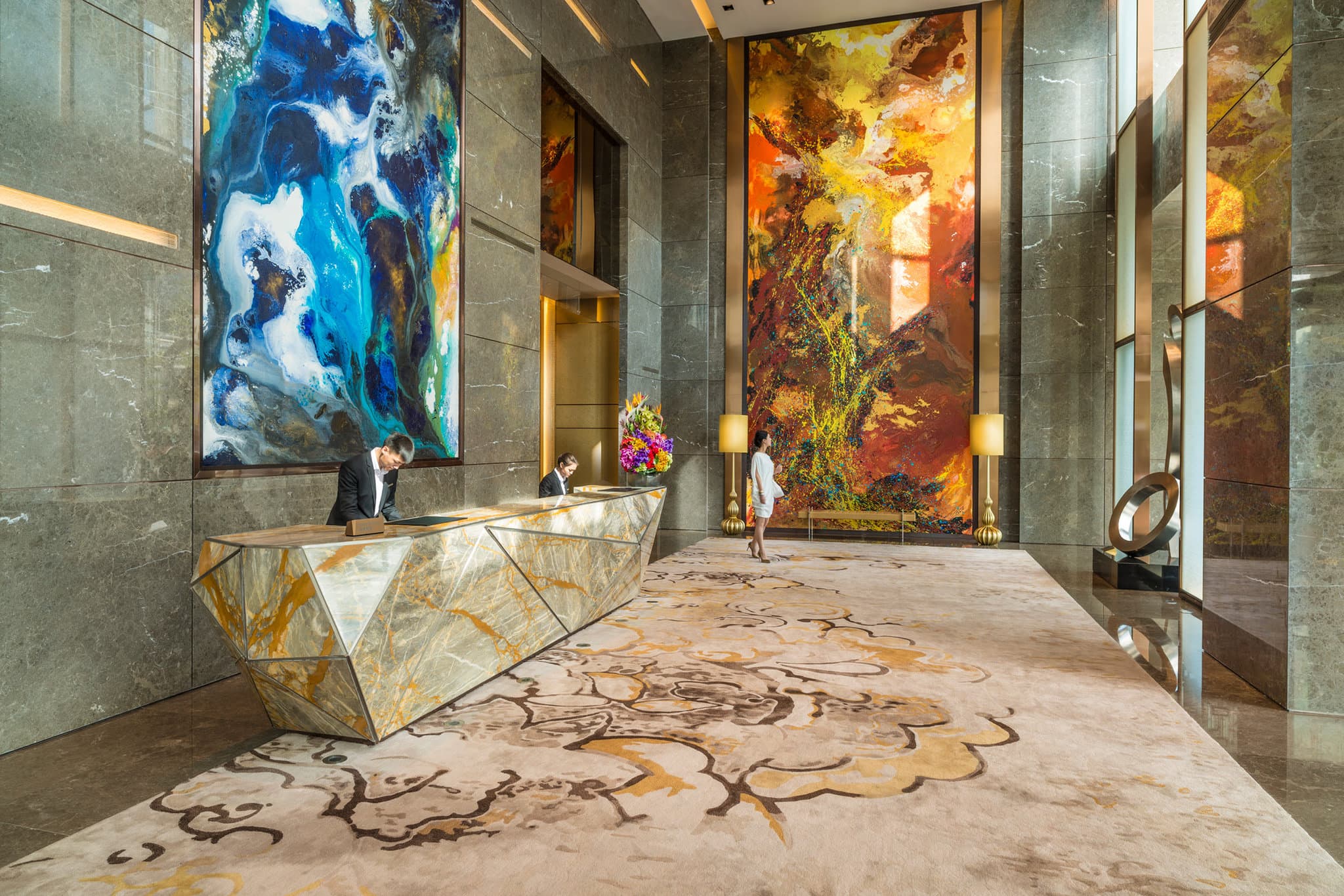
In a city that reinvents itself monthly, the Four Seasons Shenzhen—anchored in Futian since 2013—relies on old-school polish rather than flashy gimmicks. The hardware shows a faint, dignified patina, but the aesthetic remains distinct: purple carpets and hand-painted cloud murals suggest a fever dream of imperial comfort rather than a standard business hotel. The real draw is Zhuo Yue Xuan. Under Chef Alan Sun, this isn't just hotel food; it's a pilgrimage. The signature Honey-glazed Black Pork is a masterwork of texture—crystalline crust yielding to melting fat—that justifies the room rate alone. While the Japanese restaurant Matsuyi offers competent Wagyu tataki, the Cantonese kitchen is where the property flexes its true muscles. Rooms are hushed concrete boxes of silence, boasting signature beds that remain the industry gold standard. However, the nickel-and-diming for minibar soft drinks feels out of step with the otherwise generous service. The spa, utilizing Swiss Perfection and Gemology products, offers a clinical edge to relaxation. It’s not the newest player in town, but with service that anticipates your caffeine withdrawal before you do, it remains the adult in the room.
“Skip the standard check-in; book a Club Room for access to the 29th-floor Executive Lounge, where the marble-clad terrace offers the best sunset views of the Ping An Finance Center without the crowds.”
Insider TipAvg. Nightly Rate
172USD

In a city obsessed with the hyper-modern, The Ritz-Carlton, Shenzhen makes a compelling, confident case for the established. While newer neighbors flash neon and stark minimalism, this Futian stalwart leans into its golden onyx lobby and an atmosphere of hushed, 'old money' competence. It is not trendy; it is correct. The rooms have been smartly refreshed to bridge the gap with a coastal modernity, featuring 400-thread count linens and floor-to-ceiling windows that frame the Ping An Finance Centre, but the true heartbeat of this property is its culinary prowess. Xingli (星丽) is the reason power brokers cross town. This isn't just fine dining; it is a masterclass in Chiu Chow precision. The signature Chaozhou-style frozen lobster is a textural marvel—served ice-cold, firm, and sweet—while the crispy duck with lychee offers a fragrant, sophisticated twist on a classic. For a European detour, Paletto’s signature tiramisu remains the city’s unshakeable benchmark. Service here is arguably the best in Shenzhen, particularly in the Club Lounge, where the staff doesn't just respond to requests but anticipates them. Verdict: The hardware may have history, but the soft product is timeless.
“Skip the main breakfast rush. Head to the Level 5 outdoor pool early morning for a swim with an unobstructed, dramatic backdrop of the Ping An Finance Centre before the heat sets in.”
Insider TipAvg. Nightly Rate
178USD
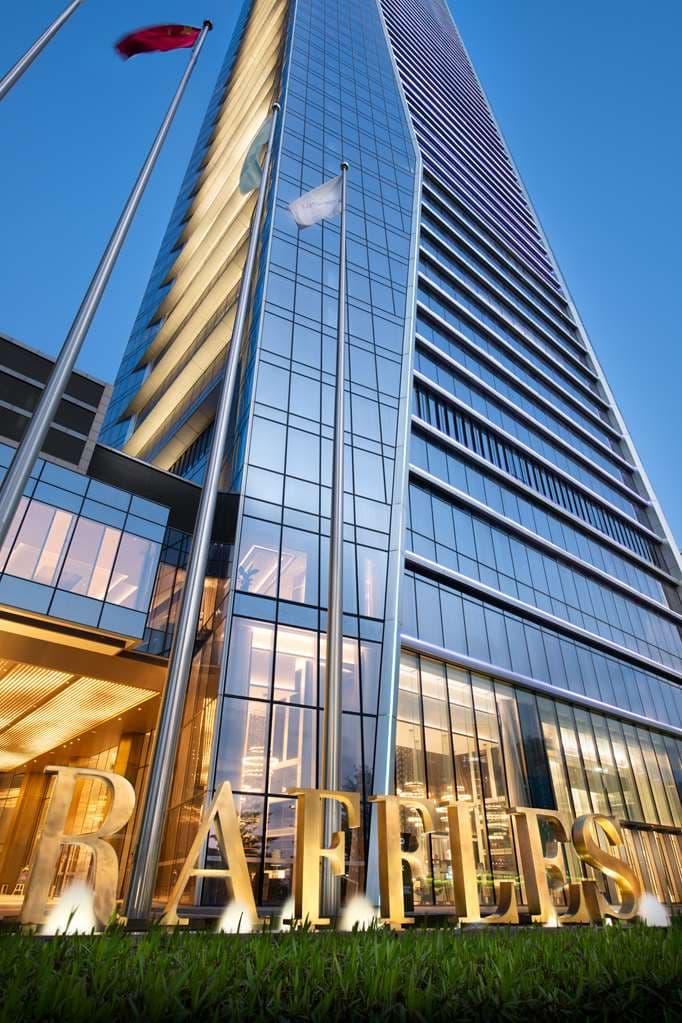
If Gotham City had a brighter, humidity-kissed cousin, it would look like the view from the 71st-floor Long Bar at Raffles Shenzhen. Perched in the One Shenzhen Bay complex, this property doesn't just dominate the skyline; it curates it. The arrival experience—whisked instantly to the 34th-floor Sky Lobby—sets a tone of residential hush that belies the frantic tech hub below. Inside the 60sqm entry-level rooms (the largest in the city), the vibe is less 'hotel' and more 'oligarch's pied-à-terre,' complete with Dyson hair dryers, Ferragamo amenities, and 400-thread count linens that practically beg you to cancel your morning meetings. But the real draw for the epicurean is Yun Jing on level 70. Here, Chef Guo Yuanfeng elevates Hakka cuisine to Michelin-recognized art. The signature Hakka-style stuffed bamboo shoots with 5J ham are a revelation—earthy, salty, and texturally complex—while the roast baby duck with caviar offers a decadent crunch that justifies the price tag. Service is where Raffles flexes its heritage; the legendary Butler Service isn't just a marketing gimmick here, it’s a well-oiled machine. Whether you’re sipping a lychee-infused Shenzhen Sling or navigating the breakfast buffet, the staff anticipate needs you didn’t know you had. It’s sophisticated, undeniably expensive, and worth every yuan for the view alone. **Verdict**: The ultimate power-dining address in Nanshan.
“Skip the standard window seats at Yun Jing and request one of the ten 'gemstone' private dining rooms for an uninterrupted, panoramic view of the Hong Kong bridge link—perfect for closing deals or impressing dates.”
Insider TipAvg. Nightly Rate
347USD
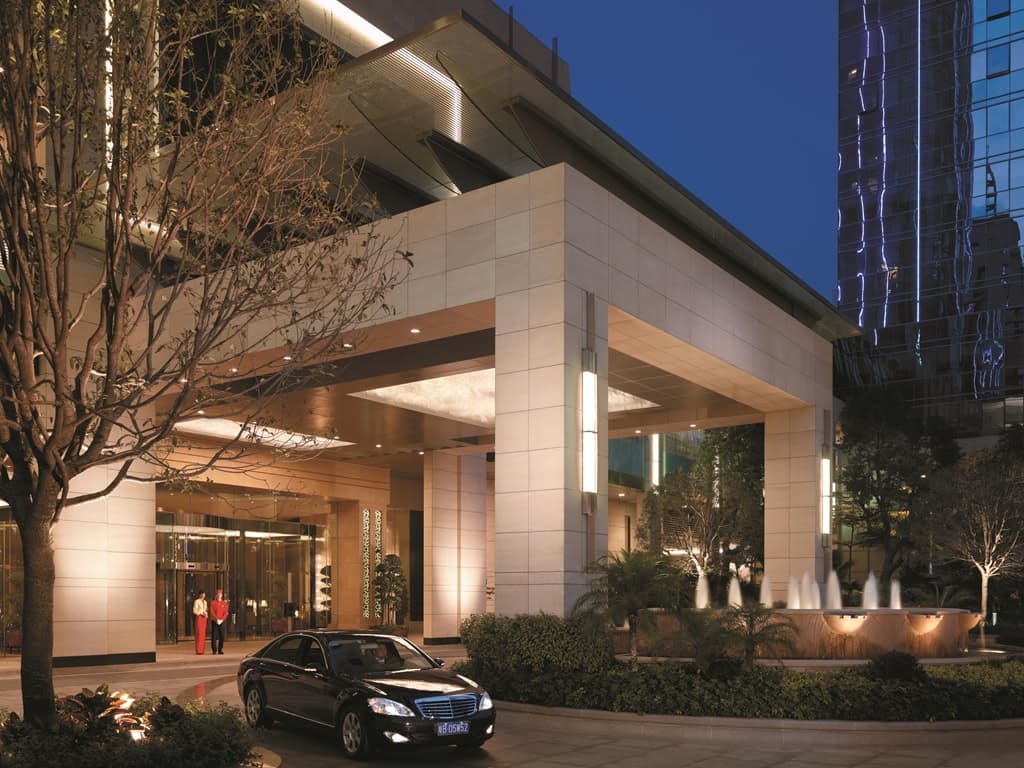
In a city obsessed with the new—where hotels age in dog years—the Futian Shangri-La is unapologetically an institution. While the lobby’s crystal chandeliers and mural-backed reception whisper of 2008 corporate grandeur, this hotel remains the sleeper hit for the serious epicurean. The reason is simple: it is the vertical vessel for the most ambitious dining in South China. The rooms, starting at a generous 45 square meters, are a study in classic comfort rather than cutting-edge cool. You won’t find minimalistic concrete here; instead, expect plush carpets, deep walk-in closets, and blackout curtains that actually work. But you didn’t check in to sleep. You’re here for the 40th floor. 'Ensue', the brainchild of Napa Valley’s Christopher Kostow, is the crown jewel. It’s not just dinner; it’s a pilgrimage. The Sourdough Baked Chicken—a Kostow signature—justifies the room rate alone, marrying Californian farm-to-table rigor with Cantonese ingredients in a way that feels like alchemy. For lunch, 'Shang Garden' offers a masterclass in Huaiyang subtlety; the Double-boiled Pork Ball Soup is clear, profound, and restorative. Between meals, the Chi Spa offers a legitimate reset with Zents-infused treatments, and the Technogym-equipped fitness center is sufficient to work off the sourdough. The vibe is bustling and business-heavy, but for the food-focused traveler, the Futian Shangri-La is a delicious paradox: a grand dame that tastes like the future. **Verdict**: Skip the newer design hotels if your priority is the palate. This is Shenzhen’s culinary power player.
“Book a room ending in '18' on the Horizon Club floors for the most direct, unobstructed views of the Shenzhen Civic Center light show.”
Insider TipAvg. Nightly Rate
116USD
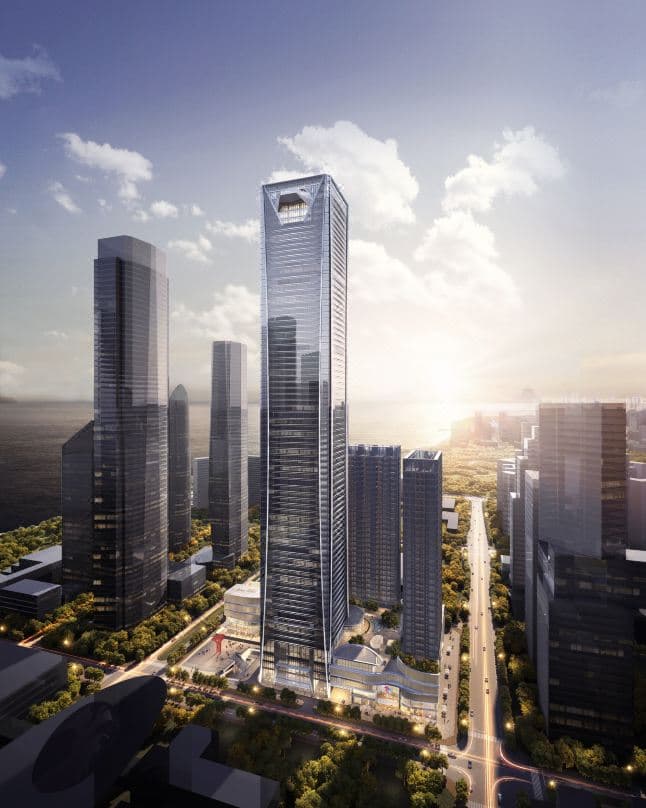
Shenzhen’s Nanshan district is a relentless grid of glass and ambition, yet the Shangri-La Nanshan attempts something audacious: a frantic escape upwards into a cantilevered 'Lingnan' garden. Your arrival is marked not by a red carpet, but by the massive ‘Egg Bird’ sculpture—a whimsical, monolithic guard dog that sets a tone of sophisticated playfulness. The express elevator shoots you to the 66th-floor Sky Lobby, a decompression chamber flooded with light from a 'moon beam' atrium that instantly quiets the city below. The rooms are studies in restraint, framing panoramic views of Shenzhen Bay that (mostly) distract from the construction cranes dotting the horizon. But the real pilgrimage here is culinary. The 'Summer Palace'—crowned 'Chinese Restaurant of the Year 2024'—deviates from standard Cantonese safety into Chaoshan precision. The Signature Crispy Roast Pork is architectural, shattering glass-like skin into unctuous fat, while the Braised Beef with Pickled Chayote offers a tart, gelatinous counterpoint that demands a vintage Pu'er from the tea master. Service still displays the jittery eagerness of a recently opened property, but when the setting is this poetic, you can forgive the occasional fumble.
“Book a table at Summer Palace specifically for the sunset seating (5:30 PM); request the 'Pavilion' section for the best bay views.”
Insider TipAvg. Nightly Rate
230USD