No. 01
Junction Of Oum Khun Street Siem Reap Cambodia 17252Siem Reap452 verified reviews
9
.6
Bitvoya Edit
Layering imagery, place, and detail before the page opens.
Siem Reap has transcended its reputation as merely the gateway to Angkor Wat, evolving into a global capital for sustainable luxury and responsible tourism. This curated collection highlights properties that seamlessly blend high-end aesthetics with deep community impact and environmental stewardship. Travelers can immerse themselves in the lush, rice-paddy serenity of the outskirts in Svay Dangkum, where resorts like Zannier Hotels Phum Baitang recreate traditional village life. Alternatively, the vibrant Old French Quarter offers urban sanctuaries like Treeline Urban Resort and FCC Angkor by Avani, where heritage preservation meets modern eco-design. These hotels prove that opulence and conscience can coexist, offering farm-to-table dining, plastic-free initiatives, and direct support to local education and conservation efforts.
Siem Reap has pioneered a hospitality model where luxury serves a higher purpose. Choosing an "Eco-Luxury" stay here means supporting properties that actively protect Cambodia's heritage and environment. The hotels in our collection, such as Shinta Mani Angkor, are designed by heavyweights like Bill Bensley but are rooted in the Shinta Mani Foundation's work to provide healthcare and education to rural families. Similarly, Phum Baitang doesn't just look like a village; it operates its own working rice paddies, ensuring green space preservation and water management.
Expect a high level of transparency and community integration. "Sustainable Chic" in Siem Reap involves:
Phum Baitang Resort by Zannier Hotels is the top choice for a quiet retreat, offering private villas set amidst 8 acres of lush rice paddies and gardens away from the city center.
Yes, Treeline Urban Resort and FCC Angkor by Avani are located near the Old French Quarter and Riverside, offering sustainable practices like plastic-free amenities within a walkable urban setting.
Absolutely. Properties like Shinta Mani Angkor operate dedicated foundations (Shinta Mani Foundation) that fund education, healthcare, and small business loans for local families.
Explore our complete curated list of luxury accommodations, from boutique hideaways to grand dames.
Explore All Siem Reap HotelsIn a town dominated by temple fatigue and beige resorts, Shinta Mani Angkor is a jolt of monochromatic electricity. Designed by the maximalist Bill Bensley, the property eschews the usual tropical clichés for a stark, Art Deco aesthetic where black-and-white stripes command the pool and hallways echo with theatrical geometry. But the real architecture here is social, not structural. As the mothership of the Shinta Mani Foundation, this hotel is a hospitality training ground for at-risk youth. The service isn’t just polished; it’s propelled by a genuine hunger to succeed. You feel it when a graduate pours your gin at Bensley’s Bar or guides you to the spa, where chemical-free Khmer Tonics—think turmeric and lemongrass balms—replace generic mass-market oils. Dining is equally deliberate. At Kroya by Chef Chanrith, the 'swinging tables' (suspended by ropes) are the only gimmick in a kitchen that takes Khmer cuisine seriously. The 26-day aged Beef Lok Lak redefines a backpacker staple into something tender and complex. While the nearby Bensley Collection villas offer private plunge pools, the main Angkor wing remains the social heart of the operation. It’s a rare feat: a property that feels incredibly expensive while funding a mission that is invaluable.
“Book one of the swinging tables on the terrace at Kroya well in advance—they are the best seat in Siem Reap. Also, order the 'Open Heart' cocktail; 100% of the cost goes to the foundation.”
Insider TipAvg. Nightly Rate
167USD
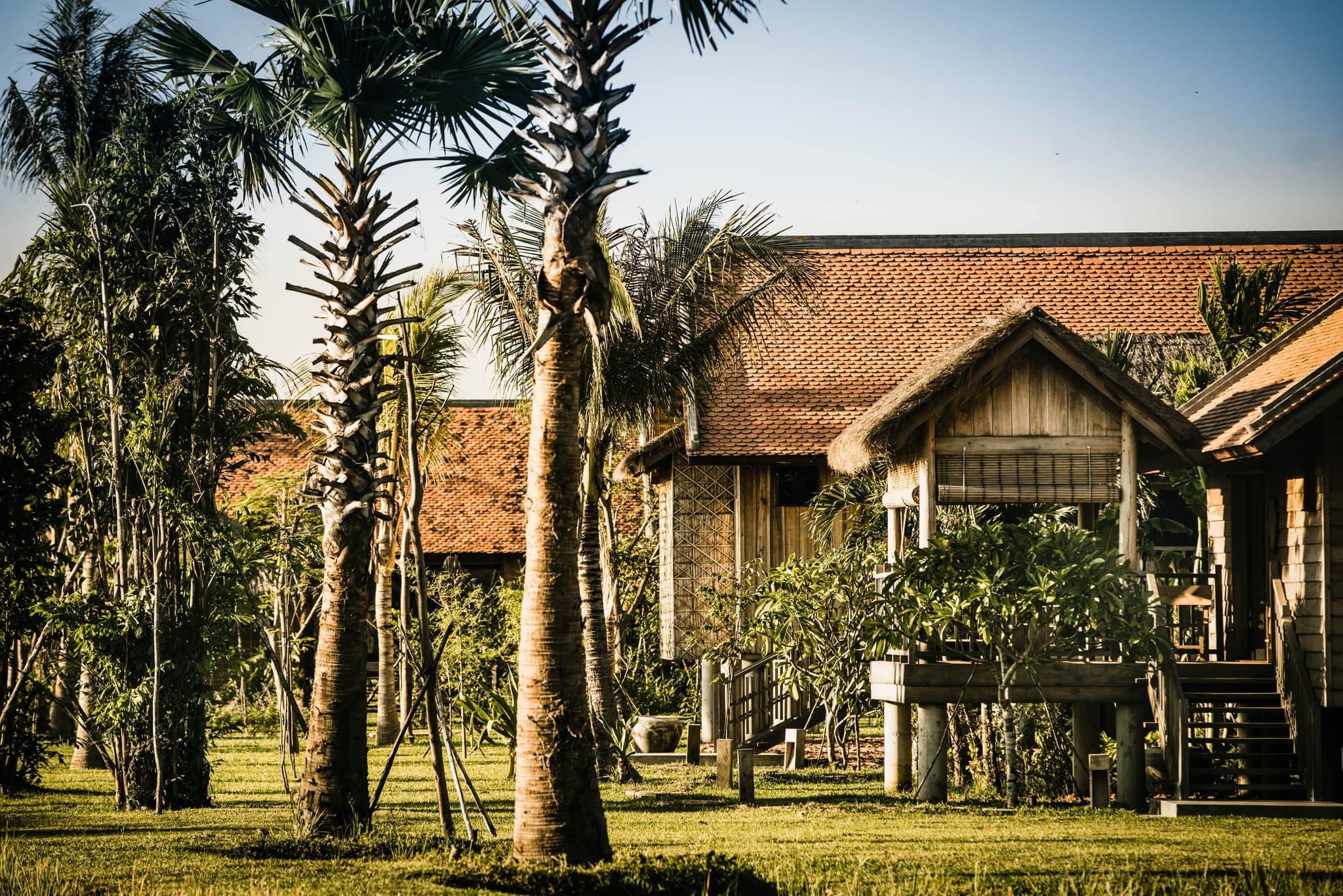
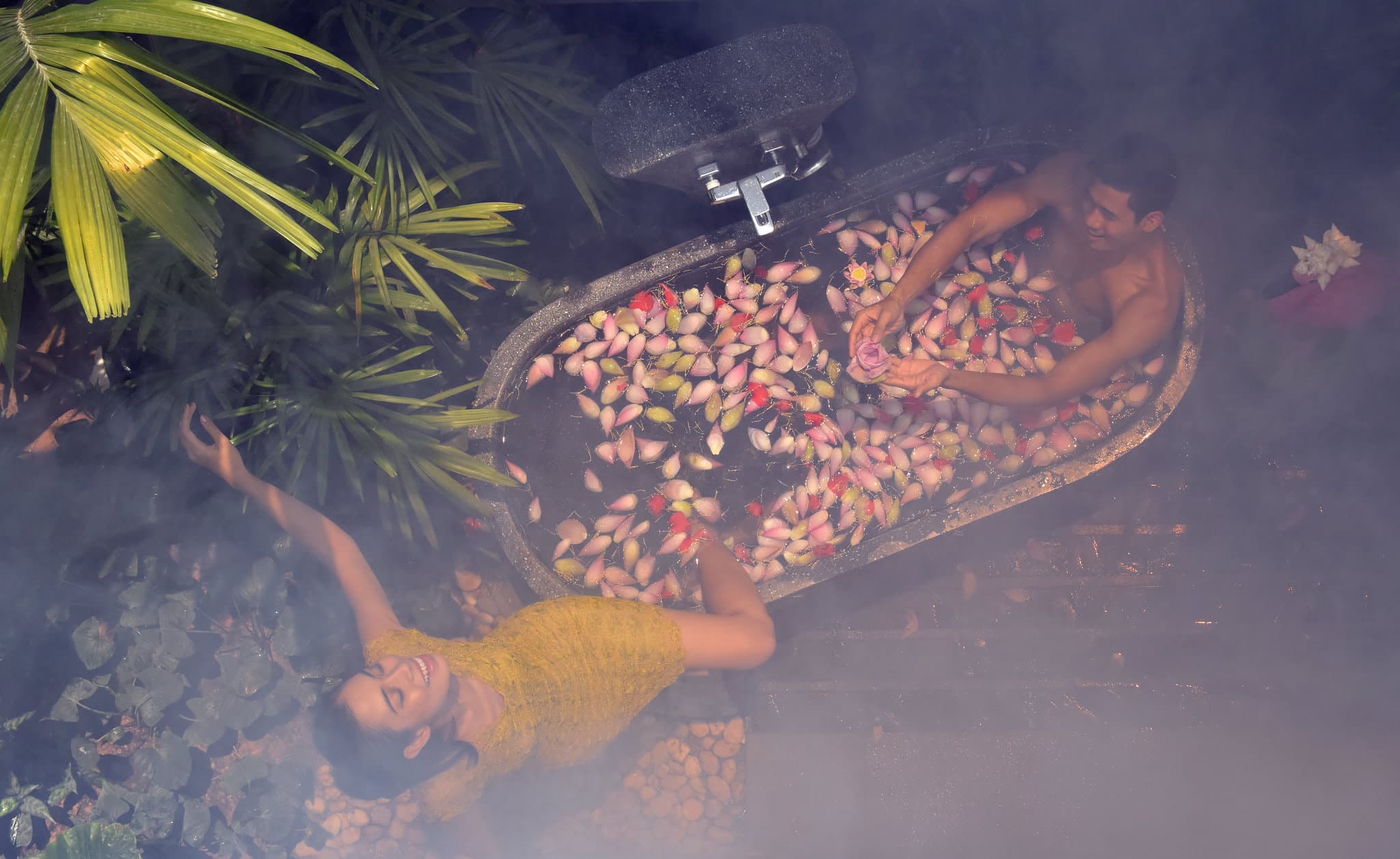
Forget the frenetic pulse of Pub Street; Phum Baitang (literally ‘Green Village’) demands a complete downshift. This isn’t merely a hotel dropped into a field—it is a meticulous reconstruction of rural Khmer life, filtered through Arnaud Zannier’s high-design lens. Forty-five stilted villas, crafted from reclaimed wood and thatched roofing, stand atop twenty acres of working rice paddies and lemongrass meadows. The commitment to sustainability here goes beyond the performative; they achieved a staggering 91% Green Globe score, producing their own linens in-house from raw wholesale rolls and bottling bespoke, paraben-free botanicals in refillable ceramic vessels. The interiors are a lesson in restraint—aged timber, matte ceramics, and eggshell bathtubs that demand a long soak. Dining at Bay Phsar involves sitting amidst the paddy fields, where the ‘Bangkia Bampong’ (crispy shrimp) is non-negotiable. Service is telepathic yet invisible, maintaining the illusion that you are the sole inhabitant of this humid, verdant dreamscape. It is the absolute benchmark for responsible luxury in Southeast Asia.
“Skip the main bar for the Sunset Lounge, housed in a century-old repurposed farmhouse. Order a cocktail laced with garden-grown lemongrass as the sky turns violet.”
Insider TipAvg. Nightly Rate
500USD
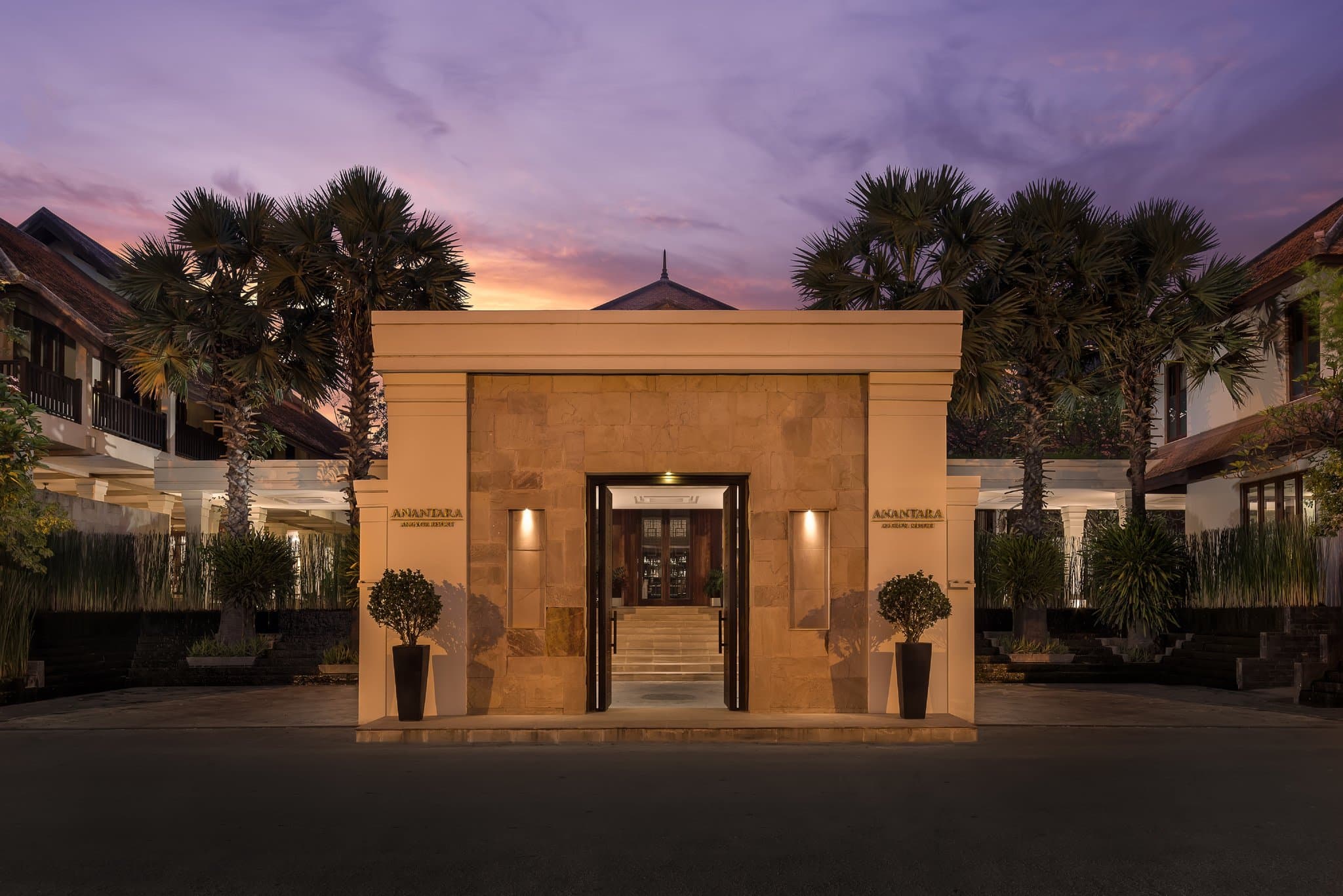
Siem Reap’s luxury circuit often confuses opulence with noise, but Anantara Angkor Resort masters the art of the whisper. This isn’t just a hotel; it’s a masterclass in 'monastic luxury'—a design ethos that favors teak floors, sandstone reliefs, and a symmetry so precise it calms the pulse upon arrival. The experience begins not with a check-in desk, but with a signature foot ritual that scrubs away the dust of the temple run, grounding you instantly in Khmer hospitality. The 39 suites are substantial (starting at 46 sqm), avoiding the cramped feel of city boutique properties. But the real story here is the 'Dollar for Deeds' initiative. It’s rare to see a CSR program that feels this tangible; your nightly dollar, matched by the hotel, directly funds the Wildlife Alliance’s 'Rewild Angkor' project, releasing gibbons and otters back into the temple forests. It transforms your stay from passive consumption to active conservation. Dining at Chi Restaurant is non-negotiable. Order the Mekong Lobster Tom Yum—it’s a progressive take that respects local sourcing without slipping into fusion confusion. For the weary, the 18-meter saltwater pool, inspired by the royal Srah Srang baths, offers a chlorine-free reprieve. **Verdict**: impeccable service and genuine eco-credentials make this the thinking traveler's sanctuary in Temple Town.
“Book the 'Henri Mouhot Suite' for its private plunge pool and direct garden access—perfect for a post-Angkor soak in total privacy.”
Insider TipAvg. Nightly Rate
195USD
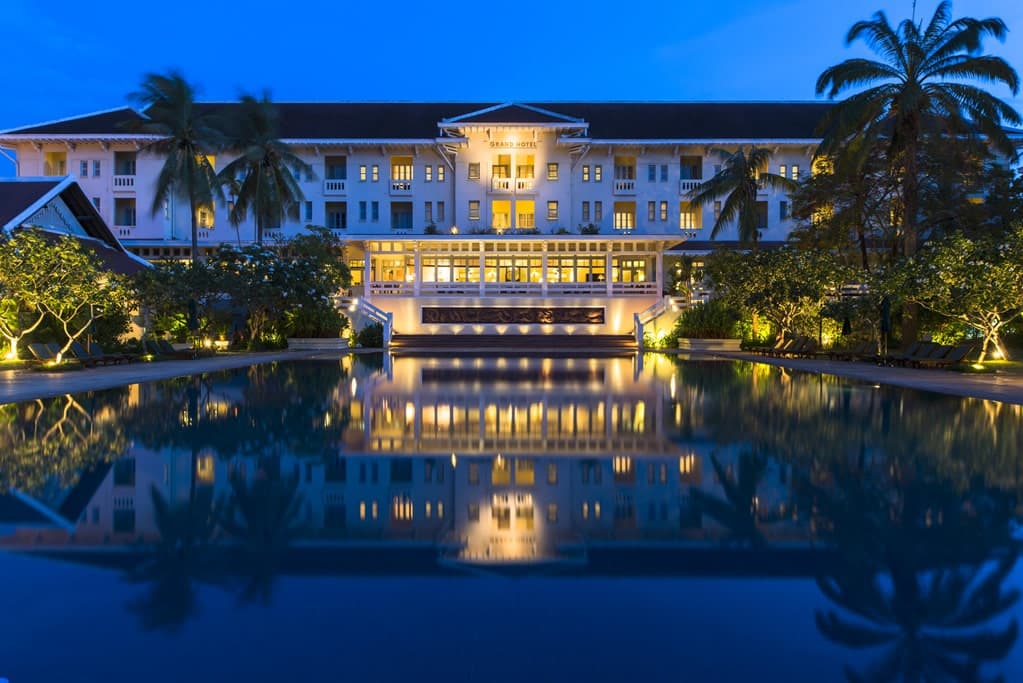
You don’t simply check in at the Raffles Grand Hotel d’Angkor; you ascend into a bygone era via the original 1930s timber cage elevator. In a city often frenetic with tuk-tuks, this Grande Dame operates at a different frequency, anchored by 15 acres of French gardens that serve as Siem Reap’s climatic regulator. While newer properties attempt 'eco-minimalism,' Raffles proves that true sustainability is preserving the historical fabric. The lobby, cooled by cross-breezes rather than aggressive AC, leads to rooms where Art Deco grandeur meets high-spec utility—think Dermalogica amenities and restored clawfoot tubs, though the original timber floors do creak with character. The culinary program at '1932' isn’t just dinner; it’s an excavation of Royal Khmer recipes, with the signature Fish Amok presenting a texture as silken as the doormen’s uniforms. Speaking of which, the service is telepathic, a hallmark of the butler culture here. The pièce de résistance? The 35-meter pool, inspired by ancient Royal Baths, offering a silent, chlorinated sanctuary after a dusty temple run. It is refined, responsible, and unapologetically regal.
“Check the doormen's trousers; they change color daily to match the Royal Palace's astrological chart (orange is Monday).”
Insider TipAvg. Nightly Rate
300USD
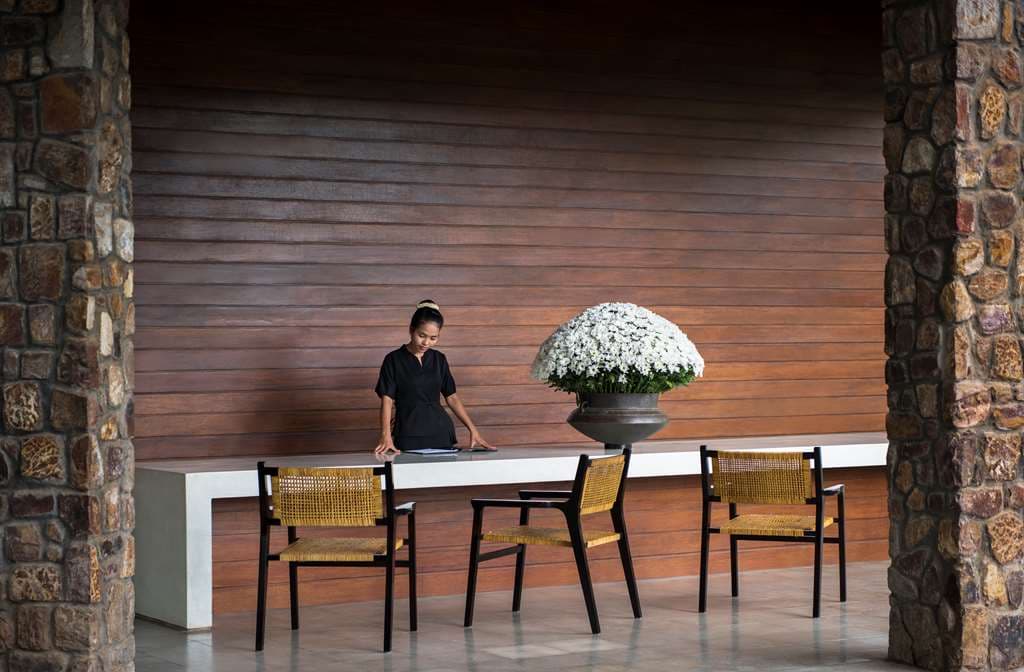
If sustainable luxury is defined by the preservation of culture rather than just carbon credits, Amansara is the genre’s undisputed matriarch. Housed in the former guest villa of King Sihanouk—a 1962 masterpiece of New Khmer Architecture restored by Kerry Hill—this property doesn't just sit in Siem Reap; it haunts it with a sophisticated, monochrome elegance. Arrival sets the tone: a purring 1965 vintage black Mercedes whisks you away from the chaotic airport, delivering you into a sanctuary of terrazzo and silence. With only 24 suites, the footprint is intentionally light. The experience is less about hotel amenities and more about privileged access. Your dedicated remork (driver included) navigates the Angkor complex through back entrances, dodging the selfie sticks for a truly spiritual encounter. Back at base, the spa’s organic Aman products and the slate-lined curved pool offer a zen counterpoint to the jungle heat. Dining is an exercise in cultural respect; skip the Western menu and demand the Nom Ben Chok at the rustic Khmer Village House—a wooden stilted home within the archaeological park itself. While the price point is eye-watering and the in-room tech intentionally sparse, you aren't paying for a TV; you're paying to live like 1960s royalty with a conscience. Verdict: The ultimate heritage-chic sanctuary.
“Book the Khmer Village House for a charcoal-cooked breakfast after sunrise; it’s the most atmospheric meal in Siem Reap.”
Insider TipAvg. Nightly Rate
1650USD
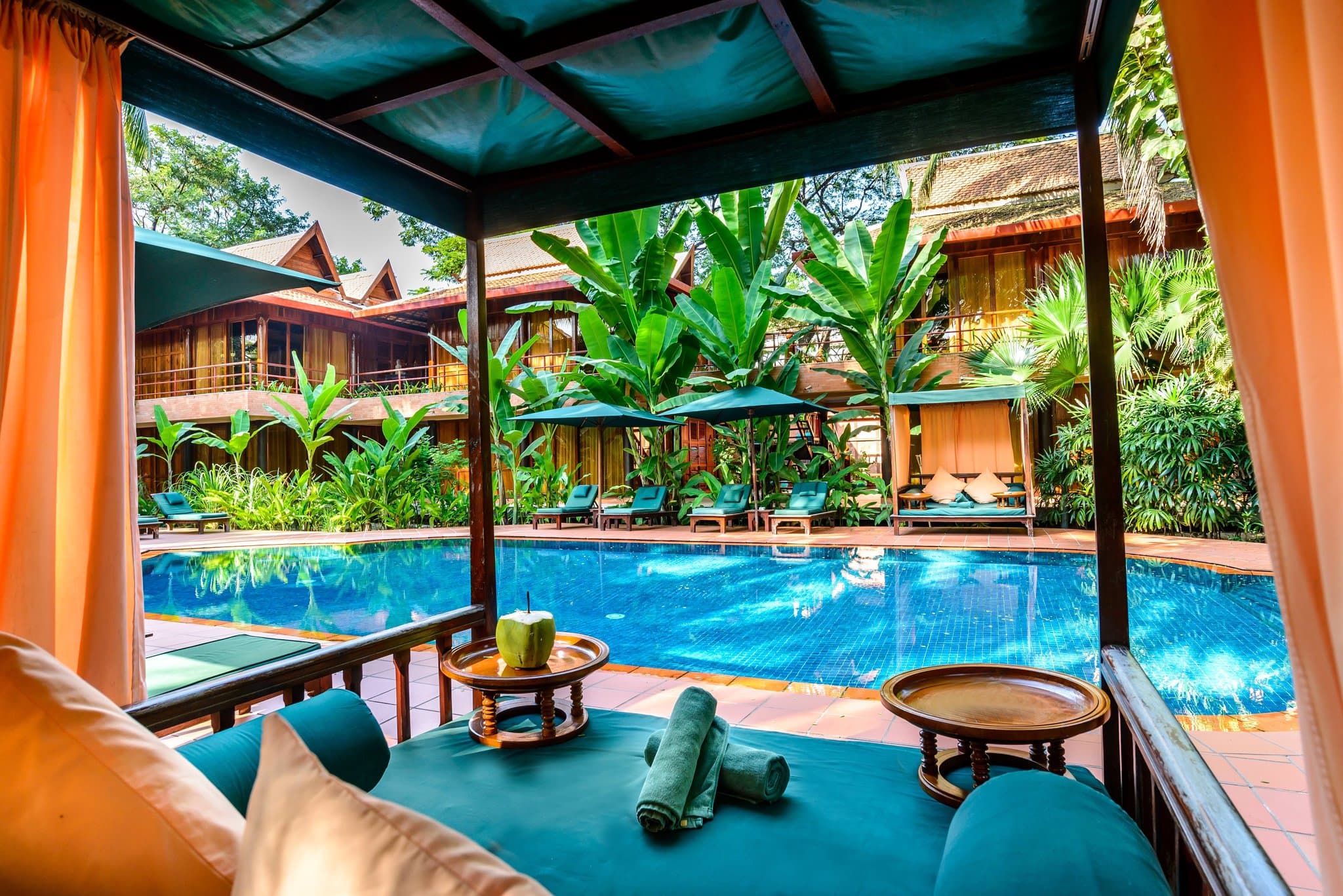
While most Siem Reap properties rely on industrial air conditioning to combat the Cambodian heat, Angkor Village Hotel employs a more sophisticated, centuries-old hack: architectural density. Constructed in 1994 by a French architect, the property doesn’t just mimic a traditional Khmer village; it functions like one. The wooden bungalows are spaced within a botanical density so thick it drops the ambient temperature by several degrees naturally. It’s dark, moody, and undeniably cooler. Inside, the rooms shun the sterile glass-box aesthetic for polished hardwoods and shuttered windows. Yes, the bathrooms feel vintage—don't expect Japanese smart toilets here—and the dense foliage invites the occasional mosquito (bring Deet), but the trade-off is a profound sense of place that the concrete chains can’t replicate. Dining is theatrical: at L’Auberge des Temples, you dine in a floating pavilion, but the real insider move is the Fish Curry at Aaraama, rich with amok spices. Service adheres to strict Small Luxury Hotels (SLH) standards—intuitive, not intrusive. It’s not for the digital nomad seeking fiber-optic speeds; it’s for the purist seeking the cooling silence of the jungle.
“Request a second-floor room. The elevation captures the cross-breeze better than the ground floor, and you’ll wake up at eye level with the canopy rather than the pathway.”
Insider TipAvg. Nightly Rate
85USD
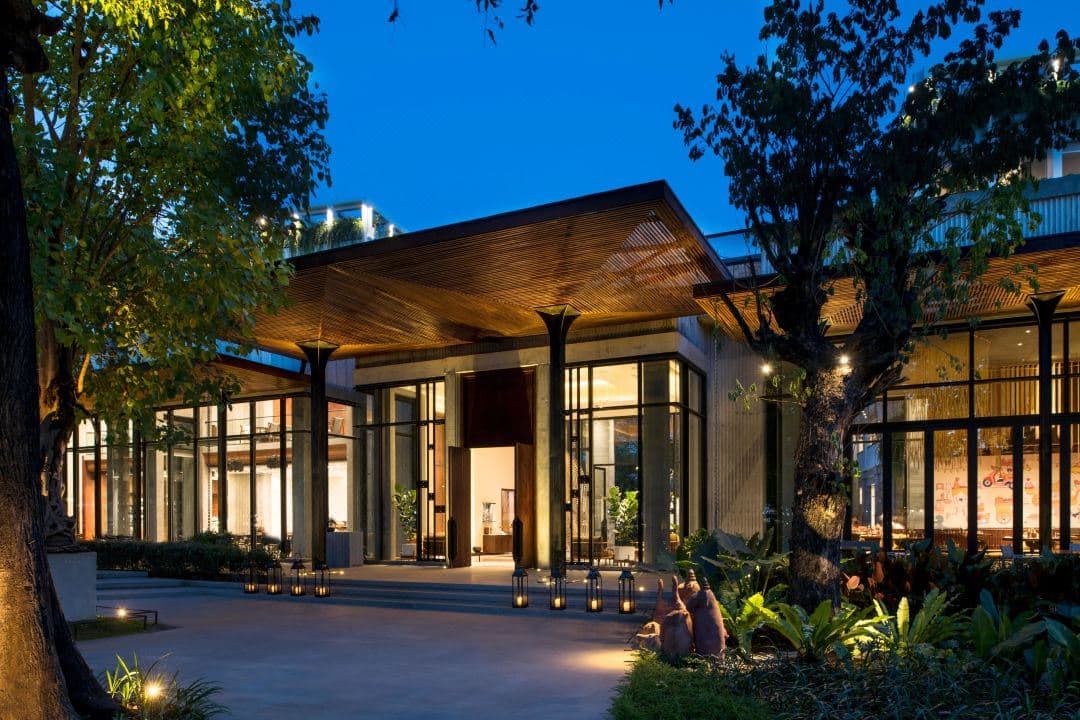
Forget the colonial pastiche that dominates Siem Reap; Treeline Urban Resort is a modernist recalibration of the Khmer aesthetic. Designed by Cambodian architect Hok Kang, the property feels less like a hotel and more like a habitable art installation, anchored by the 'Cosmic Wheel' sculpture in its jungle-dense courtyard. The vibe here is strictly 'conscious cool'—single-use plastics are banished, replaced by refillable glass bottles and biodegradable packaging. Inside, the 48 rooms trade gilt for grit with polished concrete, native timber, and Bose Bluetooth speakers. The bathrooms are stocked with local Sâmata and Kambio botanicals rather than generic imports. It’s a sensory experience that extends to the rooftop, where the saltwater infinity pool offers a chlorine-free vantage point over the Siem Reap River. Dining eschews the buffet fatigue for 'Romiet', where the Nom Krok (rice cake dumplings) are street-food alchemy. For sundowners, the Canopy Bar’s Lychee Sparkler is the only accessory you need. Treeline proves that sustainability doesn't require a hairshirt; it just needs better design.
“Craving natural light? Request a 2nd-floor Deluxe Living Room facing the river; inner courtyard rooms can be moody but dim.”
Insider TipAvg. Nightly Rate
109USD
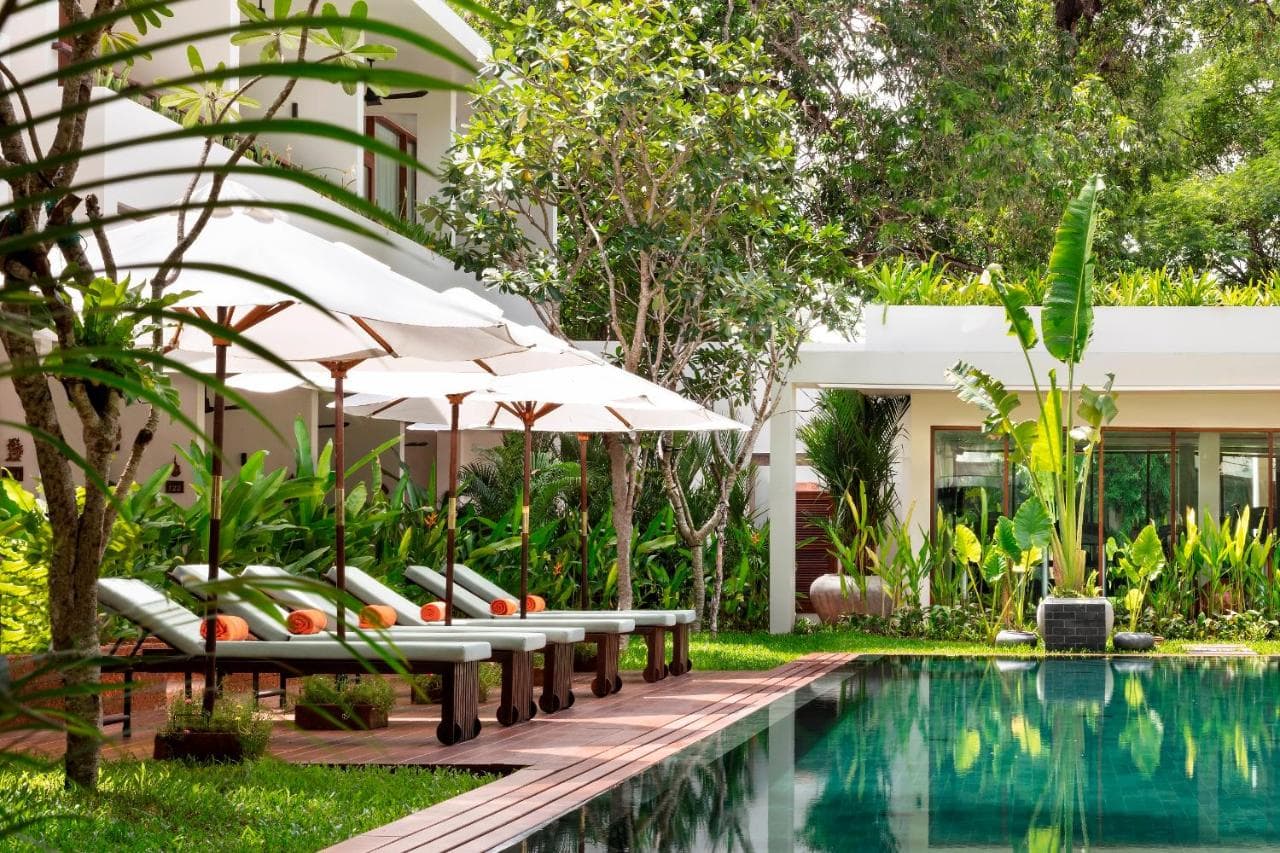
The Foreign Correspondents Club (FCC) has long been the stuff of legend—a watering hole where journalists and diplomats once traded secrets over gin. Reimagined by Avani, this property sheds the dust of history for a sharp, eco-conscious renovation that feels less like a museum and more like a living editorial. The architecture remains strictly Indochina Art Deco, but the operations are strictly 2025: the hotel holds a Green Growth 2050 certification, boasting zero single-use plastics and amenities by socially responsible local artisans. Your center of gravity here is the black-bottomed saltwater pool, a moody, jungle-framed rectangle perfect for washing off the temple dust. Rooms are textural triumphs featuring dark hardwoods and Cambodian silks, though the 'writer' aesthetic takes a literal turn with the deliberate omission of ergonomic workstations—perhaps a subtle nudge to move your drafting to The Scribe Bar. There, under the ancient banyan tree, the 'Pretty Writer' cocktail pairs dangerously well with the humid air. Dinner at The Mansion is non-negotiable; brave the signature Grilled Crickets if you must, but the Fish Amok is the culinary headline. Service is intuitive, not intrusive, though the Wi-Fi can occasionally lag—consider it a period-correct feature.
“Book a ground-floor Garden Suite for direct access to the saltwater lap pool—perfect for a pre-dawn dip before the Angkor crowds arrive.”
Insider TipAvg. Nightly Rate
150USD
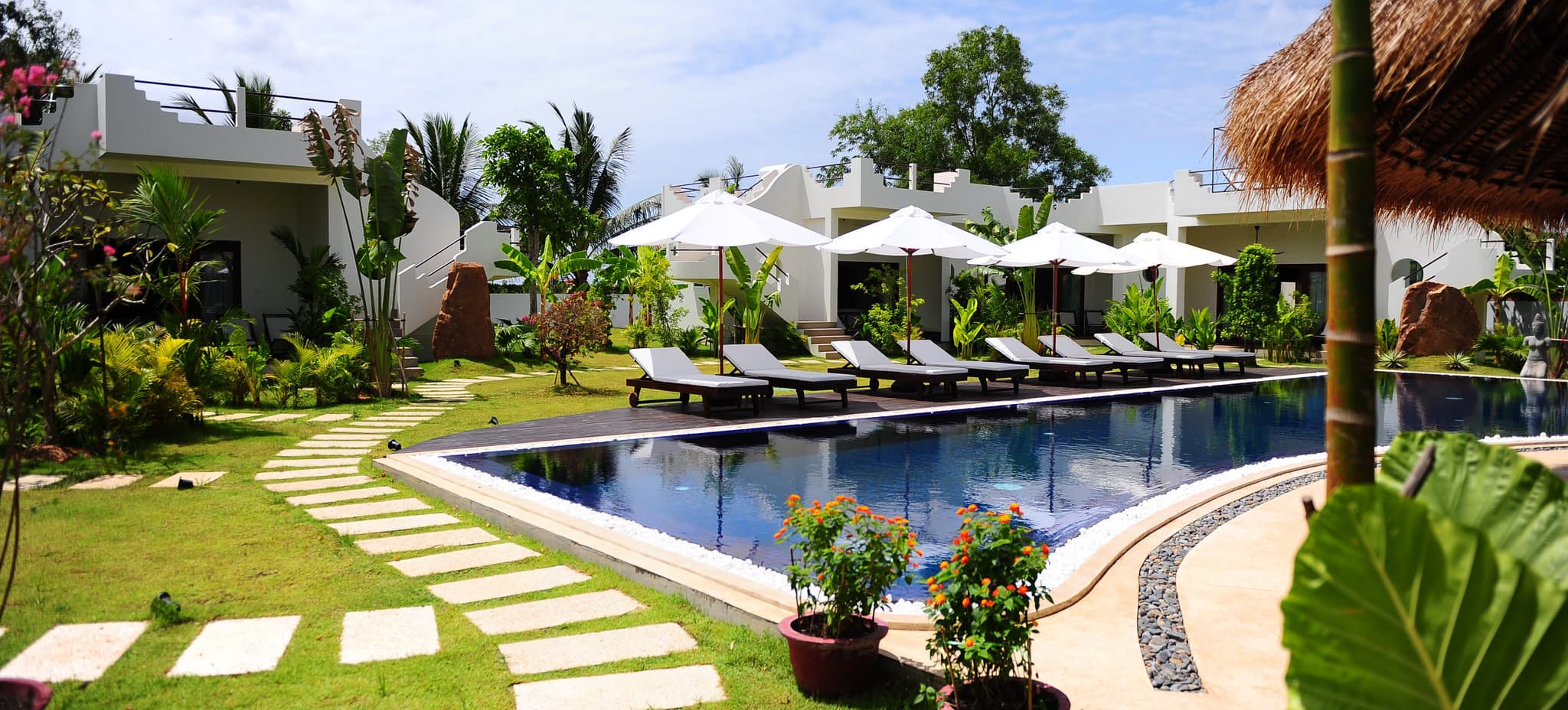
If the dust and frenetic energy of Pub Street feel like a sensory assault, Navutu Dreams is the antidote. Situated a ten-minute tuk-tuk ride from the city center, this plastic-free enclave feels less like a Khmer resort and more like a Puglian *masseria* dropped into the jungle. The aesthetic is strictly Mediterranean minimalism—think whitewashed curves and low-slung structures offset by emerald sugar palms. It is a place designed for decompression. The resort centers around three distinct pools; skip the freshwater lap pool and claim a lounger by the saltwater Lagoon Pool, which effectively mimics a beach break. Wellness here goes beyond the standard hotel massage; the Honeycomb Spa integrates Traditional Chinese Medicine (TCM) and acupuncture, a rarity in the region. Rooms, particularly the Grand Tour suites, are cavernous, featuring lemon-tiled soaking tubs that demand a long evening soak. Dining at Niam Niam Restaurant is a mixed bag—while the *Fish Amok* is competent, the menu leans heavily Western. Stick to the detox juices and wellness plates; you are here to purify, after all. With service that borders on telepathic and a 2025 World Wellness Weekend Championship under its belt, Navutu is the sophisticated traveler’s answer to temple fatigue. **Verdict**: A serious wellness retreat for those who prefer silence over proximity.
“Book a 'Grand Tour' room for the private garden access and the lemon-tiled soaking tub—perfect for washing off the Angkor dust.”
Insider TipAvg. Nightly Rate
49USD