No. 01

SuzhouSuzhou1352 verified reviews
9
.6
Bitvoya Edit
Layering imagery, place, and detail before the page opens.
Suzhou is no longer just a city of ancient canals; it has evolved into a global canvas for architectural silence and sophistication. This curated collection explores the 'Su' Aesthetic—a design philosophy that marries the whitewashed walls and black tiles of antiquity with cutting-edge modern minimalism. As you traverse from the bustling luxury of the Suzhou Industrial Park (SIP) to the quiet heritage lanes of the Gusu District, these properties redefine what it means to stay in Suzhou. Whether it is the I.M. Pei-inspired geometry at The Ritz-Carlton or the zen-like healing sanctuary of SANGHA Retreat by OCTAVE Institute near Yangcheng Lake, these design icons offer a serene counterpoint to the city's dynamic growth.
Suzhou is often termed the 'Venice of the East', but for design aficionados, it is the 'Kyoto of China'. The 'Su' aesthetic is distinct; it emphasizes negative space, light interplay, and the framing of nature—principles deeply rooted in the city's UNESCO-listed classical gardens. Choosing a minimalist design hotel here implies an immersion into a living art form. Properties like the Four Seasons Hotel Suzhou and Kimpton Bamboo Grove integrate ancient water town layouts with sleek, contemporary lines, offering a stay that is visually stunning and culturally profound.
To fully experience the 'Su' aesthetic, location is key:
Expect a muted color palette dominated by whites, grays, and natural wood tones, punctuated by the vibrant greens of meticulously manicured bonsai and bamboo. Service in these establishments often mirrors the design: unobtrusive, intuitive, and graceful. Whether you are sipping tea at the AC Hotel Suzhou China or admiring the brutalist-meets-traditional architecture at the Tonino Lamborghini Hotel Suzhou, the experience is designed to slow down time, allowing you to appreciate the subtle elegance that defines the region.
For historical minimalism, stay in the Gusu District (Old Town). For modern luxury skyscrapers with design flair, choose the Suzhou Industrial Park (SIP) near Jinji Lake.
Spring (April-May) and Autumn (September-November) offer the most pleasant weather for exploring the gardens and hotel architecture.
Yes, despite being a modern skyscraper, it incorporates 'Su' aesthetics, featuring interiors inspired by local scholar's rocks and classical gardens.
Explore our complete curated list of luxury accommodations, from boutique hideaways to grand dames.
Explore All Suzhou HotelsForget the tired 'Venice of the East' clichés. Banyan Tree Suzhou Shishan, opened in March 2024, anchors itself firmly at the foot of Lion Mountain, trading kitschy canals for a rigorous, geometric interpretation of the 'Su' aesthetic. The architecture is a stark, confident dialogue between I.M. Pei-esque modernism and the ancestral vernacular of whitewashed walls and gray tiles. Inside the 60 secluded retreats, the experience is less about hotel hospitality and more about private wellness. The headline act isn't the bed (though the linens are impeccable), but the private courtyard pools filled with metasilicic acid mineral water—a geo-thermal luxury that softens the skin. Dining at Bai Yun is non-negotiable; order the signature squirrel-shaped mandarin fish, which arrives with a theatrical precision matching the lattice-screen corridors. While the service channels the brand’s signature Thai warmth, the vibe here is strictly quiet luxury. A few maintenance quirks exist—skip the outdoor sofas in favor of the climate-controlled interiors—but for a design-led detox, this is Suzhou’s sharpest new edge.
“Privacy varies by room tier due to the low courtyard walls. For total seclusion, request a 'Wellbeing Sanctuary' suite on the upper tier, away from the public walkways.”
Insider TipAvg. Nightly Rate
176USD

If you expect the Tonino Lamborghini Suzhou to be a loud, engine-revving tribute to Italian horsepower, you’ve missed the point entirely. Designed by Czech architect Jan Benda, this property is a study in restraint—a moody, almost monastic interpretation of the 'Su' aesthetic that trades supercar Rosso Corsa for greyscale brick and tranquil water features. It’s less about 0-to-60 and more about the slow burn of Suzhou’s scholar culture. The arrival experience is undeniably cinematic: a glimmering, aggressive 'Charging Bull' sculpture stands guard in a courtyard that otherwise whispers traditional Jiangnan elegance. Inside, the 'Book Garden' concept dominates; this isn't just a hotel, it's a reinterpretation of an ancient diplomat’s library. The rooms are expansive, featuring floating TV cabinets and panoramic floor-to-ceiling windows that frame the serene Jinji Lake, though the hardware—reminiscent of its 2012 opening—is starting to show a bit of character. The real showstopper, however, is the indoor pool. Forget your standard lap lanes; this is a celestial experience with a floor paved in crushed seashells and a ceiling mimicking a starry night sky. For dining, skip the French fine dining and head straight to 'Su Mian Fang'. Their Hairy Crab Roe Noodles are a masterclass in local flavor, rich and unctuous, proving that even an Italian brand knows better than to compete with Suzhou’s noodle heritage. While reports of musky notes in the corridors occasionally drift through guest feedback, the personalized butler service and the sheer architectural drama make this a pivotal stop for the design-obsessed traveler.
“Request a Lake View Suite on the 3rd floor to bypass the courtyard noise and get the best angle of the 'Gate of the Orient' skyscraper at sunset.”
Insider TipAvg. Nightly Rate
102USD
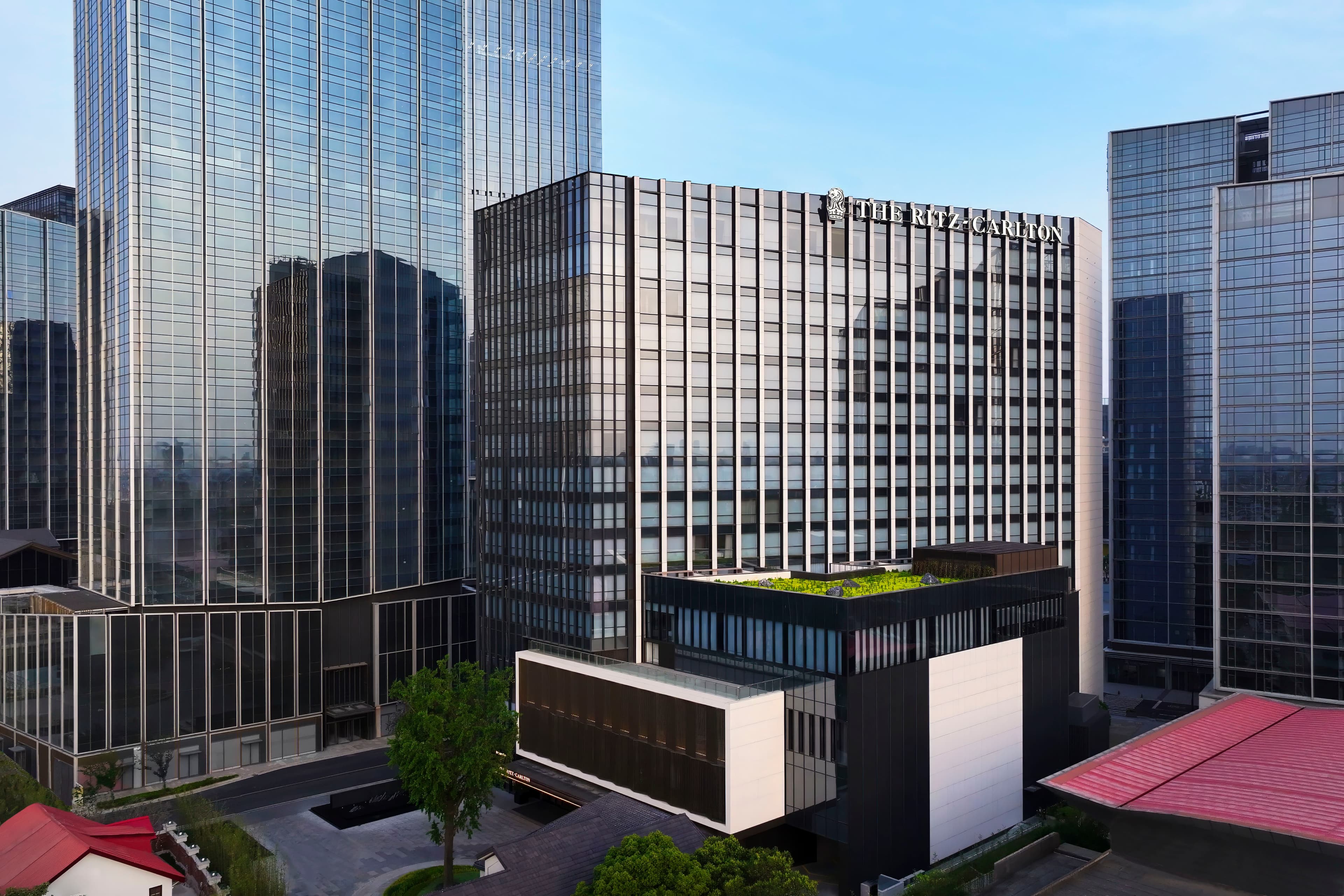
Forget the literal pagodas of the past; this is Suzhou re-imagined. Rising above the Jinji Lake skyline, The Ritz-Carlton, Suzhou doesn't just mimic the city’s UNESCO-listed gardens—it abstracts them into a vertical masterpiece. The 'Su' aesthetic is woven into the very architecture: the lobby’s arrival court is anchored by a century-old ginkgo tree, while geometric 'folding fan' screens and monochrome gradients evoke the misty canals of a scroll painting. The rooms are a masterclass in restraint, featuring silk-paneled walls, calligraphy motifs, and floor-to-ceiling windows that frame the Gusu District. The bathroom is a sanctuary equipped with Diptyque 'Philosykos' amenities and cloud-like bedding that creates a compelling case for sleeping in. Dining here is pure theatre; at Biao Xia, the crispy roasted duck is served with a precision that rivals the city's famous embroidery. It’s a sophisticated, hyper-modern love letter to Jiangnan culture, proving that even a global giant can feel intimately local.
“Skip the main bar at sunset and head to the 4th-floor Sky Garden. The water courtyard offers the most serene golden-hour views without the crowds.”
Insider TipAvg. Nightly Rate
191USD
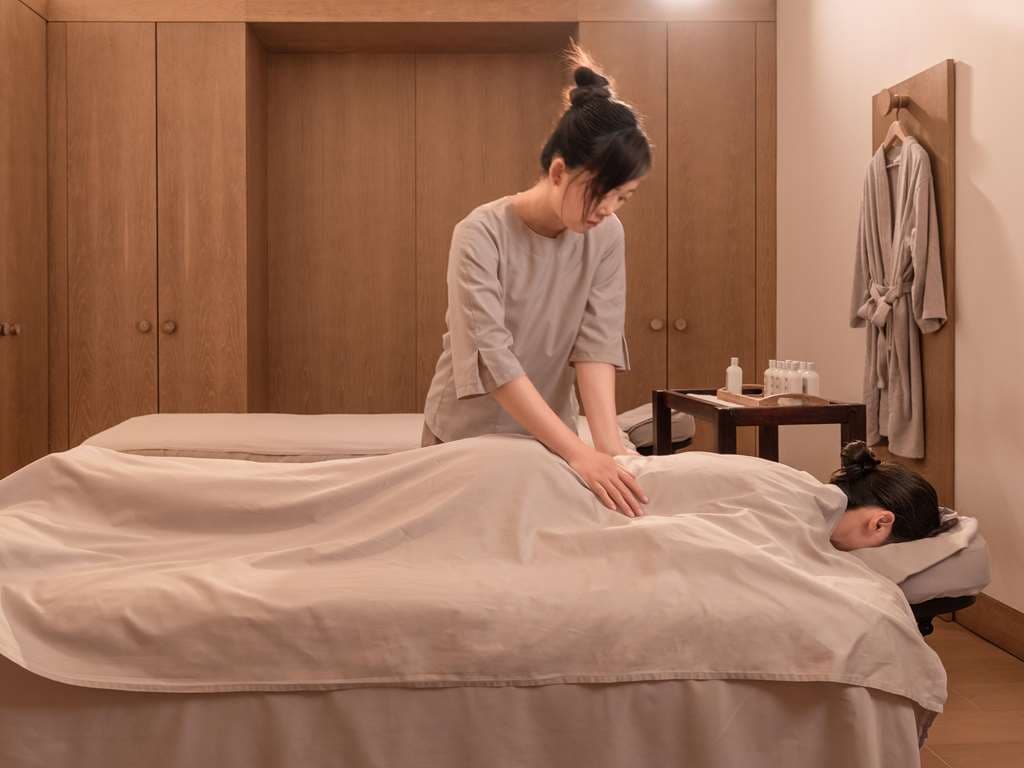
Forget everything you know about 'wellness retreats'—Sangha Retreat by OCTAVE Institute is less about cucumber slices on eyes and more about a hard reboot for your soul. Designed by Tsao & McKown, this 47-acre lakeside sanctuary is a masterclass in monastic modernism. The architecture is the first therapy: raw stone corridors, Neri&Hu’s colored glass walkways, and the ethereal ‘Sanctuary’ chapel that demands silence. The wellness program is aggressively scientific. Your stay begins with a MaxPulse test to map your stress levels, followed by a regimen that might include sleep coaching or a session in the 6,000 sqm subterranean spa. The 12-step hydrothermal circuit is non-negotiable—a journey through Himalayan salt caves and herbal steam rooms that leaves you gelatinous. Dining at ‘THOUGHT FOR FOOD’ is surprisingly indulgent; the Slow-cooked Beef Ribs with Kombu Broth Dumplings prove that ‘mindful eating’ doesn’t mean starving. Service is intuitive, almost telepathic. It’s a steep price tag, but for the burnt-out executive needing a total system restore, it’s cheaper than a breakdown.
“Request a room with a lake view for the full 'Su' aesthetic experience, and absolutely do not skip the 12-step thermal circuit—go early in the morning when you can have the salt cave to yourself.”
Insider TipAvg. Nightly Rate
1000USD

Forget the gilded excess of typical five-star monoliths; the real luxury in Suzhou is silence, and Tsingpu Suzhou Retreat has cornered the market. Tucked away at 55 Shantang Street in Mudu Ancient Town, this isn't just a hotel—it’s a scholarly rebuttal to modern noise. The property is a masterclass in the 'Su' aesthetic, where the design doesn't shout but whispers in the vernacular of exposed brick and reclaimed wood. With only eight rooms scattered across a sprawling garden, the privacy is bordering on hermetic. Inside, the experience is tactile and stripped back. You won’t find aggressive technology here; instead, the focus is on the grain of the furniture and the scent of Appelles amenities in the stark, spa-less bathrooms. The sound insulation is historically authentic (read: thin), so pack earplugs if you’re a light sleeper, though the only noise is usually the rustle of leaves. Dining is a serious affair at 'The Dining Room,' where the Squirrel-Shaped Mandarin Fish is not just dinner, but a piece of edible architecture—crisp, sweet, and exacting. It’s a place for those who prefer woodblock printing workshops over infinity pools. Verdict: A tactile history lesson for the design-conscious traveler who values provenance over polish.
“Request a room in the 'Main Embroidery Hall' structure for the most dramatic architectural framing, but be prepared to walk—cars can't reach the door.”
Insider TipAvg. Nightly Rate
300USD
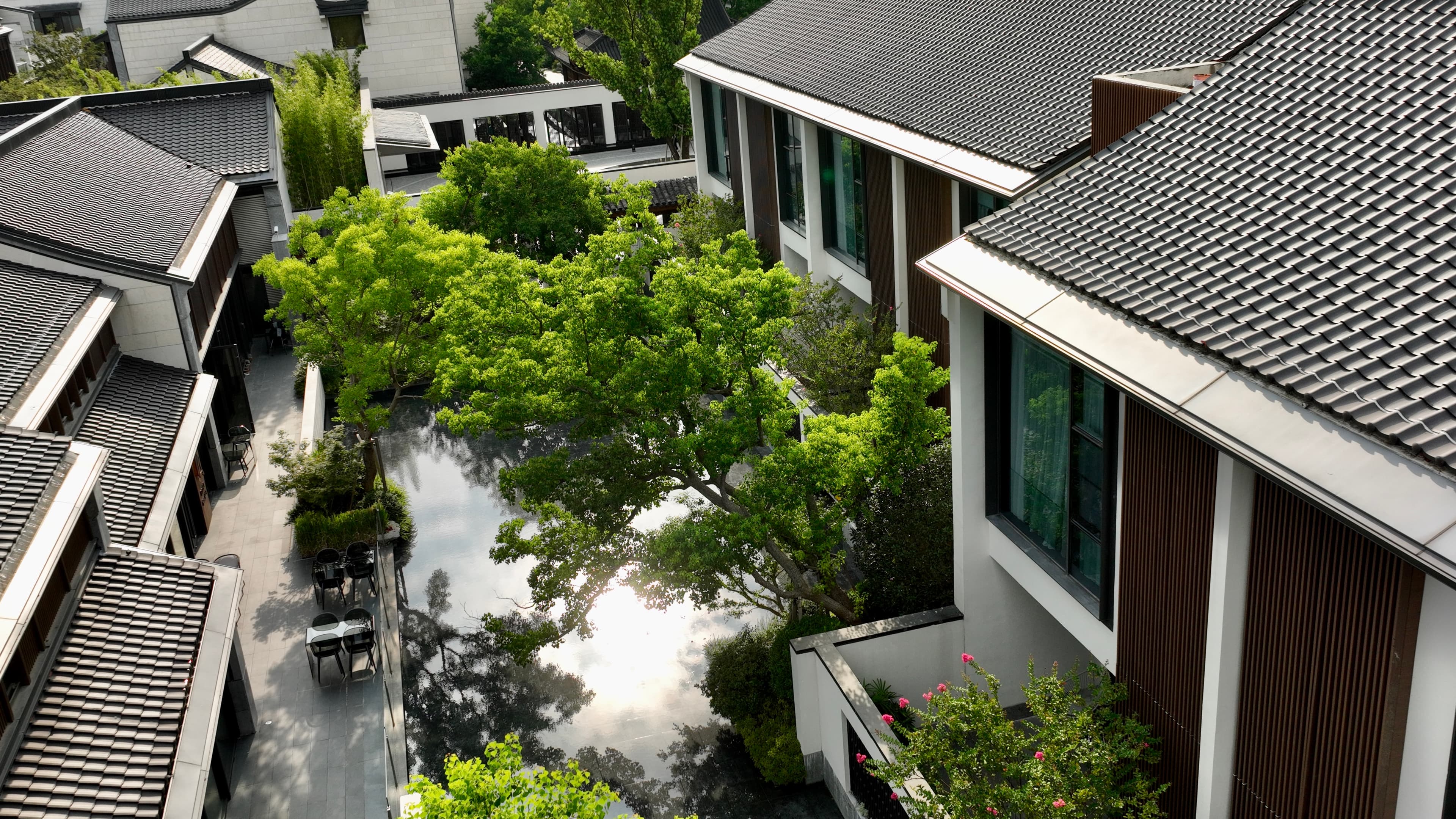
Forget the dusty nostalgia of the original 1990s Bamboo Grove. This reincarnation, helmed by SCDA Architects, is a sharp, monochromatic rebuttal to the city’s often-clichéd heritage hotels. It doesn't mimic the past; it distills it. You enter through a stark, geometric sequence of whitewashed walls and dark tiles—a deliberate, reverent dialogue with I.M. Pei’s nearby Suzhou Museum—where water features act as mirrors rather than decoration, doubling the architectural drama. In the guestrooms, the 'Su' aesthetic is ruthlessly curated: light wood screens, private patios that actually offer privacy, and the requisite Dyson hairdryers that signal you’ve left the mid-tier category behind. The standard Kimpton playfulness is restrained here, traded for a meditative quiet, though the pet-friendly policy ensures the lobby isn't entirely hushed. Dining is where the locale asserts itself. Skip the room service and head to The Grove for the braised baby hairy crab—a messy, rich indulgence that cuts through the minimalism. End the night at Bar 168, a glass cube floating on the courtyard water. It’s less about the whiskey list and more about the view: a perfectly framed, lit-up scene of weeping willows that makes you forget you're in a city of 12 million. Service is well-intentioned, if occasionally paced to the slow rhythm of the canals.
“Book a 'Premium River View' room on the ground floor for direct access to a private terrace that feels like your own secret garden.”
Insider TipAvg. Nightly Rate
138USD
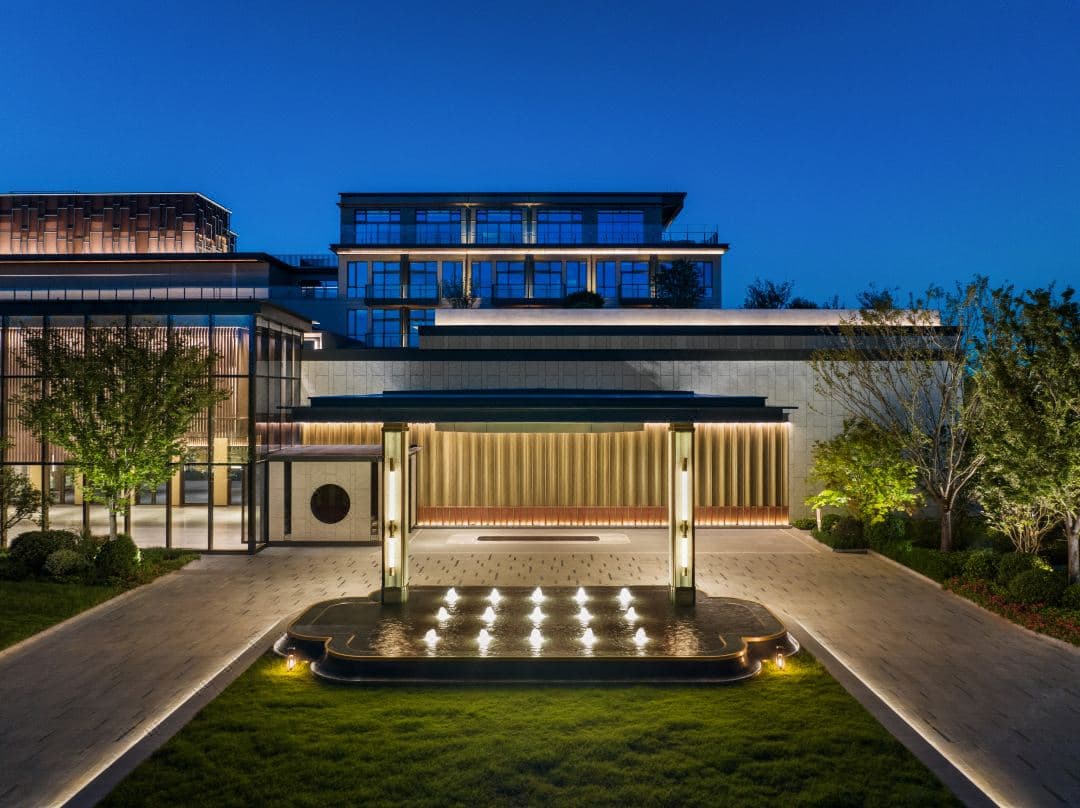
Forget the gilded excess of typical luxury; the Four Seasons Suzhou is a masterclass in the 'Su' aesthetic—quiet, horizontal, and devastatingly chic. Occupying a private 9-hectare island on Jinji Lake, this property rewrites the rules of the Jiangnan garden. The architecture eschews towering verticality for low-slung, glass-enclosed structures that frame the landscape like a living scroll. Inside, the vibe is cinematic yet meditative. The lobby atrium, dominated by a massive scroll-shaped lantern, sets a hushed tone that carries through to the rooms. While the kids are occupied at the complimentary 'Kids For All Seasons' club, you’ll be at the spa, slathered in Augustinus Bader formulations or sweating it out on Technogym gear. Dining is a serious affair: skip the safe bets and head straight to Jin Jing Ge for the Braised Pork Belly with Fermented Red Rice—a sticky, savory homage to the region. Service has settled into a confident rhythm, overcoming initial opening jitters. **The Verdict**: A sophisticated sanctuary that feels miles away from the city, yet stares right at its skyline.
“Book a table at Yun He’s terrace at sunset. The view of the 'Gate of the Orient' reflecting endlessly across the infinity pool is the ultimate Suzhou flex.”
Insider TipAvg. Nightly Rate
280USD
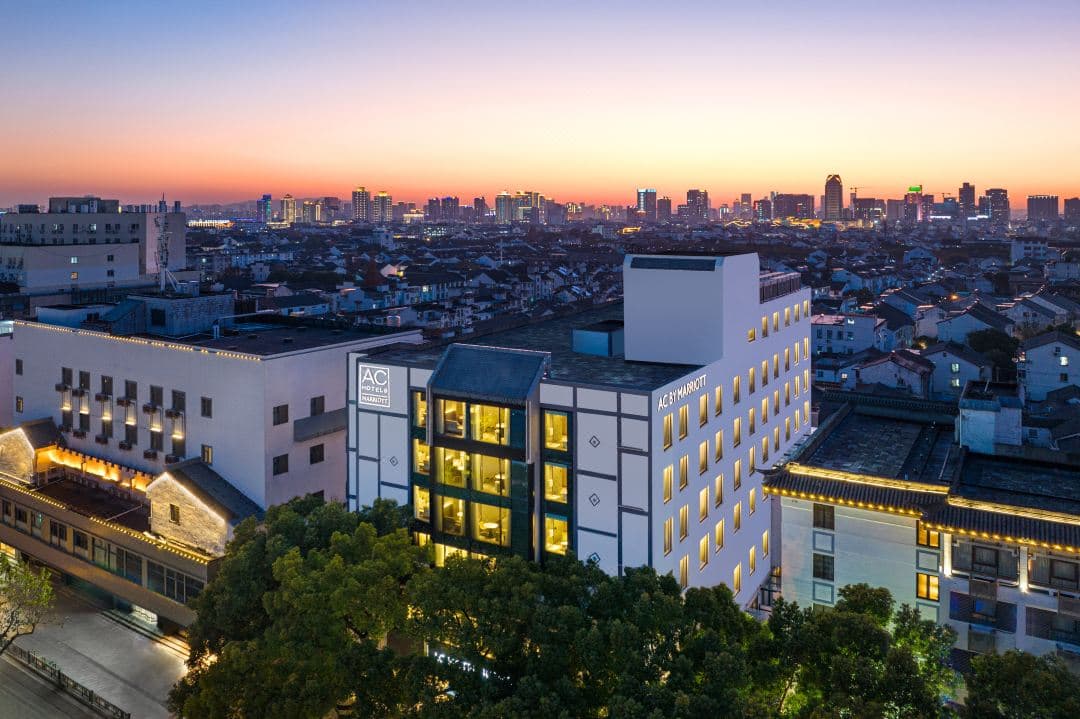
It takes architectural nerve to plant a flag just 1,500 meters from I.M. Pei’s magnum opus, the Suzhou Museum. Yet, the AC Hotel Suzhou does not try to outshout the master; it offers a hushed, geometric reverence. The exterior is a study in 'Su' aesthetics—whitewashed walls and slate-grey tiles reinterpreted through a sharp, modernist lens. Inside, the lobby feels less like hospitality and more like a contemporary gallery, stripping away the ornate clutter typical of the region for clean lines and shadow play. The rooms are an exercise in European efficiency. At 28 square meters, they are compact, but the spatial engineering prevents claustrophobia. You won’t find excessive soft furnishings here; instead, expect the clinical luxury of Greek Korres amenities and open-closet concepts that demand you travel light. The dining experience at AC Kitchen is a deliberate cultural collision. It is disarming to see plates of Spanish sliced jamón sitting adjacent to steaming bowls of Suzhou-style noodles, but the combination works. Come evening, the AC Lounge filters the city’s chaotic energy into a precise Gin & Tonic, served in glassware as heavy as the architecture. This is not a hotel for those seeking sprawling luxury; it is a sanctuary for those who find peace in precision.
“Skip the standard King; book a 'Garden Room' on the lower floor to gain a private, high-walled courtyard—your own slice of Suzhou silence.”
Insider TipAvg. Nightly Rate
74USD