No. 01
Kaertner Ring 8. Vienna Austria 01010Vienna917 verified reviews
9
.6
Bitvoya Edit
Layering imagery, place, and detail before the page opens.
Vienna’s Ringstraße is not merely a boulevard; it is a testament to imperial grandeur, a circular showcase of architectural mastery commissioned by Emperor Franz Joseph I. Staying along this historic artery means waking up inside a living museum. Our curated selection takes you to the heart of the Innere Stadt, where the legendary Hotel Sacher Wien whispers tales of opera stars, and the Hotel Imperial hosts visiting royalty. Experience the neo-renaissance marvels near the State Opera and the serene luxury of Palais Hansen. These properties blend Habsburg elegance with modern opulence. Whether you seek the famous Sachertorte or the butler service of the Hotel Bristol, these hotels offer the ultimate Viennese immersion.
Vienna is unique among European capitals for its preservation of imperial history, and nowhere is this more visible than on the Ringstraße. Staying in one of these iconic hotels is not just about accommodation; it is about inhabiting the spaces where history was made. Properties like the Grand Hotel Wien and The Ritz-Carlton, Vienna occupy palatial structures that define the city's skyline. Unlike modern builds, these hotels offer high ceilings, crystal chandeliers, and an atmosphere of 'Gemütlichkeit' (coziness) mixed with aristocracy.
When booking a stay at The Icons of the Ringstraße, expect service that harkens back to the 19th century. Concierges at the Hotel Imperial are known for unlocking doors to private palaces, while the Hotel Sacher Wien offers the exclusive culinary delight of the Original Sachertorte. Expect opulent interiors featuring silk wallpapers, antiques, and marble bathrooms. However, modern amenities are never compromised; properties like Anantara Palais Hansen Vienna Hotel seamlessly integrate state-of-the-art spas and technology within their historic walls.
Hotel Sacher Wien and Hotel Bristol are the closest historic luxury properties, located directly opposite the Vienna State Opera on the Ringstraße.
Yes, Hotel Imperial was originally built in 1863 as the private palace of the Prince of Württemberg before being converted into a hotel for the 1873 World's Fair.
Palais Coburg Residenz is built on top of historic fortress walls and features one of the most significant wine archives in the world, offering an all-suite luxury experience.
Explore our complete curated list of luxury accommodations, from boutique hideaways to grand dames.
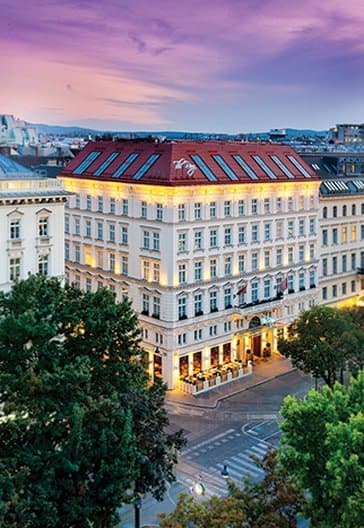
Explore All Vienna HotelsIf Wes Anderson redesigned a Habsburg palace, it might look something like The Amauris. Standing shoulder-to-shoulder with the State Opera on the Kärntner Ring, this Relais & Châteaux residence dismisses the dusty clichés of Viennese hospitality for something far more piercing. The 19th-century façade remains—a grand white wedding cake of a building—but inside, the mood shifts to high-definition monochrome. A wrought-iron elevator (a relic they wisely kept) ferries you past the striking ‘Hubirds’ mural, a chaotic splash of color in an otherwise disciplined palette of slate gray and marble. The rooms are lessons in restraint, equipped with heated floors that save you from the Austrian winter chill and Illy espresso machines for your morning jolt. But the real flex here is the amenities: generous Acqua di Parma sets that smell like Italian sunshine. Downstairs, the Glasswing Restaurant demands attention; the Miéral pigeon with lingonberry is technically flawless, though the Zwiebel-Rostbraten in the Bistro offers a heartier, rib-eye punch. Yet, the pièce de résistance is the spa. Swimming in the heated pool under a retractable glass roof, looking up at the historic courtyard walls, feels like a secret victory over the city's bustle.
“Book a courtyard-facing Grand Deluxe room to swap the Ringstraße tram noise for absolute silence, and hit the spa at noon when the glass roof is often retracted for open-air laps.”
Insider TipAvg. Nightly Rate
257USD
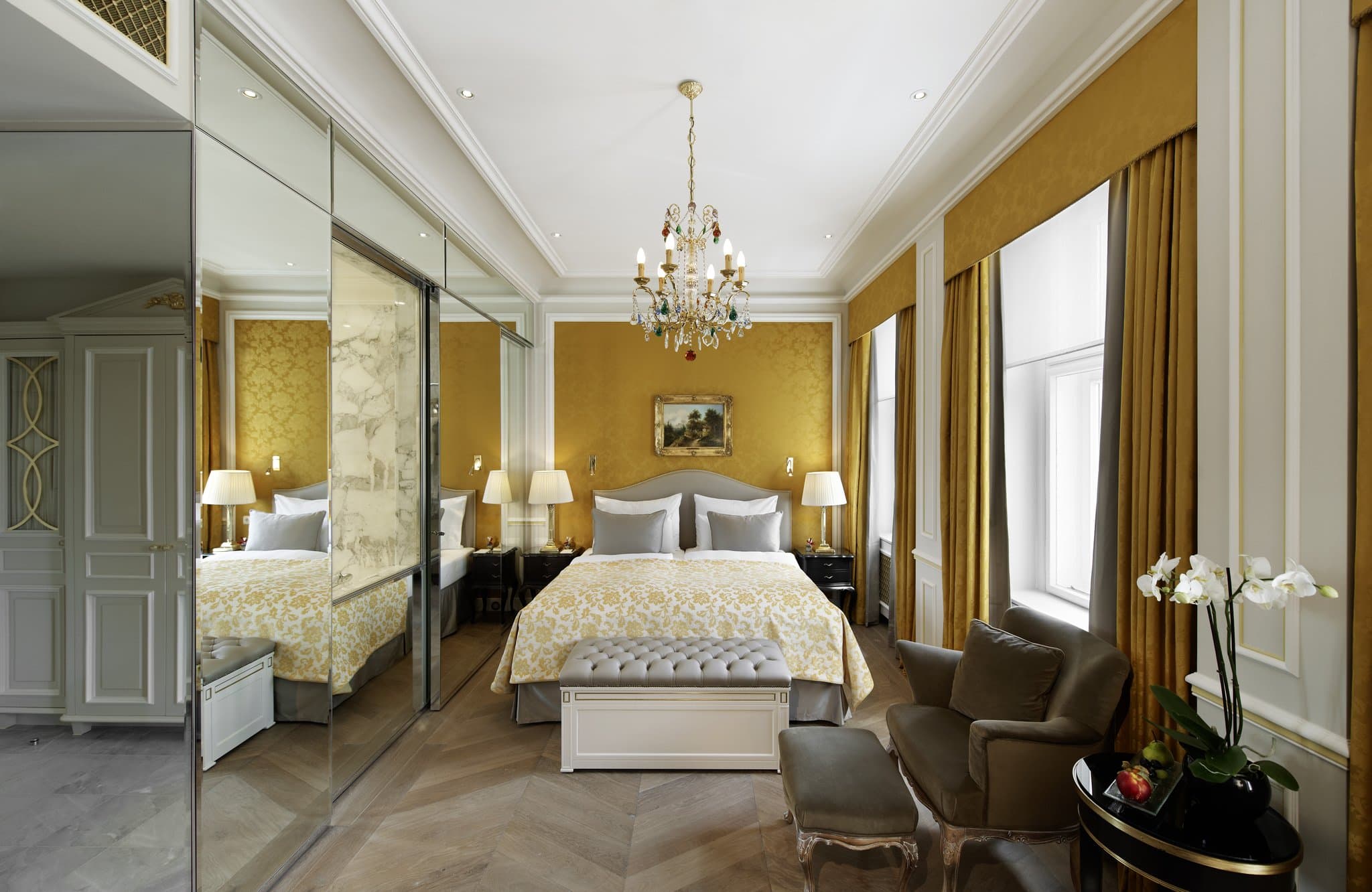
While tourists form serpentine queues outside for a slice of history, the real drama unfolds behind the velvet curtains of the Hotel Sacher. This isn't just a place to sleep; it is the upholstered heart of Imperial Vienna, anchoring the corner opposite the State Opera since 1876. The interiors are a masterclass in 19th-century noir—think dark brocade walls in the Blaue Bar and crystal chandeliers that have overseen empires fall. Rooms reject standardization; some feature split-king beds and antique switches that demand patience, while others are renovated suites with Technogym equipment and Le Labo amenities. Dining requires strategy. Skip the café line and book a table at the Restaurant Rote Bar, where the Tafelspitz (boiled beef) is served with ceremonial precision. The Sacher Boutique Spa offers a distinct olfactory escape with its 'Time to Chocolate' treatments—a literal immersion in the hotel's legacy. Service here is led by the legendary 'Wonder Maker' concierges, who pull strings at the Opera with terrifying efficiency. It remains the only place in Vienna where the floorboards creak with genuine prestige.
“Bypass the tourist queue for the Original Sacher-Torte by breakfasting in the 'Marble Hall'—exclusive to guests—or booking the 'Petit Sacher' treasure hunt if traveling with children.”
Insider TipAvg. Nightly Rate
570USD
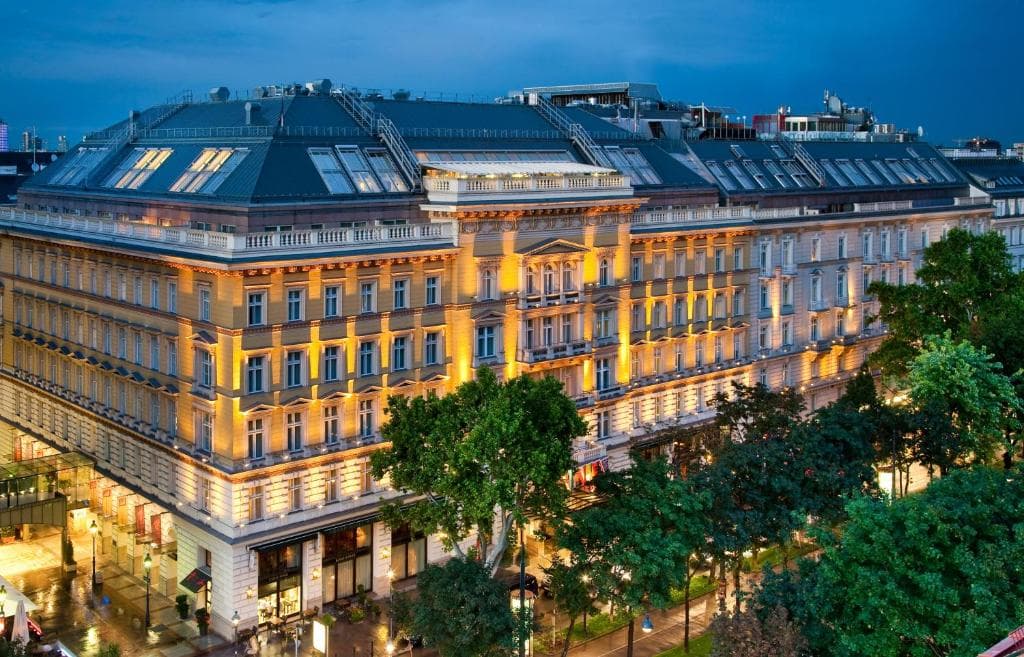
If walls could talk, these would likely gossip in stiff upper-lip German before switching to flawless Japanese. Inaugurated in 1870 as one of the Ringstraße’s first grand dames, the Grand Hotel Wien refuses to succumb to the beige minimalism sweeping the capital. The lobby remains a defiant celebration of crystal chandeliers and marble—a setting where one half-expects a waltz to break out spontaneously. Upstairs, accommodations lean heavily into the 'Grand' moniker; think heavy brocades and furniture that requires real mahogany polish, though the shower-tub acrobatics in entry-level rooms might test your flexibility. The plot twist lies in the culinary programming. While the '1870' terrace offers competent Austrian-Nikkei fusion, the real power move is booking a table at Unkai. Here, amidst imperial architecture, the kaiseki menu and Wagyu teppanyaki rival anything in Tokyo. There is no pool to cool off the meat sweats—a notable omission—but with the Vienna State Opera just 350 meters away, the drama is better sourced externally anyway. It is a place for those who prefer their history unpolished and their sushi precise.
“Skip the standard 'Superior' rooms if you dislike climbing into bathtubs to shower; upgrade to a Deluxe for a separate walk-in shower. For breakfast, the Japanese set menu option is a hidden standout over the buffet.”
Insider TipAvg. Nightly Rate
380USD
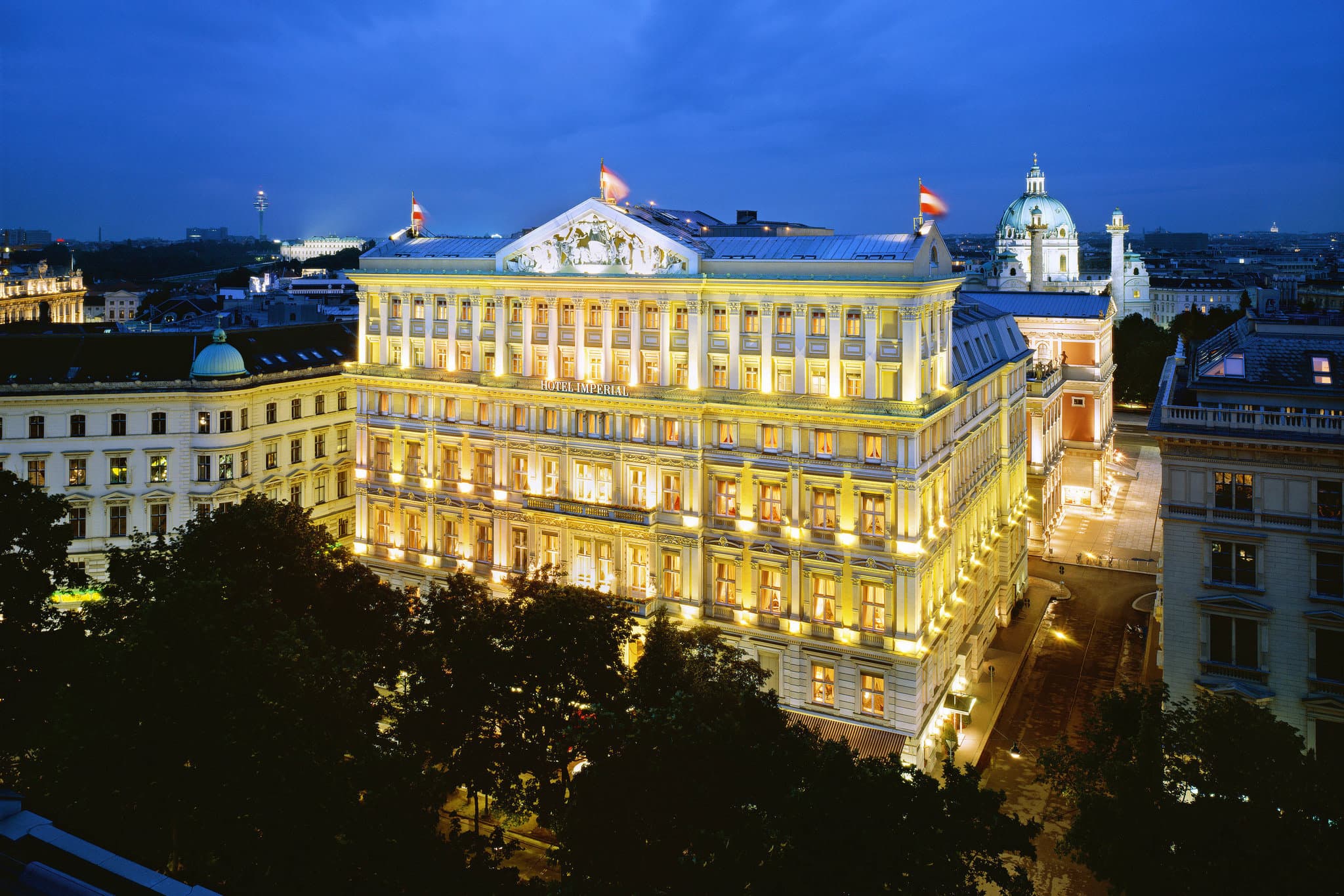
It is not often you sleep in a bedroom actually built for a Prince of Württemberg. At the Hotel Imperial, the 1863 provenance isn’t a marketing spiel—it’s the foundation. Entering the lobby, with its Royal Staircase and aggressive amounts of marble, feels less like checking in and more like a coronation. This is the undisputed monarch of the Ringstraße, a place where 'minimalism' is a dirty word and the silk walls of the Royal Suites have absorbed a century of state secrets. The rooms are unapologetically 19th-century. While some critics mutter about 'dated' bathrooms and heavy brass keys, they miss the point: you are here for the Hapsburg cosplay, not a glass shower cubicle. The service matches the setting—butlers here don’t just unpack; they seem to anticipate your desire for a stiff drink before you do. Speaking of which, the 1873 HalleNsalon serves a 'Golden Martini' that feels chemically engineered to induce nostalgia. Dining is serious business. Restaurant OPUS recently snagged 4 Toques from Gault&Millau (2026), with the Blue Shrimp and Yuzu Kosho proving the kitchen isn't stuck in the past. If you need a pool, walk to the Ritz-Carlton. If you want to feel like the Emperor of Austria, stay here.
“Skip the tourist line at Hotel Sacher. The 'Imperial Torte' at Café Imperial—a marzipan-chocolate square invented for Emperor Franz Joseph—is the superior souvenir.”
Insider TipAvg. Nightly Rate
377USD
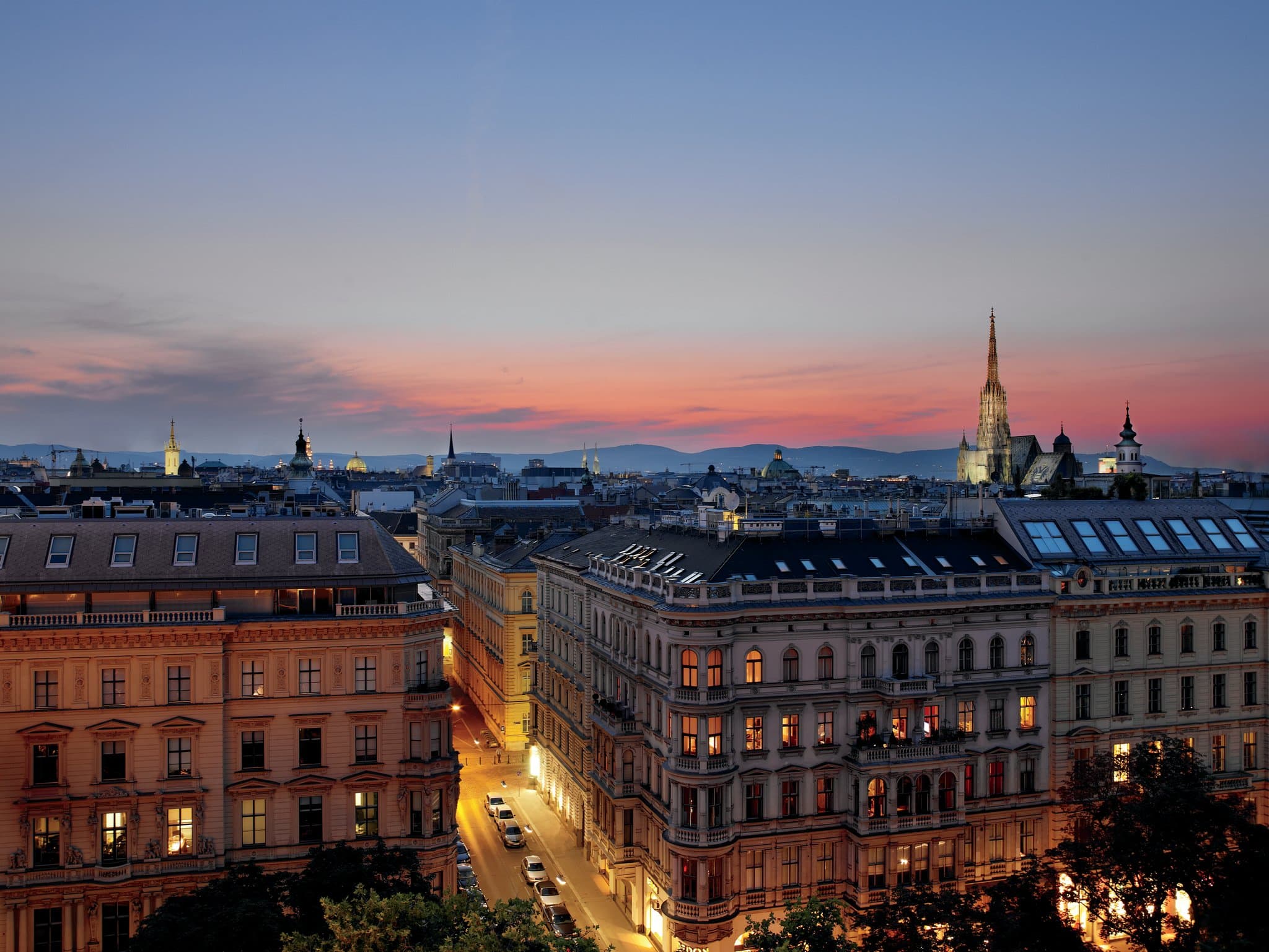
Forget the museum-stiff atmosphere of Vienna’s older dames; The Ritz-Carlton, Vienna plays a different tune on the Schubertring. Comprising four protected 19th-century palaces, this property performs a high-wire act between Habsburg heritage and contemporary restraint. While the facade screams Imperial grandeur, the interiors—often debated as 'business utilitarian'—offer a calm, masculine counterpoint to the city's baroque excess. The real theater happens downstairs at DSTRIKT Steakhouse, where the dry-aged Austrian Simmental beef and their legendary cheesecake command a cult following, or at Pastamara, where Sicilian Chef Ciccio Sultano’s Pasta con le Sarde rewrites hotel dining rules. For wellness, the 18-meter indoor pool is an acoustic marvel, featuring an underwater sound system that makes laps feel cinematic. Service here breaks the Viennese mold: less white-glove stiff, more genuinely warm. It is the perfect base for the traveler who demands the Ringstraße address but prefers their luxury without the dust of the past.
“Skip the lobby playlist and head to the basement: the 18-meter pool features an underwater sound system. Submerge your ears to hear the music clearly while you swim.”
Insider TipAvg. Nightly Rate
650USD
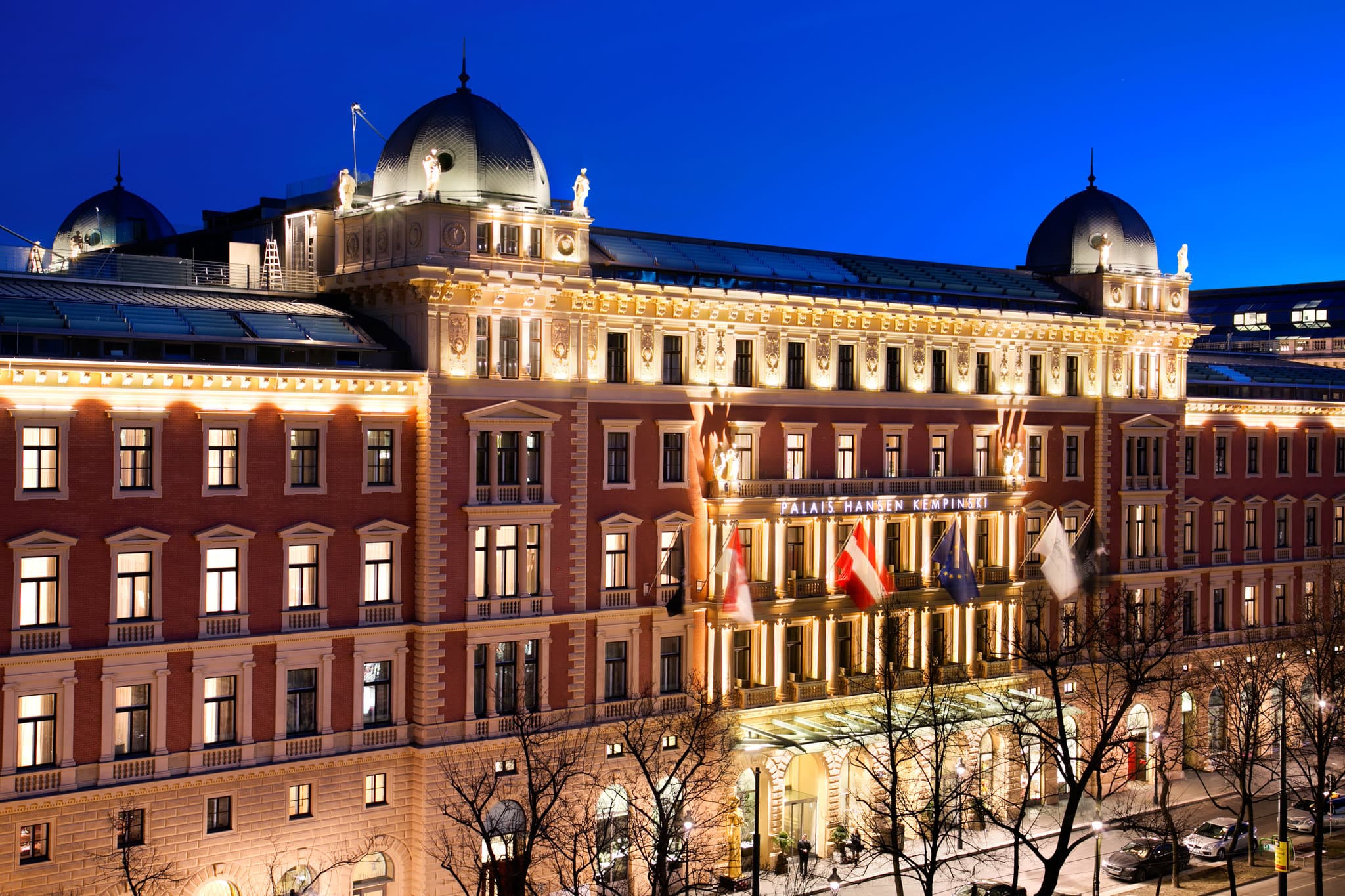
Commissioned for the 1873 World Exhibition, this Theophil Hansen masterpiece imposes itself on the Ringstraße with Neo-Renaissance authority. It is not merely a hotel; it is a history lesson with superior plumbing. Following Anantara’s rigorous 2024 overhaul, the property—now a member of The Leading Hotels of the World—balances Habsburg grandeur with sharp, modern functionality. The 152 rooms are cavernous by European standards, starting at a generous 32 square meters. Expect triple-glazed windows that silence the trams below, soaring ceilings, and bathrooms stocked with Acqua di Parma amenities. The technology is intuitive, avoiding the common trap of over-complication. Dining is the main event. At EDVARD, which retained its Michelin star for 2025, Chef Paul Gamauf executes an Alpine-Mediterranean menu that demands attention—the Golden Trout is technically flawless. Brasserie Sophie delivers a competent Viennese breakfast, though at €49, it is an investment. The spa, featuring Valmont and Elemis treatments, relies on a compact hydro pool rather than a swimming lane—manage your expectations there. Service is precise, verified by the concierge’s ability to secure difficult State Opera tickets. Verdict: A serious heavyweight for those who prefer their history polished, not dusty.
“For the best natural light, request a 'Ring Suite' on the 3rd floor; if you require absolute silence, the courtyard-facing rooms are crypt-quiet.”
Insider TipAvg. Nightly Rate
275USD
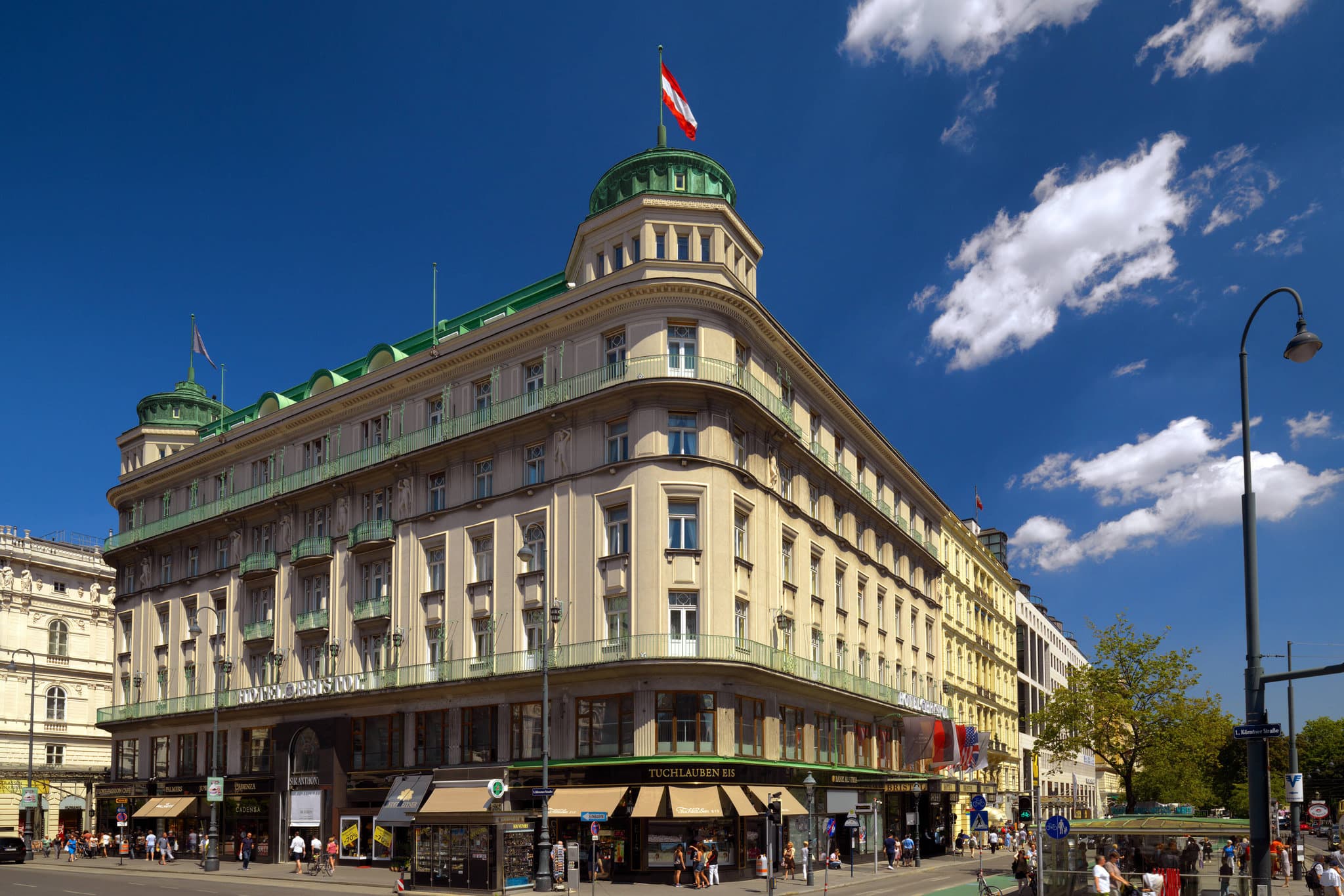
Before the Hotel Bristol lowers its velvet curtains for a major restoration in March 2025, there is just enough time to experience why Travel + Leisure readers voted it Vienna’s number one hotel this year. Sitting directly across from the Vienna State Opera, this Art Deco icon doesn’t just face the music; it conducts it. The interiors are a masterclass in Fin de Siècle grandeur—think brass railings, heavy mahogany, and the kind of hush that money usually buys. Rooms here are character-driven, particularly the Prince of Wales Suite with its private library, though pre-renovation layouts can feel distinctively vintage. Dining is a serious affair at the Bristol Lounge, where the Classic Tafelspitz is served with the precision of a symphony, followed inevitably by the signature Bristol Cake. While the lack of a pool or full spa might deter the wellness-obsessed, the Clefs d'Or concierge team performs miracles that a steam room cannot, securing impossible reservations with a mere nod. Catch this 'Grande Dame' now for her historic charm, or await her 2027 encore.
“Ask for an 'Opera Room' on a high floor to watch the crowds arrive for the evening performance without leaving your robe; it’s the best unlisted show in town.”
Insider TipAvg. Nightly Rate
325USD
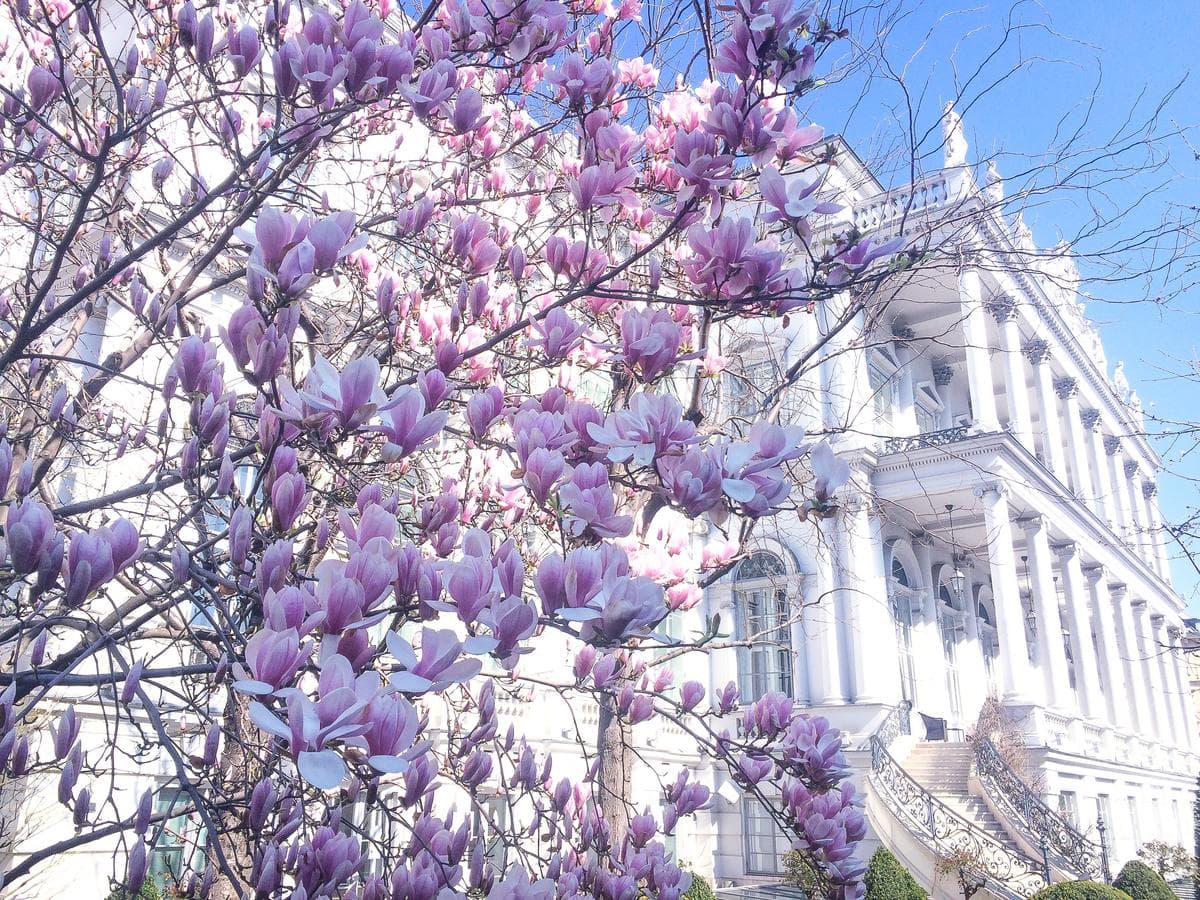
If the Ringstraße is Vienna’s showy necklace, Palais Coburg is the diamond they keep in the safe. Perched atop the 16th-century Braunbastei defense walls, this isn't just a hotel; it’s a neoclassical fortress that feels freshly polished following its late-2025 reopening. The 'Asparagus' column facade doesn't just gleam; it intimidates in the most aristocratic way possible. Inside, the vibe is less 'lobby socializing' and more 'secret society.' The all-suite layout dominates, with duplex Bastei Suites offering a residential grandeur that makes standard luxury rooms feel like broom closets. The layout quirks—sudden stairwells and internal suite steps—are a small price for ceilings that seem to scrape the sky and 400-thread count linens that swallow you whole. While the spa remains under wraps until later in 2026, the real wellness here is found in the wine archive: a cathedral of 60,000 bottles where the sommeliers treat Yquem like holy water. Dining is a tale of two Temples: Silvio Nickol’s two-Michelin-starred sanctum serves duck liver with spruce that defies physics, while Clementine im Glashaus offers a brighter, modern Austrian repast—the Barbarie duck breast is mandatory. It’s confusing, expensive, and utterly magnificent.
“Request a suite facing the Stadtpark to avoid the internal courtyard echo. Also, the pool on the 3rd floor is open despite the main spa closure—go at 7 AM for a solo swim.”
Insider TipAvg. Nightly Rate
650USD