No. 01

YangzhouYangzhou2642 verified reviews
9
.4
Bitvoya Edit
Layering imagery, place, and detail before the page opens.
Yangzhou is a city best understood through its silence, not its noise. In the historic heart of the city lies Dongguan Street, a corridor of time where the legacy of salt merchants lives on in grey bricks and intricate lattices. Our curated collection focuses on the hidden courtyards nestled within this vibrant district. We invite you to step behind the heavy wooden doors of properties like the Tsingpu Yangzhou Retreat and SSAW Boutique Hotel. Here, nestled near the banks of the Slender West Lake and the ancient Geyuan Garden, modern luxury meets the architectural serenity of the Qing Dynasty. These aren't just hotels; they are private sanctuaries where the city's 2,500-year history whispers through the bamboo groves.
Yangzhou offers a unique blend of "Slow Life" culture that is distinct from its busier neighbors like Shanghai or Nanjing. The "Hidden Courtyards" concept is intrinsic to the city's identity, stemming from the wealthy salt merchants of the Qing Dynasty who built elaborate private gardens behind unassuming walls. Staying in properties like the Tsingpu Yangzhou Retreat or the Yangzhou Seclusive Life Hot Spring Resort allows travelers to physically inhabit this history. Unlike standard glass towers, these accommodations offer a tangible connection to the architectural lineage of the region, featuring sky wells, rockeries, and water features that promote tranquility.
The primary area for this collection is the Dongguan Street Historical District. This pedestrian-friendly zone is the artery of Old Yangzhou. Staying at the SSAW Boutique Hotel puts you directly in the mix of artisan shops and street food stalls, yet provides a quiet recoil. For those seeking grandeur, the Yangzhou State Guesthouse, located slightly west along the Slender West Lake, offers a massive garden estate experience where state leaders have dined. Meanwhile, the Novotel Yangzhou City Center and Holiday Inn Express offer reliable, modern comfort just steps away from the ancient intricate alleyways, serving as perfect basecamps for exploration.
When booking a stay in this curated list, expect an immersion into the Huai-Yang lifestyle. Mornings begin with "Zao Cha" (morning tea) filled with steamed dumplings, often available right at your hotel's courtyard restaurant. Expect architecture that utilizes recycled grey bricks and reclaimed wood, particularly at the design-forward boutique properties. Facilities often include private soaking tubs or proximity to hot springs, as seen in the Seclusive Life Resort. Whether you choose the historical immersion of a courtyard suite or the trusted convenience of city-center brands, Yangzhou delivers a sophisticated, culturally rich escape.
Hotels like Tsingpu and SSAW are built into historic courtyards, offering a blend of Qing Dynasty architecture and modern luxury directly within the ancient district.
Yes, while it is a vast estate, it is located directly adjacent to the Slender West Lake, making it perfect for travelers focused on scenic garden tours.
Yes, Novotel Yangzhou City Center and Holiday Inn Express are excellent options that provide international standards while being walking distance to Dongguan Street.
Explore our complete curated list of luxury accommodations, from boutique hideaways to grand dames.
Explore All Yangzhou HotelsWhile the day-trippers jostle for selfie space on the Twenty-Four Bridge, smart travelers retreat to this Liang Jianguo-designed sanctuary that channels the introverted luxury of Yangzhou’s ancient salt merchants. It is less a hotel and more a labyrinth of slate, moss, and shadows, sitting physically adjacent to Slender West Lake yet philosophically removed from it. The architecture is 'New Chinese Zen'—austere, yes, but tempered by the steam rising from the private geothermal tubs in every room. The water here is the real article, heavy with metasilicate and lithium, drawn from deep underground rather than a municipal boiler. Service is handled by personal butlers who materialize only when needed, a nod to the invisible staff of old merchant compounds. Dinner at Zui Yangzhou is non-negotiable; their Lion’s Head meatball is a masterclass in texture, trembling but intact. The hardware shows slight fatigue—a loose handle here, a scuff there—and the soundproofing struggles against the roar of filling stone tubs next door. But when you are waist-deep in mineral water, watching the resort’s resident black swans glide past your terrace, such imperfections feel like character rather than neglect.
“Request a ground-floor suite in the 'Villas' section for direct garden access, but fill your tub during dinner service (6–8 PM) to avoid waking—or being woken by—your neighbors.”
Insider TipAvg. Nightly Rate
71USD
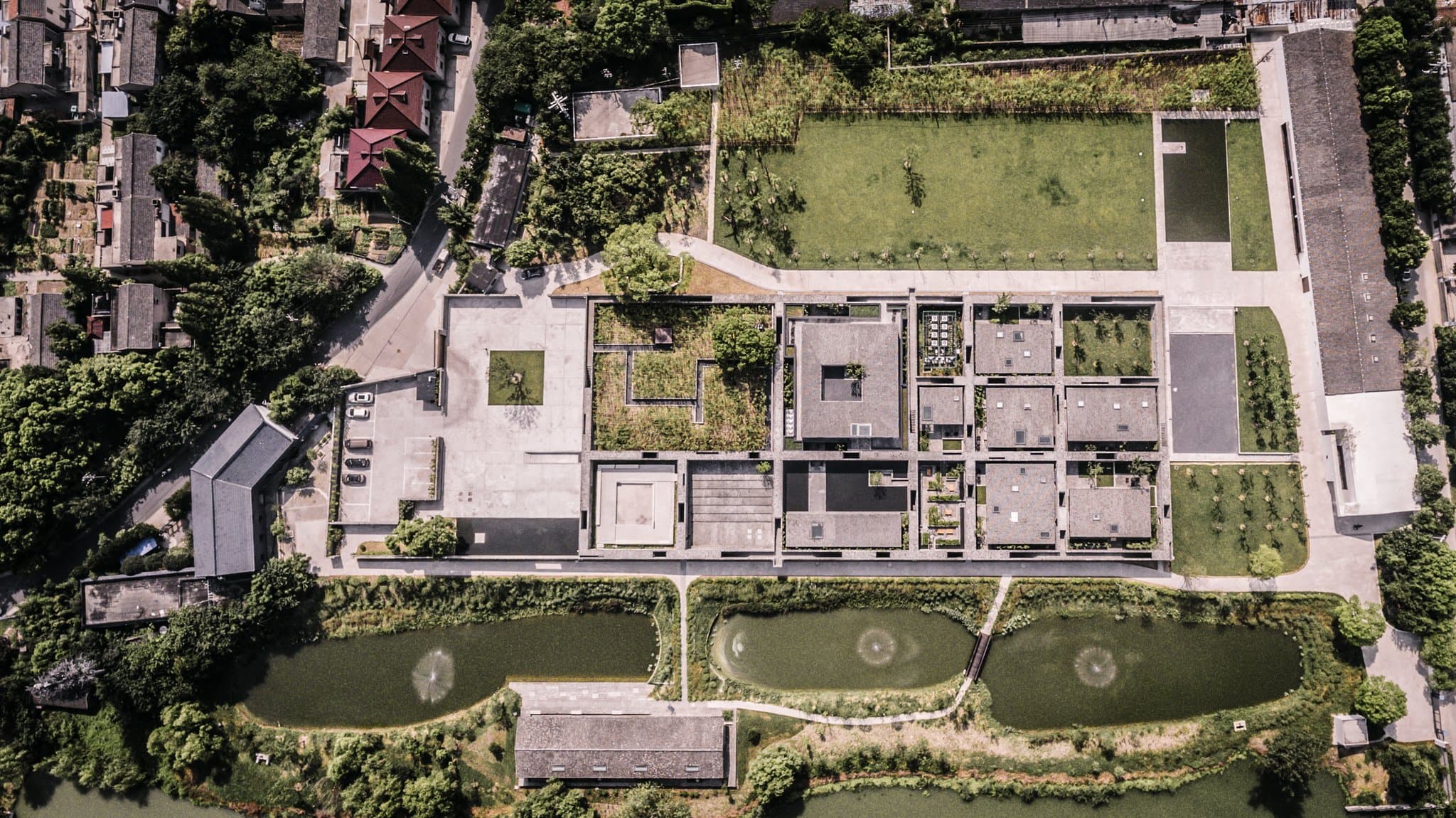
If Dongguan Street is Yangzhou’s beating heart, Tsingpu is its meditative soul. Leaving the hawker stalls and tourist throngs behind, you don’t just check in here; you vanish into a labyrinth. Designed by Neri&Hu, this isn't a hotel in the conventional sense—it’s an architectural fortress constructed from 1.2 million reclaimed grey bricks, salvaged from the region’s dismantled villages. The effect is immediate and grounding. Inside, the chaos of the city dissolves into a grid of walled courtyards. The 'rooms' are actually private pavilions where the dialogue between old and new is conducted in whispers of concrete, white oak, and terrazzo. There are no oversized TVs dominating the space; instead, light plays across the brickwork like a slow-moving sundial. Dining at 'Ta Xiang Chu' is non-negotiable. The Crab Roe Lion’s Head here is less a meatball and more a study in Huaiyang delicacy—rich yet impossibly light. Service is invisible until you need it, operating with the hushed efficiency of a monastery. It’s a place that demands you slow down, shut up, and look up at the square of sky framed above your head. A definitive, brutalist sanctuary.
“Request a room near the 'Artist Guest Room' for maximum seclusion, and don't miss the rooftop vantage points at sunset—the only place to see the grid pattern fully reveal itself.”
Insider TipAvg. Nightly Rate
215USD
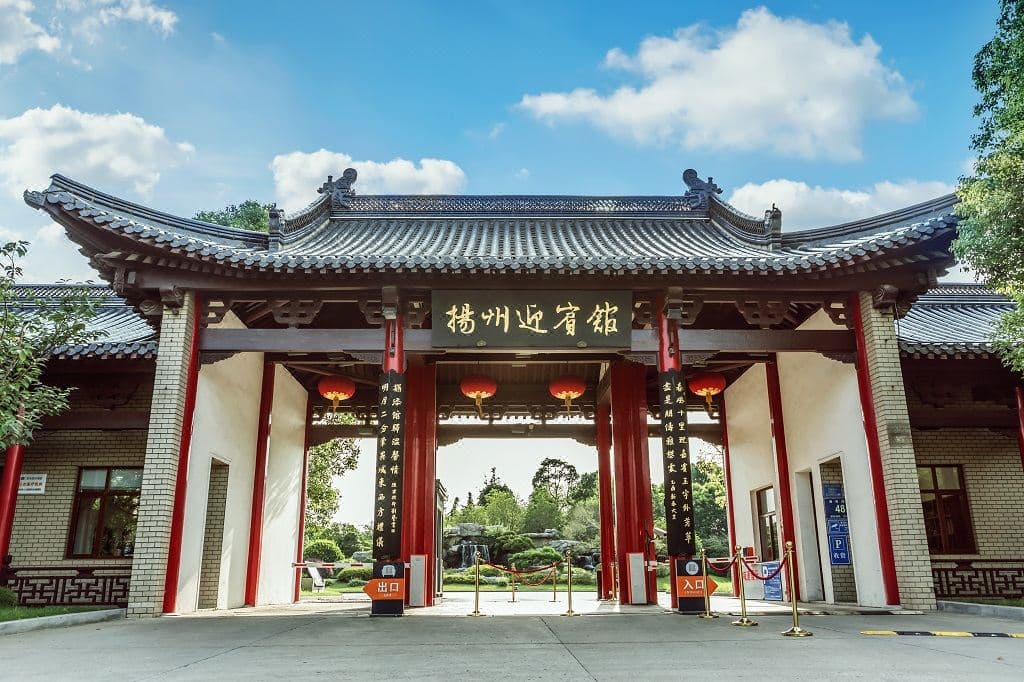
Forget the 'hidden gem' clichés—this is where heads of state sleep, and frankly, the pedigree shows. While the sprawling Yangzhou State Guesthouse can feel slightly bureaucratic (expect security checkpoints and service that prioritizes protocol over warmth), the tradeoff is unparalleled access. You’re not just near Slender West Lake; you’re effectively in it, with a private bridge granting exclusive entry to the scenic area—a godsend when avoiding the chaotic public queues. Skip the dated Buildings 1 through 5 and demand a room in Building 8 or 18, where the interiors have finally caught up to the 21st century—think Dyson hair dryers, smart toilets, and floor-to-ceiling glass that frames the willow-lined banks like a Song Dynasty scroll. The real power move, however, is breakfast. While the masses queue for hours at unticketed tea houses, guests here have priority access to the on-site Quyuan Teahouse. The crab roe soup dumplings are technically perfect, boasting a skin so thin it defies physics, justifying the Black Pearl Two-Diamond rating. It’s grand, slightly stiff, but undeniably the only way to do Yangzhou properly.
“Book the 'Morning Tea' experience at Quyuan Teahouse immediately upon check-in; hotel guests get a priority line, but it still moves fast.”
Insider TipAvg. Nightly Rate
80USD
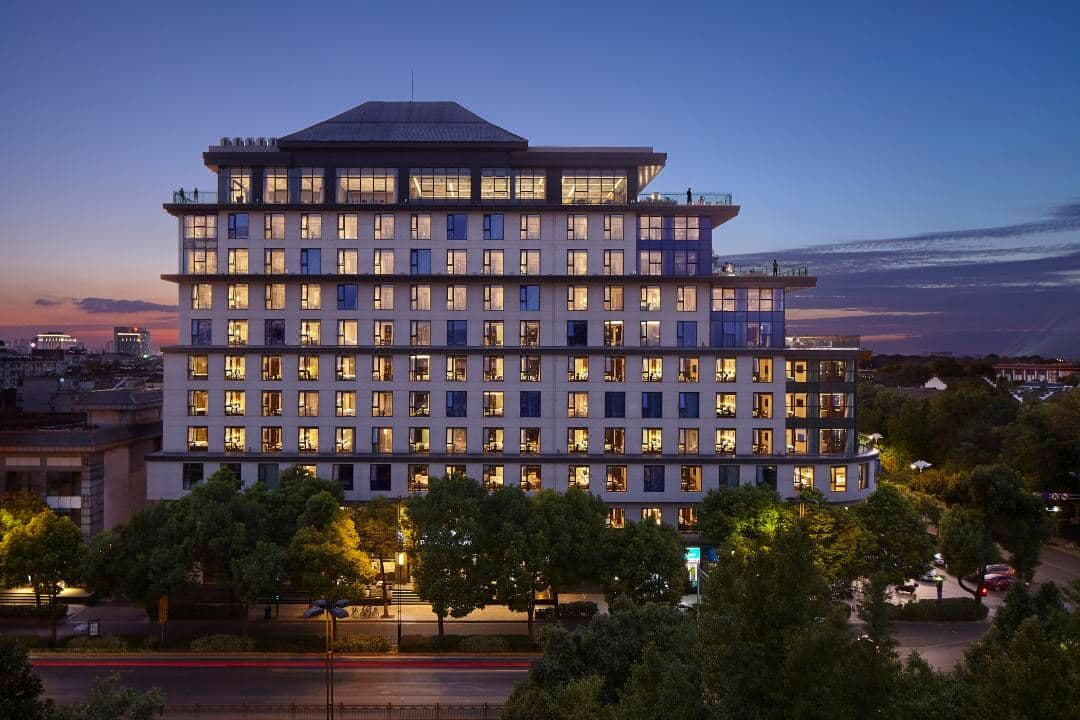
While the drowsy charm of Dongguan Street often dictates a rustic guesthouse stay, SSAW Boutique Hotel offers a sharp, modern counterpoint right at the city’s pulse. Located a mere stroll from the imperial bustle of Wenchang Pavilion, this property trades traditional wooden creaks for the hum of efficiency—think Dyson hairdryers and ‘Xiaodu’ voice-controlled smart rooms that anticipate your lighting needs before you do. The aesthetic isn’t lost, though; it’s just evolved. The ‘Blossom’ design ethos weaves subtle floral motifs into a minimalist, Japanese-leaning framework, particularly in the Tatami Suites which maximize the compact 25sqm footprint with surprising grace. Dining here is a quiet triumph. While the legendary Ye Chun Teahouse is nearby for morning crowds, the in-house Garden Restaurant serves a silken Hot Shredded Tofu that rivals the local heavyweights, alongside a pitch-perfect Yangzhou Fried Rice. Service operates with the stealth of a good butler—complimentary late-night suppers appear just when the post-exploration hunger hits. It lacks a pool, but the trade-off is a 9th-floor sky terrace that turns the city’s grey-tiled rooftops into a private sunrise gallery. For the heritage scout who needs high-thread-count recovery after a day on the cobblestones, this is the definitive base camp.
“Skip the crowded street-level view. Head to the 9th-floor Sky Terrace at 6 AM to watch the sunrise hit the Wenchang Pavilion tiles—best enjoyed with a coffee from the lobby’s 24-hour bar.”
Insider TipAvg. Nightly Rate
45USD
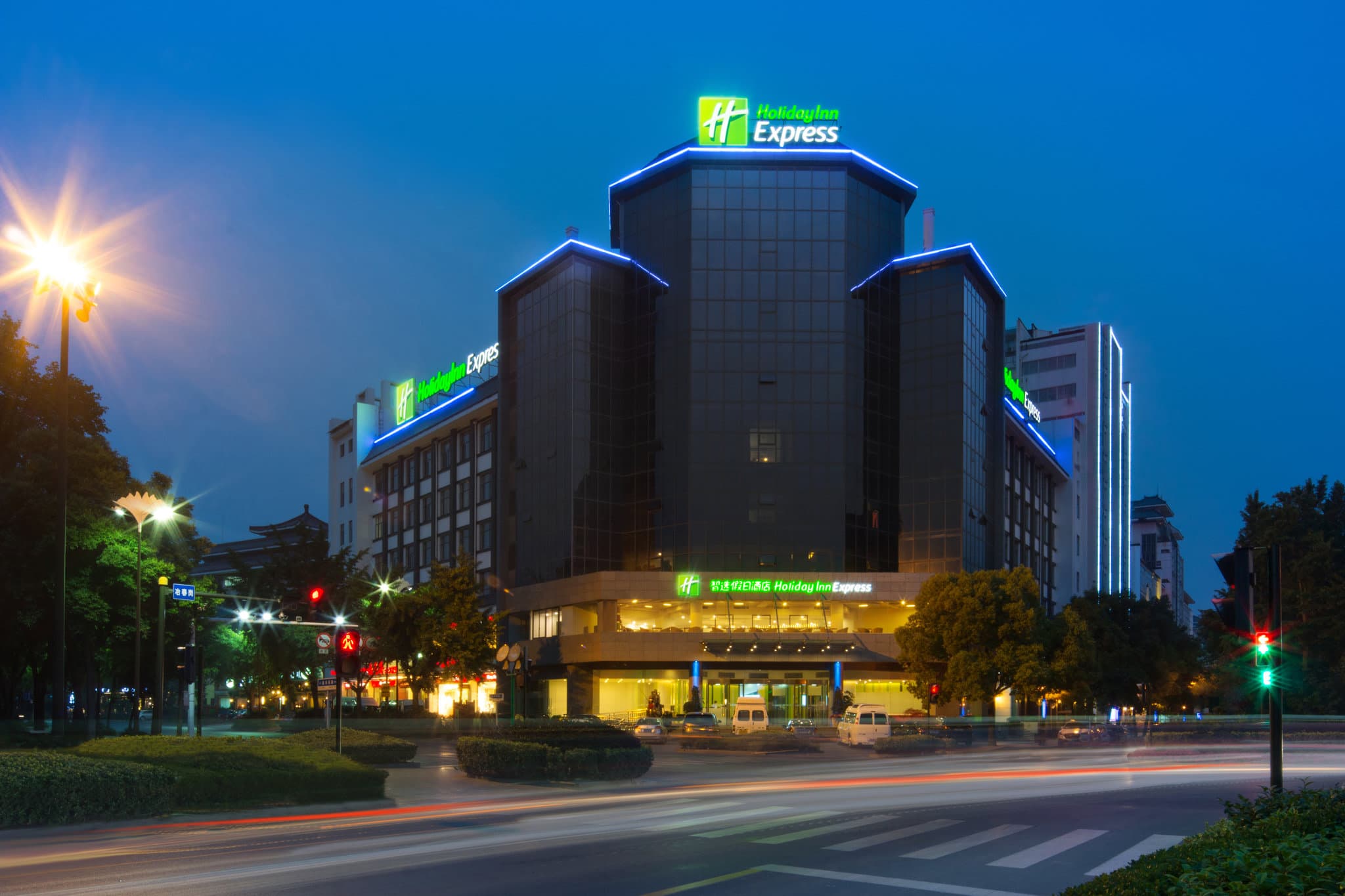
Don’t come here for Ming dynasty furniture or faux-antique latticework. You check into the Holiday Inn Express Yangzhou City Center precisely because it *isn’t* trying to be the Old Town. Positioned as the pragmatic, polished gatekeeper to the chaos of Dongguan Street, this property offers the ultimate luxury in a heritage zone: reliable, hyper-modern silence. While the address places you on the bustling Wenhe North Road, you are merely a short, cobblestone-seeking stroll from the labyrinth of hidden courtyards that define this city. The aesthetic is refreshingly predictable—IHG’s signature clean lines and bright ‘Great Room’ lobby serve as a palate cleanser after a day of sensory overload in the nearby Slender West Lake gardens. The rooms are functional sanctuaries, equipped with blackout shades that actually work and showers with reliable pressure—rarities in the charming but creaky guesthouses nearby. Breakfast is the unexpected star. Skip the western cereal and head straight for the ‘Express Start’ station, where the chef steamers churn out authentic Yangzhou baozi (steamed buns) and noodles that rival the street vendors outside. Service, led by a front desk team that seems to anticipate needs before you vocalize them, punches well above the star rating. It is efficient, energetic, and the perfect launchpad for a scout exploring the old world.
“Request a room on the 10th floor or higher facing the Wenchang Pavilion. You get a direct sightline to the illuminated historic landmark without the street-level noise.”
Insider TipAvg. Nightly Rate
28USD
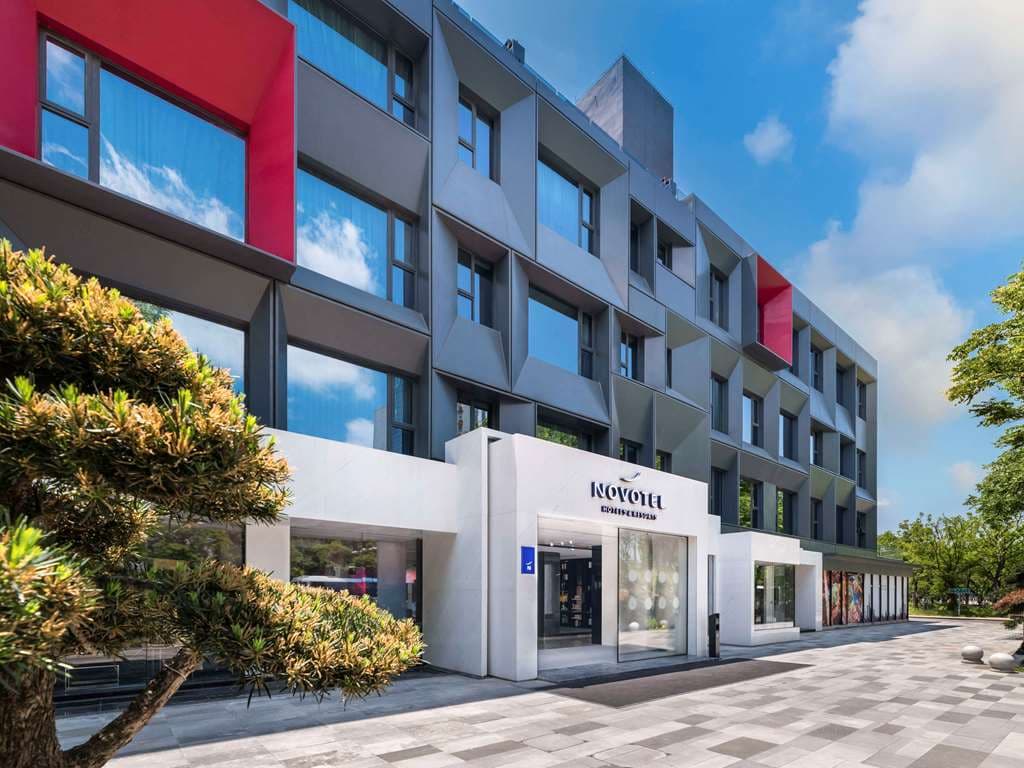
Forget the sprawling, impersonal footprint of typical chain hotels. The Novotel Yangzhou City Center operates with the soul of a boutique hideaway, executing a clever sleight of hand: it offers the reliable infrastructure of Accor with the intimacy of a private guesthouse. Located a strategic 2.5km from the legendary Yechun Teahouse, this is your quiet anchor against the morning clamor of Dongguan Street. The base rooms are unapologetically compact—a snug 22–25 square meters—but designed with the surgical efficiency of a first-class maritime cabin. Every inch works. You aren’t here to ballroom dance; you’re here to sleep on high-thread-count linens after walking the Grand Canal. The bathrooms, stocked with eco-conscious amenities, punch above their weight class in water pressure and finish. Dining is the unheralded star here. Skip the tourist traps for breakfast and head to 'The Square,' where the chef’s station serves freshly folded wontons and noodles that rival the street vendors, minus the elbow-jousting. Service is razor-sharp—staff like 'Xiao Jie' have earned a reputation for anticipating needs before you vocalize them. It is a polished, quiet machine in a city famous for its noise.
“Book an 'Executive Room' to secure a balcony with city views—essential for a private nightcap. Also, parents: the kids' club ball pit is unusually deep; watch the little ones.”
Insider TipAvg. Nightly Rate
22USD