No. 01
NO 99 BAOCHENG ROAD YANGZHOU CN 000000Yangzhou108 verified reviews
10
.0
Bitvoya Edit
Layering imagery, place, and detail before the page opens.
In Yangzhou, the morning doesn't truly begin until the steam rises from a bamboo basket. Known famously as the city where 'skin wraps water' in the morning (referring to soup dumplings), Yangzhou's Zaocha culture is a slow, deliberate ritual of culinary excellence. Our curated collection places you in the heart of this UNESCO City of Gastronomy. From the historic corridors of the Yangzhou State Guesthouse near the misty Slender West Lake to the modern elegance of the Shangri-La in the Hanjiang District, these properties offer more than just sleep—they offer a taste of history. Whether you are exploring the ancient cobblestones of Dongguan Street or seeking the zen-like architecture of Tsingpu Yangzhou Retreat, these hotels ensure you are perfectly positioned to enjoy the legendary crab soup dumplings and dried tofu shreds that define the local palate.
Yangzhou is not merely a destination; it is the spiritual home of Huaiyang cuisine, one of the Four Great Traditions of Chinese cooking. The concept of 'Morning Tea' here transcends sustenance. It involves leisurely hours spent sipping green tea, savoring Tangbao (soup dumplings), and enjoying the delicate knife work of Gansi (dried tofu strips). Choosing a hotel from our 'Epicenter of Morning Tea' collection ensures that you are immersed in this cultural fabric. Properties like the Yangzhou State Guesthouse offer exclusive access to authentic culinary masters, allowing you to experience the breakfast ritual exactly as local dignitaries have for decades.
When booking a luxury stay in Yangzhou focused on Morning Tea culture, expect an emphasis on breakfast that rivals Michelin-starred dinners. High-end properties often feature in-house restaurants serving 'Sam Ding Bao' (three-diced buns) and Emerald Shumai. Expect meticulous service (Omotenashi style in Japanese-influenced properties or traditional Chinese hospitality), lush garden views to accompany your tea, and concierge teams knowledgeable about the hidden gems of the local culinary scene.
Yangzhou Morning Tea (Zaocha) is a leisurely breakfast ritual featuring tea paired with delicacies like crab soup dumplings, steamed buns, and dried tofu strips. It emphasizes relaxation and social connection.
The Yangzhou State Guesthouse is renowned for its authentic Morning Tea, notably at its Qiyuan restaurant. Other luxury hotels like Shangri-La and Tsingpu Retreat also offer high-quality local breakfast sets.
The area around Slender West Lake is ideal for luxury dining experiences, while the Guangling District (near Dongguan Street) offers easy access to traditional street food and historic teahouses.
Explore our complete curated list of luxury accommodations, from boutique hideaways to grand dames.
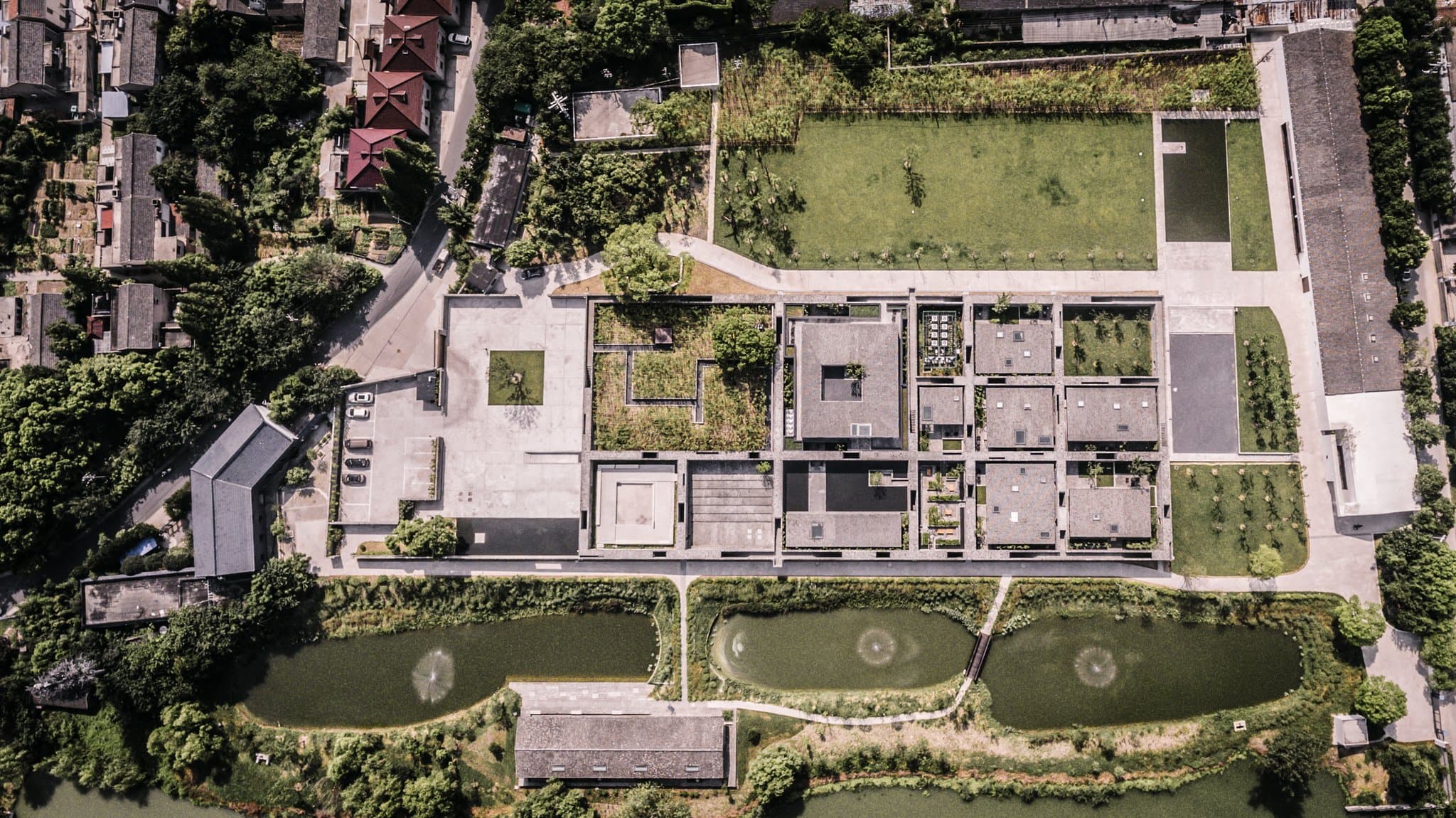
Explore All Yangzhou HotelsIt takes a certain audacity to drop a concrete and reclaimed-brick fortress right next to the weeping willows of Slender West Lake, but Tsingpu Yangzhou Retreat doesn’t do subtle. Designed by Neri&Hu, this 20-room architectural grid is less of a hotel and more of a habitable labyrinth. You navigate through 1.2 million recycled grey bricks—salvaged from local demolition sites—which creates a stark, mesmerizing geometry that feels miles away from the kitschy pagodas nearby. The rooms are studies in restraint: terrazzo floors, light oak furniture, and sliding screens that force you to actually engage with the space. Amenities are top-tier (think Dyson dryers and bespoke herbal toiletries), though the lack of elevators and the maze of uneven stone steps will test your luggage-hauling resolve. Dining at 'The Restaurant' (Ta Xiang Chu) is surprisingly un-corporate. The signature Crab Roe Lion’s Head is rich enough to stop your heart, a necessary indulgence after a morning of calligraphy classes. It’s a stark, sophisticated antidote to the chaotic tea houses outside its walls.
“Skip the hotel breakfast one morning. Walk 10 minutes to the Yechun Tea House at 6:30 AM to beat the tour buses, then retreat to your walled courtyard for a nap.”
Insider TipAvg. Nightly Rate
215USD
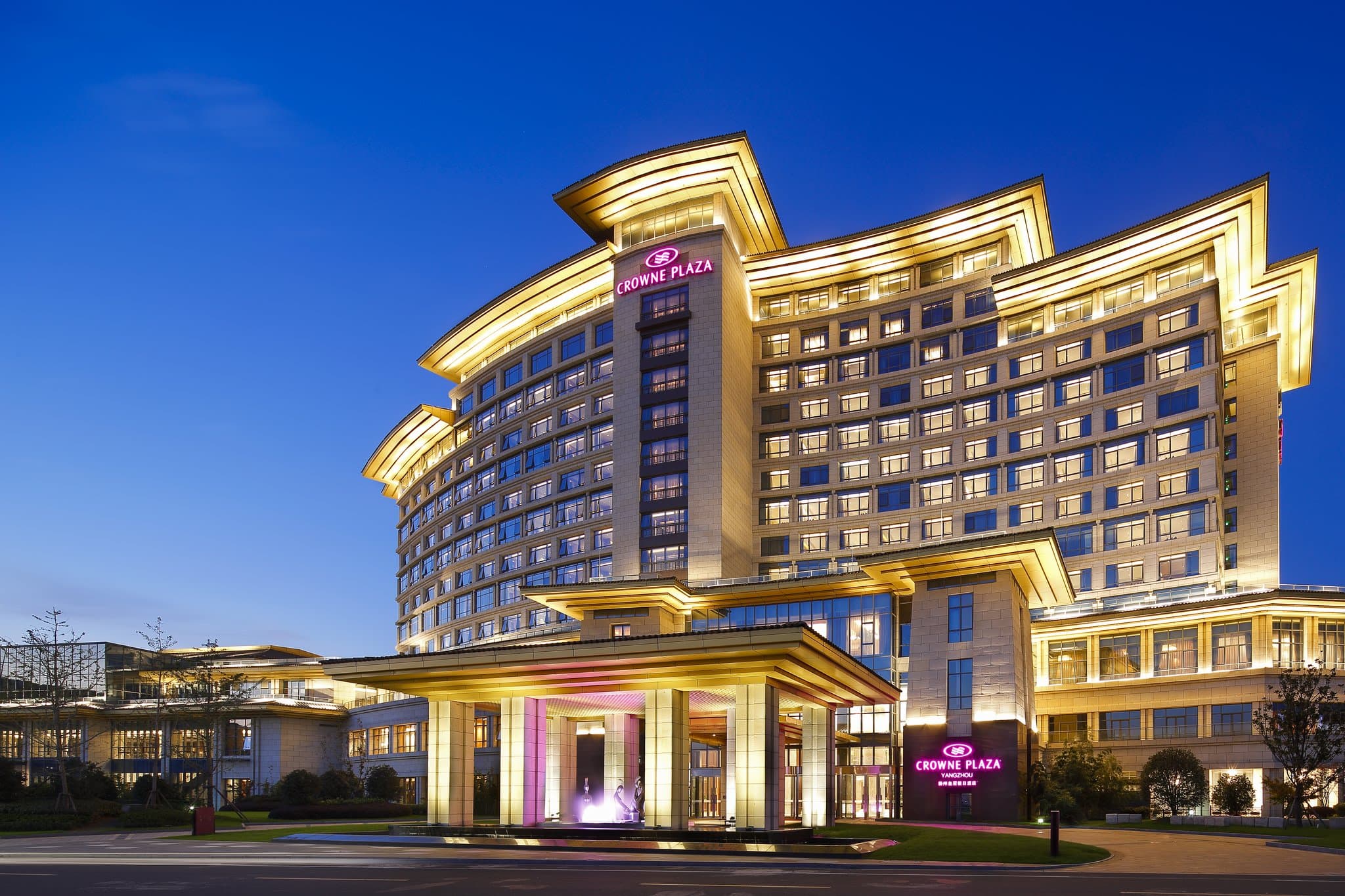
Yangzhou runs on a slower clock, and the Crowne Plaza—a hulking Tang Dynasty-style fortress on the Grand Canal—is the keeper of the time. While the hardware might whisper 'mid-2010s' (yes, the carpets are thick, and the aesthetic is resolutely unapologetic), the payoff is in the geography and the gastronomy. You aren’t here for Le Labo knock-offs; you’re here because 'Ju Cuisine' is quietly serving some of the most intellectual Huaiyang tasting menus in the province. Forget the buffet; the real theatre happens when the chefs at Qing Yun Xuan drop a Braised Pork Ball (Lion’s Head) so tender it defies physics, served alongside Yangzhou Fried Rice that actually deserves the name. The rooms? They’re cavernous, with 400-thread count linens that feel reassuringly heavy after a swim in the symmetric, heated indoor pool. It’s not trendy, it’s institutional in the best possible way—a place where the concierge knows the exact humidity required for a perfect steamer basket.
“Skip the lobby bustle; head to the 13th-floor Executive Lounge at sunset for a panoramic, unobstructed shot of the Jinghang Grand Canal sans tourists.”
Insider TipAvg. Nightly Rate
57USD
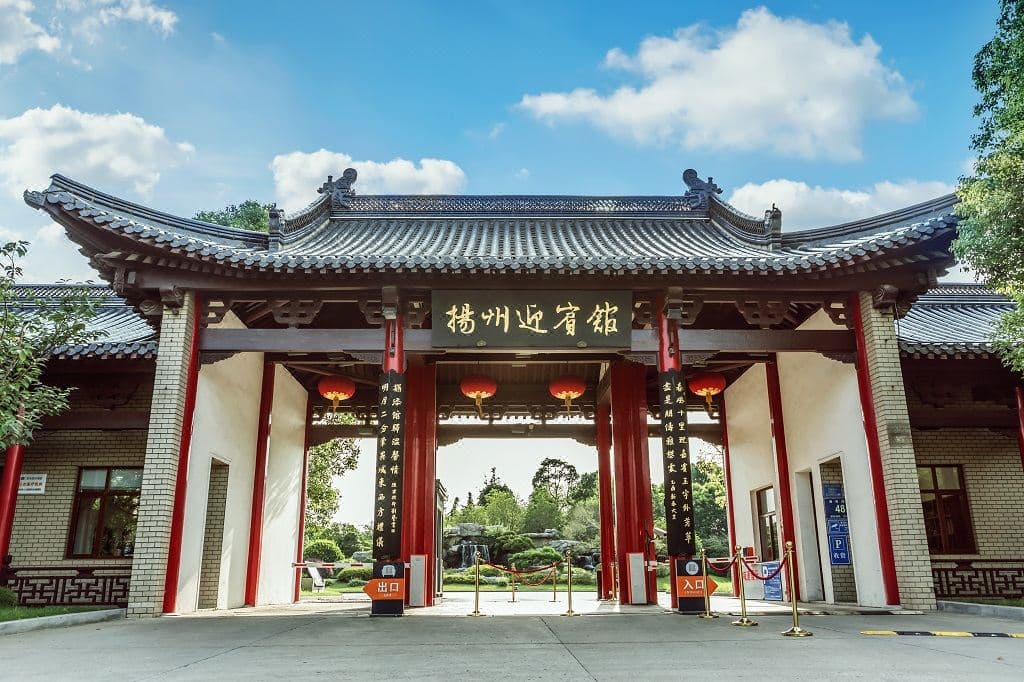
In the hierarchy of Chinese hospitality, the 'State Guesthouse' is a genre unto itself—a vast, secured compound where political heft meets calculated serenity. The Yangzhou State Guesthouse is the genre’s apex, a sprawling manor that doesn't just sit near the Slender West Lake; it inhales it. While the older wings (Building 3) retain a stiff, bureaucratic nostalgia—think heavy drapes and carpeted corridors reminiscent of a 1990s cadre meeting—the newer Building 18 offers the sharp, polished minimalism expected by the modern luxury traveler. But you are here for the pilgrimage, not the pillow mints. The property houses the legendary Quyuan Teahouse, the Vatican of 'Zaocha' (morning tea). Here, the service is brash and reactive, a hallmark of an institution that knows it's the best. The signature crab roe soup dumplings are engineering marvels—translucent, trembling orbs of broth that demand a straw and patience. It is a chaotic, delicious assault on the senses, set against the backdrop of a living landscape painting. To stay here is to access the soul of Huaiyang culture before the rest of the world wakes up.
“Avoid the 'classic' wings; specifically request Building 8 or 18 ('Fangyuan') for contemporary hardware. For morning tea at Quyuan, guests get priority but the queue is still brutal—arrive by 6:45 AM or concierge a private box.”
Insider TipAvg. Nightly Rate
80USD

Forget the frantic morning tea queues at Ye Chun; the real culinary pilgrimage in Yangzhou happens within the slate-grey walls of the Seclusive Life Resort. Designed by Liang Jianguo, this isn't just a hotel—it’s a architectural exhale next to the Slender West Lake. The vibe is 'New Chinese Zen' with a backbone, trading generic luxury for raw stone and metasilicate-rich geothermal water piped directly into your private in-room tub. The 'Zui Yangzhou' (Drunk Yangzhou) dining concept is the showstopper. Skip the western breakfast—the coffee is forgettable—and dive into the Crab Meat Dried Tofu and the legendary Yangzhou Lion’s Head, a meatball so tender it defies physics. Service is hyper-attentive (ask for the butler team), though the soundproofing can be a little *too* honest about your neighbor's bath time. It’s a sophisticated, mineral-soaked escape for the gastronomy-obsessed who prefer their dumplings served with a side of black swan views.
“Book a 'Waterfront Suite' on the ground floor to have the resident black swans swim right up to your terrace. Avoid rooms near the main pipes to dodge the 'filling' noise.”
Insider TipAvg. Nightly Rate
71USD
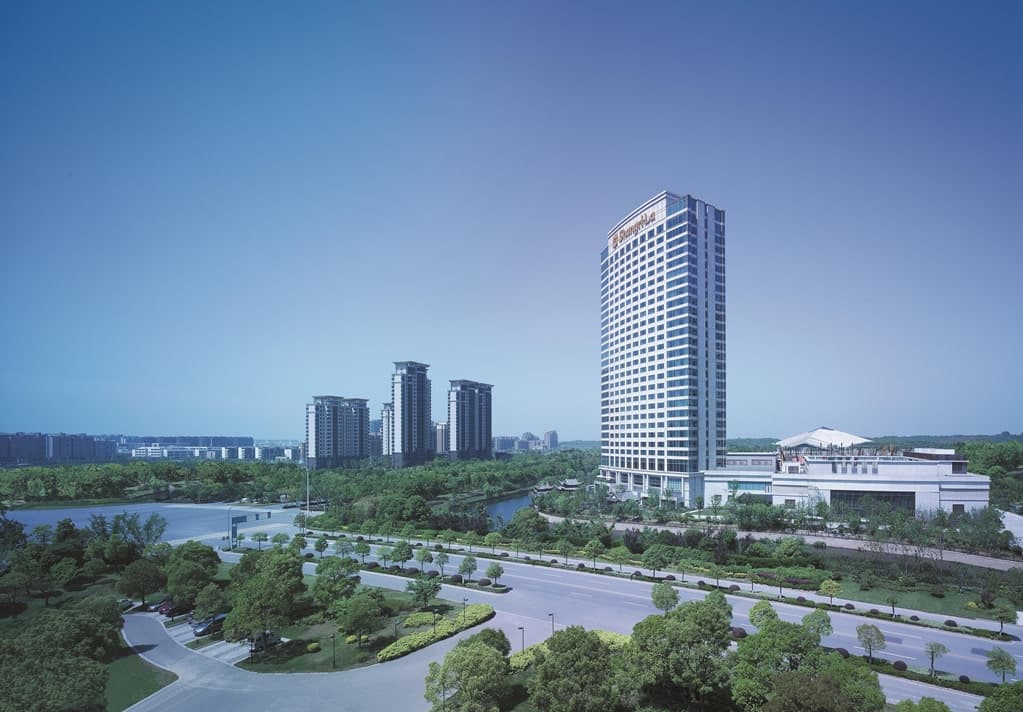
While tourists jostle for selfie space at the Slender West Lake, the true cognoscenti of Huaiyang cuisine are quietly hailing taxis to the New City. The Shangri-La Yangzhou isn't just a hotel; it is the custodian of a culinary heritage that predates the concierge desk. Rising above Mingyue Lake, this property embraces a 'scholar-official' aesthetic—think lattice screens and distinctively hushed corridors—that distracts elegantly from the hardware’s 2012 vintage. The rooms, starting at a generous 40sqm, offer the requisite plushness (and excellent blackout curtains), but you’re not here to sleep. You’re here for Shang Palace. The morning tea service here is less a meal and more a religious observance. The kitchen, recognized by the Michelin Guide, executes the 'New Huaiyang Three Heads' with surgical precision: the Lion’s Head pork ball is flecked with mugwort for an herbaceous lift, while the pig’s head terrine is cut with finger lime to banish the grease. It is sophisticated, uncompromising, and worth the 6km trek from the city center. Between meals, the private Liuyuan Garden offers a zig-zag bridge sanctuary that rivals the public parks, without the megaphone-wielding tour guides.
“Skip the main buffet at Café Xiu. Book a window seat at Shang Palace for 8:00 AM and order the 'crab roe soup dumplings' immediately—they sell out by 9:00.”
Insider TipAvg. Nightly Rate
73USD
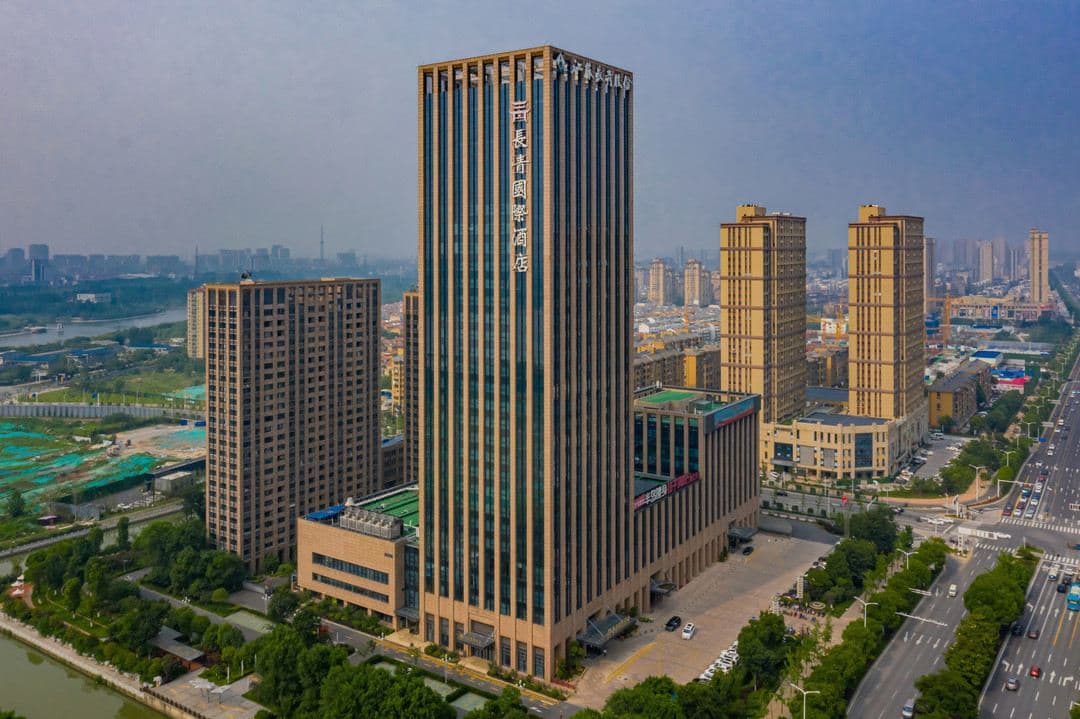
Yangzhou is a city that wakes up for *Zao Cha* (morning tea), but the most authentic steam-filled sanctuaries aren't always huddled around the Slender West Lake. Changqing International, located in the pragmatic Jiangdu District, offers a culinary counter-narrative. The draw here isn't the sweeping lobby or the vast, family-sized suites—though the 400-thread count linens are serviceable enough. The draw is **Jianghuai Chun**. While the hotel’s bones scream 'functional business luxury'—and yes, the in-room hair dryers are aggressively vintage—the on-site dining is a masterclass in Huaiyang finesse. Skip the international buffet at Canal Hall; it’s competent but forgettable. Instead, dedicate your morning to Jianghuai Chun’s crab-roe soup dumplings, which wobble with the promise of rich, savory broth. It is a place where local patriarchs hold court, proving that the best food is often found where tourists rarely tread. It is an imperfect hotel with a perfect kitchen.
“Book a table at Jianghuai Chun for 7:30 AM sharp to beat the local rush, and request a Family Suite if you need luggage space—they are cavernous.”
Insider TipAvg. Nightly Rate
44USD
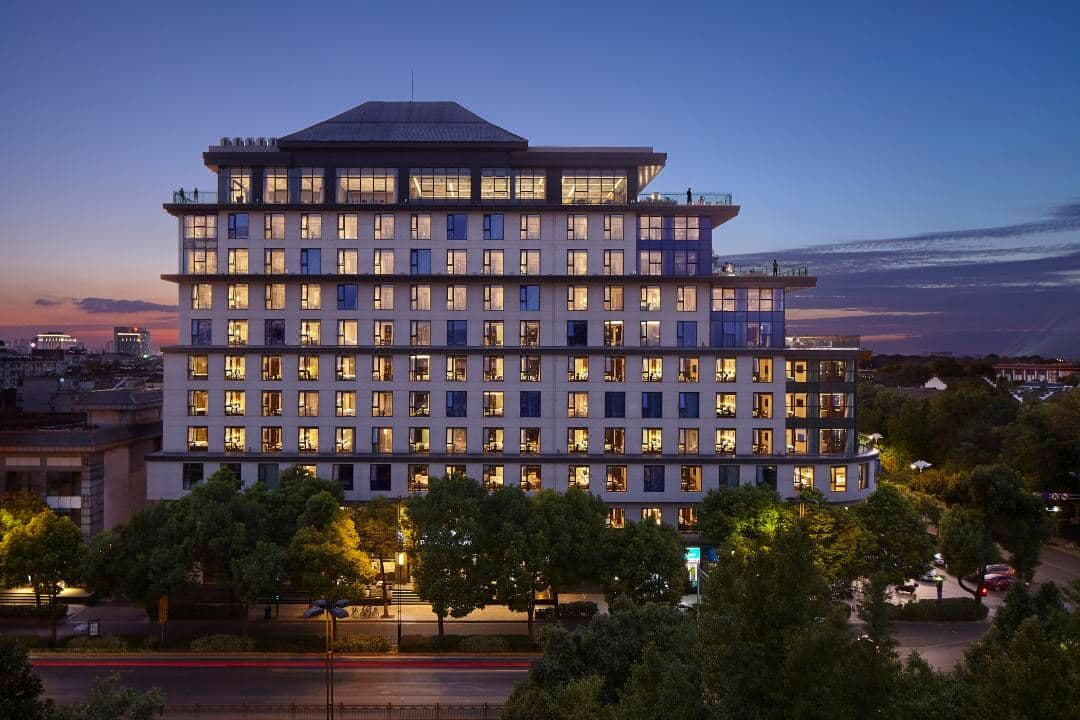
In Yangzhou, *zao cha* (morning tea) isn’t just breakfast; it’s a competitive sport. To win, you need strategy, and SSAW Boutique Hotel is your tactical headquarters. Located a mere stroll from the legendary Ye Chun Teahouse, this property eschews the sprawling anonymity of big-box chains for a focused, hyper-local efficiency. The aesthetic here is ‘literati chic’—think warm woods and muted tones—but the hardware is unapologetically modern. Entry-level rooms are compact (22sqm), yet they punch above their weight with Xiaodu voice-controlled smart systems and Japanese-style smart toilets. The real flex? The bespoke ‘Morning & Night’ essential oil amenities, designed to revive you after a carb-heavy morning or lull you to sleep after a day at Slender West Lake. While the goal is to eat out, the on-site Garden Restaurant (Huayuan) demands attention. Their Yangzhou Fried Rice is a masterclass in grain separation, and the Hot Shredded Tofu rivals the heritage houses outside. Service is brisk and intuitive, offering a complimentary late-night supper—usually a comforting congee—that feels like a secret handshake among guests. It’s not a palace, but for the gastronomy pilgrim, it’s the perfect sanctuary.
“Skip the lobby bustle; head to the 9th-floor Sky Terrace just before sunrise for a private, panoramic view of the city waking up before you hit the teahouses.”
Insider TipAvg. Nightly Rate
45USD
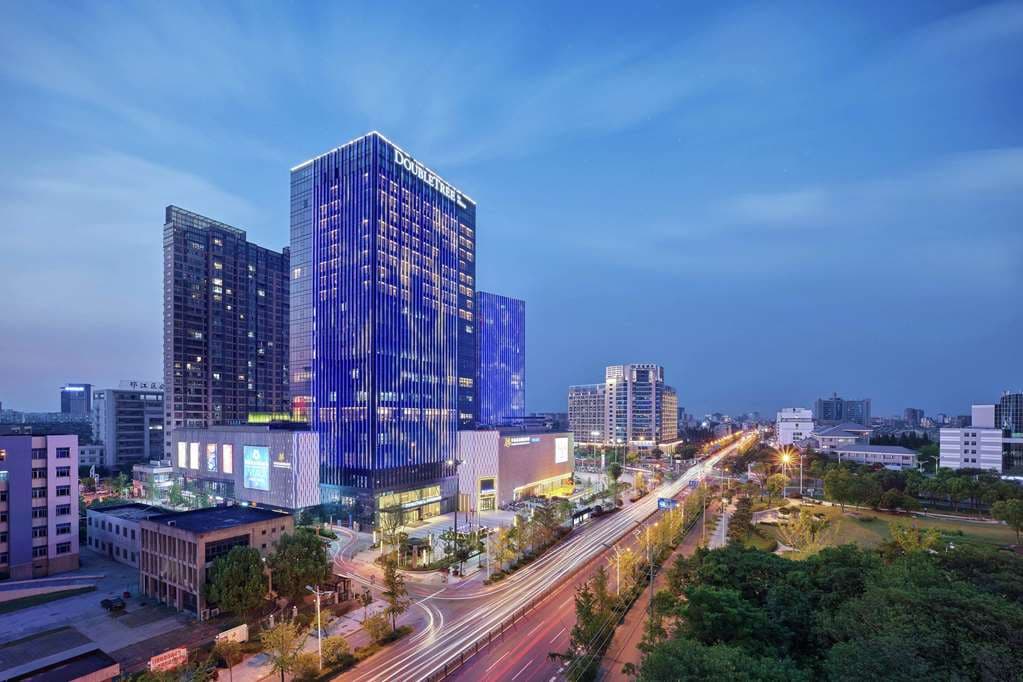
While the world flocks to Yangzhou for slow-paced morning tea, the DoubleTree by Hilton offers a sharper, modern counterpoint anchored in the Sansheng International Plaza. It begins, inevitably, with that signature warm chocolate chip cookie—a reliable sugar rush before you descend into the serious business of Huaiyang cuisine. The rooms are exactly what you need after a 6km trek from Slender West Lake: utilitarian luxury with 400-thread count linens and the familiar scent of Crabtree & Evelyn amenities. But the real draw here is the culinary integration. Skip the room service and head straight to Taste Café (味全日餐厅). The Lion’s Head meatballs here rival the old-world teahouses, and the Yangzhou Fried Rice is wok-tossed with a precision that demands respect. Service is the hotel’s ace card; staff members like Tina and Salina manage the front desk with a hyper-competence that navigates English language barriers with grace. It’s not a lakeside retreat—it’s a high-functioning launchpad for the serious food pilgrim.
“Bypass the main mall entrance. Use the direct hotel-to-plaza connection on the 2nd floor to access late-night local snack vendors without stepping outside.”
Insider TipAvg. Nightly Rate
60USD