No. 01
78 BEISHAN ROAD HANGZHOU CNHangzhou137 verified reviews
9
.8
Bitvoya Edit
Layering imagery, place, and detail before the page opens.
Hangzhou is not merely a destination; it is a living painting of ink and wash, where the mist over West Lake meets the incense smoke of ancient temples. Beyond the bustling city center lies a world of monastic calm, particularly in the secluded valleys near Lingyin Temple and the historic shores of Beishan Road. Here, luxury hospitality reimagines history. From the tea-surrounded serenity of Amanfayun—a restored village frozen in time—to the republican-era elegance of Qiushui Villa, these properties offer a dialogue between the past and the present. Immerse yourself in the scent of Longjing tea and the sound of temple bells in these curated sanctuaries of peace.
Hangzhou offers a unique juxtaposition of spiritual heritage and ultra-luxury hospitality rarely found elsewhere in China. The area surrounding Lingyin Temple and the Fayun Village operates at a different frequency than the modern city. Here, hotels like Amanfayun are not just buildings; they are restored communities where 47 dwellings have been preserved to maintain the spirit of a century-old tea growers' village. Choosing this district means waking up to the sound of monks chanting and walking through bamboo groves before the tourists arrive.
Expect a stay defined by 'quiet luxury.' The aesthetic in these restored villages leans towards minimalism—stone floors, open timber roofs, and calligraphy art. Service is intuitive and often includes cultural immersion experiences such as private tea ceremonies using locally grown West Lake Longjing tea, meditation sessions with monks, or calligraphy classes. Dining focuses on fresh, seasonal ingredients reflecting the dietary principles of the nearby monasteries.
Amanfayun is the premier choice. Located adjacent to Lingyin Temple, it is a restored village surrounded by tea fields, offering unmatched monastic calm.
Yes, properties like Banyan Tree Hangzhou and Amanfayun offer spacious villas and cultural activities suitable for families, though the atmosphere is generally quiet and contemplative.
Unlike typical luxury hotels, these properties (like Vallie Hotel or Amanfayun) repurpose historical dwellings, preserving the original architecture and village layout while adding modern luxury amenities.
Explore our complete curated list of luxury accommodations, from boutique hideaways to grand dames.
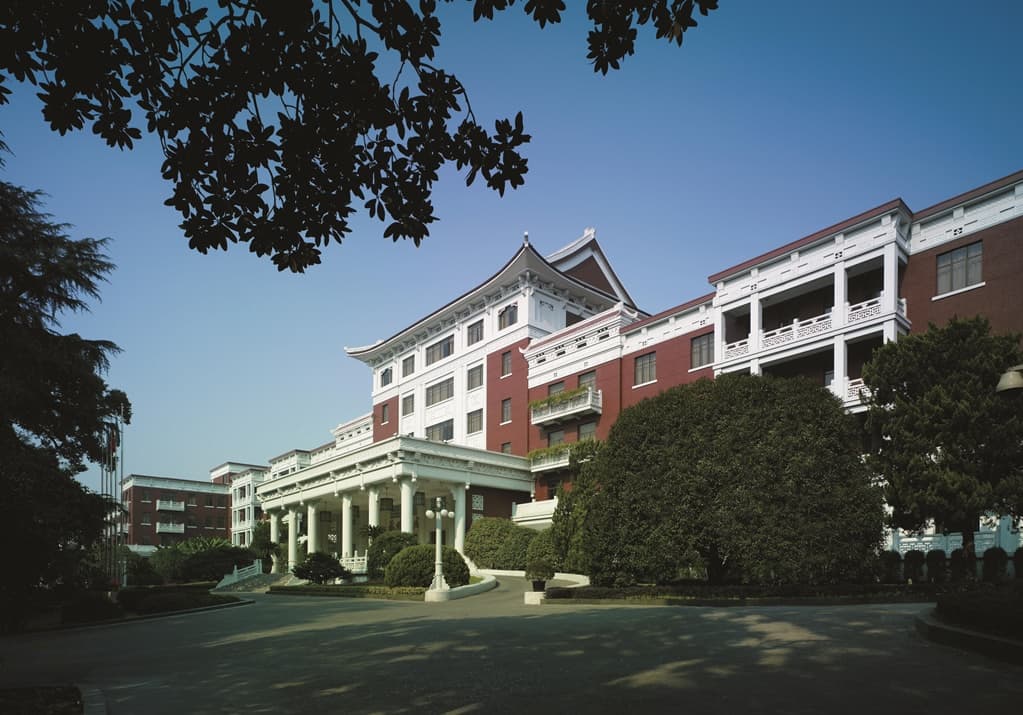
Explore All Hangzhou HotelsIt’s rare that a hotel manages to be both a nostalgic grand dame and a provocative newcomer, but The Silk Lakehouse—the newly unveiled, ultra-luxe alter ego of the Shangri-La Hangzhou—pulls it off with almost arrogant ease. Anchored on Beishan Road, steps from the mist-shrouded Yue Fei Temple, this isn't just a renovation; it’s a resurrection of the historic Xiling site. Forget the faded carpets of the West Wing; the action here is strictly in the East Wing, where the new 'Shangri-La Signatures' concept debuts. The design is a mood—broody, textural, and unapologetically romantic. In the lobby, the 'Crystal Willow' installation doesn't just hang; it weeps light, mimicking the lake’s shoreline. The rooms are a tactile masterclass, banishing generic hotel beige for deep woods and silks that feel like they were spun in the imperial workshops. The pièce de résistance is the Grotto Pool—a cliff-style, indoor heated sanctuary that feels more like a monk’s secret bath than a hotel facility. Dining is equally serious. While the 'Shang Palace' delivers a textbook Dongpo Pork that gelatinizes on the tongue, the real insider play is 'Golden Silk'. Order the Swimming Crabs with wild brown croaker—it’s the taste of the Zhejiang coast refined for a state banquet. Service is telepathic, likely a result of the high staff-to-guest ratio in this exclusive wing. Verdict? The Silk Lakehouse reclaims the northern shore's crown.
“Book the 'Lotus Suite' in the East Wing for the steam shower and bamboo garden access. Avoid the West Wing entirely if you care about Dyson dryers and 2025-era plumbing.”
Insider TipAvg. Nightly Rate
120USD
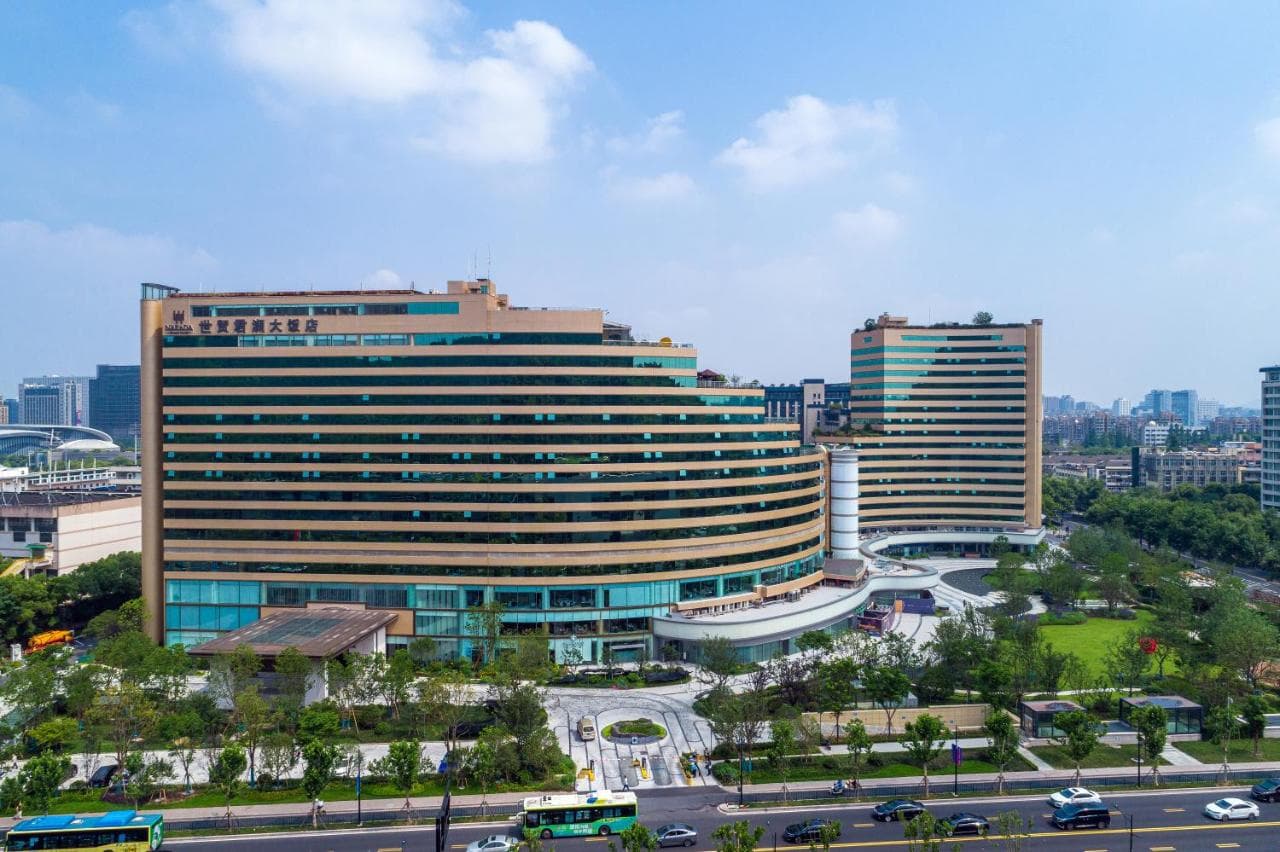
If you prefer your spiritual solitude with a side of old-world gravitas rather than minimalist beige, the Zhejiang Narada Grand is your temple. Perched on the slopes of Baoshi (Precious Stone) Hill, this property functions less like a hotel and more like a high-altitude sanctuary watching over the frenetic city below. While the interiors lean into a decidedly vintage aesthetic—think mahogany tones and heavy drapery rather than blonde wood—the hardware is impeccable, from the blackout drapes that actually banish the dawn to the crisp linens in the executive mountain-view rooms. The real pilgrimage here is culinary: The Lotus Chinese Restaurant serves a 'Buddha Jumps Over The Wall' so rich it borders on the theological, while Nasubi offers Kobe beef teppanyaki that justifies the hike. Wellness is strictly traditional; the 20-meter indoor pool features floor-to-ceiling glass framing the forest, creating the illusion of swimming directly into the tree canopy. It’s not the newest player in town, but for direct access to the Baochu Pagoda at sunrise without the tourist crush, it remains unrivaled.
“Book a room in the North Wing on a high floor for direct views of the Baoshi Hill forest; you can access the hiking trail to Baochu Pagoda directly from the hotel grounds, bypassing the main street crowds.”
Insider TipAvg. Nightly Rate
85USD
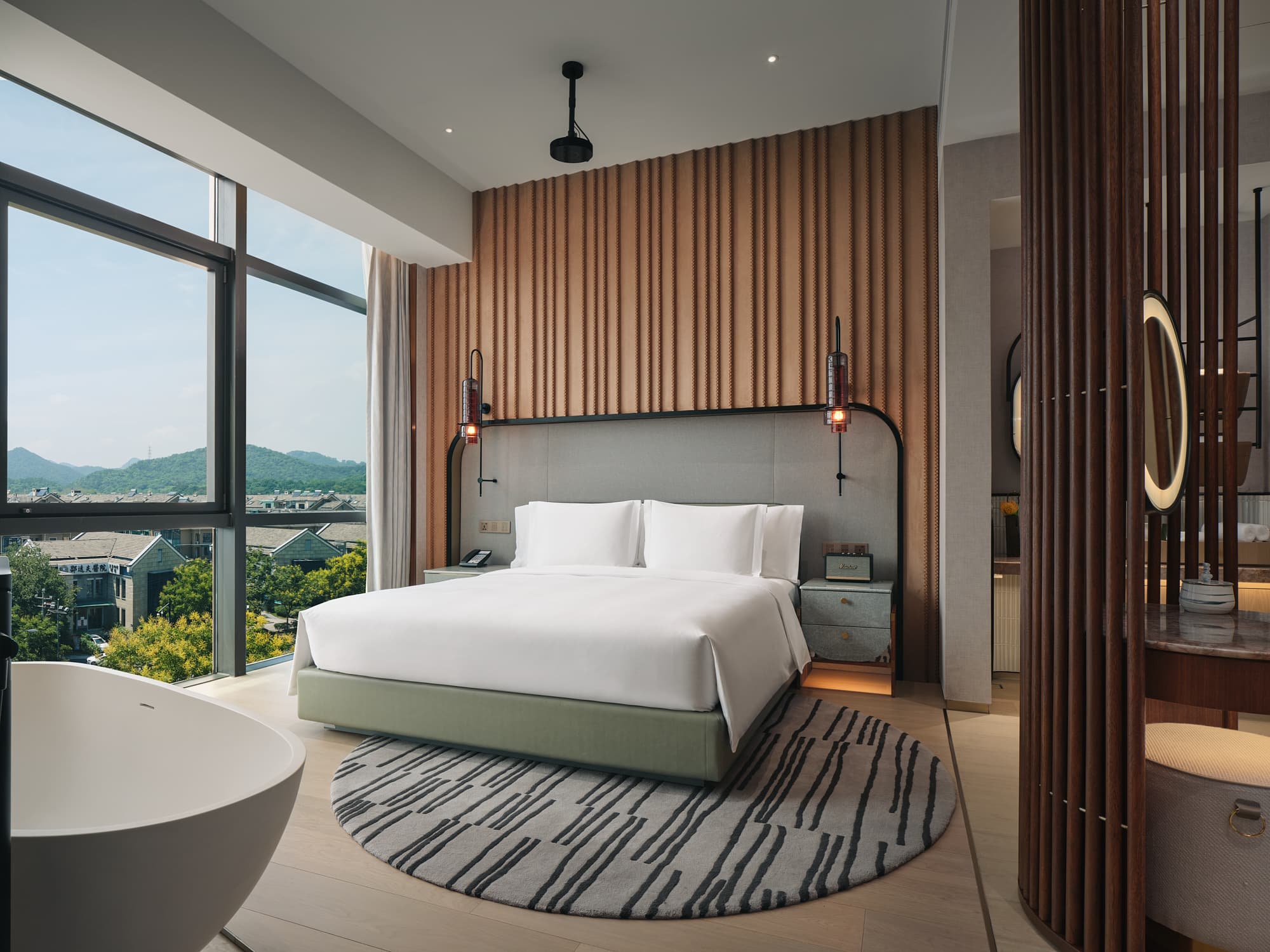
Forget the elbow-to-elbow crush of the Broken Bridge. The real pulse of Hangzhou’s history beats further south, where the Hotel Indigo Hangzhou Uptown channels the refined aesthetics of the Southern Song Dynasty just meters from the Imperial City Ruins. Enter through the 'Golden Avenue'—a tunnel of light that feels less like a hotel lobby and more like a time portal—and you’re met with a striking wall of movable type printing blocks, a tactile nod to one of China’s Four Great Inventions. The vibe here oscillates brilliantly between two modes: 'Scholarly Zen' by day and a vibrant 'Lin’an Night Market' energy after dark. Rooms aren't just places to sleep; they are curated studies in Song-era sophistication. Expect ceramic tea sets for private ceremonies and brass incense holders that invite you to practice the 'Four Arts' of the ancients. It’s not all history, though—55-inch screens and fiercely efficient air-conditioning keep the modern traveler grounded. Dining at ING Restaurant is non-negotiable; the Song Dynasty-inspired fusion dishes are a culinary history lesson, while ING Bar’s Yellow Rice Wine Tea Cocktail offers a smoky, spirited kick. For those seeking a design-forward sanctuary that trades temple austerity for imperial chic, this is the insider's Hangzhou.
“The indoor pool is a serene escape but strictly closes Monday through Wednesday for maintenance. Plan your dip for the weekend, or swap the swim for a walk to the Eight Diagrams Field, just 500m away.”
Insider TipAvg. Nightly Rate
109USD
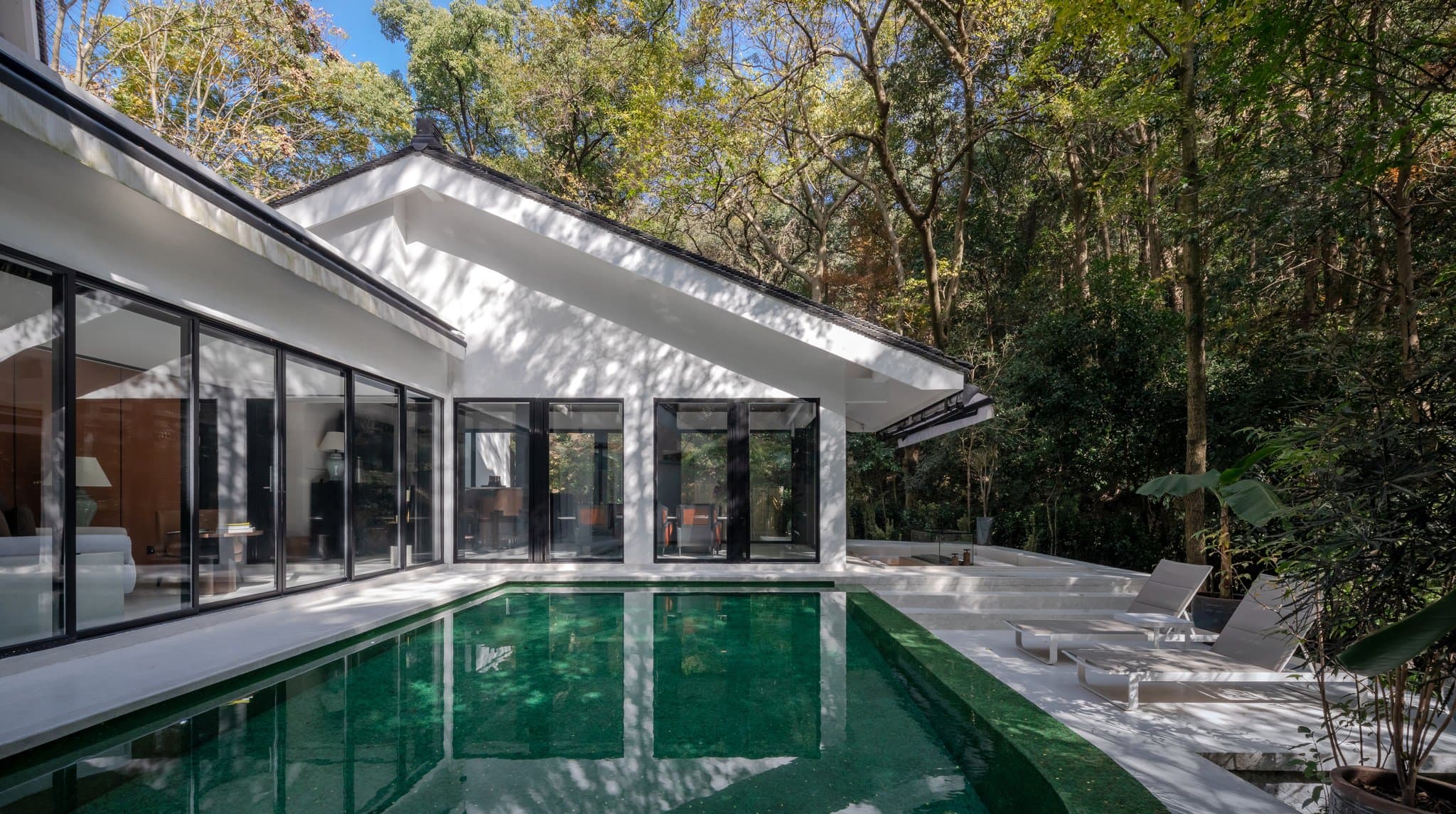
If the Six Harmonies Pagoda wasn’t enough of a draw, Vallie Hotel makes a compelling case for seclusion. This isn’t your typical sprawling resort; it’s a tight cluster of restored tea-farmer homes, housing just eight rooms in the dense forest canopy. The draw here is the water—literally. Every tap and private soaking pool runs with the legendary Hupao Spring water, revered for centuries by tea masters. The interiors lean into a 'wabi-sabi meets tech' aesthetic—think exposed beams and mossy courtyards paired with Dyson dryers and heated floors. However, the 40-square-meter base rooms feel compact given the aggressive price point; you’re paying for the address, not the acreage. The real surprise is L’éclat 19 (Shijiu), where Michelin-starred Chef Olivier Elzer attempts a high-wire act of French-Hangzhou fusion. It works. The bread served with Moutai-infused butter is a stroke of genius, and the seasonal tasting menus justify the trek alone. Service is hyper-attentive, bordering on hovering, but effective. For a weekend of total disconnection where you don't leave the property, it’s unmatched.
“Skip the base 'Garden View' rooms. Book a 'Courtyard Suite' to ensure your own private Hupao Spring soaking pool—essential for the full experience.”
Insider TipAvg. Nightly Rate
554USD
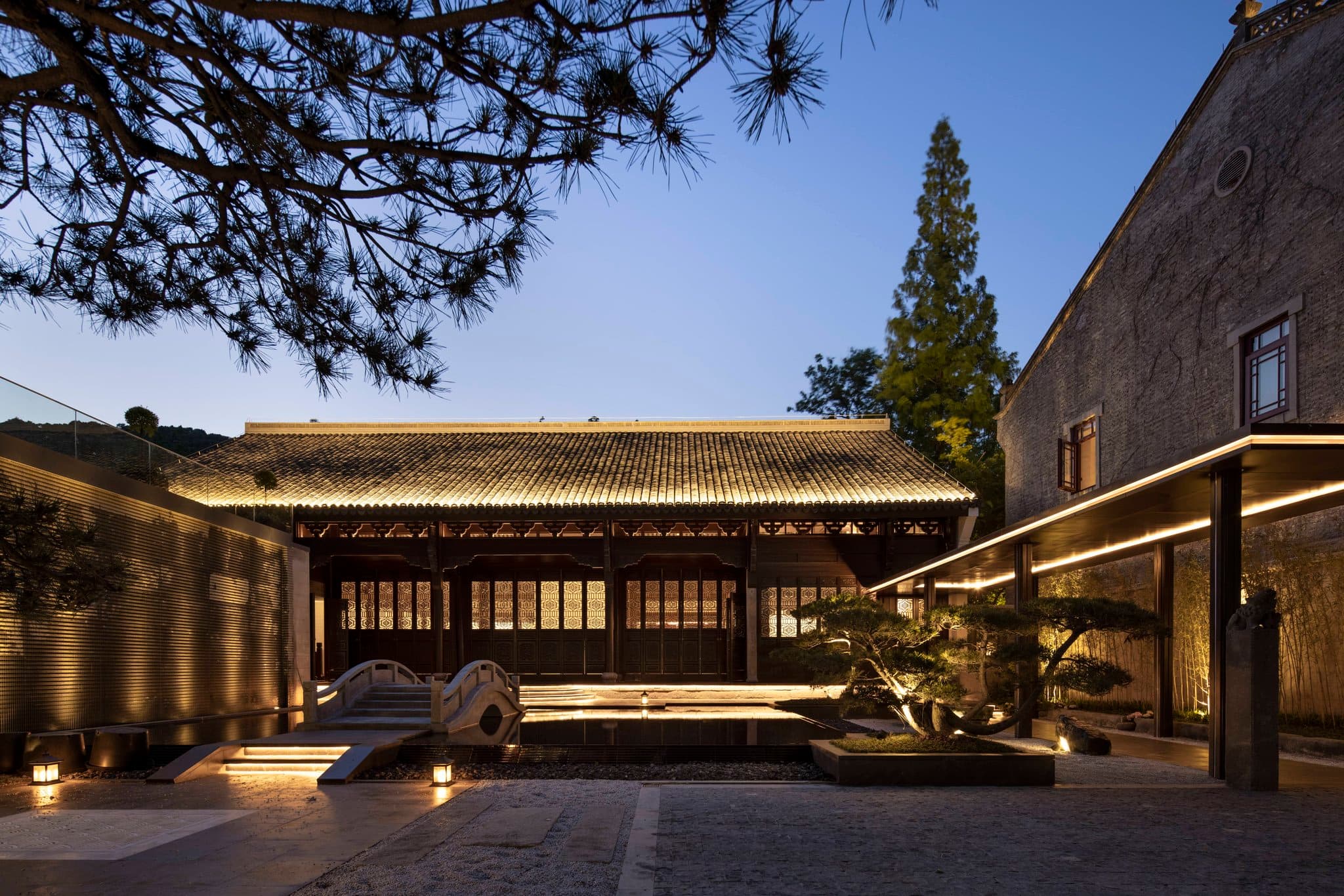
If the walls of Qiushui Villa could talk, they wouldn't whisper—they would recite poetry from the 1930s. Originally built by newspaper tycoon Shi Liangcai for his wife, this 12-room sanctuary on Beishan Road is less a hotel and more a curated act of time travel. Now a member of Small Luxury Hotels of the World (SLH), it balances its 'ascetic luxury' aesthetic with a surprising, albeit occasionally glitchy, layer of facial-recognition tech. The central courtyard, damp with moss and history, leads to the showstopper: a semi-open infinity pool beneath a retractable glass roof, guarded by a surreal 'water-drop' sculpture. My suite, the 'Zhang Ailing', felt impossibly romantic with its 400-thread count linens and hand-picked antiques, though the street noise from the causeway occasionally pierced the calm. Service is hyper-personalized—my butler, Joyce, didn't just pour tea; she orchestrated a private ceremony with the gravity of a performance. Dining is a tale of two eras. The 'In Villa' restaurant serves a formidable fried crab with stinky tofu that challenges the palate, but breakfast is the weak link—delivered from the neighboring Xinxin Hotel, it often arrives lukewarm, a logistical fumble that betrays the price point. Come for the cinematic nostalgia; stay because you’ve locked yourself in with the facial scanner.
“Book the 'Feng Zikai' suite for the best view of the Broken Bridge without the street noise. Also, skip the in-room breakfast and walk 200m to the Lou Wai Lou for a morning feast.”
Insider TipAvg. Nightly Rate
1450USD
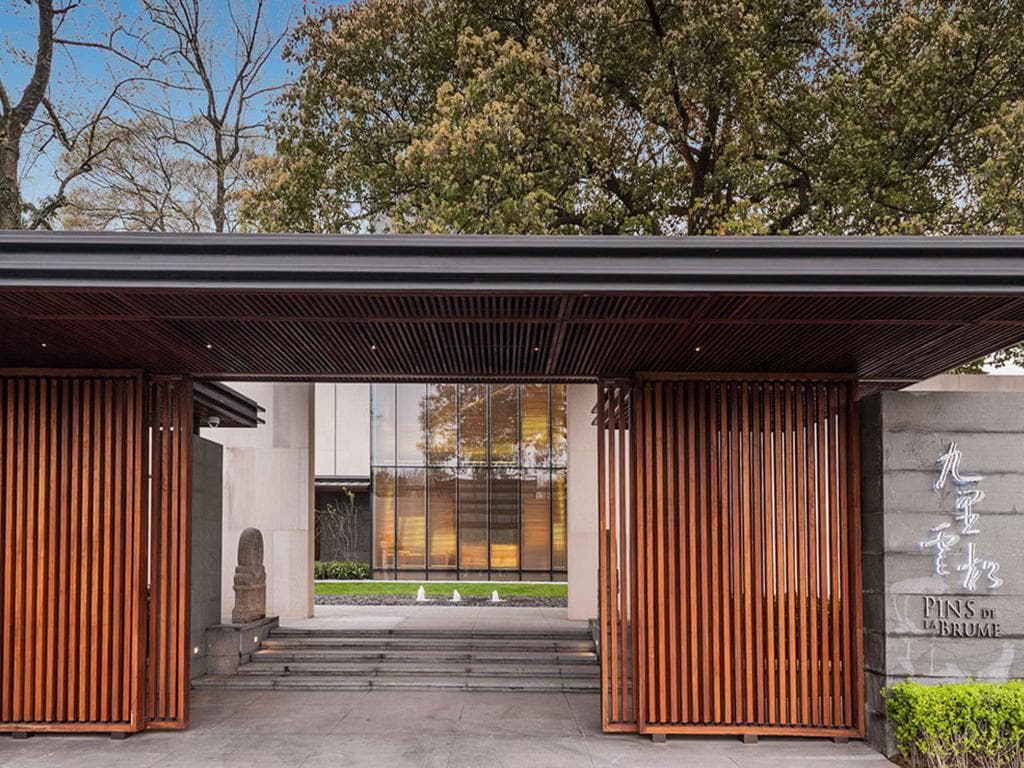
While the masses jostle for incense space at Lingyin Temple, a different kind of worship happens 800 meters away at Pins De La Brume ('Misty Pines'). This isn't just a hotel; it's an architectural exhale. Designed by GOA Architects, the property replaces imperial grandeur with a sharp, geometric minimalism that frames the surrounding tea fields and ancient pines like living canvases. The pièce de résistance is the central courtyard’s 'water mirror,' a reflective pool that captures the sky and trees in a silence so profound it feels heavy. The 42 rooms are studies in restraint—think bleached woods and floor-to-ceiling glass—but the asceticism ends there. Bathrooms are stocked with Le Labo amenities, and the 400-thread count linens are pure indulgence. Dining at Tianxiang (La Parfum) is a serious affair; the West Lake Vinegar Fish here avoids the usual tourist traps, delivering a delicate balance of tart and sweet that rivals any in Jiangnan. Service is deferential but invisible, operating with the hushed efficiency of the monks next door. It’s a sanctuary for those who prefer their enlightenment with a side of single-malt.
“Book a second-floor Garden Suite facing the rear tea plantations for absolute privacy and the best morning mist views.”
Insider TipAvg. Nightly Rate
180USD
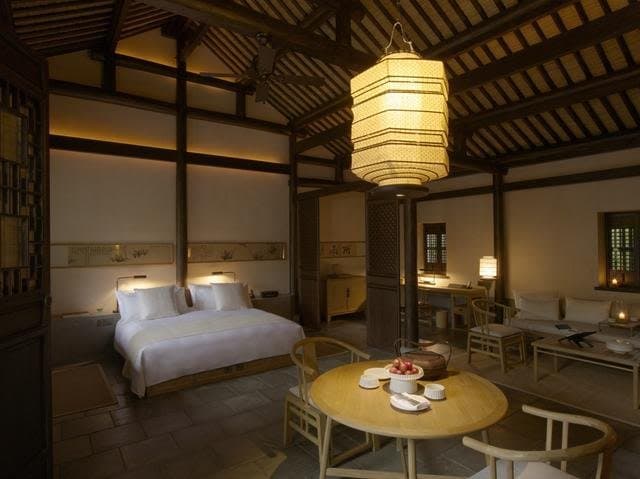
Forget the gilded excess of the Bund; Amanfayun is where high-net-worth souls go to decompress. Situated on the pilgrimage route to Lingyin Temple, this isn’t a hotel—it’s a meticulously reconstructed village of 47 Tang Dynasty-style stone dwellings. The vibe is aggressively low-key: think moss-covered roofs, stone pathways, and an atmosphere so quiet you can hear your own heart rate drop. Inside, the austerity is purely aesthetic. The intentionally dim 'mood lighting' (bring a flashlight) hides serious comforts like radiant underfloor heating and circular wooden soaking tubs that smell of ancient cedar. Dining requires a walk along the Fayun Pathway—technically public, so prepare to be an accidental tourist attraction for day-trippers. Ignore them and head to 'The Steam House' for bamboo mushroom soup and dumplings that rival any in Hong Kong. Service is telepathic, though the price point for transfers might sting even the black-card set. Verdict? If you can tolerate the occasional bug and the dimness, this is the ultimate spiritual detox—with Le Labo amenities.
“Book a Deluxe Village Suite on the upper tier for maximum privacy from the public path. Request a morning blessing at Lingyin Temple; the concierge can bypass the queues.”
Insider TipAvg. Nightly Rate
716USD
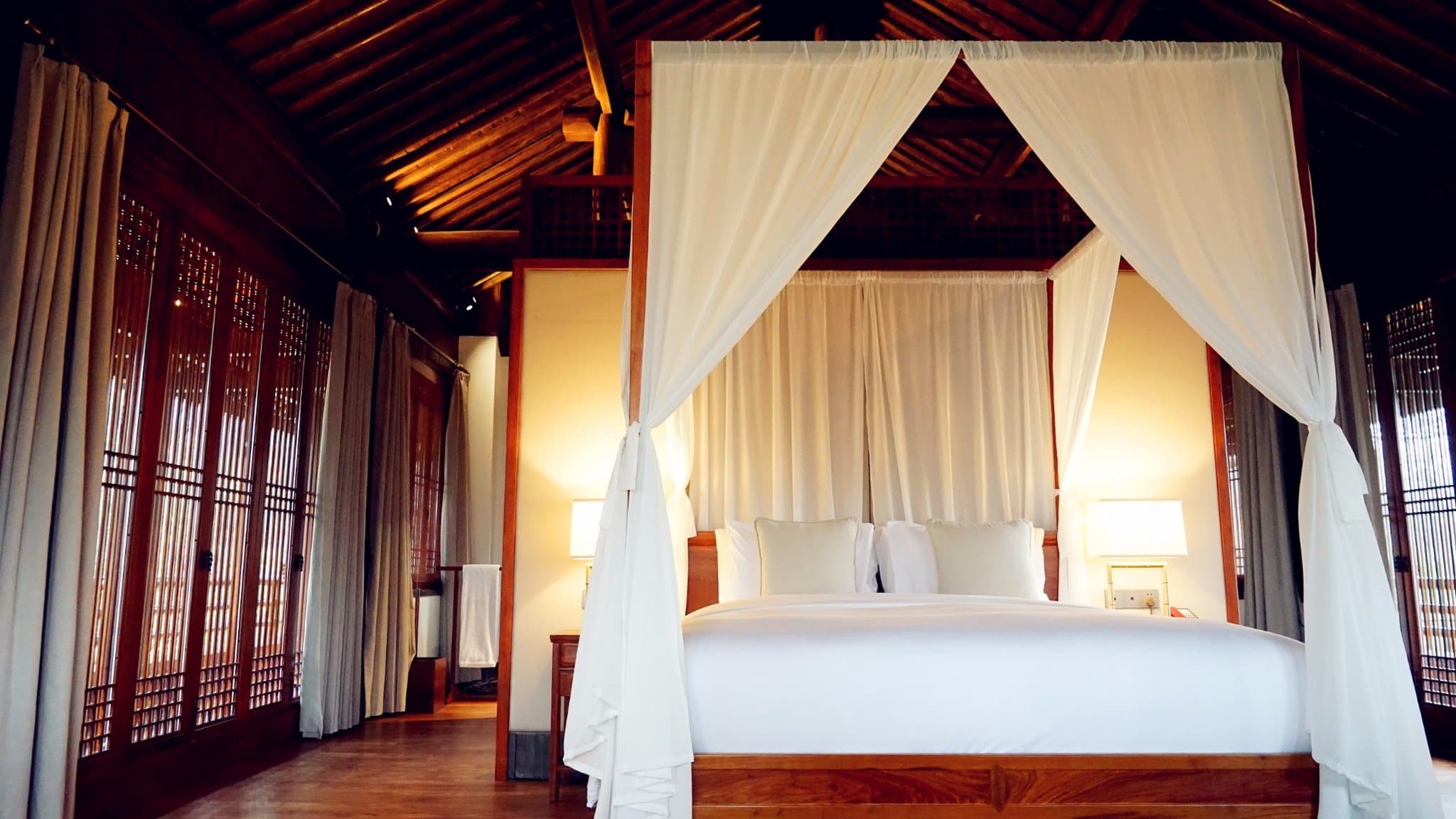
If the definition of modern luxury is the absence of noise, Seven Villas is deafening. Recently stamped with the Relais & Châteaux badge, this 48-room sanctuary in the Yangmeiling tea hills functions less like a hotel and more like the private estate of a tasteful recluse. There is no lobby scene here. Instead, you are greeted by the scent of ancient camphor trees and the visual hush of slate-grey tiles dissolving into the mist. The villas are exercises in restraint—expect high-beamed ceilings and private courtyards, though the glass-walled bathrooms demand a certain exhibitionist confidence (draw the blinds). The real pilgrimage here is culinary. While the on-site 'Jie Xiang Lou' retained its Michelin Star in 2025 for its Veggie Beggar’s Purse and Golden Medallion Wagyu, the buzz is at 'La Villa', where Chef Eric Yu just snagged the 2025 Michelin Young Chef Award. His French-Jiangnan fusion is sharper than the knives. Service is butler-led and clairvoyant, a necessity given the lack of a pool or gym. But who needs a treadmill when you have miles of vertical tea plantations at your doorstep? Verdict: The ultimate hideout for the burned-out executive who prefers Pu'er tea to pool parties.
“Skip the main dining room for breakfast; ask your butler to set up the 'Nine-Grid' morning set on your private terrace. Also, request the 'Xanadu Villa' for maximum distance from the public pathway.”
Insider TipAvg. Nightly Rate
625USD
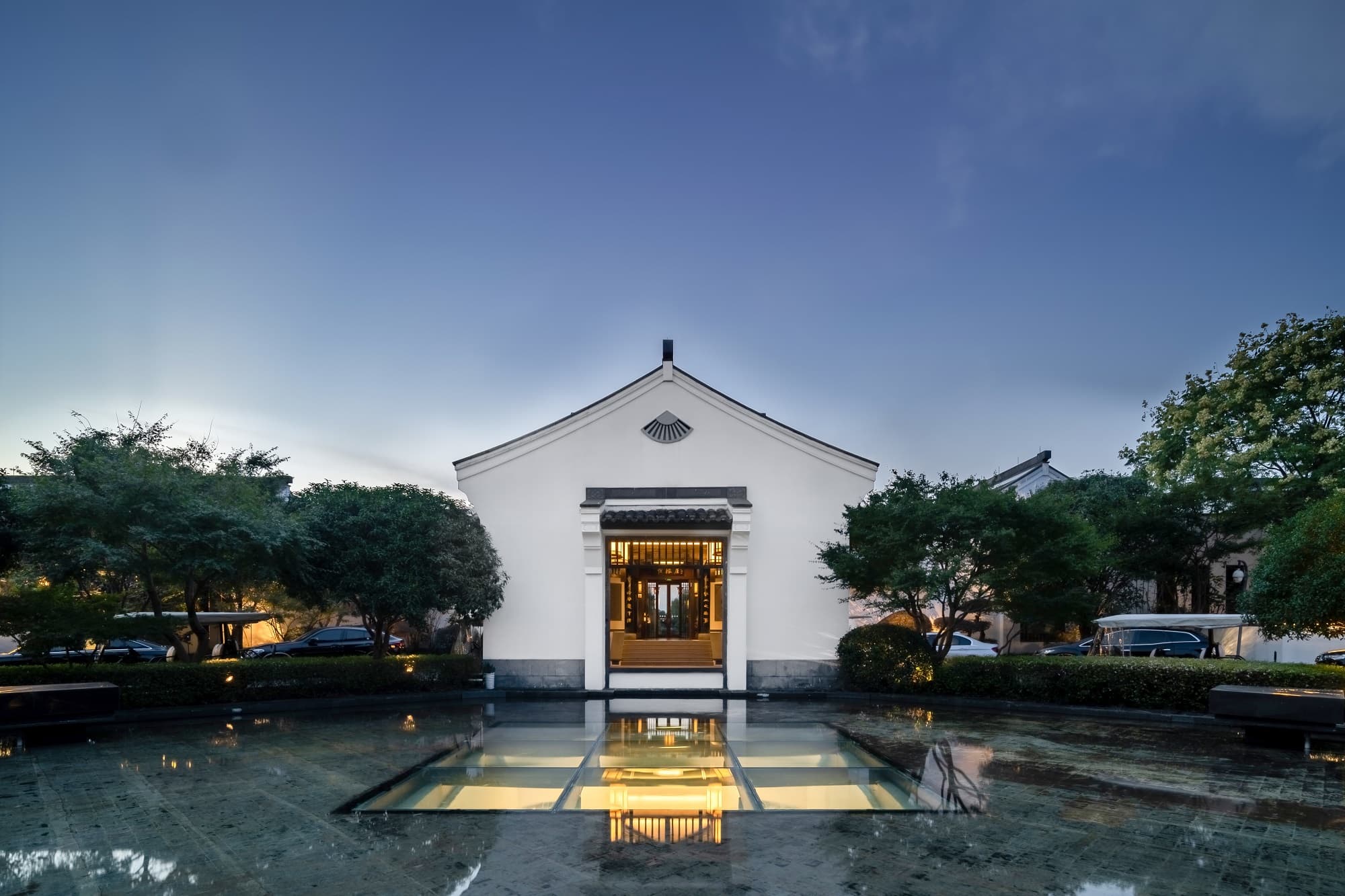
It takes a certain architectural bravado to construct a 'historic' village from scratch and charge top dollar for the privilege, but Banyan Tree Hangzhou pulls off this sleight of hand with aplomb. Located in the Xixi National Wetland Park—a marshy expanse that makes the West Lake look like a crowded bathtub—this resort is a sprawling compound of gray-tiled roofs and whitewashed walls that channels the brooding elegance of a Jiangnan water town. The illusion of antiquity is total, broken only by the hum of the Dyson hairdryer in your 120-square-meter Water Terrace Suite. These rooms are less 'hotel accommodation' and more 'private quarters of a moody Qing dynasty scholar,' complete with soaring ceilings, dark lacquered furniture, and silk brocades that actually feel expensive rather than theatrical. Dining requires a pilgrimage to Bai Yun, where the Dongpo Pork is a sticky, fatty masterclass in texture, though the check might make you wince. Service is telepathic; staff members like Viola seem to anticipate requests for extra Le Labo amenities before you even reach for the phone. The caveat? You are a solid 40-minute drive from the West Lake’s tourist crush. But frankly, after a night in this wetland void, the real world feels entirely overrated. **Verdict**: A masterclass in manufactured serenity.
“Book a 'Water View Villa' for direct canal access, but request one away from the public walkway for true privacy.”
Insider TipAvg. Nightly Rate
512USD
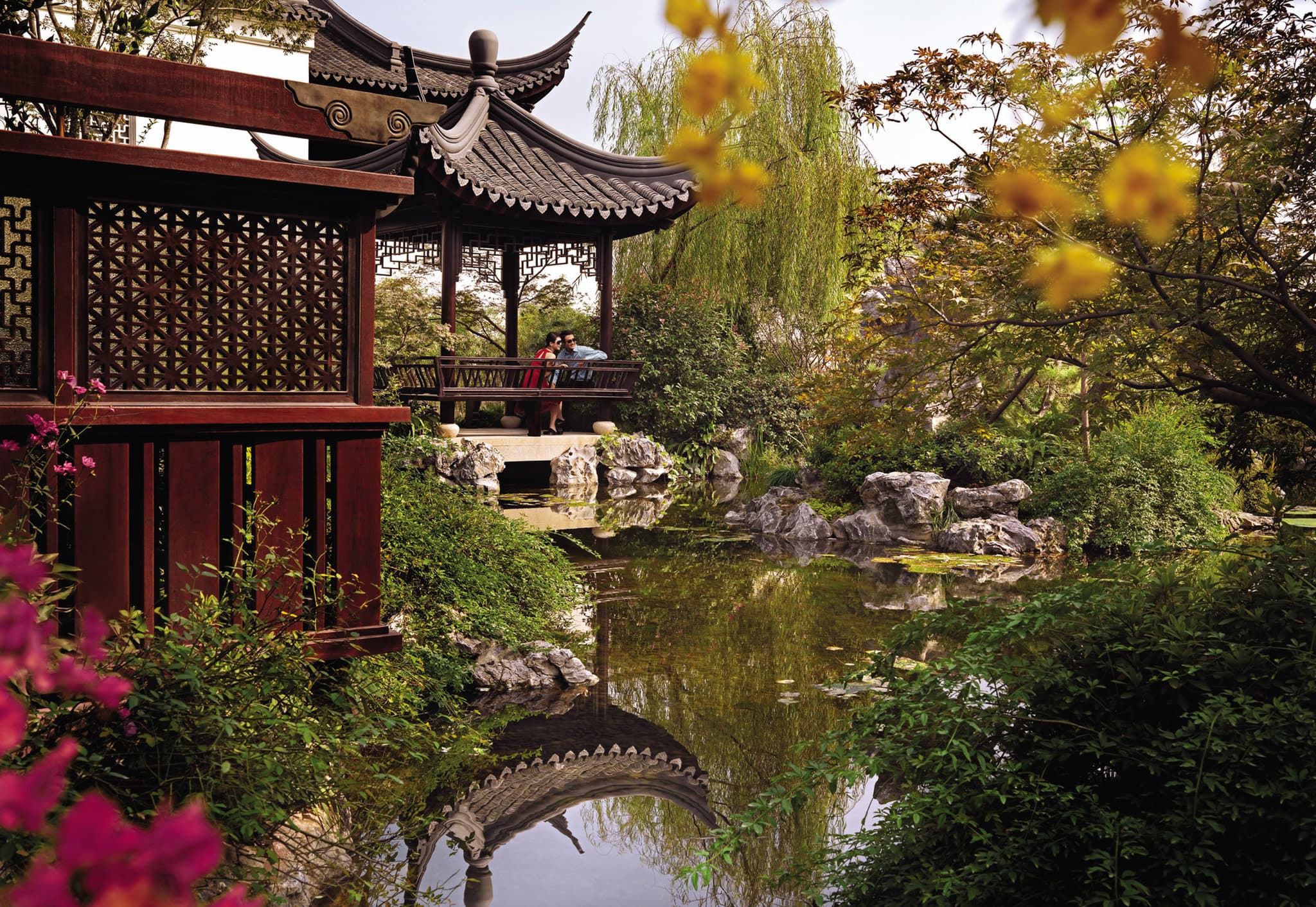
Forget the megaphone-wielding tour groups cluttering the Broken Bridge. The Four Seasons isn’t just near the action; it is a masterclass in architectural camouflage, sequestered behind bamboo thickets and willow curtains. While the structure is modern, the execution is pure Song Dynasty—grey-tiled roofs and timber columns framing misty vistas that feel ripped from a ink-wash scroll. The rooms are a lesson in tactile luxury. Expect silk panels hand-embroidered with magnolias and soundproofing so absolute it creates a vacuum of silence. But the real power move here is securing a table at Jin Sha. As the only Black Pearl 3-Diamond restaurant in the district, it serves a Shanghainese Braised Pork with Abalone that is less a dish and more a religious experience—glossy, trembling, and rich enough to end a marriage. Service is invisible until you need it, and the facilities are unapologetically high-spec, from the Technogym-equipped fitness center to the imperial-style indoor pool. It comes with a steep price tag, but you aren't just paying for 400-thread count sheets; you are buying the rarest commodity in Hangzhou: solitude.
“Skip the taxi queue. Book the hotel’s private wooden rowing boat for arrival or a sunset tour; it departs directly from the hotel’s private dock, bypassing the crowded public piers entirely.”
Insider TipAvg. Nightly Rate
535USD
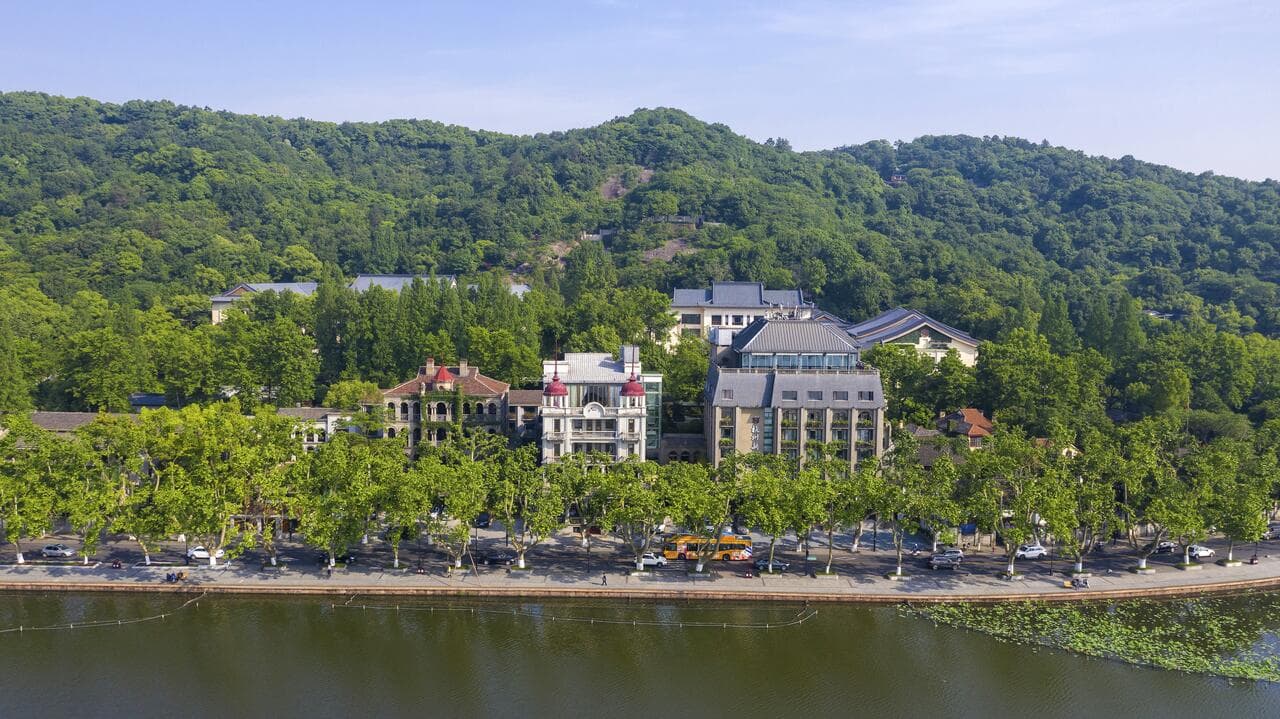
Forget the cookie-cutter glass towers; The New Hotel (Xin Xin Hotel) is a mood piece, a 1913 heritage structure that feels less like a hotel and more like a set from a Wong Kar-wai film. Perched on the north bank of West Lake, it offers a melancholic, cinematic elegance that modern luxury often scrubs away. The 'Lust, Caution' vibe is palpable in the creaking wooden floors and the grand spiral staircase, a favorite haunt for cheongsam-clad influencers. The rooms are a masterclass in vintage restraint—think dark woods, brass fixtures, and arched windows that frame the Broken Bridge like a painting. A word of warning to the pampered Western spine: the mattresses here possess an orthopedic rigor typical of local preference. Embrace it as part of the authenticity. Dining at the 1913 Restaurant is non-negotiable; while the West Lake Vinegar Fish is the famous headliner, the real draw is the atmosphere of dining in a living museum. Service is polite but distinctively old-school—don't expect the fawning swiftness of a St. Regis, but rather a dignified, measured pace befitting a centenarian dame.
“Book a 'Lake View' room on the 4th floor of the main building for the best vantage point of the Broken Bridge without the noise of Beishan Road traffic.”
Insider TipAvg. Nightly Rate
93USD