No. 01
No 18 8 Lingyin Road Hangzhou, China 310013Hangzhou47 verified reviews
9
.2
Bitvoya Edit
Layering imagery, place, and detail before the page opens.
Hangzhou is not merely a city; it is a living painting of mist-covered waters and rolling emerald hills. For the discerning traveler, the true allure lies beyond the bustling shores of West Lake, deep within the fragrant embrace of the Longjing (Dragon Well) tea plantations. This curated collection invites you to explore the most exclusive retreats tucked away in the spiritual heart of the Lingyin Temple area and the serene tea villages of Manjuelong. From the zen-like corridors of Amanfayun to the historic elegance of Fuchun Resort, these properties offer a sanctuary where the ancient art of tea culture meets modern luxury. Immerse yourself in the verdant landscape where emperors once roamed.
Hangzhou offers a unique juxtaposition of UNESCO World Heritage culture and breathtaking natural scenery. The Longjing Tea Hills are not just agricultural sites; they are the cradle of China's most prestigious green tea. Staying in this region allows travelers to wake up to the scent of roasting tea leaves, participate in private tea ceremonies, and hike through bamboo forests that have inspired poets for centuries. Unlike the busy city center, these verdant escapes provide seclusion, cleaner air, and direct access to ancient temples like Lingyin, making it the ultimate destination for wellness and cultural immersion.
Visitors to these high-end retreats can expect an emphasis on "Slow Living." Hotels like Tsingpu Hangzhou Retreat and Vallie Hotel often feature traditional Jiangnan architecture with white walls and black tiles, integrated seamlessly into the forest. Expect world-class spas utilizing tea-based treatments, farm-to-table dining featuring fresh bamboo shoots and river fish, and personalized itineraries that might include tea picking in the spring or meditation sessions with monks. The service is attentive yet unobtrusive, respecting the tranquility of the environment.
The best time is from March to May, during the tea harvest season. Late March (before Qingming Festival) is particularly prized for witnessing the first flush of Longjing tea picking.
Yes, resorts like Four Seasons and Fuchun Resort offer excellent family amenities and kids' clubs. However, Amanfayun is more suited for couples or those seeking quietude.
While many hotels offer tea experiences, private ceremonies with master tea growers often require advance booking through the hotel concierge, especially during harvest season.
Explore our complete curated list of luxury accommodations, from boutique hideaways to grand dames.
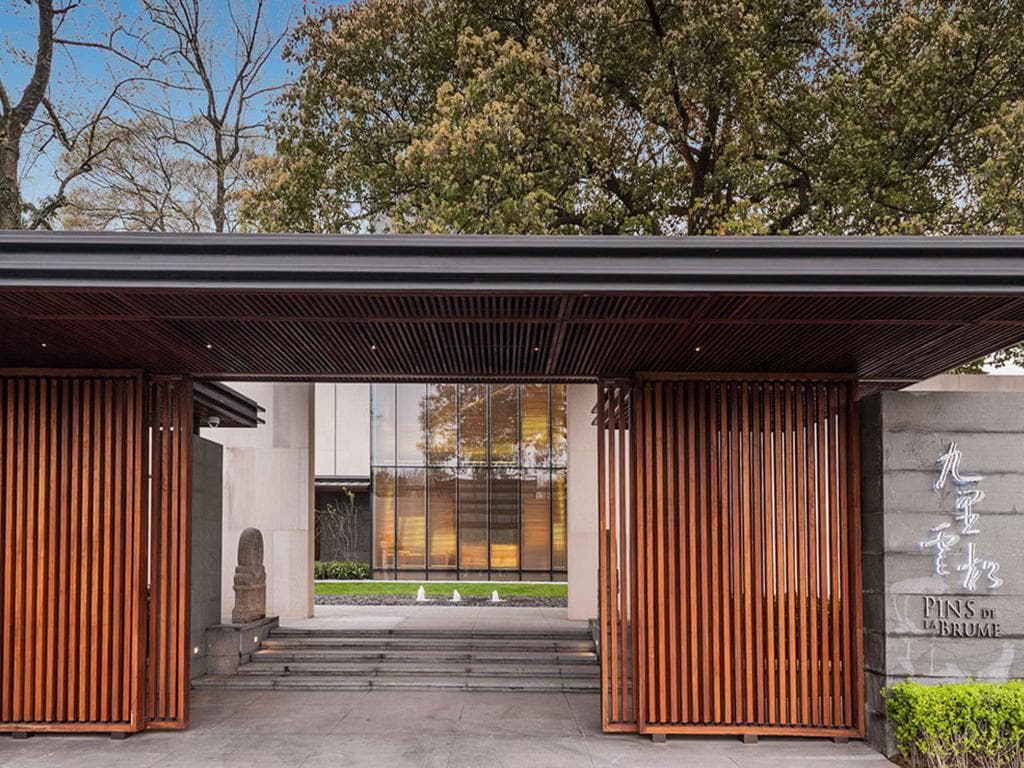
Explore All Hangzhou HotelsWhile the masses jostle for position at Lingyin Temple, the smartest travelers are a mere 800 meters away, sipping seasonal Longjing tea in the glass-walled stillness of Pins De La Brume. This property executes the 'sanctuary' concept with a precision that belies its proximity to Hangzhou’s tourist epicenter. The design is a study in restraint—think central courtyards featuring 'water mirrors' that reflect ancient pines and slate-grey minimalism that feels more Kyoto than Zhejiang. Inside, the commitment to tactile luxury is evident. You aren’t just getting a room; you’re getting 400-thread count linens, complimentary minibars stocked daily, and full-sized Le Labo or L'Occitane amenities that justify the room rate alone. Dining at Tianxiang (La Parfum) is mandatory; their West Lake Vinegar Fish avoids the cloying sweetness found elsewhere, delivering a sharp, sophisticated bite. However, the seclusion comes with a caveat: hailing a ride-share here is a test of patience, and the WiFi login often demands a local number—a frustrating oversight for international guests. But once you’re floating in the outdoor pool (strictly for scenery; it’s unheated) surrounded by mist-topped trees, the digital world feels happily irrelevant. **Verdict:** An impeccable, if slightly impractical, hideaway for design purists.
“The outdoor pool is stunning but unheated—treat it as a landscape feature. For a true swim, book a suite with a private soaking tub.”
Insider TipAvg. Nightly Rate
180USD
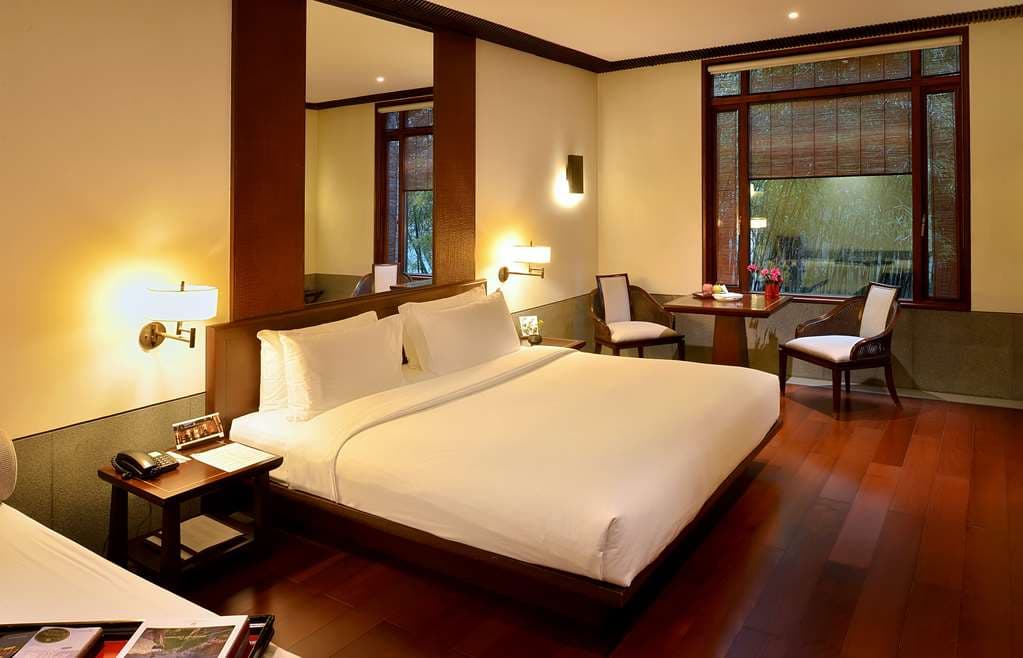
Forget the chaotic clamor of West Lake. Fuchun Resort, a 45-minute drive southwest, offers a different frequency entirely: absolute silence. Designed to inhabit the spirit of the 14th-century scroll 'Dwelling in the Fuchun Mountains,' the property feels less like a hotel and more like a habitable museum. While the hardware admits to a certain patina—do not expect the iPad-controlled curtains or USB-C ports of Hangzhou’s newest openings—the atmosphere is unreplicable. The indoor pool is a cathedral of calm, defined by dramatic timber columns and black tiles that reflect the lantern light, arguably the most photogenic swim in Zhejiang. Dining requires a reservation at the Asian Corner, where the Signature Flavor Durian Crab challenges purists but rewards the brave. For wellness, the resort’s partnership with Valmont offers a serious anti-aging pedigree that justifies the high price point, particularly when paired with a session of Himalayan Yoga. It is expensive, and the vibe is decidedly grown-up despite the presence of alpacas in the kids' club. Verdict: Come for the mist-shrouded tea terraces, stay for the Valmont facials, and forgive the aging carpet for the sake of the view.
“Book a tea ceremony at the Lake Lounge strictly during sunset; the view of the misty plantation terraces turning gold is worth the price of the Mingqian Longjing tea alone.”
Insider TipAvg. Nightly Rate
244USD

Forget the clamor of West Lake’s causeways; the real poetry of Hangzhou hides in the bamboo-clad hills of Fuyang, where the Tsingpu Hangzhou Retreat offers a masterclass in monastic chic. Designed with a strict wabi-sabi ethos, the architecture is a conversation between raw rammed-earth walls and the verdant landscape—a stark, sophisticated departure from the gilded opulence typical of the region. There is no spa here, and that is the point. The 'treatment' is the silence itself, best enjoyed from deep soaking tubs in rooms that feel like curated galleries of light and shadow. Days are spent mastering the ancient local craft of bamboo paper making or tracking insects in the forest—activities that sound twee but feel profound in this setting. Dining at Tsingpu Kitchen is hyper-local; do not leave without trying the Zhuangyuan Tofu and the clay-baked Beggar’s Chicken, dishes that taste of the earth just outside your window. Service is telepathic rather than hovering, led by butlers who anticipate needs you didn’t know you had. It is not for the traveler seeking nightlife, but for the design purist craving a digital detox, it is nothing short of a sanctuary.
“Request a room facing the 300-year-old Ginkgo trees for the best morning light, and book the bamboo weaving workshop in advance—it's surprisingly meditative.”
Insider TipAvg. Nightly Rate
310USD
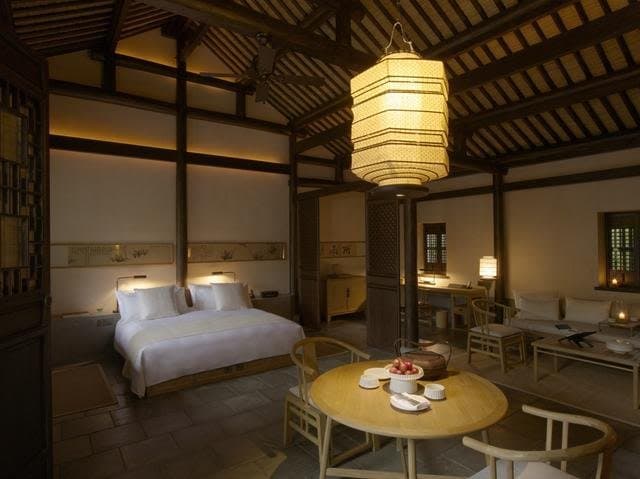
Forget the gilded skyscrapers of Shanghai; Amanfayun is a masterclass in subtraction. Located on the grounds of a restored Tang Dynasty village, the property feels less like a hotel and more like a living museum of silence. There is no grand lobby—only the stone-paved Fayun Pathway, flanked by ancient camphor trees and tea bushes, where the only traffic is a passing monk from the neighboring Lingyin Temple. The 47 dwellings are a study in rustic restraint: unvarnished elm furniture, open-beam ceilings, and stark white walls. But don’t let the ascetic aesthetic fool you—the creature comforts are aggressively high-end, featuring powerful underfloor heating (essential in the damp hills) and hidden sound systems. Dining is an extension of the terroir. Bypass the Western options for The Steam House, where bamboo-steamed dumplings taste like the fog outside, or visit Lan Xuan for the Double-boiled deboned chicken. The spa, with its circular wooden soaking tubs, offers a bathing ritual that feels almost baptismal. Verdict: This is not a place to be seen, but a place to disappear.
“Skip the main public entrance to Lingyin Temple. Use the hotel's private guests-only gate near the Fayun Pathway at 7:00 AM to catch the monks' morning chanting before the tourist crowds arrive.”
Insider TipAvg. Nightly Rate
716USD
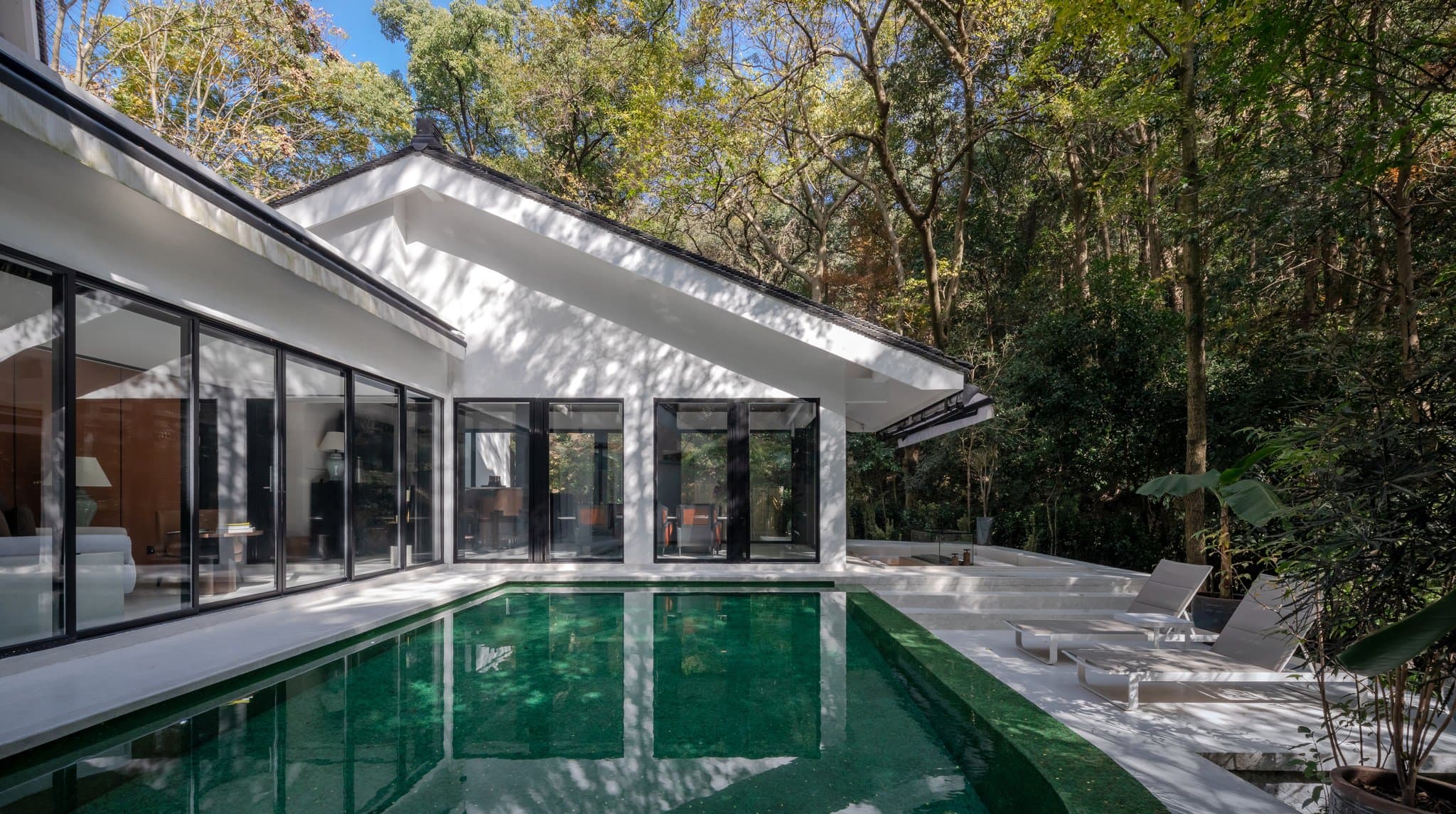
If water is the soul of Hangzhou, Vallie is its most closely guarded atrium. Tucked away near the Six Harmonies Pagoda, this eight-room retreat demands a pilgrimage up damp, stone pathways that feel cinematic in the mist. The primary draw here isn't just the aggressive privacy, but the plumbing: in a move of supreme localized luxury, the taps run not with municipal fluid, but with the fabled Hupao (Tiger Running) Spring water. It is a flex that serious tea drinkers will understand immediately. The aesthetic is moody and timber-heavy—think 'monastic chic' meets 400-thread count indulgence. While the base rooms (40sqm) can feel intimate, the trade-off is the forest pressing right against your glass. Your 24-hour butler navigates the property’s quirks (occasional key card glitches add a rustic, if unintended, charm) with grace. Dinner at Shijiu Gastro Lounge (L’éclat 19) is mandatory; the Fennel Caviar Tart is a textural triumph, and the Yellow Wine Scampi bridges the gap between French technique and Hangzhou terroir perfectly. It is imperfect, expensive, and deeply atmospheric—exactly what a tea hills escape should be.
“Request a ground-floor suite for a private courtyard pool. The steam rising off the hot Hupao water in the winter air is pure visual poetry.”
Insider TipAvg. Nightly Rate
554USD
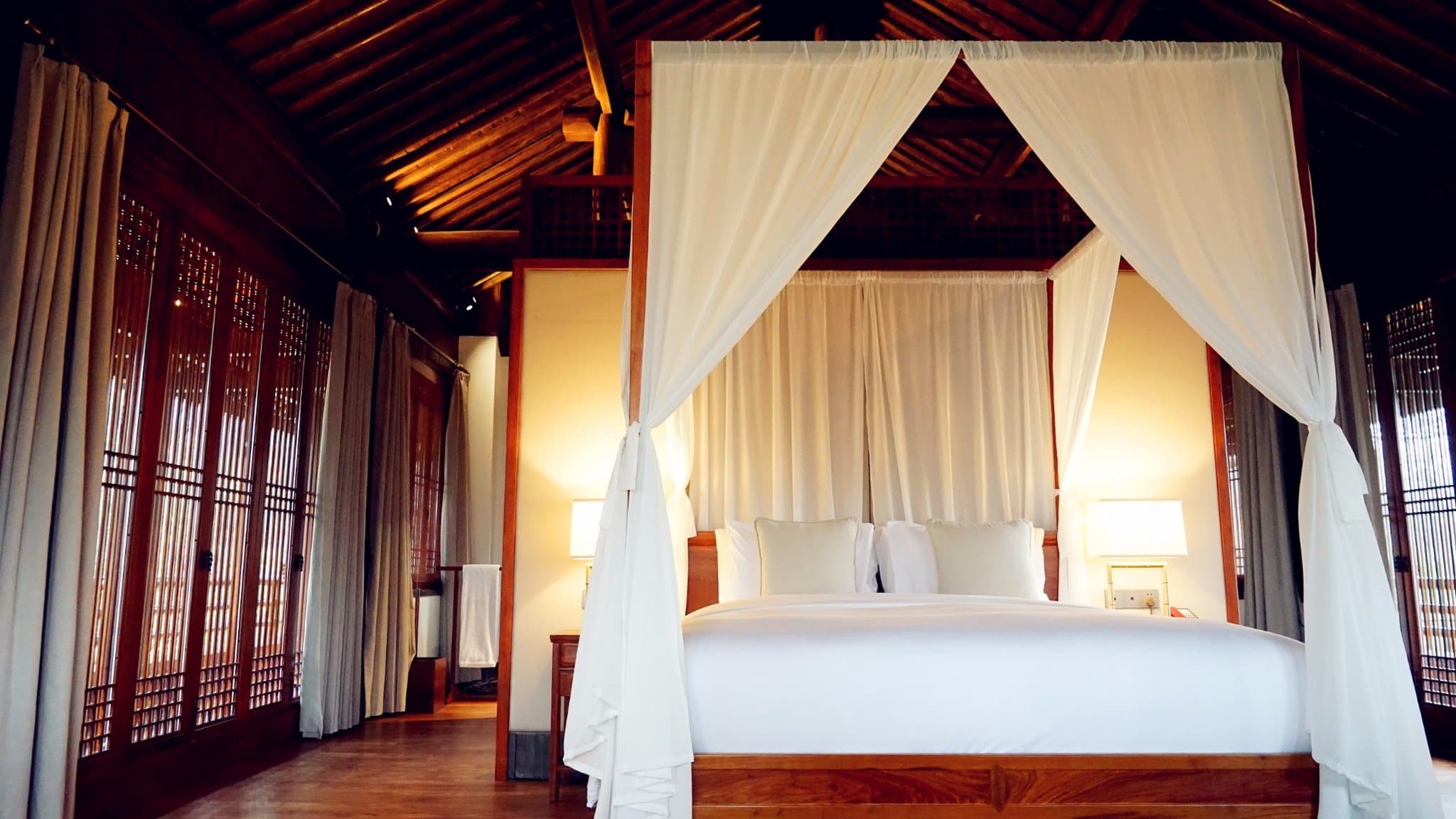
Forget the West Lake promenade, where tourists swarm like cicadas. Seven Villas (Qiushuye) is where you go to disappear. Tucked into a bamboo-choked valley on Bapanling Road, this 42-key sanctuary feels less like a hotel and more like a portal to the Southern Song Dynasty—if 12th-century poets had access to Dyson dryers and Aromatherapy Associates bath products. The aesthetic is pure 'wabi-sabi' luxury: moss-covered stone paths, rough-hewn timber beams, and a silence so profound it feels expensive. The draw here isn't a pool (there isn't one, thankfully), but the gastronomy. The on-site Jie Xiang Lou has retained its Michelin Star and Black Pearl status for 2024, serving a 'Golden Medallion Wagyu' that is legitimately life-altering, alongside a delicate 'Veggie Beggar’s Purse' that upstages the meat. Service is of the 'invisible butler' variety—tea appears before you ask, and buggies vanish into the foliage. It is a hermitage for the burnt-out executive who prefers their Zen with a side of foie gras.
“Book the 'Xanadu Villa' (Villa 3) for the deepest isolation. Avoid the ground-floor garden rooms if you're shy—the floor-to-ceiling glass walls offer zero secrets from passing buggies.”
Insider TipAvg. Nightly Rate
625USD
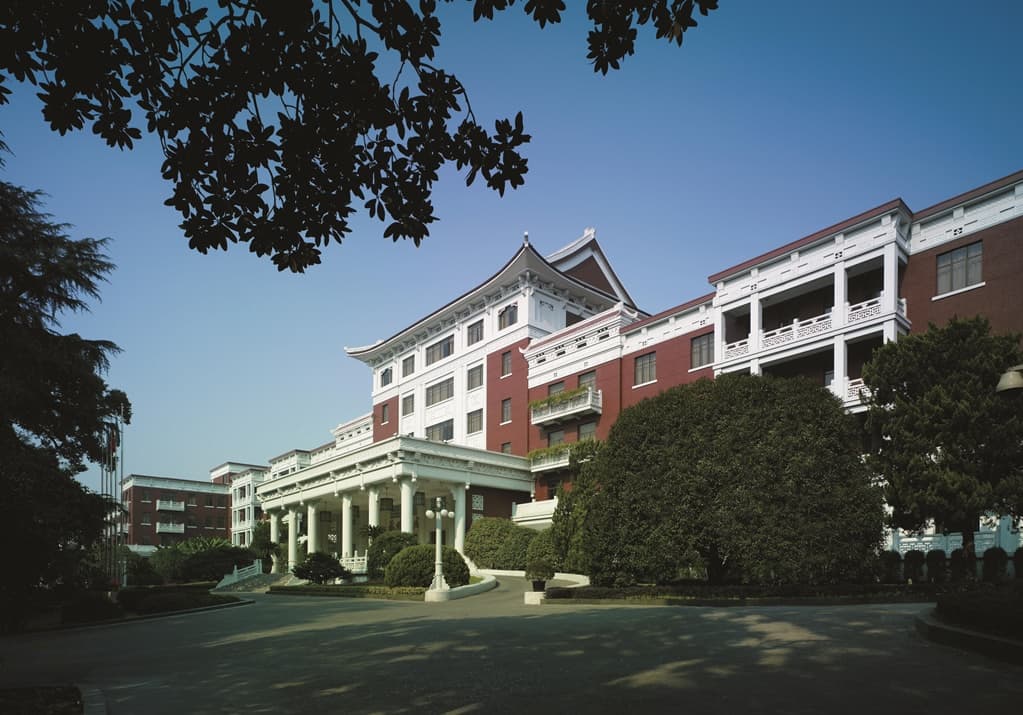
Anchored on the historic Beishan Road, The Silk Lakehouse isn’t just a renovation; it is the inaugural statement of the ‘Shangri-La Signatures’ portfolio, reclaiming the grounds of the former Xiling Hotel. Unlike its Midtown sibling, this 68-key property trades corporate polish for the intimacy of a private residence. The lobby immediately sets the tone—not with a chandelier, but a ‘Crystal Willow’ installation of 1,930 hand-blown Murano glass leaves, a sharp nod to the weeping willows sweeping the West Lake just outside. The accommodations bridge the gap between heritage and hyper-modernity. While the exterior respects the Jiangnan architecture, interiors feature AI-responsive mattresses and freestanding tubs positioned to command 270-degree views of the water. For dining, skip the hotel buffet tropes. The Living Room, helmed by Chef Alan Yu, serves a Mackerel Escabeche that is bright, acidic, and entirely unexpected in a tea-growing region. Meanwhile, Golden Silk handles the local requisite—Swimming Crabs and Wild Brown Croaker—with deft precision. The real showstopper, however, is the ‘Grotto’ pool. Designed like a subterranean cavern, it offers a moody, atmospheric swim that feels miles away from the humidity of the lake. Verdict: A triumphant, boutique evolution of a classic brand.
“Book a ‘Lakeside Suite’ on the top floor for the 270-degree view; request a morning session in the Grotto pool before 9 AM to have the ‘cave’ entirely to yourself.”
Insider TipAvg. Nightly Rate
120USD
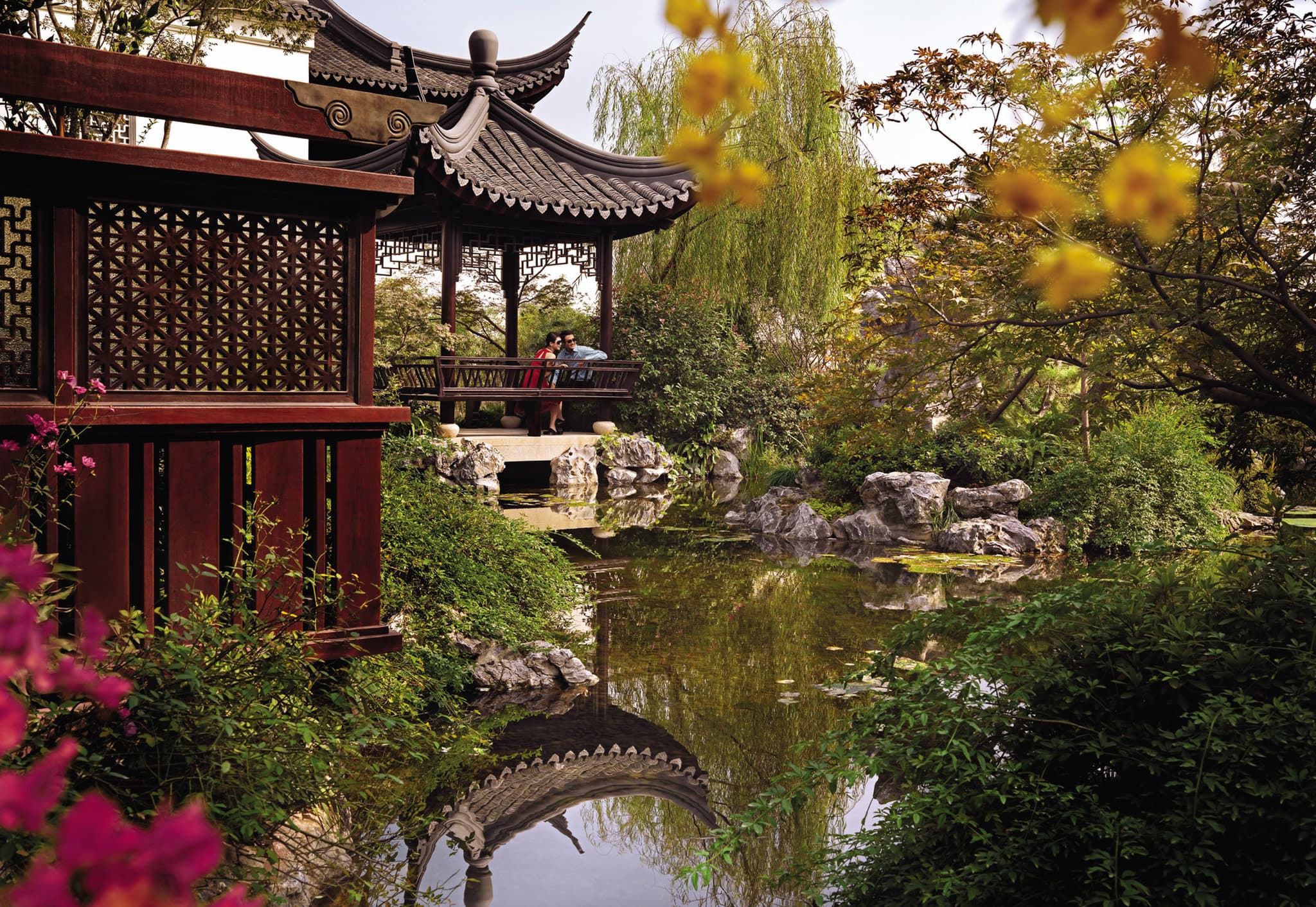
If the West Lake is a painting, the Four Seasons is the gilded frame that elevates it to high art. While the broken bridges and causeways teem with tourists, this Jiangnan-style estate in the Qingzhiwu scenic area offers a silence so profound you can hear the morning dew drop from the willow trees. The architecture is a love letter to the Song Dynasty—think winding wooden corridors, moss-covered stone bridges, and manicured lagoons that blur into the tea hills. Inside, it’s not just about 400-thread count sheets; it’s about the seamless integration of nature. The Technogym-equipped fitness center overlooks a traditional rockery, while the spa—one of the few in China offering Biologique Recherche treatments—features VIP suites with private steam showers that feel like personal temples of steam. But the real pilgrimage here is culinary. Jin Sha, the hotel's crown jewel, is the only restaurant in Hangzhou to hold a Black Pearl 3-Diamond rating for six consecutive years and retains its Michelin star for 2025. Chef Wang Yong’s signature Shanghainese Braised Pork with Abalone is not merely dinner; it’s a lesson in texture—rich, gelatinous, and utterly unmissable. Verdict? The only address in Hangzhou that matters.
“Book a table at Jin Sha at least two weeks in advance—specifically requesting a window seat in a private lagoon-side pavilion. For a crowd-free West Lake experience, grab one of the hotel's complimentary bicycles at 6:00 AM.”
Insider TipAvg. Nightly Rate
535USD