No. 01
No 2 Yinzhu Tianxi Lake Resort Hangzhou China 311519Hangzhou61 verified reviews
8
.6
Bitvoya Edit
Layering imagery, place, and detail before the page opens.
Hangzhou is not merely a destination; it is a canvas where centuries of Chinese heritage blend seamlessly with modern architectural ambition. Nowhere is this more evident than in the Xixi National Wetland Park, a labyrinth of waterways located west of the city center. Here, the 'Architectural Marvels' collection highlights properties that refuse to disrupt the landscape, choosing instead to mirror its tranquility. From the gray-tiled roofs of the Banyan Tree Hangzhou reflecting in the canals to the ornate modernism of the Sheraton Grand Hangzhou Wetland Park Resort, these structures pay homage to the Jiangnan aesthetic. Whether hidden in the reeds of Xixi or nestled near the spiritual Lingyin Temple like Amanfayun, these hotels offer an immersive dive into design.
For the design-conscious traveler, Hangzhou offers a rare juxtaposition of untamed ecology and refined construction. The Xixi Wetlands, China's first national wetland park, serves as a unique backdrop where architecture does not dominate nature but frames it. Choosing a hotel here means staying in living museums of Jiangnan style—characterized by white walls, black-tiled roofs, and intricate wooden lattice windows—updated with world-class luxury amenities. Beyond the visual appeal, these properties, such as the Seven Villas Hangzhou and the Vallie Hotel Hangzhou, offer a seclusion that is hard to find in major metropolises.
While the Xixi Wetlands is the primary focus for eco-architectural tourism, the broader Hangzhou area extends the narrative of design excellence.
Guests should expect a slower pace of life. The architecture facilitates this through open courtyards, reflecting pools, and floor-to-ceiling windows that invite the outdoors in. Interiors often feature local materials like bamboo, silk, and stone. Whether it represents the scholarly elegance of ancient China or bold futuristic lines, every property in this Bitvoya collection promises a stay that is as visually stimulating as it is restorative.
The architecture typically follows the traditional Jiangnan style, featuring white walls, gray tiles, and integration with the surrounding waterways and vegetation to minimize ecological impact.
Amanfayun offers a unique secluded village experience near the temples, while Banyan Tree Hangzhou provides private villas directly within the tranquil Xixi Wetlands.
Yes, properties like Sheraton Grand Hangzhou Wetland Park Resort and Angsana Hangzhou offer family-friendly amenities while maintaining their architectural integrity and cultural atmosphere.
Explore our complete curated list of luxury accommodations, from boutique hideaways to grand dames.
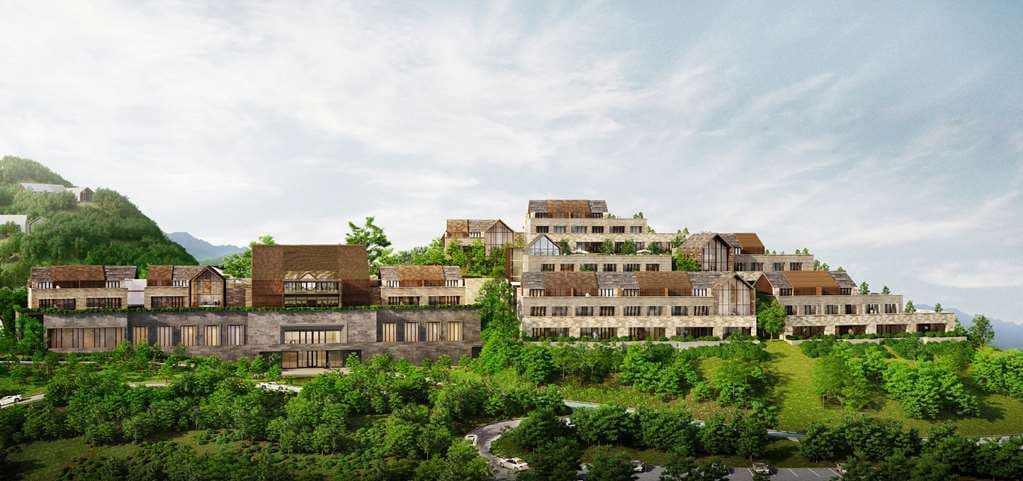
Explore All Hangzhou HotelsForget the whitewashed walls and gray tiles typical of Jiangnan’s traditional playbook. The Conrad Hangzhou Tonglu is a different beast entirely—a cascading geometric fortress of glass and stone that doesn't just sit on the Fuchun Mountains; it slices through them. It is a bold, brutalist retort to the organic softness of the wetland resorts. Inside, the vibe is less “family resort” and more “design sanctuary.” The lobby, crowned with a dramatic glass ceiling, commands a play of light that shifts from ethereal to moody as the fog rolls off Tianxi Lake. The villas are cavernous, capitalizing on that isolation with vast balconies where the only intruder is the morning mist. While the Precor-equipped gym is functional, the real draw is the outdoor infinity pool, which creates a seamless visual bridge with the lake water. Dining at Origine brings a rotisserie-fired warmth to the concrete chic, though Le is where the local terroir really sings—the seasonal river delicacies are mandatory. However, the service can suffer from the property’s seclusion; while the hardware is five-star, the concierge occasionally lacks the slick anticipation one expects from the Conrad badge. It is a minor friction in an otherwise seamless interaction between man-made rigor and wild nature. Verdict: A spectacular design triumph for those who prefer their nature served with sharp angles and silence.
“Skip the standard morning rush. Book a late afternoon session at Bask for their Signature Afternoon Tea; the lighting over the lake at 4 PM hits the lobby's glass panels perfectly for photos.”
Insider TipAvg. Nightly Rate
220USD
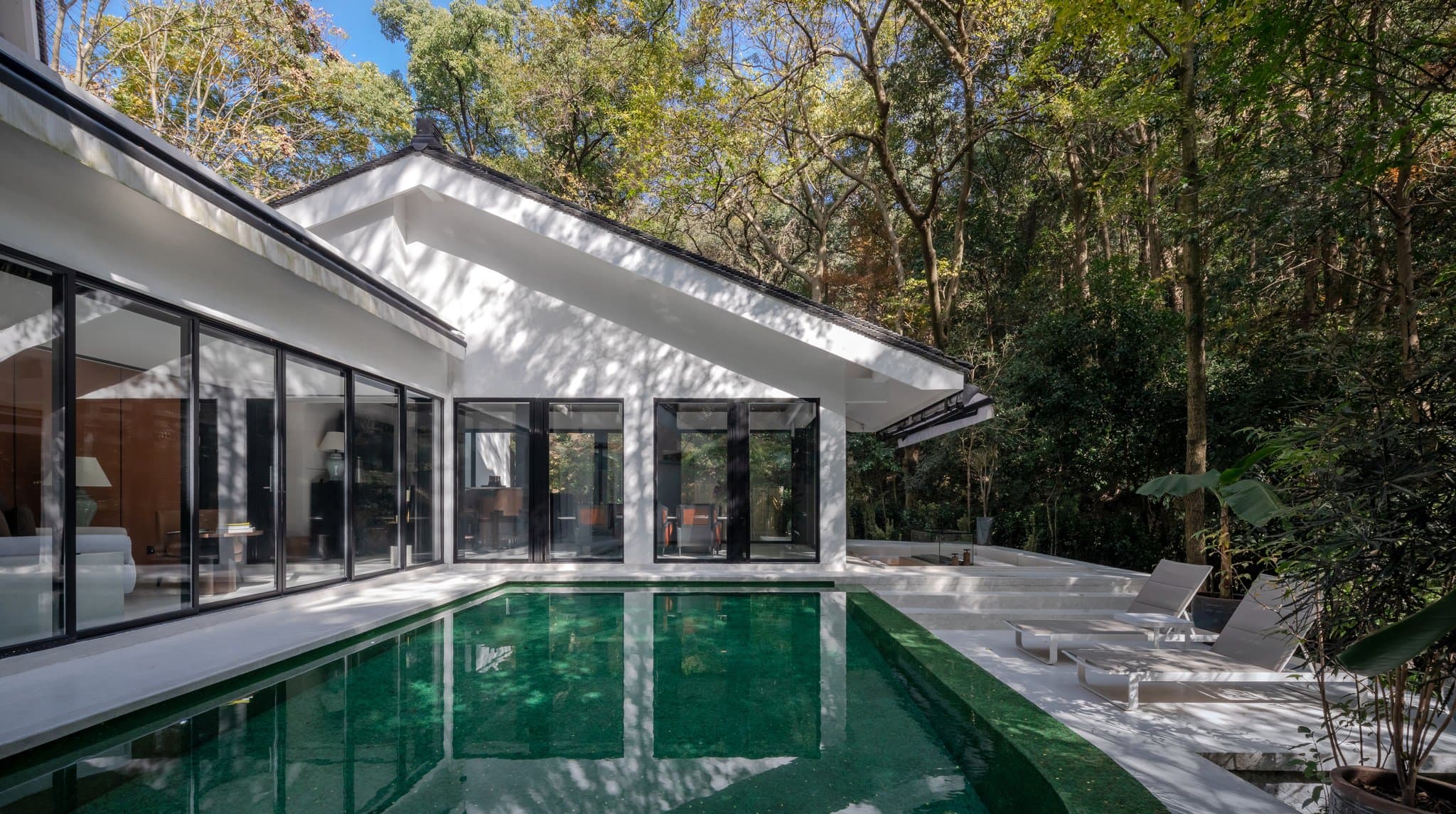
While the Xixi Wetlands draw crowds seeking curated nature, the true architectural silence lies south, sequestered in the camphor woods near the Six Harmonies Pagoda. Vallie is an exercise in reduction: just eight rooms carved from former tea farmers' dwellings. The design rejects the usual "East-meets-West" clichés for raw timber beams, micro-cement, and floor-to-ceiling glass that frames the forest like a live feed. The amenity game is serious—Dyson dryers and Le Labo toiletries are standard—but the real flex is the plumbing. Taps and soaking tubs run with water drawn directly from the legendary Hupao Spring. Dining at Shijiu Gastro Lounge (L’éclat 19) mirrors this hyper-local ethos; the Fennel Caviar Tart is sharp and structural, while the Yellow Wine Scampi delivers a sophisticated kick of Hangzhou fermentation. Service is executed by 24-hour butlers who understand that true luxury is never having to ask. Base rooms are intimate—40sqm feels tight at this price point—but for the antisocial aesthete, the solitude is worth the premium.
“Request the ground-floor Courtyard Room for the private outdoor stone pool; it is fed directly by thermal Hupao Spring water, perfect for a steam at dawn.”
Insider TipAvg. Nightly Rate
554USD
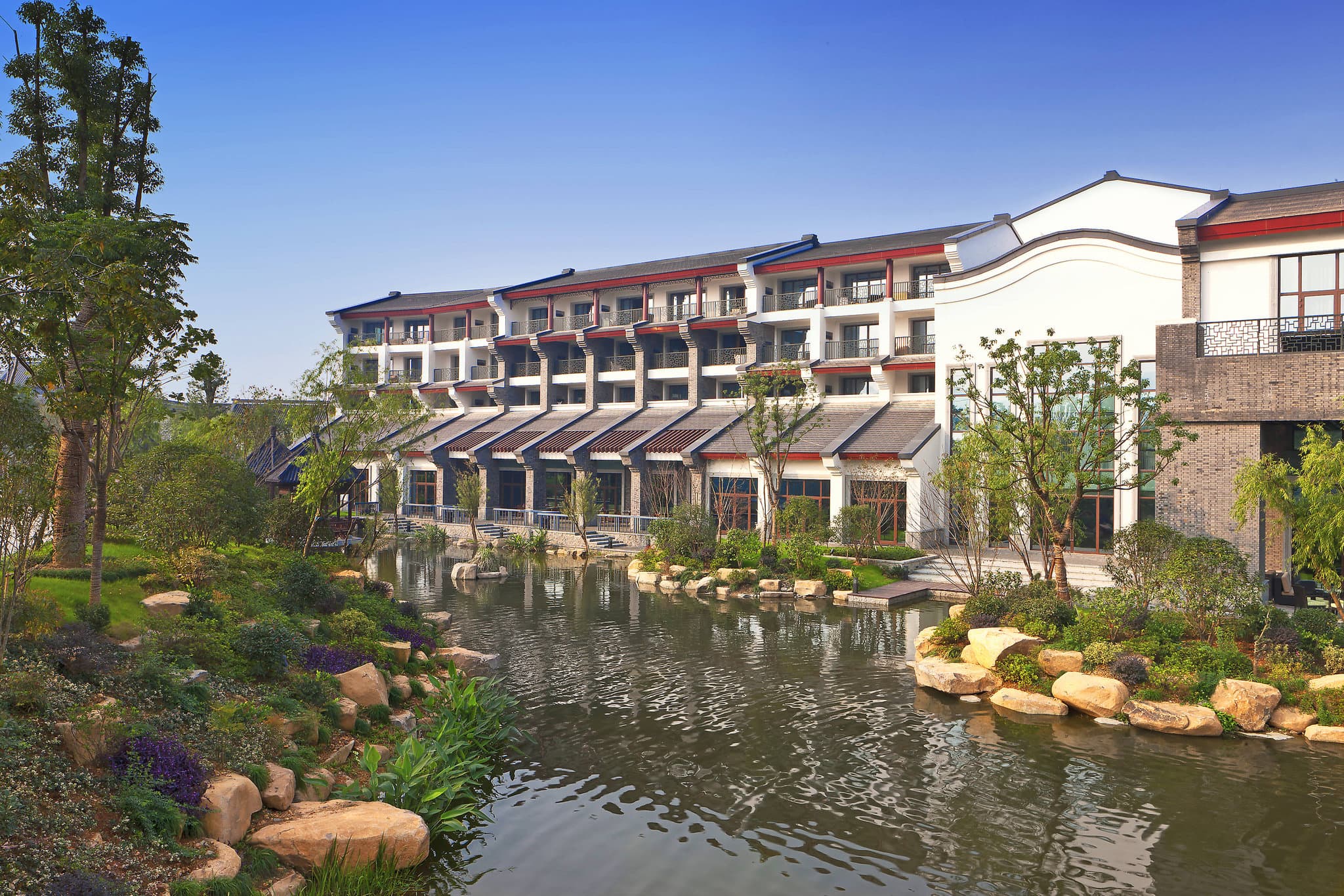
In a city obsessed with vertical ambition, the Sheraton Grand makes a compelling case for lying low. Avoiding the glass-monolith cliché, this resort adopts the vernacular of a Jiangnan water village—all grey-tiled eaves and whitewashed walls sprawling horizontally across the Xixi wetlands. It is a deliberate labyrinth; getting lost among the lantern-lit corridors and lush vegetation is part of the aesthetic transaction. The 45sqm base rooms, refreshed in 2023, feature French windows opening onto private balconies that actually frame nature rather than a parking lot. However, the hardware feels slightly analog in this digital capital; the absence of smart toilets is a curious omission for Alibaba’s hometown. Culinary redemption awaits at Yue, where the Sautéed Shrimp with Longjing Tea offers a masterclass in local terroir. While the Technogym-equipped fitness center impresses, the software occasionally buffers—frontline English proficiency varies, and breakfast at Feast can resemble a rugby scrum. Yet, sipping tea on your terrace as mist rolls off the water, you forgive the service hiccups. It’s not just a hotel; it’s a front-row seat to the ecosystem.
“Skip the chaotic 9 AM rush at Feast. Instead, order the 'Hangzhou Breakfast' to your room balcony to watch the wetland fog lift in privacy.”
Insider TipAvg. Nightly Rate
108USD
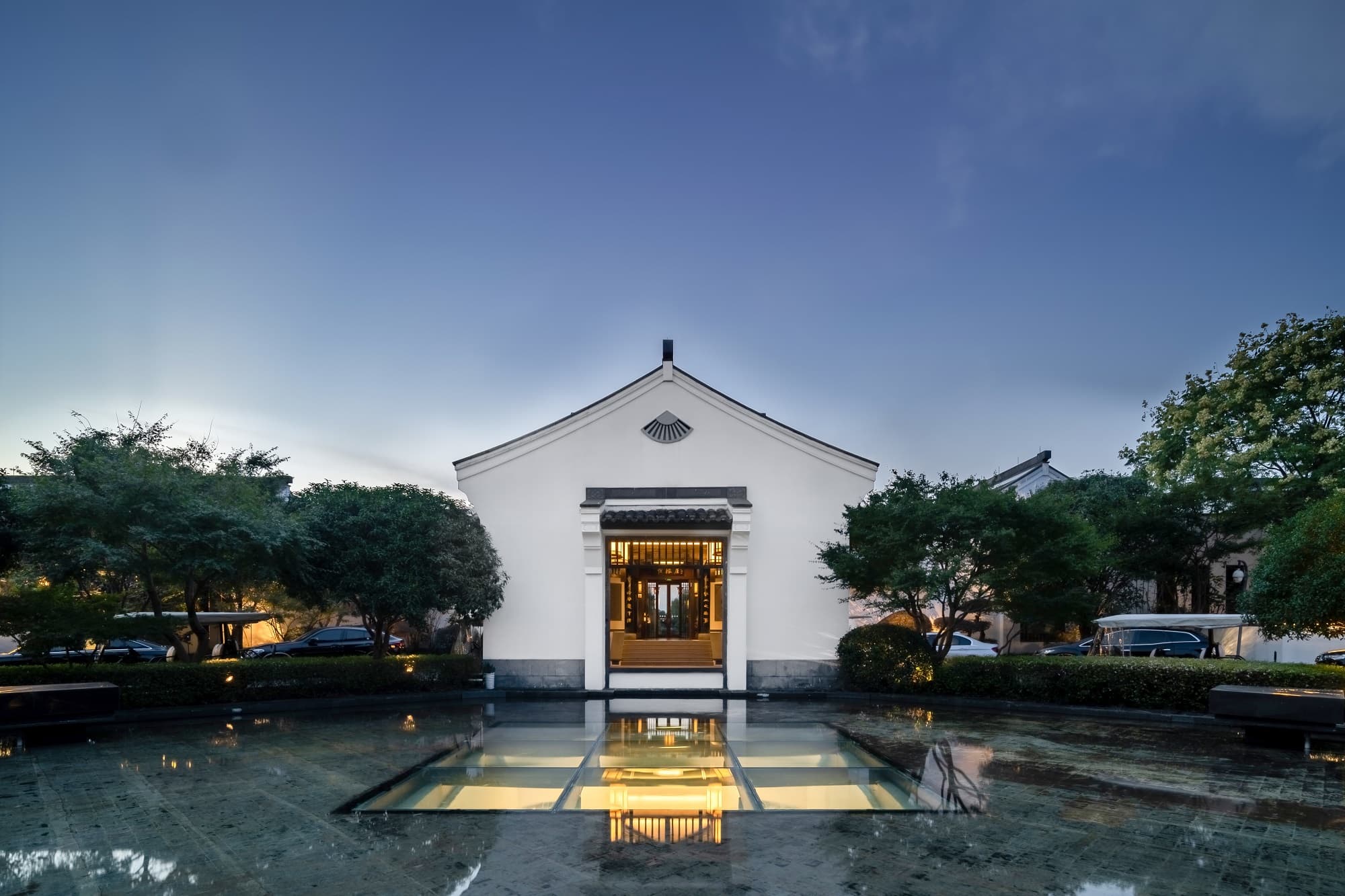
Forget the frenetic energy of the West Lake tourist trail. Banyan Tree Hangzhou is an exercise in atmospheric seclusion, a property that demands you downshift the moment you cross its stone-arch bridges. Designed as a traditional Jiangnan water village, this isn’t a pastiche; it’s a faithful architectural dialogue with the surrounding Xixi National Wetland Park. Gray-tiled roofs cut striking silhouettes against the mist, and the canals serve as the resort’s primary arteries. The accommodations are vast. Even the entry-level Water Terrace Suites clock in at a staggering 120 square meters, featuring high-beam ceilings and intricate silk brocades that evoke a nobleman’s residence. The lighting is intentionally dim and moody—romantic to some, cavernous to others. While a few older villas display a patina consistent with the humid wetland environment, the housekeeping team works tiresomely to maintain the illusion of timelessness. Service is the true anchor here; staff members like Viola and Bruno operate with a warmth that softens the property’s grand scale. Culinary pursuits center on Bai Yun, where the signature Dongpo Pork is rendered so tender it practically dissolves. Breakfast at Waterlight Court is an expansive spread of local and international plates, though be warned: dining prices here reflect the captive audience. The spa, utilizing Natura Bissé and Banyan Tree Essentials, remains a non-negotiable indulgence. This is not a base camp for city exploration—the 40-minute drive to West Lake sees to that. It is a sanctuary for those who prefer the sound of sculling oars to the roar of traffic. Verdict: A moody, atmospheric triumph for the reclusive traveler.
“Book a 'Love Boat' dining experience at dusk; the sculling boat ride through the private canals offers the best vantage point of the architecture without the walking.”
Insider TipAvg. Nightly Rate
512USD
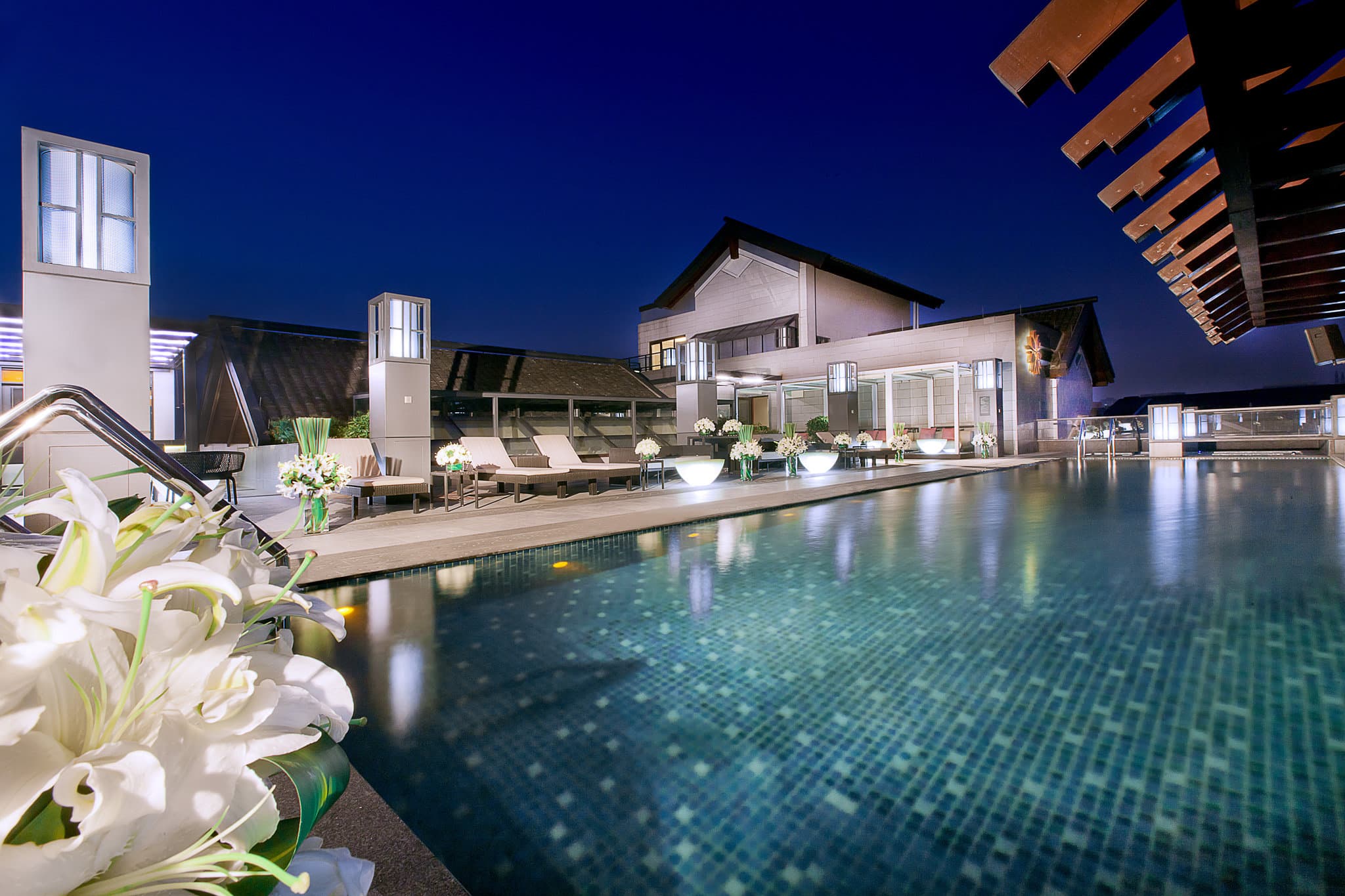
If the neighboring Banyan Tree is the grand, imperial matriarch of the Xixi Wetlands, Angsana is the cooler, younger sibling who knows where to find the best cocktails. Located within the Westbrook Resort complex, this property trades traditional solemnity for a sharper, contemporary interpretation of the Jiangnan water-village aesthetic. The architecture is decidedly local—grey tiles, white walls, wooden colonnades—but the vibe is refreshingly unpretentious. Inside, the rooms prioritize privacy with generous balconies that frame the misty wetland greenery. While the interiors are generally sleek, discerning eyes might spot a bit of patina in the showers, a reminder that the humid wetland climate takes no prisoners. Families are surprisingly well-catered for, with whimsical touches like Peppa Pig bedding available for the junior set, though the design crowd will likely appreciate the Life Fitness-equipped gym more. Dining at 'Pavilion' is non-negotiable; their Hainanese Chicken Rice and signature Angsana Fried Rice are arguably the best comfort food in the district. For sundowners, the Lunar Bar serves a mean Premium Longjing Tea cocktail. The onsite outdoor pool is seasonal and admittedly petite—think 'social dip' rather than 'Olympic laps'—but the real architectural hack here is the access. Guests hold the golden ticket to the Banyan Tree’s award-winning spa and massive indoor pool just steps away. It’s the ultimate insider move: Angsana style with Banyan infrastructure.
“Skip the small rooftop dip and walk 100m to the Banyan Tree to use their cavernous 25m indoor heated pool and spa facilities—it's included in your stay.”
Insider TipAvg. Nightly Rate
95USD
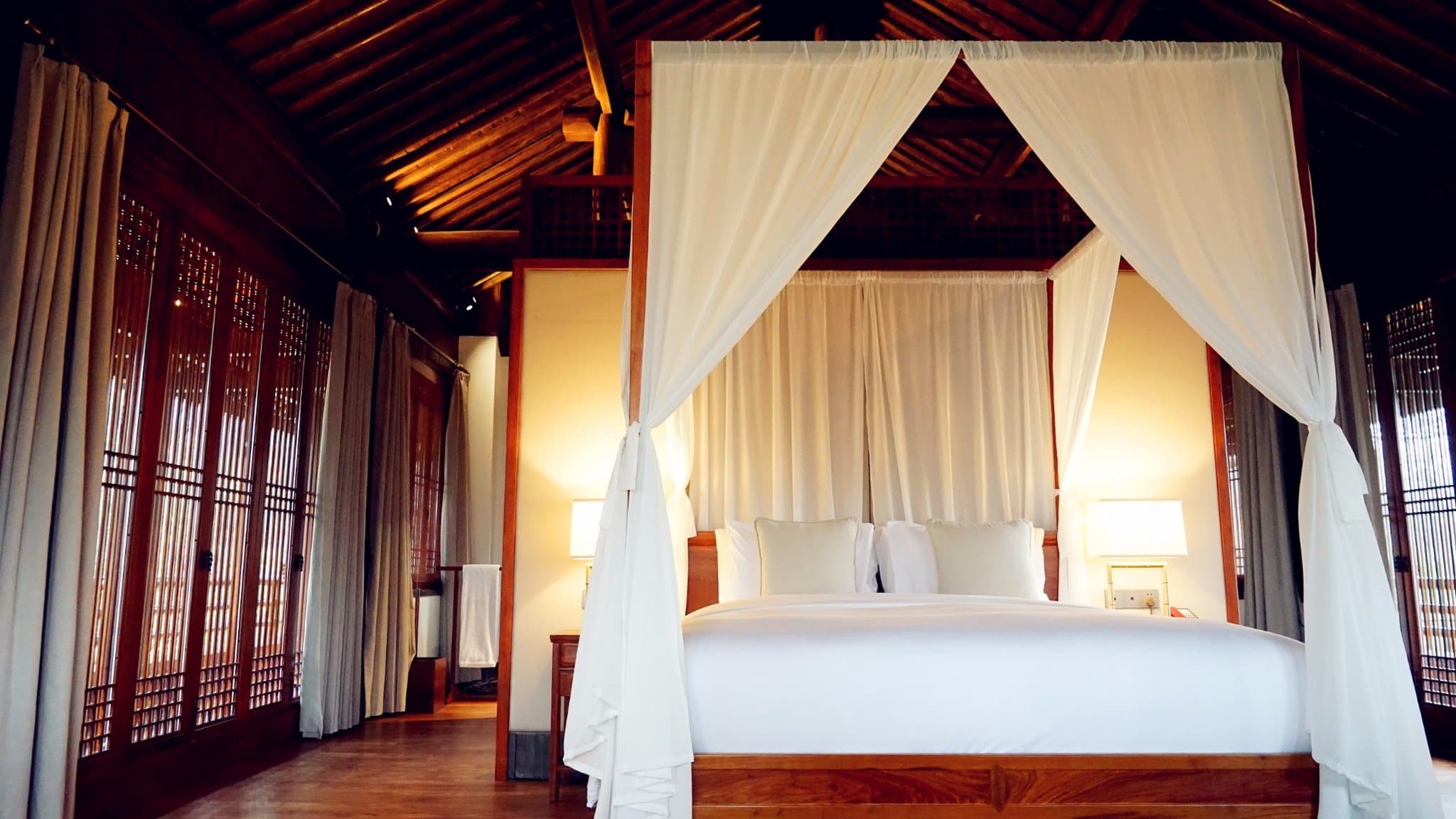
In a city defined by the West Lake’s poetic mist, Seven Villas manages to out-quiet the competition. Tucked into the Maojiabu forest—a greener, wilder spiritual cousin to the Xixi Wetlands—this Relais & Châteaux sanctuary feels less like a hotel and more like a wealthy scholar’s secret hermitage. With just nine distinct rooms and villas scattered across the canopy, the exclusivity is palpable; you aren't just checking in, you're disappearing. The architecture practices the art of vanishing. Slate-tiled roofs and timber frames dissolve into century-old camphor trees and bamboo groves. The villas feature floor-to-ceiling glass that turns the forest into wallpaper, though this transparency means privacy in ground-level suites requires vigilant use of the electric blinds. Inside, the aesthetic is Zen-minimalist but comfortably expensive, featuring heated floors, Dyson hair dryers, and herbal bath amenities that smell like the damp earth outside. While the rooms are sanctuaries, the dining is the sermon. The property houses three heavyweight restaurants, a rarity for such a small footprint. Jie Xiang Lou, holding a Michelin star and two Black Pearl diamonds, draws gourmands from Shanghai for its Veggie Beggar’s Purse and Golden Medallion Wagyu. It’s a destination dining venue where guests compete with locals for a table. The absence of a pool or gym might deter the fitness-obsessed, but the Xiaoqing Spa, with its TCM-inspired rituals and Aromatherapy Associates products, offers a far deeper form of recovery. **Verdict**: A gastronomic temple for the antisocial hedonist who prefers ancient trees to infinity pools.
“Book a table at Jie Xiang Lou immediately upon confirming your room; even hotel guests are not guaranteed a seat without a reservation.”
Insider TipAvg. Nightly Rate
625USD
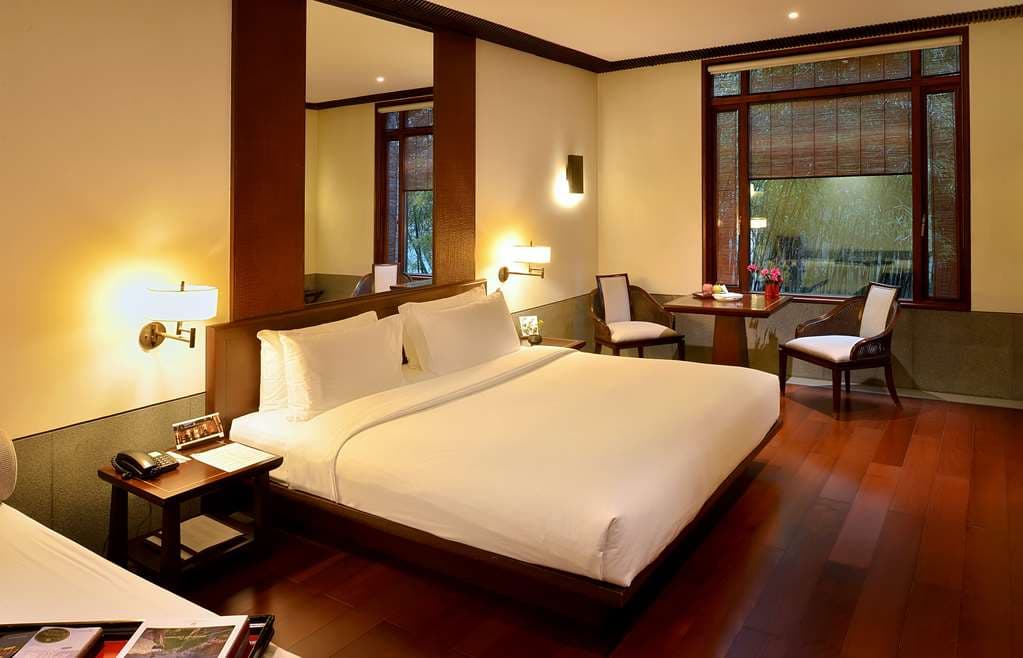
If the Xixi Wetlands are Hangzhou’s ecological lungs, Fuchun Resort is its meditative soul. A forty-minute drive from the city center, this Jean-Michel Gathy-designed retreat in Fuyang doesn’t just sit on the land; it hallucinates the 14th-century scroll 'Dwelling in the Fuchun Mountains' into physical form. The architecture is a masterclass in symmetry and silence—think soaring timber beams, grey brick walls, and corridors that frame the tea plantations like cinema screens. Inside, the hardware shows its age (don’t expect iPad controls or the latest USB-C ports), but that’s almost the point. You’re here for the tactile luxury: the heavy slide of a wooden lattice door and the scent of Mingqian Longjing tea drifting from the Lake Lounge. Dining is serious business at Asian Corner, where the Signature Flavor Durian Crab challenges purists and rewards the brave. The pièce de résistance is the indoor pool—a cathedral of black mosaic tiles and lacquered columns that makes every swim feel like a ritual. Service is telepathic, a rarity that justifies the steep price tag even when the room tech feels circa 2010. It’s not modern; it’s timeless.
“Skip the standard garden rooms. Request a Lake View Suite on the second floor of the main pavilion for unobstructed views of the mist rising off the water at dawn.”
Insider TipAvg. Nightly Rate
244USD
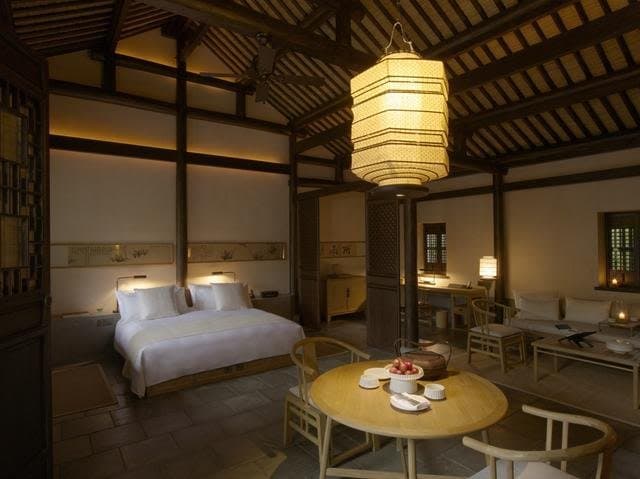
To check into Amanfayun is to resign from the 21st century—at least until you hit the underfloor heating. Located on the fringes of Hangzhou’s Lingyin Temple, this isn’t a resort in the conventional sense; it is a restored Tang Dynasty village where the 'lobby' is a maze of stone pathways often shared with saffron-robed monks. The genius of the late Jaya Ibrahim’s design lies in its confidence in darkness. There are no crystal chandeliers here, only dim lanterns that force your eyes to adjust to the shadows of bamboo groves and clay-tiled roofs. The rooms are exercises in textural asceticism: elm wood furniture, unvarnished pillars, and stark white linens that feel almost sinful against the rustic shell. It’s not for everyone—the intentional dimness can feel cavernous, and the proximity to wild nature means the occasional insect visitor. But the trade-off is the Bath House, where circular wooden soaking tubs offer a steam-soaked rebuttal to the damp Hangzhou chill. Dining is equally site-specific. Skip the western fare and head to Lan Xuan (Hangzhou House) for the double-boiled deboned chicken with termite mushrooms—an earthy, umami-rich broth that mirrors the damp scent of the surrounding forest. Service is typically Aman: invisible until you need it, though the public nature of the main Fayun Pathway means your 'private' village walk often includes curious day-trippers. Verdict: The ultimate monastic cosplay for the ultra-wealthy.
“Request a suite on the upper hill (specifically units 16–18) to avoid the gaze of public hikers walking the main Fayun Pathway below.”
Insider TipAvg. Nightly Rate
716USD