No. 01
NanjingNanjing252 verified reviews
9
.2
Bitvoya Edit
Layering imagery, place, and detail before the page opens.
Nanjing, the former capital, wears its history in the dignified architecture of the Republic Era (1912-1949). This curated collection explores the city's "Golden Age," where the romance of the past meets modern luxury. From the plane tree-lined avenues of the Yihe Road district to the bustling banks of the Qinhuai River, we highlight properties that serve as living museums.
Stay within the yellow walls of restored heritage villas at Yihe Mansions, or experience the grandeur of the Yihe Yangtze Hotel. Whether tucked away in the serene Jiezi Garden or overlooking the Purple Mountain, these hotels offer an immersive journey into the elegance of old Nanjing.
Nanjing stands alone in China as the custodian of the Republic Era (Minguo) heritage. Unlike other cities that have rapidly modernized over their history, Nanjing has meticulously preserved the "Yellow Wall" mansions and plane-tree-lined avenues that defined the 1920s and 30s. Choosing a hotel from our Republic Era Revivals collection is not just about booking a room; it is about stepping into a narrative of elegance, diplomacy, and romance. Hotels like the Yihe Mansions and Yihe Yangtze Hotel offer a rare opportunity to sleep within protected heritage sites, blending the architectural grandeur of the past with contemporary luxury standards.
Guests booking these revivals can expect a high degree of cultural immersion. Properties like Nanjing Yihe Jiezi Garden Hotel focus on the aesthetics of traditional Chinese gardens fused with Republic-era interiors. Expect butler services that mimic the hospitality of old noble houses, interiors featuring dark wood and velvet, and culinary experiences that revive the "Huaiyang" cuisine favored by dignitaries of the golden age. Even modern builds like the Kempinski Hotel Nanjing and Parkview Dingshan Hotel incorporate these design elements, offering a seamless bridge between the grandeur of history and modern comfort.
The Yihe Mansions is widely considered the most authentic, consisting of restored heritage villas from the 1920s located in the historic Yihe Road district.
Yes. Yihe Mansions is near the Presidential Palace, while Yebo Qinhuai SSAW Hotel and Yihe Water Street Hidden House are located directly on the Qinhuai River scenic belt.
These hotels feature 'Minguo' style architecture, characterized by yellow exterior walls, French windows, plane trees, and interiors blending Art Deco with traditional Chinese elements.
Explore our complete curated list of luxury accommodations, from boutique hideaways to grand dames.
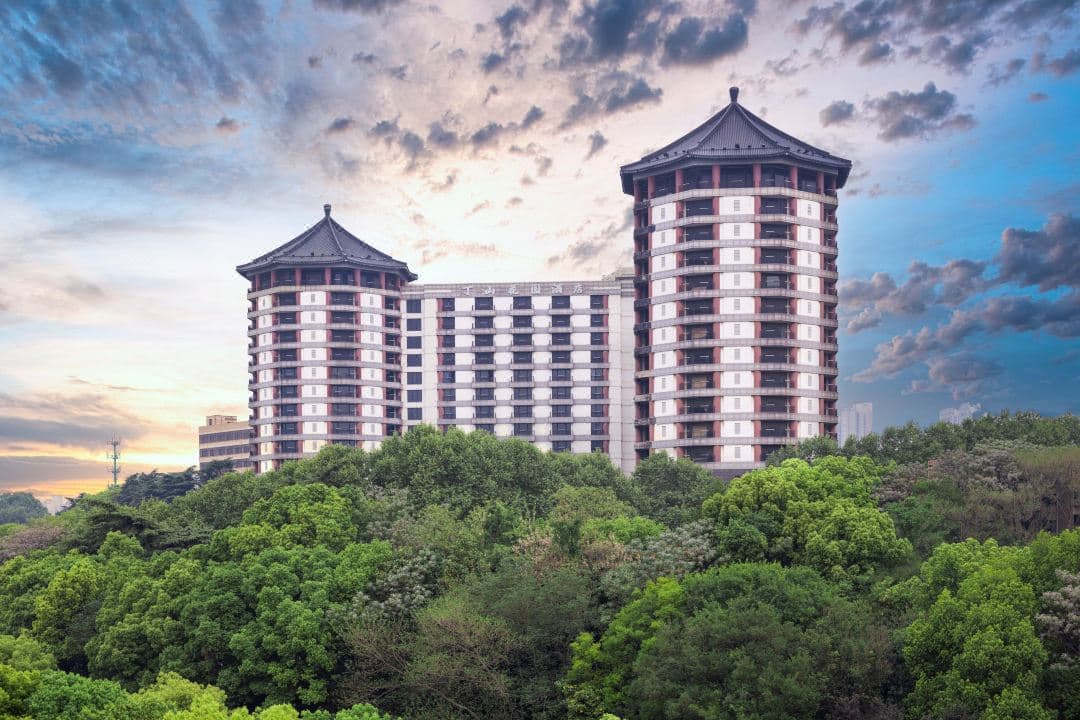
Explore All Nanjing HotelsWhile Nanjing’s city center races toward neon modernity, the Parkview Dingshan Hotel remains a stubborn, stately bastion of 'Red Capital' prestige. Perched on Dingshan Hill, this property doesn’t just host guests; it marshals them with the quiet authority of a 1990s diplomatic residence. The aesthetic is unapologetically cinematic—think wide, echoey corridors and heavy wood paneling that whispers of state secrets and black limousines. Check-in feels less like a transaction and more like an induction. The base rooms are shockingly vast, clocking in at over 50 square meters, dwarfing the shoeboxes of newer competitors. While the hardware shows a charming patina—the carpets have seen history, and the heating requires patience—the trade-off is a rare, palpable soul. However, you are here to eat. The local adage “Shi zai Dingshan” (Eating in Dingshan) exists for a reason. At Ming Yuen, the Huaiyang kitchen operates with military precision. The Signature Dingshan Salted Duck is briny perfection, but the Dingxiang Pork Ribs are the true heavyweights, demanding to be eaten with fingers. Service is old-school: white-gloved, intuitive, and devoid of scripted pleasantries. This isn’t a hotel for the tech-obsessed; it’s a sanctuary for those who prefer their luxury with a side of history.
“Skip the modern annexes. Demand a room in the Main Building with a balcony facing the Yuejiang Tower; the sunset views over the Yangtze are worth the slightly retro plumbing.”
Insider TipAvg. Nightly Rate
55USD

If you want to understand Nanjing’s soul, skip the glass-and-steel skyscrapers and head straight for the Zhongshan Wharf. Here, The Yihe Yangtze Hotel operates not just as accommodation, but as a meticulously curated time capsule. Housed in a 1914 French château-style manor constructed with repurposed Ming Dynasty city wall bricks, the property feels less like a hotel and more like a Silent Era film set awaiting its lead actors. The vibe is decidedly 'Old Money'—think North American pine staircases, moody lighting that eschews harsh overhead beams, and a pervasive silence that feels expensive. Inside the rooms, the experience is intimate and textured. You won’t find generic luxury here; instead, expect louvered windows, Marshall speakers, and capsule coffee machines that bridge the gap between 1930s romance and modern necessity. Dining is equally atmospheric: Le Vermeil serves authentic French specialties under the guidance of Chef Sylvain, while Wan Guo Chun revives the 'Yangtze Boat Banquet,' a culinary nod to the region's riverine heritage. Service is led by personal butlers who double as historians, eager to walk you through the property’s storied past. It lacks a pool or gym, but honestly, sweating on a treadmill feels pedestrian here. This is a place to wear silk, sip cognac, and ghost the modern world.
“Request a room with a private terrace for sunset views over the Yangtze, or ask your butler to arrange the Ming City Wall brick rubbing experience—a hands-on dive into the building's literal foundation.”
Insider TipAvg. Nightly Rate
115USD

While the neon-lit chaos of the Confucius Temple (Fuzimiao) throbs just meters away, Yihe Water Street Hidden House performs a vanishing act, slipping its guests behind whitewashed walls into a silence so profound it feels like a different century. This isn't a hotel for those seeking a grand lobby; it’s a collection of restored Republic-era residences tucked directly against the Ming City Wall, offering a masterclass in atmospheric restraint. The rooms reject standard hotel symmetry for dark wood lattice windows that frame the weeping willows of the Qinhuai River. Butler service replaces the check-in counter, delivering hot tea and cool towels before you can even ask for the Wi-Fi. Dining is a serious affair at Wan Guo Chun, where the chef’s take on Nanjing Salted Duck and melt-in-the-mouth Braised Pork rivals any street-side legend without the queue. It is a moody, cinematic property that trades sprawling amenities for history you can actually sleep in. Verdict: The ultimate hideout for the traveler who prefers their history served with silence and exceptional tea.
“Skip the crowded public ferries. Book the hotel’s private sculling boat for a floating breakfast on the Qinhuai River—best enjoyed at blue hour before the tourists descend.”
Insider TipAvg. Nightly Rate
140USD

While the masses elbow through the snack stalls of Laomendong, a nondescript gray-brick wall hides one of Nanjing’s most intellectual retreats. The Nanjing Yihe Jiezi Garden Hotel isn't just near the historic Mustard Seed Garden (Jiezi Yuan)—it is the garden. Or rather, it’s a masterfully reconstructed extension of the Qing Dynasty estate where the famed 'Manual of the Mustard Seed Garden' painting guide was first woodblock-printed in the 17th century. Here, the 'Yihe' brand’s penchant for Republic-era restoration shines. The architecture is pure Jiangnan: flying eaves, intricate wood carvings, and whitewashed walls that glow under the moonlight. Inside, the vibe shifts from historical drama to modern restraint. Rooms are hushed sanctuaries, though a word of warning: the entry-level categories can feel claustrophobic, often facing blank walls. You are here for the atmosphere, not the expansive vistas, unless you secure a garden-facing suite. The culinary program is the property's heavy hitter. The on-site restaurant, Wan Guo Chun (萬國春), has earned a nod in the 2025 Michelin Guide for its precise Huaiyang execution—don't leave without trying the Squirrel-shaped Mandarin Fish, a dish that balances sweet and sour with surgical precision. While the breakfast buffet remains perplexingly basic for a hotel of this caliber (think sparse pastries and lukewarm congee), the dinner service and the immersive, opera-soundtracked garden strolls more than compensate. It is a place to read, sip tea, and pretend you are a literati in exile.
“The entry-level rooms often face a solid brick wall. Demand a 'Garden View' upgrade immediately upon booking, or risk staring at gray masonry for your entire stay.”
Insider TipAvg. Nightly Rate
71USD
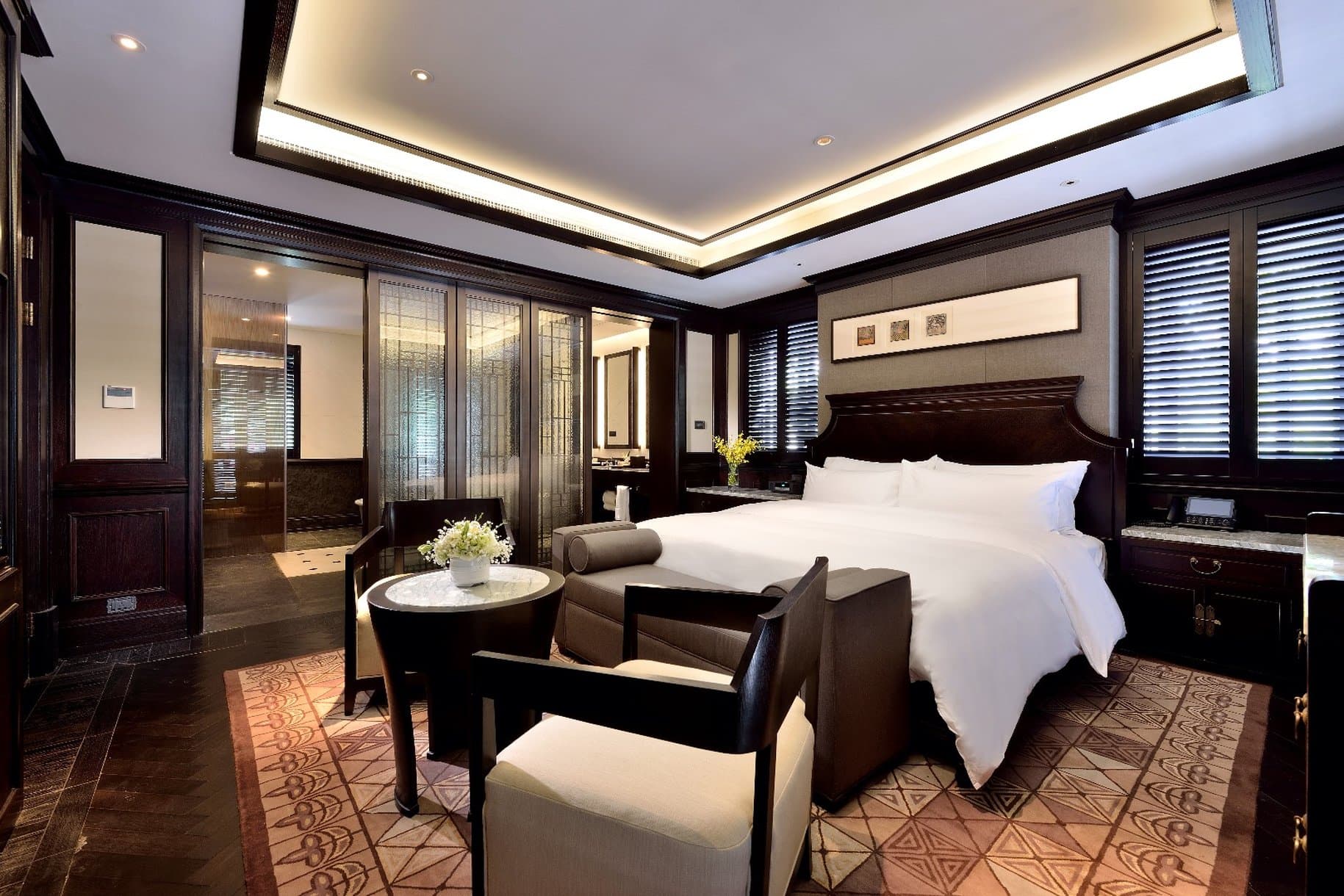
If walls could talk, the yellow-washed brickwork of The Yihe Mansions would whisper state secrets from 1927. Located in the legendary Yihe Road district—formerly the Beverly Hills of the Republic of China—this collection of 26 heritage villas isn't a hotel built to mimic history; it is history, painstakingly rescued from decay. The atmosphere is less hotel lobby, more private diplomatic residence. Inside, the design eschews generic beige for dark woods, intricate Persian rugs, and Art Deco lamps that cast a moody, cinematic glow—perfect for channeling your inner Tony Leung, though admittedly challenging for late-night spreadsheet work. The immersion continues at Le Siècle, where the kitchen delivers a poaching masterclass with Canadian Lobster and Aussie Wagyu, though the local Huaiyang flavors at Meng Tong Mansion—specifically the hand-peeled river shrimp with Gorgon fruit—offer a stronger sense of place. While the absence of a pool might deter the aquatic-minded, the 24-hour butler service compensates with frightening efficiency, anticipating needs before you dial 0. It’s a study in preservation: creaky floorboards, Aromatherapy Associates spa treatments, and an undeniable air of mystery.
“Ask your butler for the private key to the in-house museum (Villa 3), which was once the residence of General Xue Yue, to see the original architectural blueprints.”
Insider TipAvg. Nightly Rate
115USD

If Jay Gatsby had traded West Egg for 1930s Nanjing, this is where he would have summered. The approach alone sets a cinematic tone: a winding drive up Wutong Avenue, canopied by centennial plane trees that shield the estate from the clamor of the modern capital. Inside, design firm CCD has masterfully channeled the 'Minguo' aesthetic—not through kitsch, but through a moody interplay of black wood, brass, and royal blue lattice screens that dominate the 'Time Tunnel' corridor. The hardware is defiantly palatial. Even entry-level keys unlock 58-square-meter sanctuaries, featuring expansive balconies that overlook the manicured fairways of the Gary Player-designed golf course. Inside, the marble-clad bathrooms boast Dyson hair dryers and deep soaking tubs, though the lighting controls can require a degree in engineering to master. Culinary excellence is singular here: bypass the inconsistent western fare at the all-day dining venue and secure a table at Zijin Court. Their Nanjing Salted Duck is a masterwork of brine and texture, served with the kind of precise, silent service that old-world dignitaries expect. It is an isolated bubble of aristocratic leisure—you will need a car to leave, but with the silence of the Purple Mountain forests at night, you likely won’t want to.
“Request a room in the East Wing (even numbers) for direct sunrise views over the 9th hole. Also, the 'Golf Afternoon Tea' is best taken on the Lobby Lounge terrace at 4 PM for the golden hour light.”
Insider TipAvg. Nightly Rate
100USD
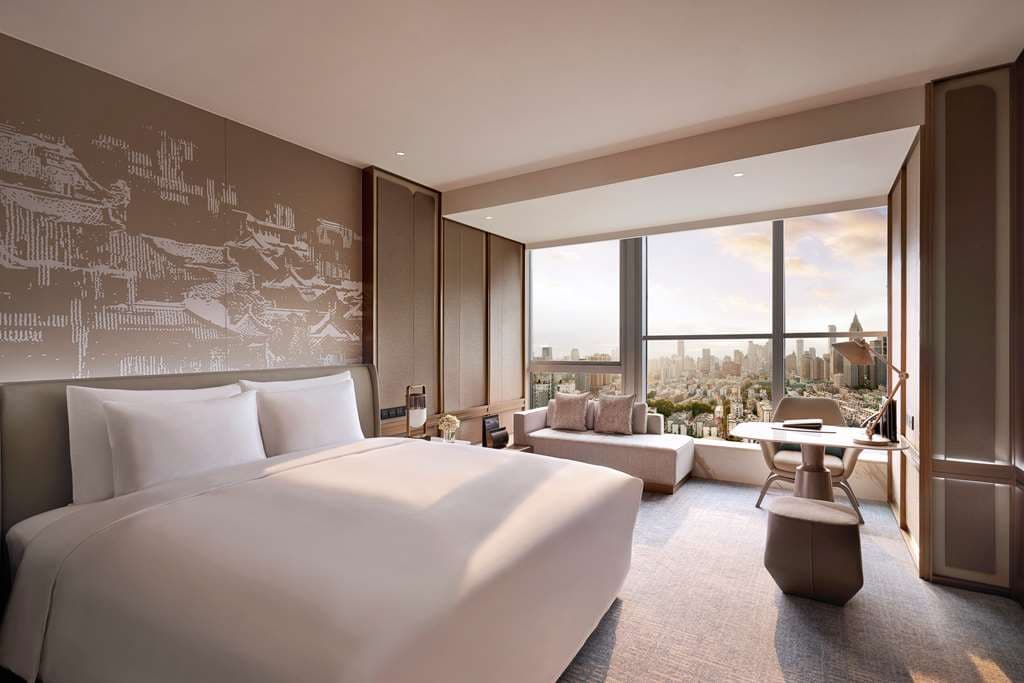
Nanjing is a city of ghosts and grandeur, nowhere more palpable than the 'Republic of China' architectural district. The Kempinski Hotel Nanjing doesn’t just sit near this history; it curates it. The lobby is a masterclass in shadow and light, where massive double-layered metal screens filter the sun like ancient palace lattices, creating a museum-like hush that instantly lowers your heart rate. Base rooms are a generous 45sqm, dressed in calming greys and outfitted with the kind of intuitive hardware (fast USB ports, silent climate control) that makes a business hotel feel like a sanctuary. But the real surprise is the culinary duality: *Frieda* serves a Schweinshaxe (pork knuckle) so authentic it rivals Munich’s best, housed in the restored 'Wangzilou' villa—a Republic-era heritage site on the grounds. Conversely, *Jin Kai Lou* delivers a Braised Pork Ball that dissolves on the tongue, honoring the local Huaiyang tradition. Service is polished, though the 10-minute walk to the nearest metro is the only slight friction point. For those seeking a narrative-rich stay removed from the tourist crush of Confucius Temple, this is the Capital’s modern classic.
“Request a room facing the 'Wangzilou' villa for a view that bridges the 1920s and 2020s. For a nightcap, the Fang Mo Lounge’s 'City Gate' entrance sets a dramatic, moody tone perfect for whiskey.”
Insider TipAvg. Nightly Rate
105USD
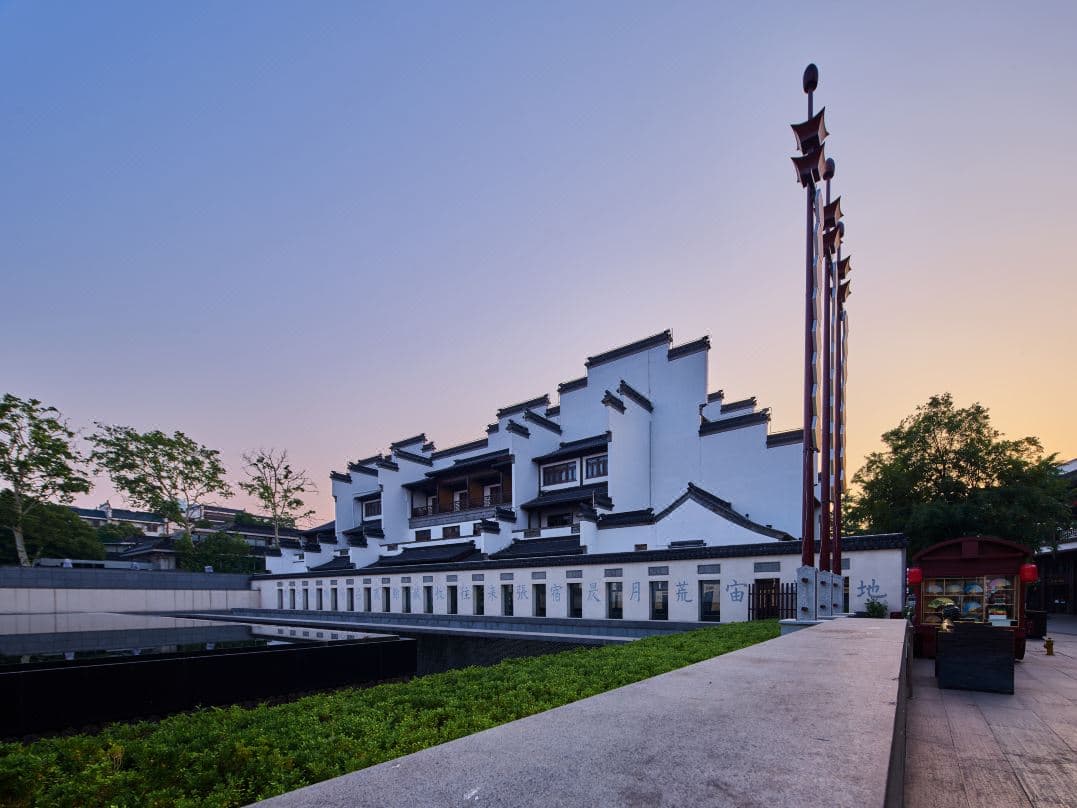
If Nanjing’s 1930s golden age was a feature film, the Yebo Qinhuai SSAW Hotel·Grand Theater would be its most lavish set piece. Situated in the thrumming heart of the Confucius Temple (Fuzimiao) district, this independent boutique property doesn’t just nod to history; it stages a full-blown revival. The design is unapologetically theatrical—vintage movie props and heavy velvet curtains in the lobby set a mood that is less 'hotel check-in' and more 'backstage pass.' The 'Republic Era Movie' rooms are the real draw, offering a sultry, low-lit ambiance that feels ripped from a Wong Kar-wai script. While the street-facing windows invite the neon glow of the bustling pedestrian strip (bring earplugs if you’re a light sleeper), the interiors remain a cocoon of retro-chic, complete with complimentary minibars and a qipao dress-up experience for those inclined to roleplay. Dining at Xi Yan is a masterclass in local flavor, where the seasonal crayfish and signature crispy pork demand attention. Breakfast is equally thoughtful, with guests raving about the salted duck egg paired with plain congee—a humble yet perfect start. Service here has a scripted warmth; the staff often send guests off with a 'snack bag' for the road. It’s a sophisticated, if slightly noisy, second act for the city's historic quarter.
“Book a 'Republic Era Movie Deluxe' room and ask for the 6th floor to access the rooftop terrace—it’s the only spot with a serene, bird's-eye view of the Confucius Temple rooflines.”
Insider TipAvg. Nightly Rate
80USD
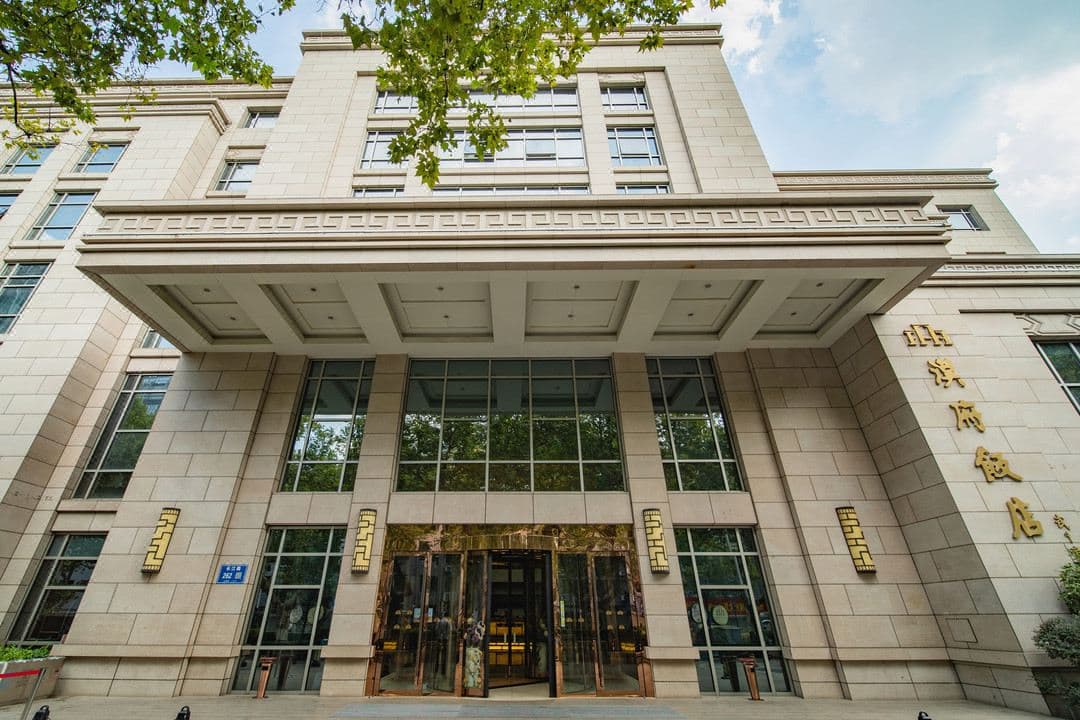
Forget the glass-and-steel skyscrapers dominating Nanjing’s skyline; the Hanfu Hotel is an exercise in atmospheric time travel. Situated on Changjiang Road, shaded by plane trees that feel as historic as the 1912 regime, this property sits cheek-by-jowl with the Presidential Palace. The vibe here is strictly "State Guest"—think hushed, carpeted corridors, heavy velvet drapes, and a lobby that prioritizes dignity over design trends. It is not flawless. The entry-level rooms are a tight 24 square meters, and you might spot peeling wallpaper that speaks to its aging infrastructure. However, the trade-off is the central courtyard: a silence so profound you’ll forget you’re in the city center. A bizarre but welcome perk is the 50-meter heated indoor pool—an Olympic-standard facility rarely seen in hotels of this vintage. Dining is non-negotiable. Skip the international buffet and head straight to the Chinese restaurant for authentic Huaiyang fare. The Hongyun Roast Suckling Pig is theatrically crisp, and the Salted Duck rivals any street vendor. It’s a fading dame, but for history purists, it is the only address that matters.
“Request a room facing the central courtyard (Inner Building) to completely block out the Changjiang Road traffic noise.”
Insider TipAvg. Nightly Rate
70USD