No. 01
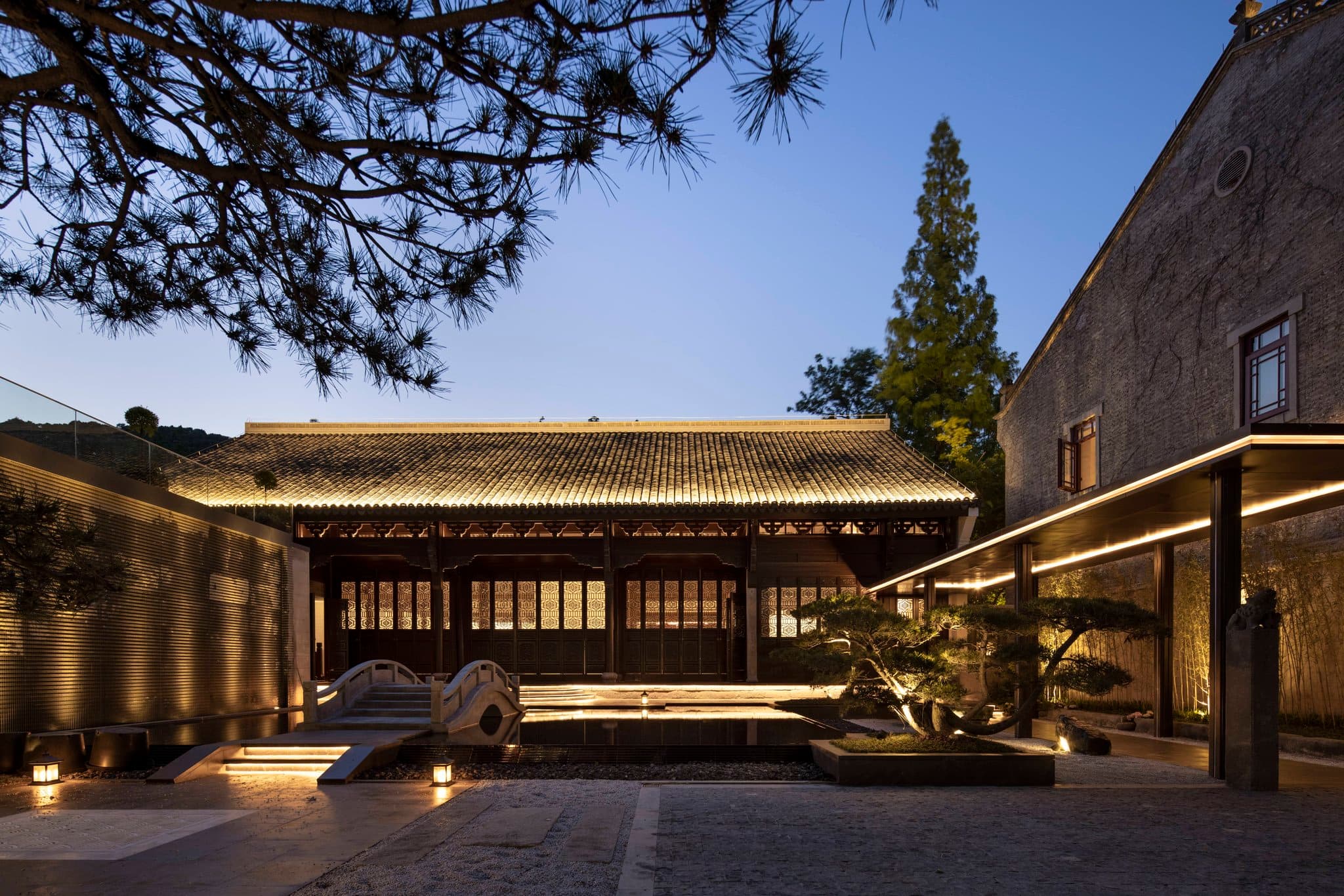
60 Beishan Street Hangzhou ChinaHangzhou24 verified reviews
9
.8
Bitvoya Edit
Layering imagery, place, and detail before the page opens.
Hangzhou, often immortalized by poets and emperors, offers more than just scenic vistas of West Lake; it harbors a treasure trove of architectural heritage waiting to be rediscovered. In our curated collection, 'Past Perfect,' we delve into the city's most exquisite restored properties, where Republican-era glamour meets Song Dynasty aesthetics. From the spiritual solitude of Amanfayun, nestled in the bamboo forests near Lingyin Temple, to the Shikumen-style elegance of Chaptel Hangzhou near the lake, these venues aren't just hotels—they are living museums. Explore the meticulous restoration of Qiushui Villa and the water-town serenity of Banyan Tree Hangzhou in the Xixi Wetlands. These hidden courtyards invite discerning travelers to step back in time without sacrificing modern luxury.
Hangzhou serves as the ultimate canvas for the 'Past Perfect' collection because its history is not just preserved in museums, but lived in its architecture. The city's unique position as a former imperial capital and a retreat for scholars has left a legacy of exquisite villas and tea villages. Staying in properties like Tsingpu Hangzhou Retreat or Seven Villas Hangzhou allows travelers to engage with the local culture intimately. These restored mansions offer a rare blend of authenticity and comfort, featuring original brickwork, wooden beams, and traditional courtyards equipped with modern floor heating and butler services. It is an immersion into the 'Jiangnan' lifestyle of leisure and refinement.
Guests choosing these restored ancient mansions should expect a slower pace of life. The experience is centered around the courtyard—'Tian Jing'—where one can sip Longjing tea while listening to the rain. Unlike standard luxury hotels, room layouts in places like Chaptel Hangzhou may be unique and non-uniform, dictated by the historic structure. Expect high ceilings, intricate wood carvings, and a deep sense of privacy. Service is often highly personalized, with many properties offering cultural activities like calligraphy, tea ceremonies, or private tours of the surrounding historic districts.
Spring (March-May) for the greenery and tea harvest, or Autumn (September-November) for the sweet osmanthus scent and cool weather. These seasons are perfect for enjoying the open courtyards.
Yes, properties like Banyan Tree Hangzhou and Amanfayun are family-friendly, offering spacious villas and cultural activities. However, some smaller boutique villas like Qiushui Villa prioritize a quieter, adult-oriented atmosphere.
Extremely authentic. Hotels like Amanfayun and Chaptel Hangzhou adhered to strict preservation guidelines, retaining original layouts, bricks, and wood carvings while retrofitting modern plumbing and heating invisibly.
Explore our complete curated list of luxury accommodations, from boutique hideaways to grand dames.
Explore All Hangzhou HotelsIf walls could talk, these would whisper of illicit romance and tragic ambition. Originally built in the 1930s by newspaper magnate Shi Liangcai for his muse, Shen Qiushui, this villa is less a hotel and more a cinematic set piece on the edge of West Lake. The transition from the frenetic Beishan Road is jarringly swift: a facial recognition gate—occasionally temperamental—swings open to reveal a silent, museum-grade sanctuary of terrazzo floors and velvet drapery. There are only a handful of rooms, each a moody study in Republican-era nostalgia, though updated with 21st-century necessities like Dyson dryers and Le Labo amenities. The centerpiece is the semi-open infinity pool; with its retractable glass roof, it allows you to float in a controlled climate while visually merging with the misty lake outside. Dining is a tale of two eras: the adjacent '1913 Restaurant' serves a fearless fried crab with stinky tofu that challenges delicate palates, while the 'Guyun French Restaurant' offers a more predictable, albeit refined, Western high tea. Service is hyper-personalized—butlers don’t just greet you; they anticipate your itinerary. It’s not flawless, but it is deeply, seductively atmospheric.
“Request the 'Wenqin Pavilion' suite for the most authentic experience—it recreates the living quarters of Shen Qiushui herself and features a private balcony with unrivaled views of the Broken Bridge.”
Insider TipAvg. Nightly Rate
1450USD
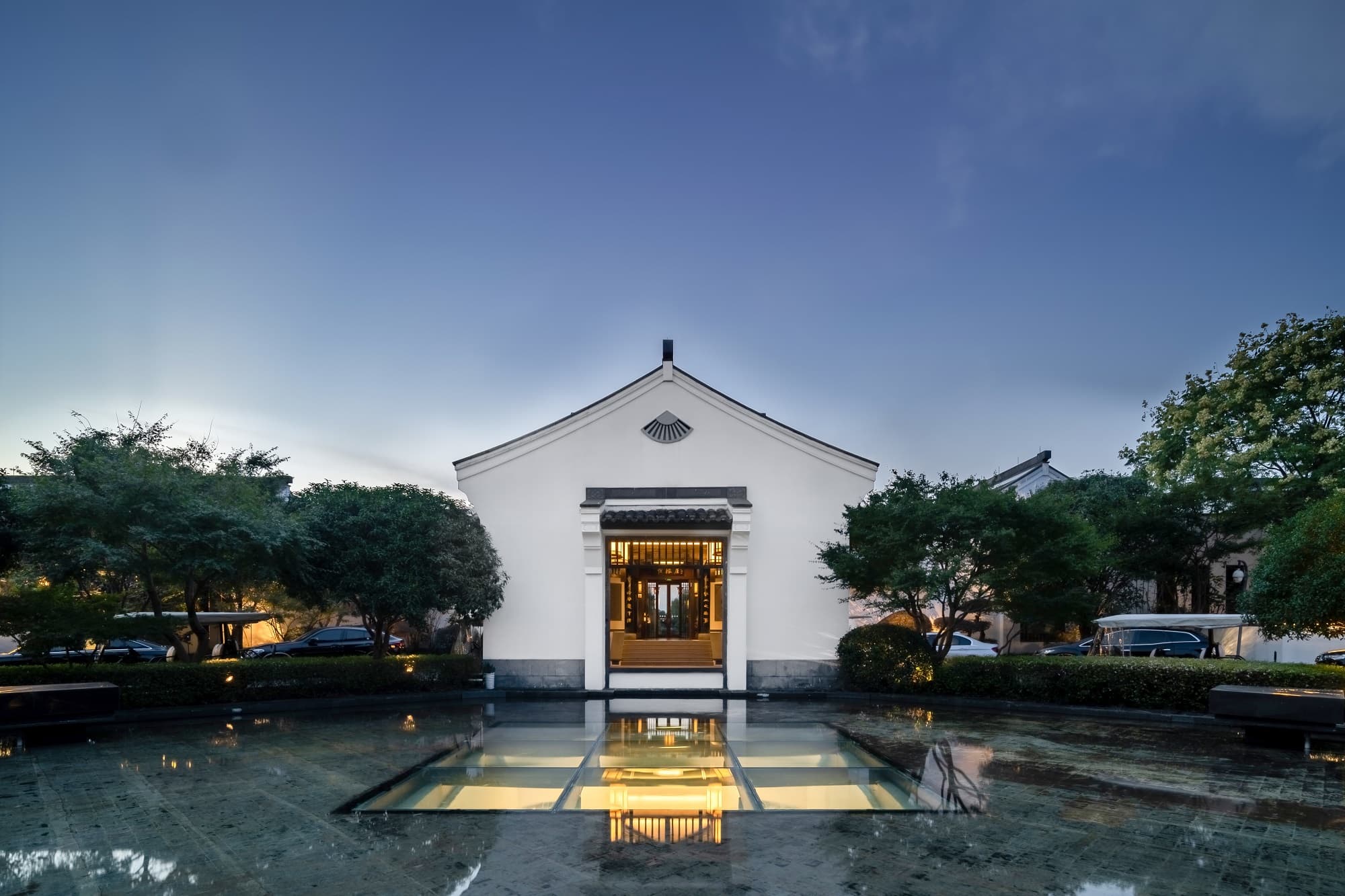
It’s a magnificent trick of the eye: Banyan Tree Hangzhou feels like a centuries-old settlement preserved in amber, yet it’s a masterclass in modern reconstruction. Located within the mist-shrouded Xixi National Wetland Park, this sanctuary trades the frantic energy of West Lake for the silent glide of traditional sculling boats—'Love Boats,' as they’re locally dubbed—drifting under stone arch bridges. The architecture is a faithful homage to the Jiangnan water village aesthetic: gray tiled roofs, ivory walls, and high-ceilinged lobbies illuminated by oversized lanterns. Inside, the illusion of antiquity gives way to contemporary excess. Even entry-level Water Terrace Suites are a sprawling 120 square meters, outfitted with intricate silk brocades, jet pools, and Natura Bissé amenities that smell like expensive calm. Dining is equally theatrical; at Bai Yun, the Dongpo pork is a glossy, trembling cube of perfection, while the Longjing shrimp captures the region’s tea heritage on a plate. Service, led by standouts like Viola, is telepathic rather than just attentive. Yes, it’s a 40-minute drive from the city center, but that’s the point. You don’t come here to see Hangzhou; you come here to dream of it.
“Book a 'Water Terrace Suite' for direct canal views, but for true seclusion, ask for a villa near the 'Jiu Xian' pavilion to minimize the walk to your evening cocktails.”
Insider TipAvg. Nightly Rate
512USD

This isn't a hotel you stumble upon; it is a destination you commit to. Located in the bamboo-clad hills of Fuyang, the Tsingpu Hangzhou Retreat rejects the polished marble of city luxury for something far more arresting: the raw, tactile silence of rammed earth and stone. The architecture commands attention not by shouting, but by whispering—a wabi-sabi aesthetic that frames the mist-covered mountains like a living ink wash painting. Inside, the experience is a study in subtraction. Rooms are stripped of digital noise, replacing televisions with expansive windows that look out onto 300-year-old Ginkgo trees. The luxury here is time and touch. You don't just sleep; you engage. Mornings are spent mastering the local art of bamboo paper making—a Fuyang heritage—or stone masonry, guided by local artisans. Dining at Tsingpu Kitchen is equally grounded, serving hyperlocal dishes like the delicate Zhuangyuan Tofu and the earth-baked Beggar’s Chicken, flavors that taste of the surrounding soil. Service is handled by personal butlers who anticipate needs without hovering. While the lack of a dedicated spa building might deter the traditional resort-goer, the in-room cultural therapies prove far more restorative. Verdict: A severe, beautiful digital detox for those who prefer heritage over high-tech.
“Skip the lap swim—the 0.7m deep pool is designed for meditative wading. Instead, book the sunset bamboo-weaving workshop; the light hitting the forest at 5 PM is unmatched.”
Insider TipAvg. Nightly Rate
310USD
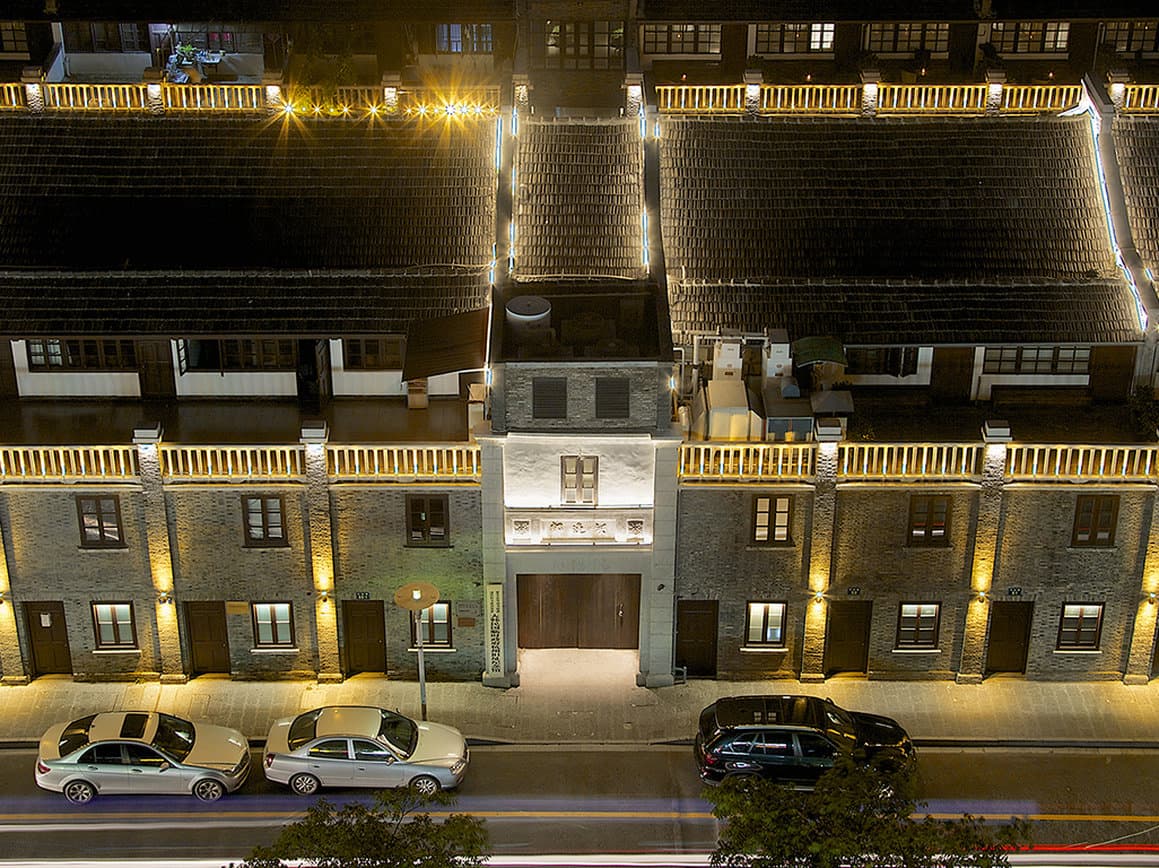
Step through the brick archway of Chaptel Hangzhou on Changsheng Road and the modern roar of Zhejiang’s capital vanishes, replaced by the hushed, cinematic romance of the 1930s. This isn't just a hotel; it’s a meticulously restored Shikumen (stone warehouse gate) mansion that whispers stories of a bygone Republican era. Forget the cookie-cutter lobbies; here, you are greeted by lantern-lit alleyways and a personal butler—a hallmark of its Relais & Châteaux pedigree—who guides you to one of the all-suite sanctuary's private villas. Inside, the design flirts with nostalgia: think dark wood furnishings, wrought-iron balconies, and Art Deco flourishes, balanced by modern necessities like Dyson hair dryers and Molton Brown amenities. Dining is an equally evocative affair. At Le Lotus, the signature Pan-fried Foie Gras bridges French technique with local finesse, while Xike Hall serves a British Afternoon Tea so authentic you’ll expect a poetry reading to break out. While the absence of a pool or sprawling spa might deter the resort crowd, the trade-off is absolute privacy and an unbeatable location just steps from West Lake and the Kerry Centre. It is a rare, living museum for the traveler who prefers deep soaking tubs and history over swim-up bars. Verdict: A moody, magnificent time capsule for the design-conscious soul.
“Request a second-floor suite with a private balcony facing the internal courtyard for the most atmospheric, lantern-lit evening views.”
Insider TipAvg. Nightly Rate
270USD
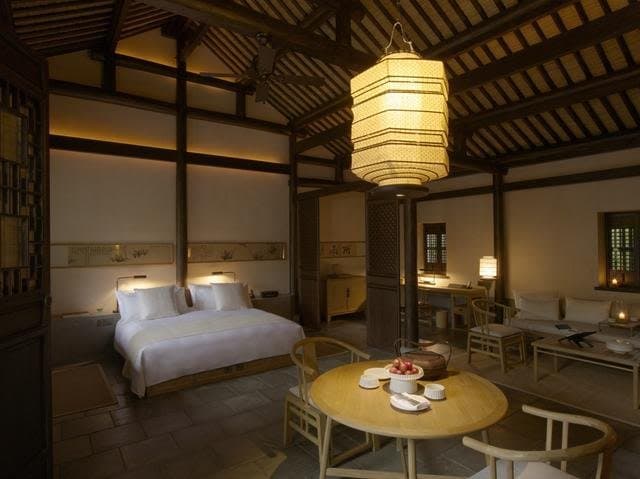
Forget the marble-lobby grandeur of standard five-stars. Amanfayun is an act of preservation, a meticulous reconstruction of a Tang Dynasty tea village that feels less like a hotel and more like a spiritual retreat with exceptionally high thread counts. The heart of the property is the Fayun Pathway, a cobblestone artery shared with saffron-robed monks from the neighboring Lingyin Temple. Yes, the public wanders this path, meaning your privacy relies on the discrete 'Guests Only' markers and the fortress-like walls of your courtyard—a friction that adds a frisson of authenticity rather than annoyance. Inside the converted farmhouses, the vibe is aggressively low-lit and moodily atmospheric. You won't find chintz here; instead, expect Elmwood furniture, intricate calligraphy, and stone floors warmed by underfloor heating—a non-negotiable comfort during Hangzhou’s damp winters. The dimness is a design choice, forcing your circadian rhythm to reset, though it might make finding your amenities a challenge after sunset. Dining is a serious affair at Lan Xuan, where the double-boiled deboned chicken with termite mushrooms justifies the trek alone. But the real showstopper is the Bath House. Skip the in-room shower for a soak in the colossal circular wooden tubs, surrounded by steam and silence. It is, quite frankly, the benchmark for rustic restoration: ancient in spirit, but thankfully modern where it counts (the plumbing).
“Request a 'Village Suite' on the upper levels for better light, and book your circular wooden tub session at the Bath House immediately upon arrival—slots at dusk fill instantly.”
Insider TipAvg. Nightly Rate
716USD
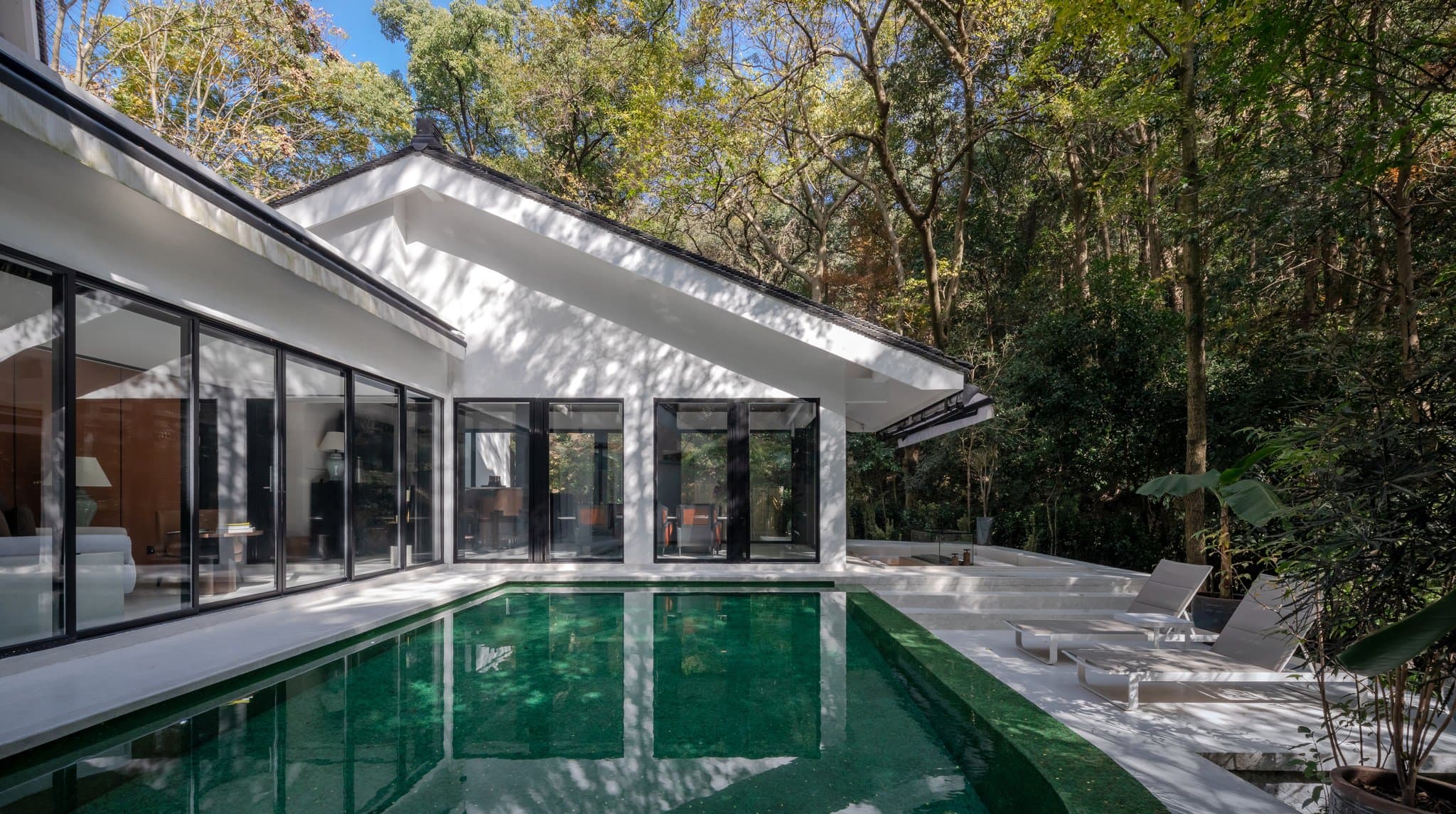
While the masses jostle for selfies on the Broken Bridge, the real Hangzhou—the one of misty ink paintings and silence—hides here, in the shadow of the Six Harmonies Pagoda. Vallie Hotel is less a hotel and more a curated act of preservation: a cluster of restored tea farmers’ dwellings woven so seamlessly into the Yuelun Mountain forest that the architecture feels organic. With only eight rooms, the solitude is absolute. The design aesthetic is 'rural brutalism' meets high-gloss luxury: exposed ancient wooden beams hovering over crisp 400-thread count linens and Dyson-equipped vanities. The pièce de résistance is the plumbing, quite literally. Taps and private courtyard soaking pools are fed by the legendary Hupao Spring—water so prized that locals queue for hours to bottle it, yet here, you bathe in it. Dining at Shijiu Gastro Lounge offers a startlingly competent French-Hangzhou dialogue; the Fennel Caviar Tart is a textural triumph that demands a pairing from their surprisingly deep cellar. Service is invisible until needed, delivered by butlers who anticipate rather than ask. It is not cheap, and the base rooms are intimate to the point of cozy, but for a weekend of meditative hedonism, it has no peer.
“Skip the entry-level rooms; they can feel tight (40sqm). Book a suite with a private outdoor Hupao Spring pool to truly exploit the location's unique hydro-geology.”
Insider TipAvg. Nightly Rate
554USD
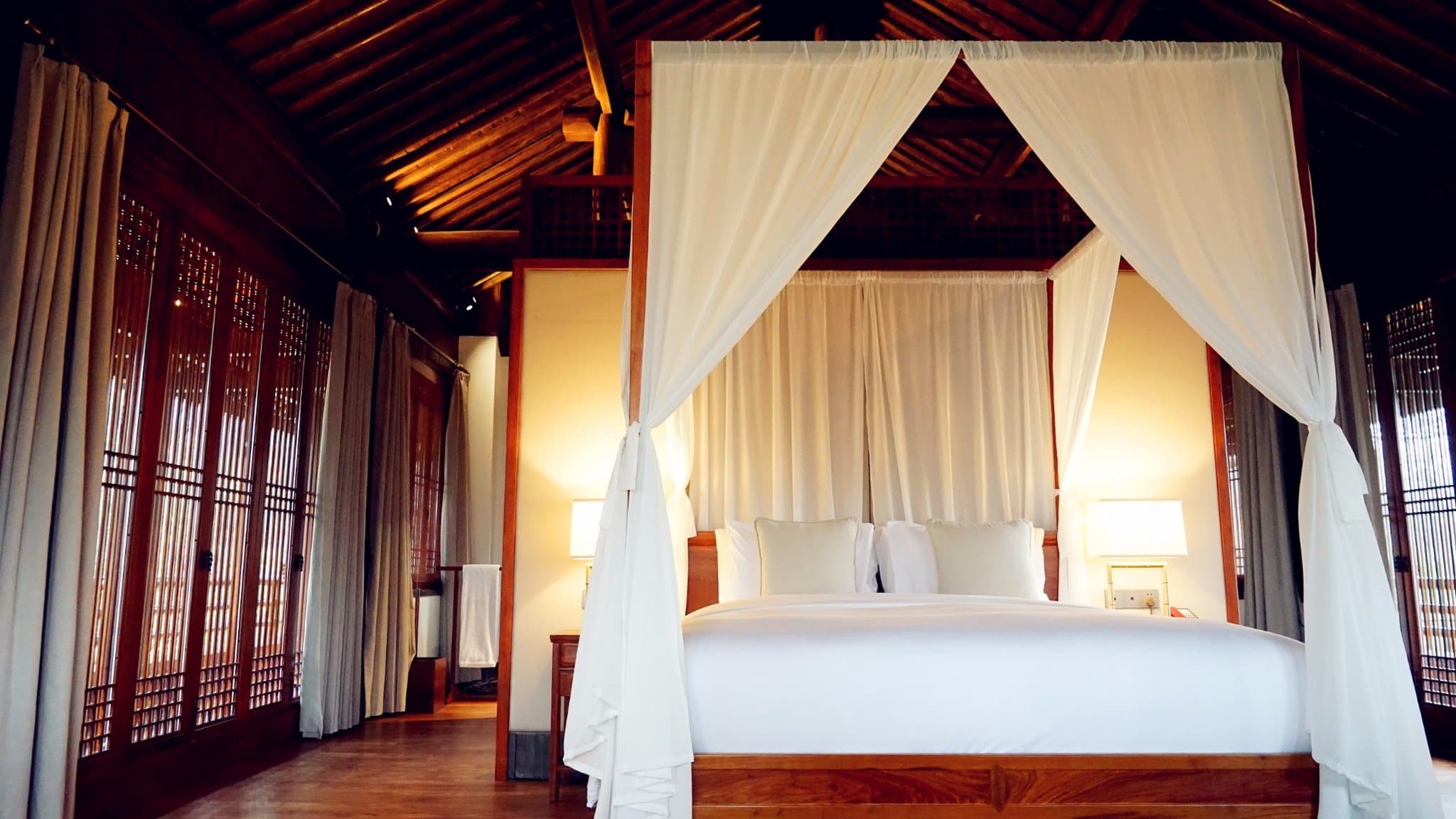
While the masses jostle for selfie space on the Broken Bridge, the real Hangzhou—the one of misty ink paintings and silence—hides in the tea fields of Maojiabu. Seven Villas (or Zixuan) is less a hotel and more a curated village of restored ancient mansions, where the soundtrack is strictly chirping cicadas and the rustle of bamboo. There is no swimming pool here, a bold omission that filters out the splashing families and preserves an almost monastic quietude. Inside, the 42 villas balance Ming Dynasty aesthetics with 21st-century necessities—think underfloor heating and Aromatherapy Associates bath products. But one comes here primarily to eat. The property houses *Jie Xiang Lou*, a culinary temple holding a Michelin Star and two Black Pearl diamonds, where the 'Veggie Beggar’s Purse' (a refined take on the beggar's chicken) justifies the flight alone. For dinner, *La Villa* offers French technique with local ingredients; Chef Eric Yu’s pan-fried yellow croaker is a masterclass in texture. Service is hyper-personalized but invisible—butlers appear only when needed, vanishing like ghosts into the courtyards. It is sophisticated, sensory, and unapologetically grown-up.
“Guest status does not guarantee a table at Jie Xiang Lou. Book your 'Golden Medallion Wagyu' and table at least two weeks prior to arrival.”
Insider TipAvg. Nightly Rate
625USD
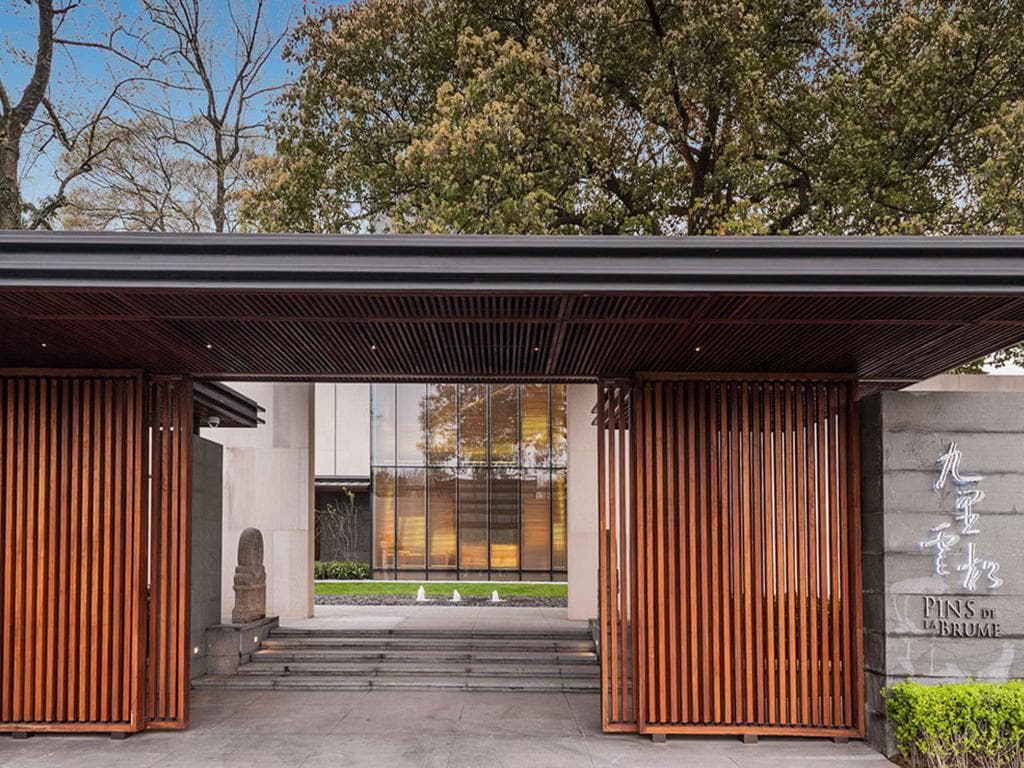
If the crowds at Lingyin Temple are the storm, Pins De La Brume is the eye. Tucked away on a leafy road often shrouded in the region’s signature mist, this property doesn’t just pay lip service to ‘Zen’—it embodies it. The design is a masterclass in framing nature; the glass-walled lobby turns the surrounding ancient pines into living wallpaper, while the central courtyard’s ‘water mirror’ offers a meditative focal point that changes with the light. Inside, the asceticism is purely aesthetic. Rooms are plush sanctuaries stocked with Le Labo amenities and linens that feel dangerously close to sin. Dining at Tianxiang (La Parfum) is non-negotiable; the West Lake Vinegar Fish here is handled with a precision that rivals the temple’s rituals. Service is invisible until you need it—the hallmark of a true hideaway. It’s less a hotel, more a reset button for the overstimulated soul.
“The secluded location is a double-edged sword; ride-shares are notoriously impossible to hail here. Book the hotel’s private transfer for dinner reservations in the city.”
Insider TipAvg. Nightly Rate
180USD
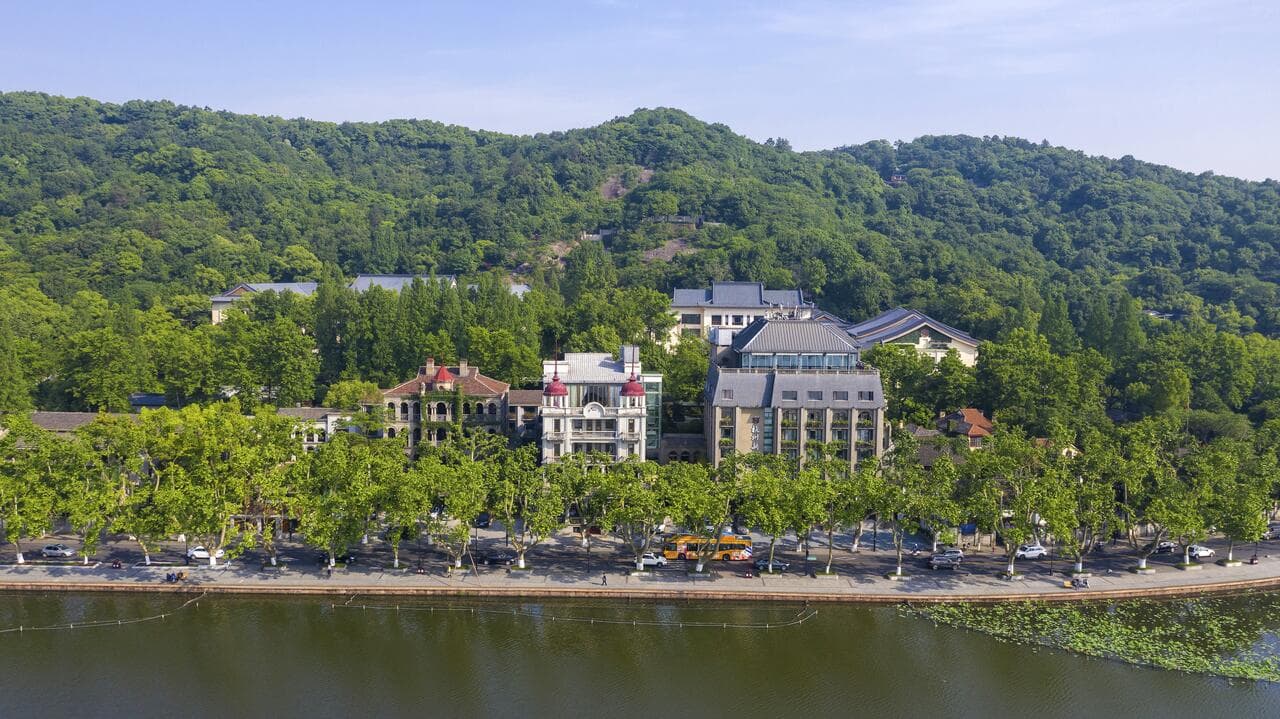
Ignore the misnomer. 'The New Hotel' (Xin Xin Hotel) is actually Hangzhou’s oldest continuously operating hospitality legend, anchoring Beishan Road since 1913. While the nearby Four Seasons offers manicured perfection, this red-brick grand dame serves cinematic drama straight out of a fervent period piece. The architecture is a moody collision of Western Baroque and traditional Jiangnan aesthetics, featuring creaky wooden spiral staircases that whisper stories of the 1920s aristocracy. The rooms, particularly in the heritage 'He Zhuang' wing, trade modern sterility for atmosphere—think high ceilings, arched windows framing the Broken Bridge, and notably firm mattresses that prioritize orthopedic tradition over plush sinking. A word of warning: the proximity to West Lake means a faint, persistent humidity clings to the air, adding to the 'vintage' olfactory experience. Dining is an exercise in nostalgia. The '1913 Restaurant' plates a credible, if sharp, West Lake Vinegar Fish, but the afternoon tea in the Lobby Bar—served on retro Republic of China crockery—is the true photogenic star. Service is eager but old-school; don't expect digital concierges here. This is a stay for the melancholic romantic who prefers history with a pulse over clinically perfect luxury.
“Book a 'He Zhuang' Lake View room for the best vantage point of the Broken Bridge. Also, guests often get breakfast access to the neighboring West Lake State Guesthouse—ask the concierge immediately upon arrival.”
Insider TipAvg. Nightly Rate
93USD