No. 01

HangzhouHangzhou2642 verified reviews
9
.4
Bitvoya Edit
Layering imagery, place, and detail before the page opens.
Hangzhou, once praised by Marco Polo as the finest city in the world, has evolved into a canvas for futuristic architecture and avant-garde design. While the West Lake remains its spiritual heart, the city's skyline now boasts daring structures that challenge convention. Our curated collection invites you to explore properties that are destinations in themselves. Experience the fluid curves of the Conrad Hangzhou in the Raffles City complex, or immerse yourself in the striking geometry of the InterContinental Hangzhou's golden sphere in Qianjiang New Town. For those seeking a dialogue between modernism and nature, the Lucid Resort Xixi and Tsingpu Hangzhou Retreat offer minimalist sanctuaries hidden within the wetlands. This is where ancient heritage meets bold innovation.
Hangzhou is no longer just a destination for classical gardens and tea culture; it has emerged as a global hub for architectural experimentation. The city's rapid development leading up to the Asian Games has birthed a collection of hotels that push the boundaries of physics and aesthetics. Choosing a design-focused hotel here means residing inside works of art created by world-renowned firms like UNStudio (Conrad) and Canadian architect Carlos Ott (InterContinental). Whether it's the industrial-chic vibes of Hotel Indigo Hangzhou Tianmushan or the brutalist-meets-nature approach at FOUND RETREAT Jiande Hangzhou, these properties offer an immersive experience that transcends typical luxury accommodation.
Expect a juxtaposition of the hyper-modern and the deeply traditional. In properties like the Pagoda Hotel Hangzhou Zijingang, you will find spaces optimized for digital nomads and creatives, featuring bold color palettes and social-centric layouts. Conversely, resorts in the wetlands utilize natural materials—stone, wood, and water—to create a 'wabi-sabi' luxury aesthetic. Service in these establishments is tailored to the cosmopolitan traveler, often featuring curated art galleries within the lobby, collaborations with local artists, and dining experiences that present food as edible art. This collection represents the new face of Chinese luxury hospitality.
The InterContinental Hangzhou is arguably the most iconic, famous for its golden sphere structure representing the sun, located in the CBD.
Yes, The Lucid Resort Xixi and Tsingpu Hangzhou Retreat are located within the Xixi National Wetland Park, offering eco-centric avant-garde design.
Absolutely. Housed in the Raffles City complex designed by UNStudio, it features fluid, twisting towers that are a marvel of modern engineering.
Explore our complete curated list of luxury accommodations, from boutique hideaways to grand dames.
Explore All Hangzhou HotelsArrival at FOUND RETREAT is an act of erasure. You don’t just check in; you drift away—specifically, on a 20-minute private boat ride across a tributary of the Fuchun River, leaving the frantic pulse of Hangzhou dissolving in the mist. Designed by the China Academy of Art, this property isn't merely 'blended' with the landscape; it is structural honesty incarnate. Grey brick and raw timber villas command the hillside, framing the wilderness like a living ink-wash painting. Inside, the asceticism is purely visual. The experience is uncompromisingly plush: heated floors combat the river damp, and Le Labo 33 amenities scent the air with sandalwood and cedar. Request a 'Mufeng' villa for the most dramatic water views. Dining at Bujue Chinese Restaurant is a masterclass in local terroir—the Claypot Fish Head Soup is non-negotiable, a milky, savory broth derived from the very river you overlook. While the infinity pool leans on the petite side, the Japanese-style forest hot spring more than compensates. Service is led by private 'Lishi' butlers who materialize exactly when needed and vanish when you require solitude. Verdict: The ultimate architectural detox.
“Skip the main dining room for sunset; head to the Lin Jian Book Bar and order the signature Osmanthus Latte while watching the fog roll off the river.”
Insider TipAvg. Nightly Rate
185USD

Forget the gilded lobbies of downtown Hangzhou; the Tsingpu Hangzhou Retreat is a masterclass in architectural silence. Located in the Fuyang district—the very landscape that inspired the legendary 'Dwelling in the Fuchun Mountains' scroll—this property eschews ornamentation for raw impact. The design utilizes reclaimed grey brick and rammed earth to create a grid of courtyards that feel less like a hotel and more like a monastic sanctuary for the design-obsessed. Inside, the experience is startlingly intimate. The rooms are stripped back, featuring warm wood accents and furniture that demands you slow down. There are no distractions here—just massive windows framing the bamboo forest. Dining at ‘Tsingpu Kitchen’ is equally grounded; the Zhuangyuan Tofu is a revelation of local texture, while the Beggar's Chicken arrives with theatrical rustic charm. Service is handled by butlers who anticipate needs rather than hover. It is a place to disconnect completely, provided you can handle the profound quiet and the occasional humidity of the mountain air. A triumph of substance over style.
“Skip the main pool for laps; it's shallow (0.7m). Instead, book a private bamboo weaving session in the afternoon for true meditative focus.”
Insider TipAvg. Nightly Rate
310USD
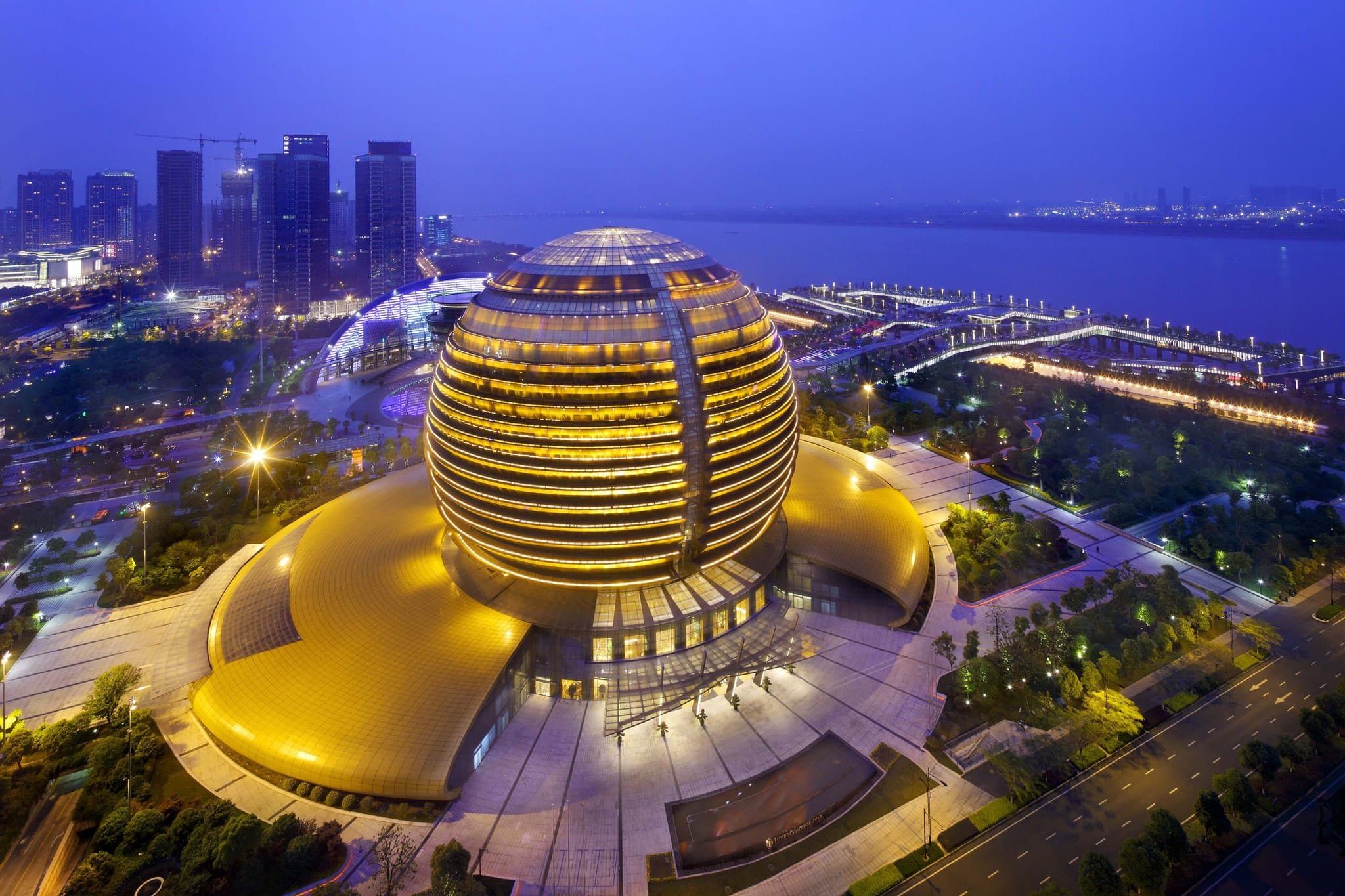
If Hangzhou’s West Lake is the city’s poetic soul, the InterContinental is its brazen, golden ambition. Dominating the Qianjiang New City skyline like a captured sun, this 100-meter-high sphere is impossible to ignore—and that’s entirely the point. Entering the 85-meter atrium, you aren’t just checking in; you’re staring up into a dizzying architectural kaleidoscope that feels like stepping inside a sci-fi cathedral. The rooms, admittedly, whisper of their 2010 vintage. You’ll find dark woods and heavy drapery rather than minimalist cream, but the hardware holds up—Dyson hair dryers and Byredo amenities add a modern veneer to the retro-futurism. The real draw is the view: floor-to-ceiling windows framing the Qiantang River light show, a nightly spectacle that makes the aging air-conditioning forgivable. Skip the chaotic breakfast buffet. Instead, book a table at Sun & Moon Chinese Restaurant for the crispy pigeon and fried ham with sweet beans—dishes that prove this icon still has culinary teeth. It’s not the newest player in town, but for sheer geometric drama, the Golden Sphere remains undefeated.
“Request a 'River View' room on the 16th floor or higher. The angle down into the atrium is vertigo-inducing (in a good way), and you get a front-row seat to the city’s light show without the crowds.”
Insider TipAvg. Nightly Rate
115USD
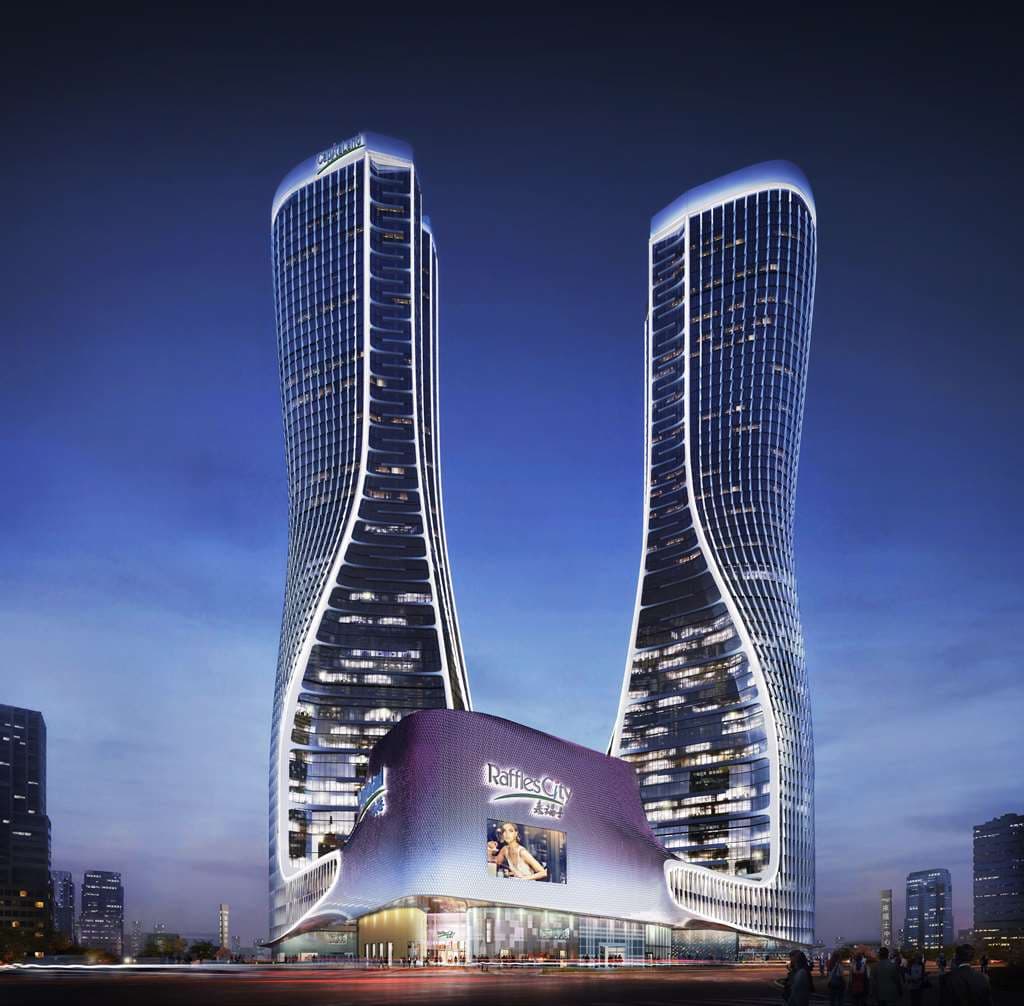
Forget the willow-patterned nostalgia of West Lake; the Conrad Hangzhou is unapologetically current. Housed within the sinuous, figure-eight towers of Raffles City—a UNStudio masterpiece that appears to ripple against the skyline—this property captures the electric ambition of Qianjiang New Town. The arrival experience is sheer theater: a high-speed ascent to the 27th-floor sky lobby, dominated by a sculptural spiral staircase that looks less like a transit point and more like a set piece from *Dune*. Inside, the rooms (starting at a generous 50 square meters) reject corporate beige in favor of fluid, curvaceous walls and floor-to-ceiling glass that frames the Qiantang River. The hardware is sharp—expect **Nespresso** machines, **Byredo** amenities, and crisp linens—though the absence of a master lighting switch can leave you fumbling after a night out. Dining is the true headliner. **Li'An**, perched on the 50th floor, justifies its **Black Pearl One Diamond** status with a "Mapo Tofu with Boston Lobster" that delivers a sophisticated spicy-sweet kick. Meanwhile, breakfast at **Blue Willow** features chefs hand-pulling Hangzhou noodles with hypnotic precision. While the concierge service can occasionally lag behind the architecture’s velocity, a **Valmont** facial at the Yuan Spa or a lap in the sci-fi indoor pool (swim cap mandatory) solidifies this as the city’s most compelling design statement.
“Book the 'Grand River View' room type to secure the corner layout with the most dramatic curved windows and 180-degree water views.”
Insider TipAvg. Nightly Rate
127USD
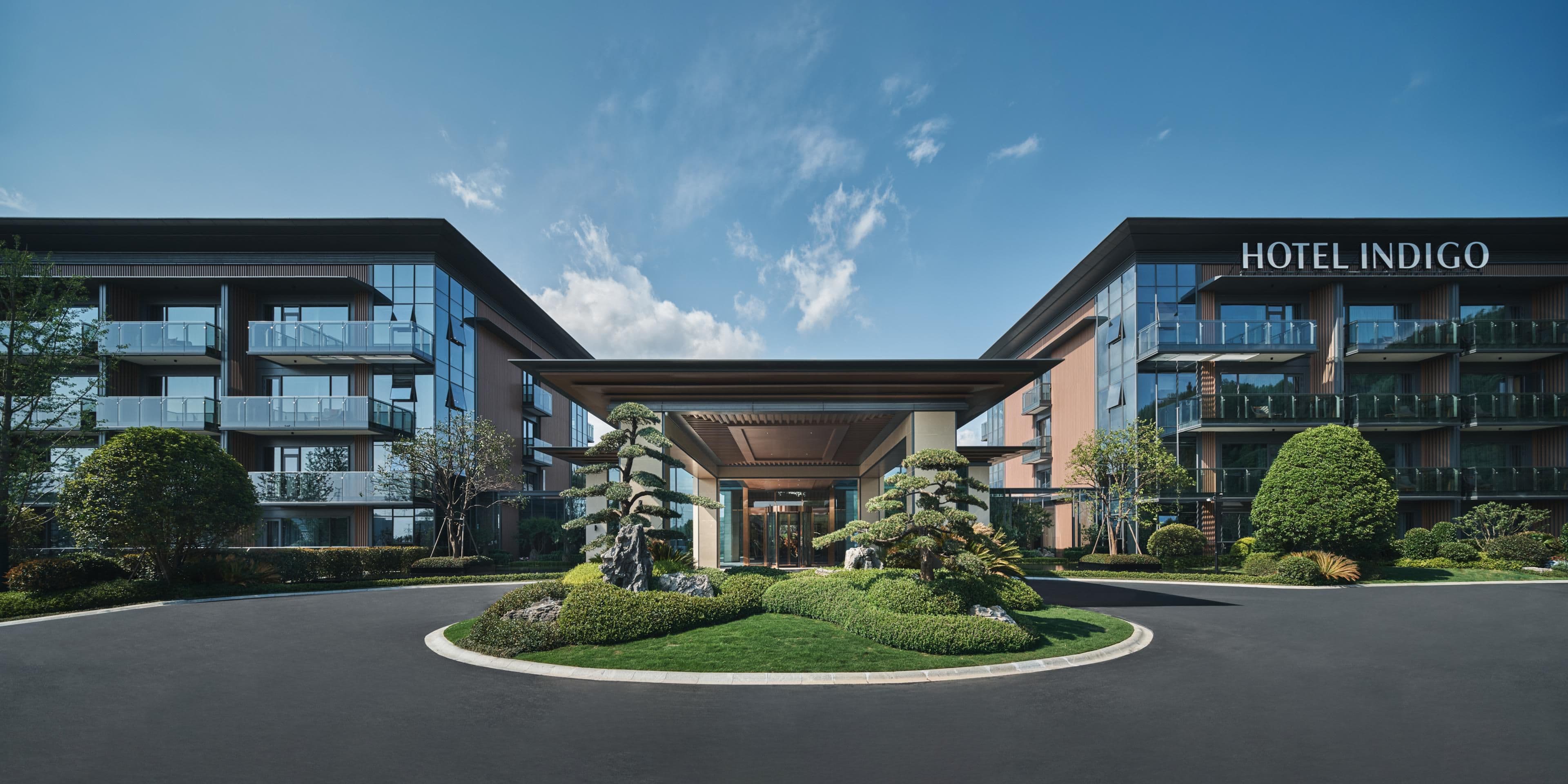
Forget the willow-lined clichés of West Lake; the real architectural drama in Hangzhou is happening two hours west, deep in the UNESCO-protected Tianmu Mountain biosphere. Hotel Indigo Hangzhou Tianmushan is not so much built on the land as it is grafted onto it. Designed by HBA, the structure is a confident, angular visual statement of wood and glass that pierces the canopy without disrupting it. Inside, the 'Kingdom of Trees' narrative avoids kitsch, manifesting instead as massive Ginkgo-leaf art installations and a lobby that feels like an open-air gallery. The 163 rooms are exercise in restraint—think neutral tones, expansive balconies, and the kind of silence city dwellers pay a premium for. Expect TOTO smart toilets, Dyson hairdryers, and Le Labo amenities that smell of santal and woodsmoke, matching the air outside. Dining at 'Sen Neighborhood' offers a crash course in local terroir; order the signature beef and dried bamboo shoot noodles—the bamboo is likely harvested from the adjacent slopes. It’s a sophisticated, oxygen-rich retreat that trades gold-plated luxury for something far rarer: genuine stillness.
“Book a 'Valley View' villa for a private terrace that feels suspended in the tree canopy—perfect for morning coffee before the mist clears.”
Insider TipAvg. Nightly Rate
99USD
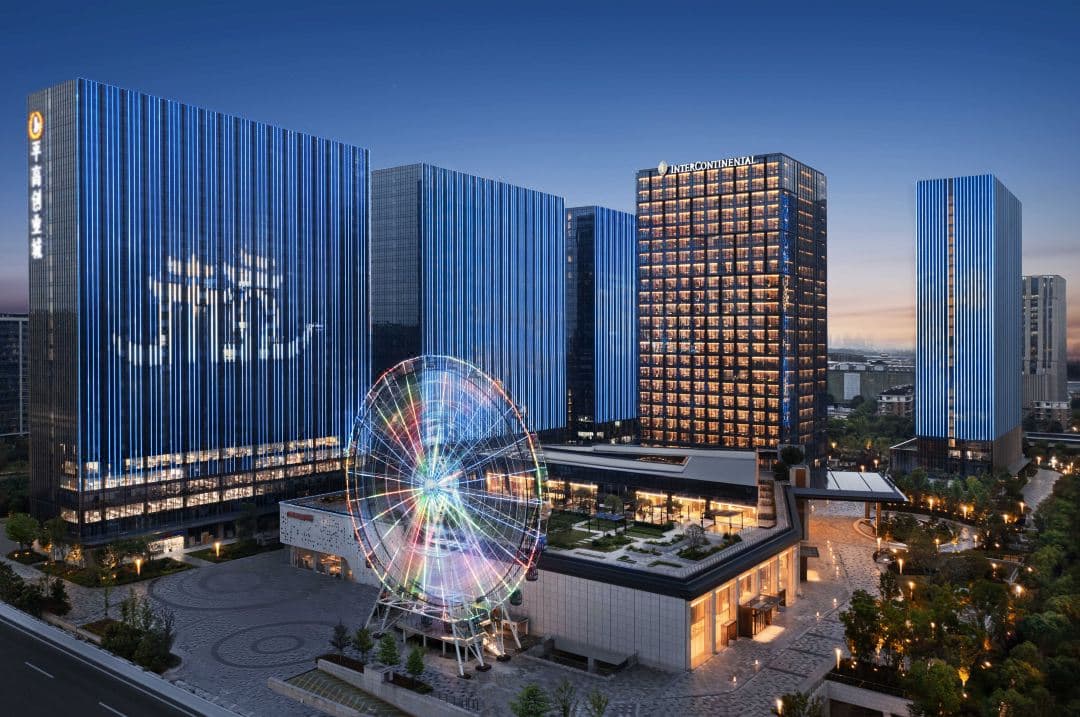
If downtown Hangzhou’s InterContinental is a loud, golden sphere, its Liangzhu sibling is a masterclass in quiet power. Anchoring the new Birland cultural district, this HBA-designed property doesn't just sit near the UNESCO-listed ruins; it converses with them. The lobby’s nine-meter 'Crystal Waterfall' and heavy stone textures mirror the architectural gravity of the David Chipperfield-designed Liangzhu Museum nearby, swapping imperial gloss for geological cool. Inside, the rooms function as high-tech sanctuaries. We’re talking Dyson hair dryers, full-sized Byredo Bal d’Afrique amenities, and smart toilets that hum with efficiency. The floor-to-ceiling glass doesn't frame a skyline, but rather the kinetic energy of the Ferris wheel and the serene district below. Dining is best experienced at Hehui Liangzhu, where the kitchen treats Hangzhou classics with surgical precision—the Jasmine smoked fish is non-negotiable. Service is sharp, exemplified by the concierge who navigates the Birland crowds for you. It’s a property that proves you don’t need to be in the CBD to feel the city's pulse; you just need better design.
“Skip the main breakfast rush. Head to the indoor pool early—the 'Aero Light' design creates a surreal, sci-fi morning swim atmosphere before the crowds arrive.”
Insider TipAvg. Nightly Rate
106USD

While the masses flock to West Lake’s humid crush, the Pagoda Hotel Hangzhou Zijingang offers a cool, gallery-like exhale in the city’s academic quarter. Located near Zhejiang University, this property trades traditional lakeside willow-pattern kitsch for a crisp, industrial-chic narrative. The lobby sets the tone immediately: a sweeping spiral staircase wraps around the ‘I Hold the Umbrella for You’ sculpture, a stark geometric centerpiece that screams art-house cinema rather than hotel reception. Upstairs, the 42-square-meter base rooms feel less like accommodation and more like private design studios. The aesthetic is warm wood meets matte grey, punctuated by window-side Tatami nooks perfect for plotting your next chapter. Tech is ubiquitous but invisible; smart home controls manage the ambience, while service robots glide silently through corridors delivering water. Dining at ‘Go-To Place (Hao Qu Space)’ is a hyper-local affair—skip the continental options and order the signature pan-fried buns (Shenjianbao) and Hangzhou noodles, which rival street-side vendors for authenticity. It’s a sophisticated, gallery-grade sanctuary for those who prefer their tranquility with a side of high-speed Wi-Fi.
“Skip the main lounge for work; snag the window-side Tatami nook in your room for a private tea ceremony with a view of the university district's quiet canopy.”
Insider TipAvg. Nightly Rate
60USD

If Alibaba’s nearby HQ represents the frenetic pulse of modern China, The Lucid Resort Xixi is its deep, meditative exhale. Drawing its name from the ancient poem 'Building a hut in the human realm,' this design-forward retreat masters the difficult art of being both accessible and secluded. The architecture is a study in transparency; floor-to-ceiling glass dissolves the barrier between your suite and the persimmon-dotted wetlands outside, while the interiors lean into a 'hidden hut' aesthetic with raw woods and stone grays. The real showstopper is the rooftop 'Sky Mirror' infinity pool. Unlike the ground-level lagoons common in Xixi, this sixth-floor vantage point floats you above the tree canopy, offering a rare, unblocked sunset view over the marshes. Service is a deft mix of high-touch and high-tech—expect whisper-quiet robot butlers delivering extra towels alongside human staff who remember your tea preference. Dining at Jing Yan is serious business; skip the western menu and order the signature East China Sea catch, steamed to preserve its briny sweetness. It’s a lucid dream of minimalism, executed with razor-sharp precision.
“Book a table at the Rooftop Infinity Pool Bar exactly 30 minutes before sunset for the 'Sky Mirror' effect, where the water turns into a liquid extension of the twilight sky.”
Insider TipAvg. Nightly Rate
71USD