No. 01
480 West Jianguo Road. Shanghai China 200031Shanghai99 verified reviews
9
.6
Bitvoya Edit
Layering imagery, place, and detail before the page opens.
In the electric pulse of Shanghai, true luxury is defined by silence, space, and stillness. Our curated collection, 'Urban Zen,' highlights the city's most exquisite minimalist masterpieces, where world-class architects like Piero Lissoni and Kerry Hill have carved out sanctuaries of calm. From the ceramic-clad sophistication of The Middle House in the bustling Jing'an District to the restorative wellness focus of The Anandi Hotel and Spa in Hongqiao, these properties redefine modern hospitality.
Explore the historic Shikumen lanes of the Xuhui District at Capella Shanghai, Jian Ye Li, or escape the city entirely for the ancient camphor forests of Amanyangyun in Minhang. Whether overlooking the Bund or hidden in water towns, these design sanctuaries offer a tranquil counterpoint to Shanghai's neon skyline.
Shanghai is often associated with colonial architecture on the Bund or futuristic skyscrapers in Lujiazui. However, a silent revolution has taken place in its hospitality sector. The city has become a canvas for minimalist design and architectural innovation. Choosing an "Urban Zen" property here means opting for a sophisticated retreat that balances the frenetic energy of China's biggest city with profound tranquility. Properties like The PuLi Hotel and Spa pioneered the concept of the "urban resort," using dark woods, slate, and bamboo to create a barrier against the outside world. This collection appeals to travelers who value aesthetics, privacy, and a holistic approach to travel, offering interiors that act as a visual detox.
Staying in Shanghai's minimalist sanctuaries goes beyond just a bed for the night. Expect holistic wellness programs; for instance, The Anandi Hotel and Spa focuses on healing chi with sleep cycles and meditation. Culinary experiences are often understated but exquisite, featuring Michelin-starred dining within hushed, dimly lit dining rooms such as those at The Sukhothai Shanghai. Visually, anticipate a palette of greys, earth tones, and natural materials like stone and silk. Service is intuitive and often invisible—butler services are common, ensuring your stay remains unbroken by the mundane.
The Anandi Hotel and Spa is the top choice for wellness, featuring a healing concept focused on balancing 'Chi', expansive spa facilities, and sleep-focused amenities.
Yes, Banyan Tree Shanghai On The Bund offers a Zen retreat with minimalist interiors and in-room dipping pools, all while providing spectacular views of the river and skyline.
Capella Shanghai, Jian Ye Li is the premier heritage choice, located in the French Concession and comprised of restored Shikumen stone-gate villas blending history with luxury.
Explore our complete curated list of luxury accommodations, from boutique hideaways to grand dames.
Explore All Shanghai HotelsForget the Pudong skyline’s neon aggressive grandeur. The real flex in Shanghai is silence, and you’ll find it at Capella Jian Ye Li. Hidden within the Xuhui District’s lovingly restored Shikumen lanes, this all-villa property feels less like a hotel and more like the private residence of a moody 1930s film noir protagonist. Designed by the late Jaya Ibrahim, the aesthetic is a masterclass in dark timber and hushed tones, where the only drama comes from the steep staircases (strictly not for the faint of knees). Vertical living is the rule here: you enter through a private courtyard, ascend to a media room, sleep on the second floor, and bathe on the third. Speaking of bathing, the Auriga Spa doesn't just dabble in relaxation; it goes hard with moon-phase treatments and floatation tanks using Carita products. Dinner at *le Comptoir de Pierre Gagnaire* is non-negotiable—order the signature Cocotte of frogs Poulette to see why the Michelin inspectors keep returning. It’s an introspective, hushed sanctuary that trades sweeping river views for the intimacy of red bricks and rustling plane trees.
“Skip the main bar for a nightcap; instead, ask your Capella Culturist to set up a private Rabbit Gin Fizz service on your villa’s top-floor terrace.”
Insider TipAvg. Nightly Rate
618USD
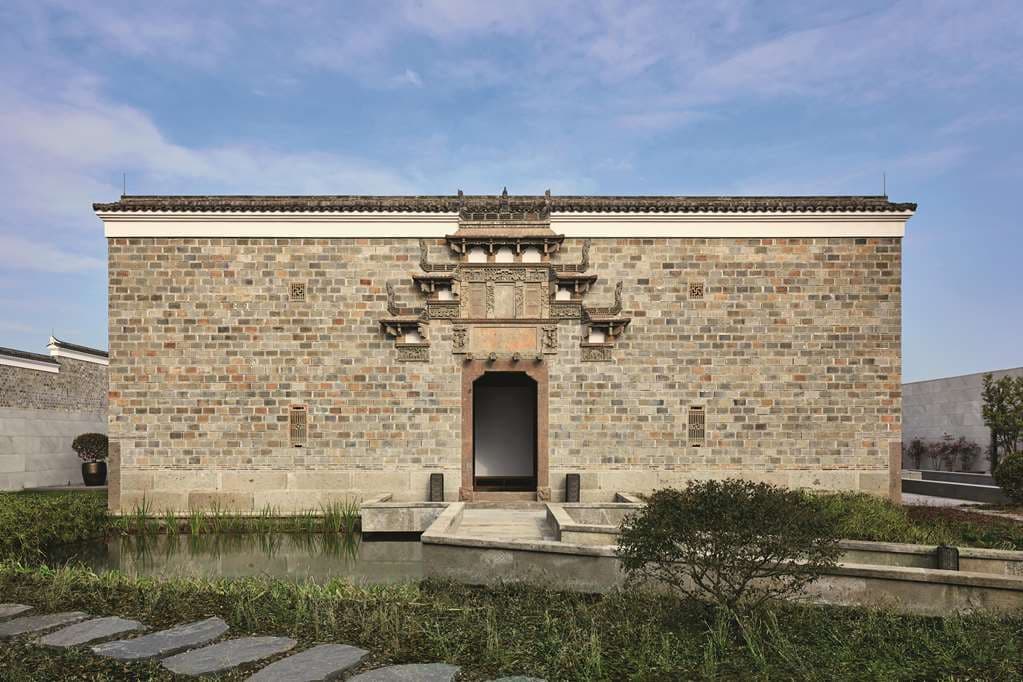
Amanyangyun is less a hotel and more a conservation miracle with 400-thread-count sheets. The backstory is legendary: 50 Ming and Qing dynasty villas and 10,000 ancient camphor trees, saved from a reservoir project in Jiangxi and reassembled, brick by ancient brick, in Shanghai’s suburbs. The result, orchestrated by the late Kerry Hill, is a masterclass in austere opulence. The arrival experience is a decompression chamber; you leave the frantic energy of the Bund for a lobby of Nanmu wood lattice that smells of centuries-old timber and expensive silence. In the Ming Courtyard Suites, the history is palpable—stone floors and stark wooden pillars—but the comfort is aggressively modern, featuring Hebei black granite tubs and heated floors that make the damp Shanghai winter irrelevant. Dining requires a decision between the familiar and the fiery. Lazhu delivers authentic Jiangxi heat (the Double-boiled Clay Pot Soup is non-negotiable), while Arva serves a Red Prawn Carpaccio that rivals anything in Milan. The real showstopper, however, is the 2,840sqm Aman Spa. Skip the standard massage and book the Russian Banya; getting thrashed with oak leaves before plunging into icy water is the kind of brutal wellness that actually works. Yes, it’s far from the city center, and the occasional roar of a plane reminds you that civilization is nearby. But for a weekend of drinking tea in the Nan Shufang scholar’s studio and pretending you’re a literati in exile, there is no equal.
“Book the 'Banya' treatment at the spa specifically—it's rare in Shanghai. Also, request a villa in the 'North' section to minimize airplane noise.”
Insider TipAvg. Nightly Rate
987USD
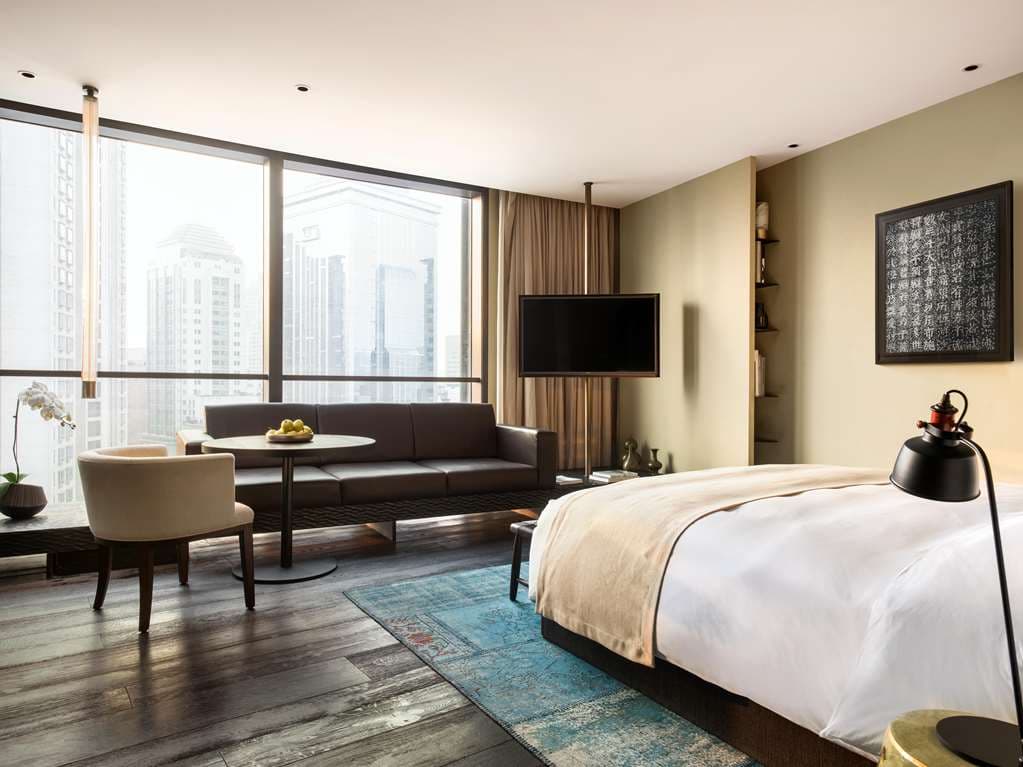
If Gotham City had a five-star spa retreat, it would look like this. Designed by Piero Lissoni, The Middle House rejects the beige neutrality of standard luxury for something far more seductive: a study in charcoal, emerald, and shadow. The arrival is pure theatre—passing through a bamboo forest into a lobby dominated by a staggering 6-meter Venetian glass chandelier. It’s not just a hotel; it’s a vibe shift. In the rooms, the moodiness continues with slate-grey walls and floor-to-ceiling windows that frame the Jing’an skyline like a cinematic still. The open-plan bathrooms in the Studios are undeniably sexy, though the glass walls demand a certain level of intimacy with your roommate. The complimentary ‘Maxi-bar’ (stocked with beer and coconut water) is a generous touch that embarrasses the stingy minibars of competitors. Dining is a serious affair here; Sui Tang Li serves contemporary Chinese that justifies the hype—order the Black Pearl Quail Egg Siomai immediately. It’s dark, it’s mysterious, and it’s arguably the coolest address in town.
“Book a table at Sui Tang Li weeks in advance—it’s Michelin-selected and perpetually full. If you miss out, the 'Seafood Wellington' at Café Gray Deluxe is a worthy consolation prize.”
Insider TipAvg. Nightly Rate
288USD
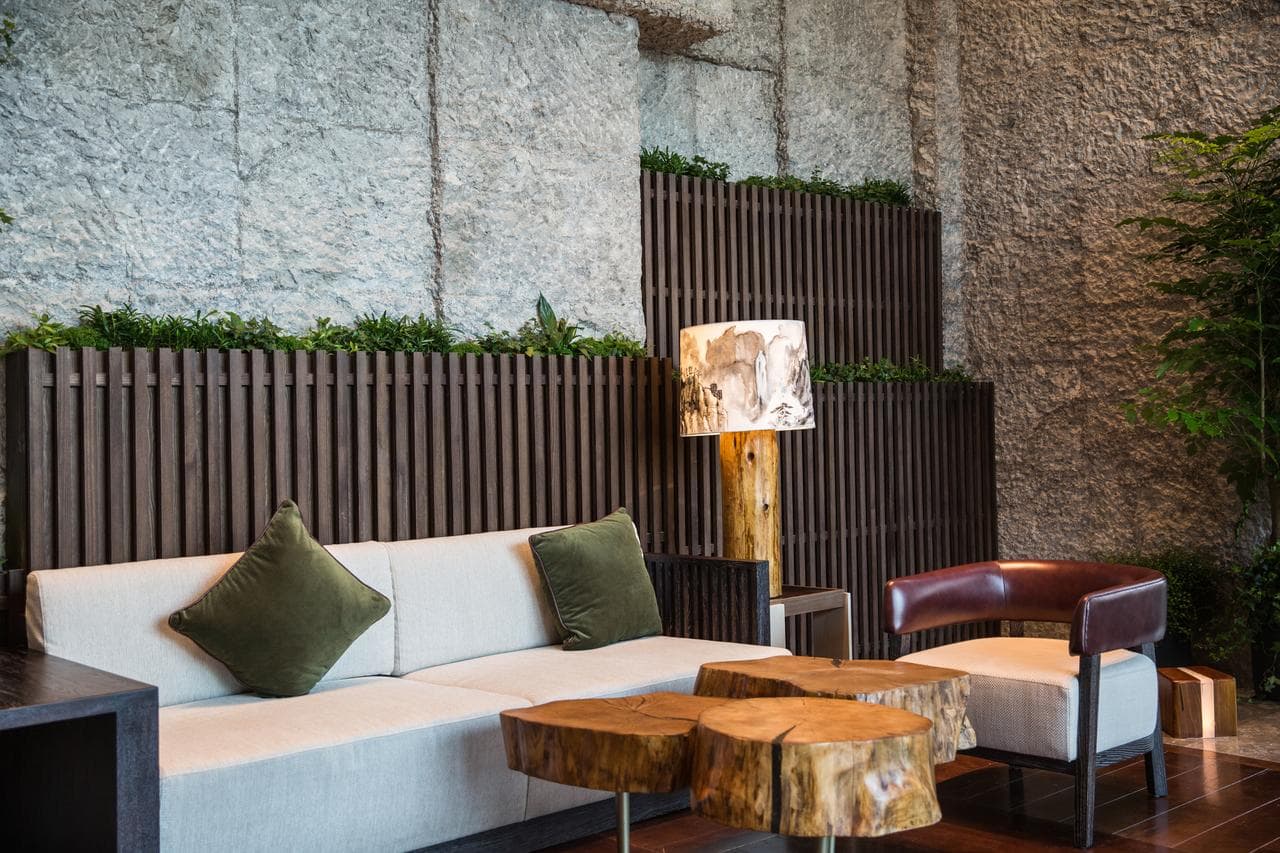
Shanghai’s Hongqiao district, a grid of logistics hubs and concrete, seems an unlikely candidate for spiritual recalibration. Yet, The Anandi performs a formidable pivot. Once you cross the threshold of the ‘Jade’ entrance, the industrial grind dissolves, replaced by a calculated silence and the faint scent of lemon verbena. This isn't just a hotel; it’s a sleep lab draped in minimalist luxury. The architecture avoids sharp angles—bad for 'chi', apparently—opting for a fluid, Tai Chi-inspired layout that guides you toward the Suzhou Creek. The interiors are a serious commitment to wellness, not just marketing fluff. We’re talking flooring embedded with nanometer-healing stones and 'Healing Butlers' who curate your circadian rhythms with the intensity of a sleep scientist. Rooms are monochromatic cocoons featuring expansive stone tubs, Natura Bissé amenities, and clinically proven sleep-aid music by Dr. Lee Bartel. Dining at Yuan is equally curative; the Boiled Young Lobster is served in a broth so rich it feels medicinal, while Takeyoshi delivers a pristine Eel Set Meal that rivals Ginza’s best. While the location makes a Bund excursion a logistical headache, that’s precisely the point. You don’t check in here to see Shanghai; you check in to stop seeing everything else.
“Skip the morning alarm and book the 'Sunset Meditation' session in the Peacock and Olive Tree Garden—the resident peacocks are surprisingly zen companions.”
Insider TipAvg. Nightly Rate
156USD
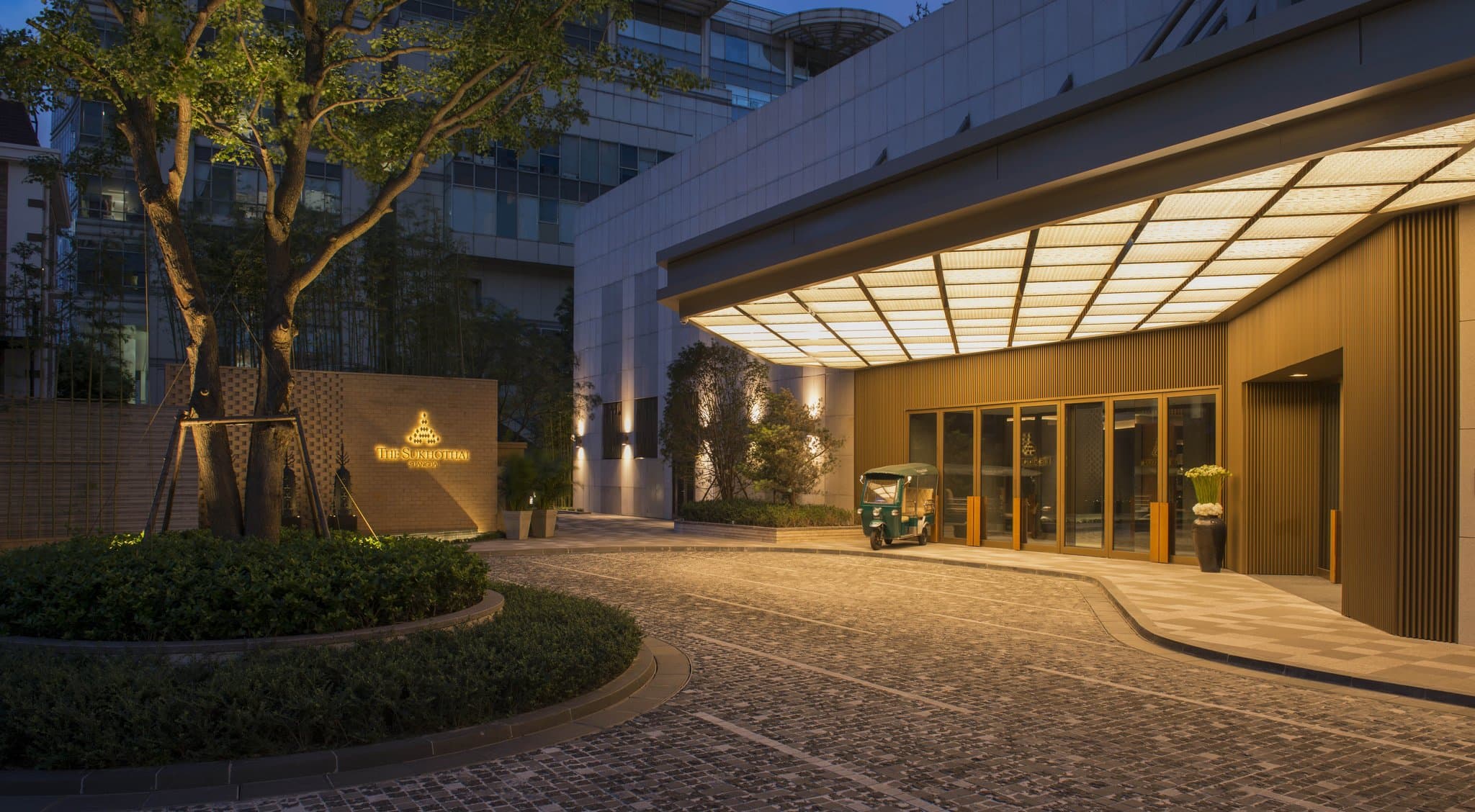
Stepping off the frenetic Jing’an streets into The Sukhothai Shanghai is an act of decompression. Neri&Hu have exorcised the gold-leafed ghosts of traditional Chinese luxury, replacing them with a brutalist poetry of split-face stone, brushed brass, and gray terrazzo. The floating staircase in the lobby isn't just a transit point; it’s a sculptural declaration of the hotel’s 'Industrial Zen' ethos. Upstairs, the rooms function as high-design hermitages. The walls, clad in pale green or clay-pink diatom-silica (a natural material chosen for air purification and humidity control), create a matte, tactile silence that is rare in this neon city. While the service can occasionally stumble over language barriers, the hardware is impeccable. Dining at La Scala delivers solid contemporary Italian—try the Impepata di Cozze—but the real atmospheric win is the jade-green mosaic pool in The Retreat, a subterranean vault that feels more like an ancient cistern than a hotel amenity. **Verdict**: A tactile masterpiece that demands you slow down, even if the service sometimes forces you to wait.
“Bypass the standard lobby waiting game and head to URBAN Lounge; their 'Gin Library' boasts over 120 global labels. Order a custom infusion while your room is finalized.”
Insider TipAvg. Nightly Rate
230USD
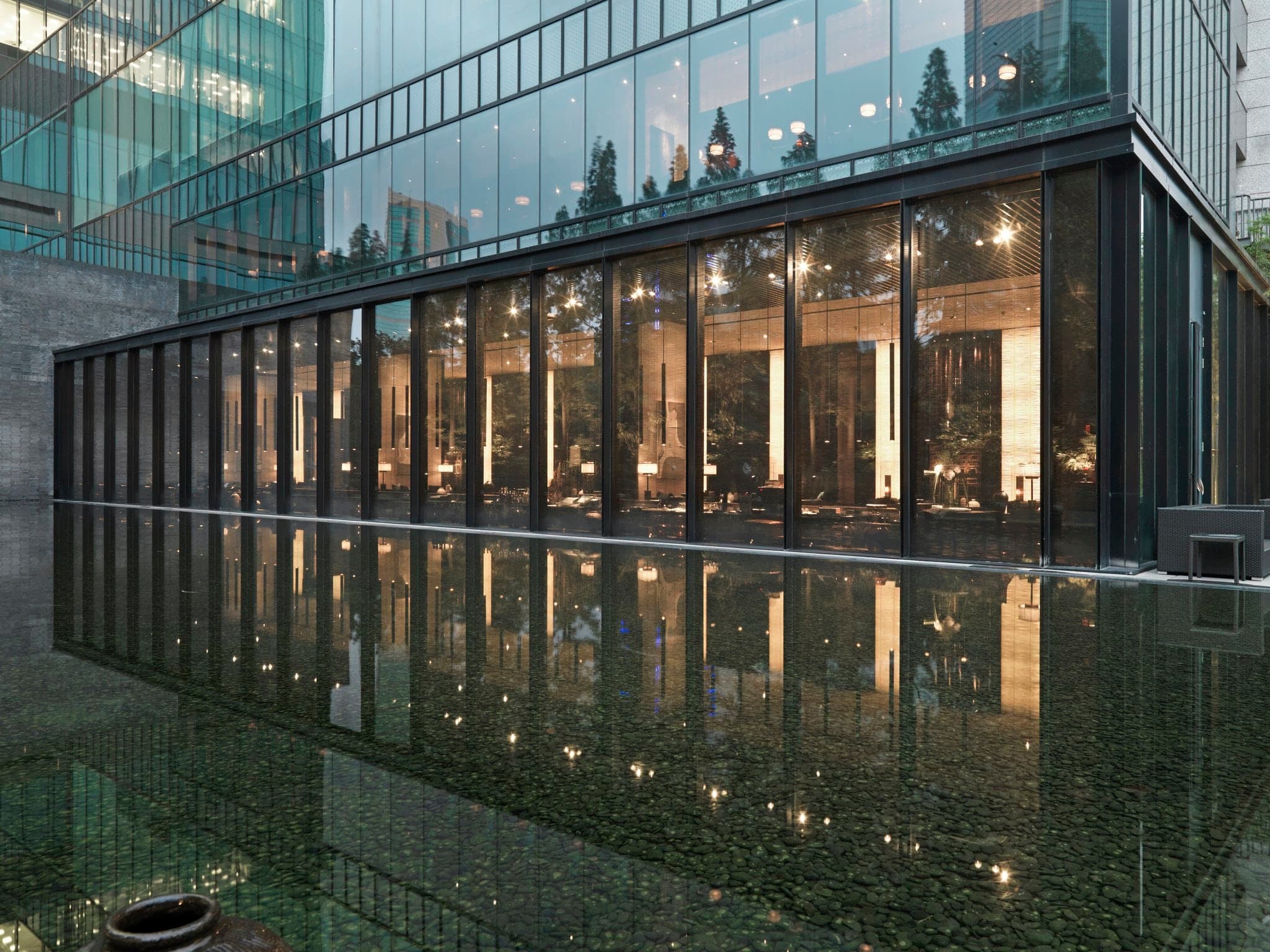
In a city obsessed with the 'new', The PuLi Hotel and Spa pulls off a rare feat: it refuses to age. While the bund-side glittering giants scream for attention, this Jing’an sanctuary whispers. Stepping off the frenetic Nanjing West Road into the lobby—a moody, slate-clad cathedral of calm—feels less like a hotel arrival and more like a decompression session. The design, a tactile mix of charcoal brick, bamboo screens, and polished bronze, remains seductively timeless. Rooms here reject the beige corporate standard for dark woods and open-plan layouts that force you to unwind. The Grand Studios are the pick, featuring window-side stone tubs that offer a voyeuristic soak overlooking the treetops of Jing’an Park. Yes, the room tech is a generation behind the iPad-controlled curtains of its newer rivals, but the Bose sound systems and Nespresso machines still do the heavy lifting. The bedding—Tempur-Pedic mattresses wrapped in high-thread-count cotton—is narcotic. Dining is the property's ace. PHÉNIX has rightfully retained its Michelin star for 2025; the Roast Pigeon with foie gras is not just a dish, it’s a masterclass in richness. Conversely, the 32-meter teak Long Bar offers a sexier, shadowy vibe for a nightcap. Service is telepathic, not intrusive—a rare balance in Chinese hospitality. It’s not the newest kid on the block, but it’s still the coolest.
“Skip the standard rooms. Book a 'Grand Studio' on the southwest corner for dual-aspect views of the Jing'an Temple and the park—the bathtub view is unrivaled.”
Insider TipAvg. Nightly Rate
240USD
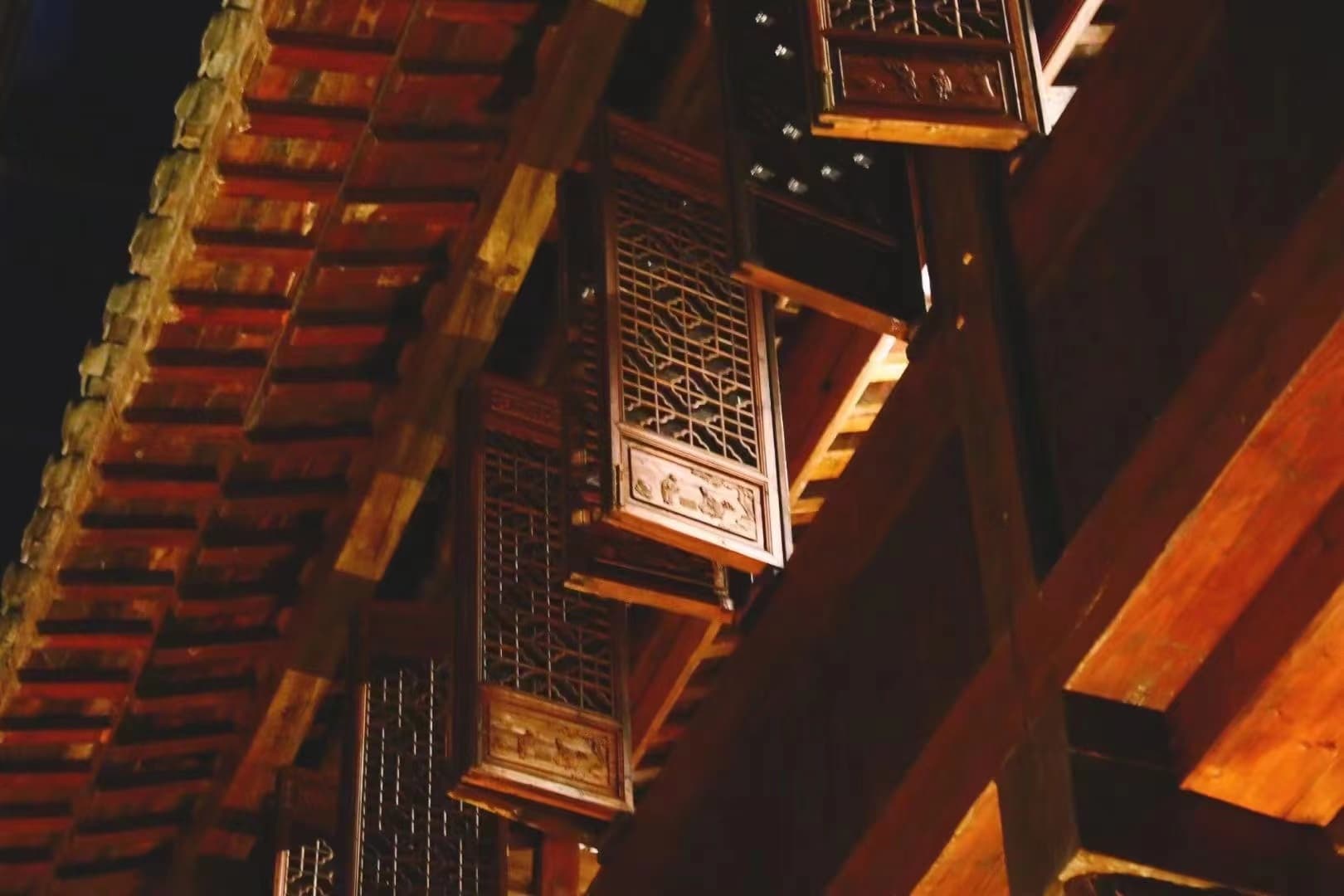
Forget the Bund’s neon glitz. The real drama lies an hour west, where Ahn Luh Zhujiajiao demands a different kind of attention. The arrival experience is less 'check-in' and more 'time travel,' anchored by the Wu Feng Lou—a 600-year-old Ming Dynasty courthouse painstakingly transported from Anhui. Its towering wooden pillars and reflection pools set a mood that is cinematic and severely meditative, recalling the set of 'Raise the Red Lantern' without the melodrama. The thirty-five villas are studies in restraint, swapping gold leaf for grey slate and stark white walls. Interiors feature heated floors, Dyson hair dryers, and Diptyque toiletries, ensuring the 14th-century aesthetic doesn't impede 21st-century comfort. While the lack of a gym might irk the Peloton crowd, the heated indoor pool offers a silent, chlorinous reprieve. Dining at the Ahn Luh Dining Room is strictly Jiangnan. The signature Steamed White Water Fish is impeccably fresh, though breakfast can feel like an afterthought compared to the architectural grandeur. Service is efficient—sometimes to a fault—but for a weekend of brooding sophistication and architectural voyeurism, this is Shanghai’s sharpest escape.
“Skip the standard Courtyard Villas; book a 'Pool Pavilion' if you want the only private outdoor swimming experience on the property.”
Insider TipAvg. Nightly Rate
300USD
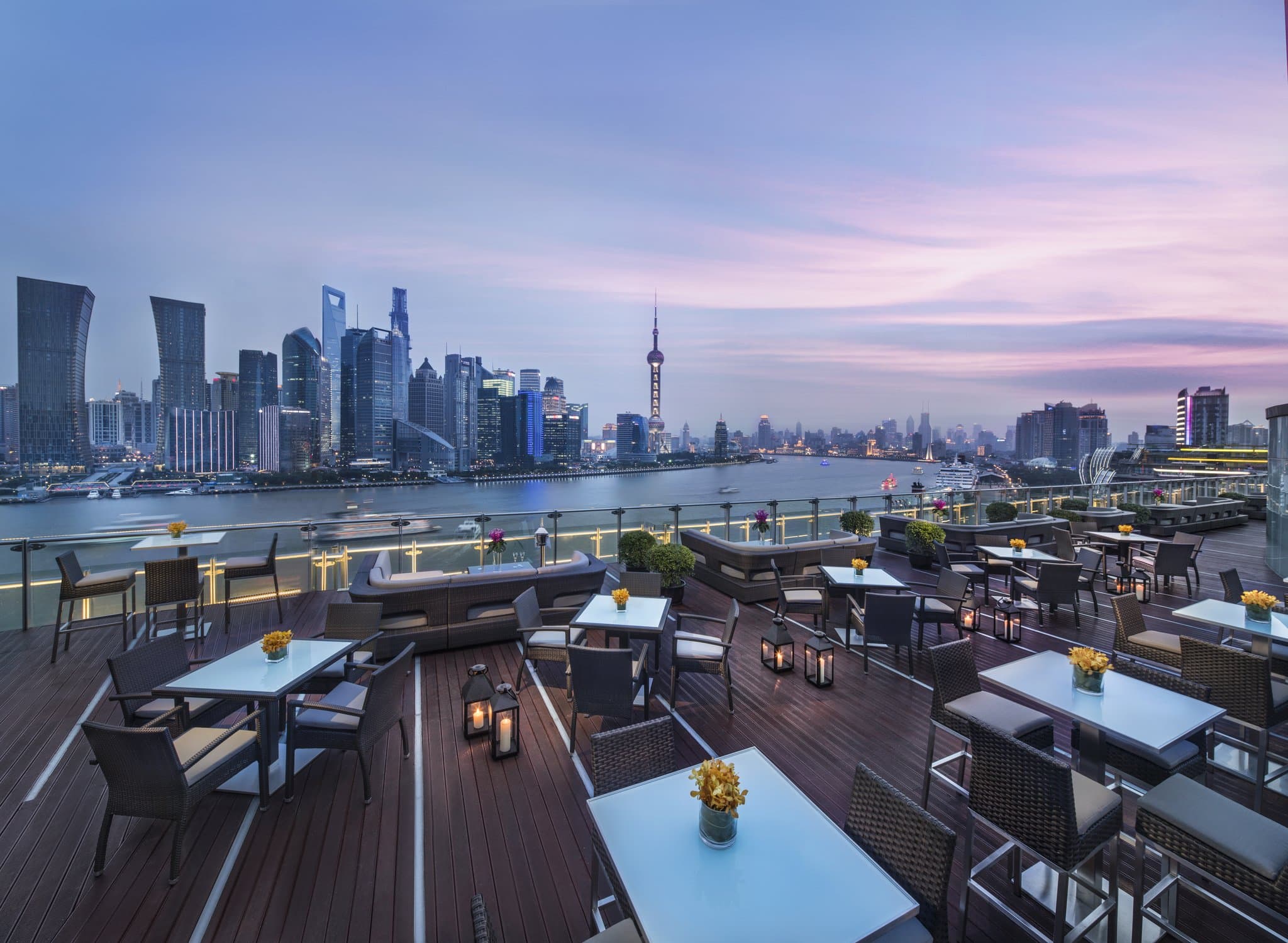
While the historic Bund teems with selfie sticks and tourists, the Banyan Tree Shanghai On The Bund offers a counter-narrative: absolute, soaking solitude. Located in the North Bund—a slightly removed, industrial-cool district—this property functions less like a city hotel and more like an urban resort. The draw here isn't just the view, though the unhindered panorama of Lujiazui from the floor-to-ceiling windows is cinematic; it’s the hardware. Specifically, the dipping pools. Book the Oasis Suite, where a massive, in-room relaxation pool awaits, effectively turning your living quarters into a private spa. The interiors are warm, heavy on timber and silk, grounding the airy architecture. Dining is serious business: Ming Yuan’s Double Boiled Fish Head Soup is a collagen-rich masterpiece that demands attention. While the property’s 2012 vintage shows faint signs of age in the tech, the service remains razor-sharp. End your night at TALES, the rooftop bar where the river breeze and nouveau tapas prove that distance from the main Bund is actually a luxury.
“Book an 'Oasis Suite' on a high floor (10+) to ensure your river view clears the cruise terminal buildings below.”
Insider TipAvg. Nightly Rate
245USD
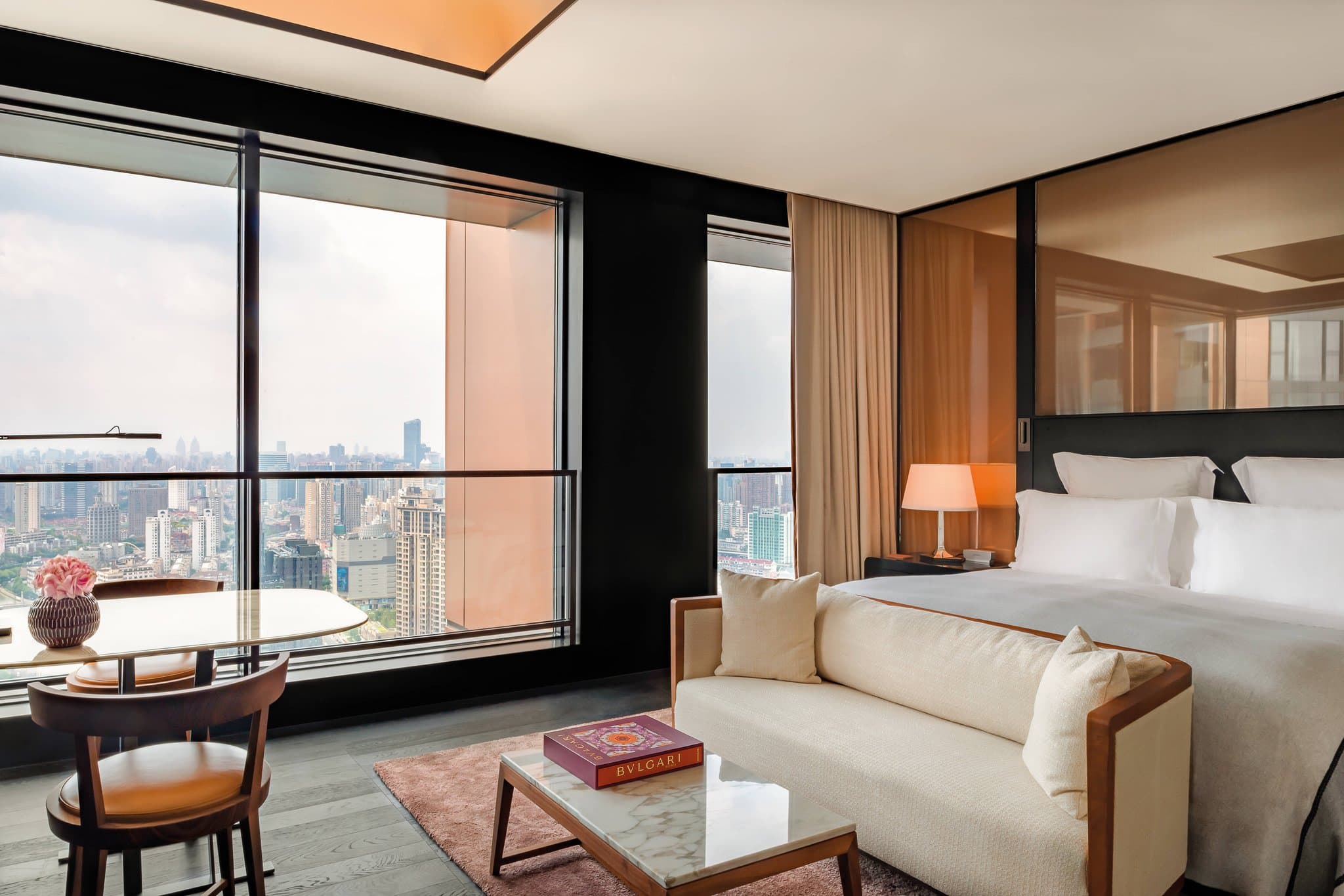
If Gotham City had a penchant for Italian couture, it would look like the Bulgari Hotel Shanghai. Perched atop the 48-story Suhe Creek tower, this isn’t just a hotel; it’s an Antonio Citterio-designed mood board brought to life in black granite, dark teak, and bronze. The arrival is discreet—almost too discreet—but the elevator ride to the 48th-floor lobby reveals a high-octane panorama of the Bund that renders the Pearl Tower a mere trinket. The guest rooms are studies in masculine restraint, where 400-thread-count linens soften the sleek, monochromatic edges. Yes, the closets are maddeningly dim—fashion police need flashlights here—but the bathrooms, clad in massive slabs of marble with Toto smart toilets and Dyson dryers, are veritable sanctuaries. Dining is the real theater. At Il Ristorante - Niko Romito, the Spaghetti with Lobster is a deception of simplicity, masking complex technique in every bite. Downstairs, the two-Michelin-starred Bao Li Xuan serves Rose Soy Sauce Chicken that justifies the flight alone. The 2,000sqm spa, with its jade-green mosaic pool and La Mer treatments, is the antidote to Shanghai’s frenetic energy. It’s pricey and unashamedly moody, but for those who prefer their luxury served with a side of noir glamour, this is the only address that matters.
“Skip the standard booking and request a room ending in '08' for the most direct, dead-center view of the Pudong skyline from your bathtub.”
Insider TipAvg. Nightly Rate
716USD
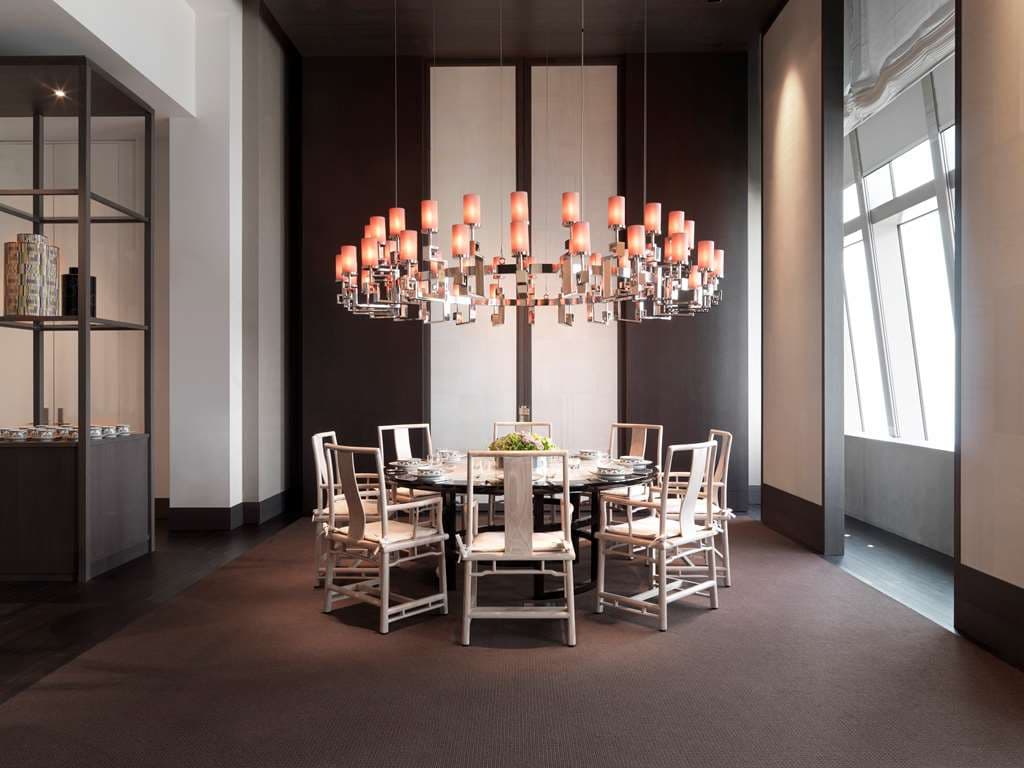
While the Shanghai skyline screams for attention with neon theatrics, the Park Hyatt Shanghai whispers. Occupying floors 79 to 93 of the 'Bottle Opener' (SWFC), this Tony Chi-designed enclave remains the city’s most stoic vertical sanctuary. It doesn't dazzle with gold leaf; it disarms you with geometry and silence. The aesthetic is strictly monastic-chic. Corridors are dimly lit, clad in mute greys and earth tones that force your eyes toward the windows, where the Oriental Pearl Tower looks like a toy below. Rooms feel like a modern scholar’s residence—spare, deliberate, and softened by 400-thread count linens. Yes, the hard product is aging slightly compared to the flashy new J Hotel across the street, and the air-conditioning can be temperamental, but the 'Water's Edge' spa and its Tai Chi courtyard offer a level of zen that newer rivals can't manufacture. Dining is a high-altitude spectacle. Skip the lobby lounge tourists and head to 100 Century Avenue. The Char-grilled Wagyu M5 Ribeye is competent, but the real draw is the breakfast: watching the clouds part over the Bund while sipping coffee at 91F is a spiritual experience. Service is invisible in the best way—anticipatory, not hovering. It’s no longer the newest giant in Lujiazui, but it remains the most dignified.
“Book a table for dinner at 100 Century Avenue specifically on the west side for the Puxi sunset, and don't miss the 85th-floor infinity pool at 6 AM for a solo swim in the clouds.”
Insider TipAvg. Nightly Rate
265USD